- Company Articles
- Products and Technology
- Product knowledge
- Small Manufacturers: Budget-Friendly Three Way Lean Pipe Joint Options

Small Manufacturers: Budget-Friendly Three Way Lean Pipe Joint Options
Related Product
Three Way Lean Pipe Joint
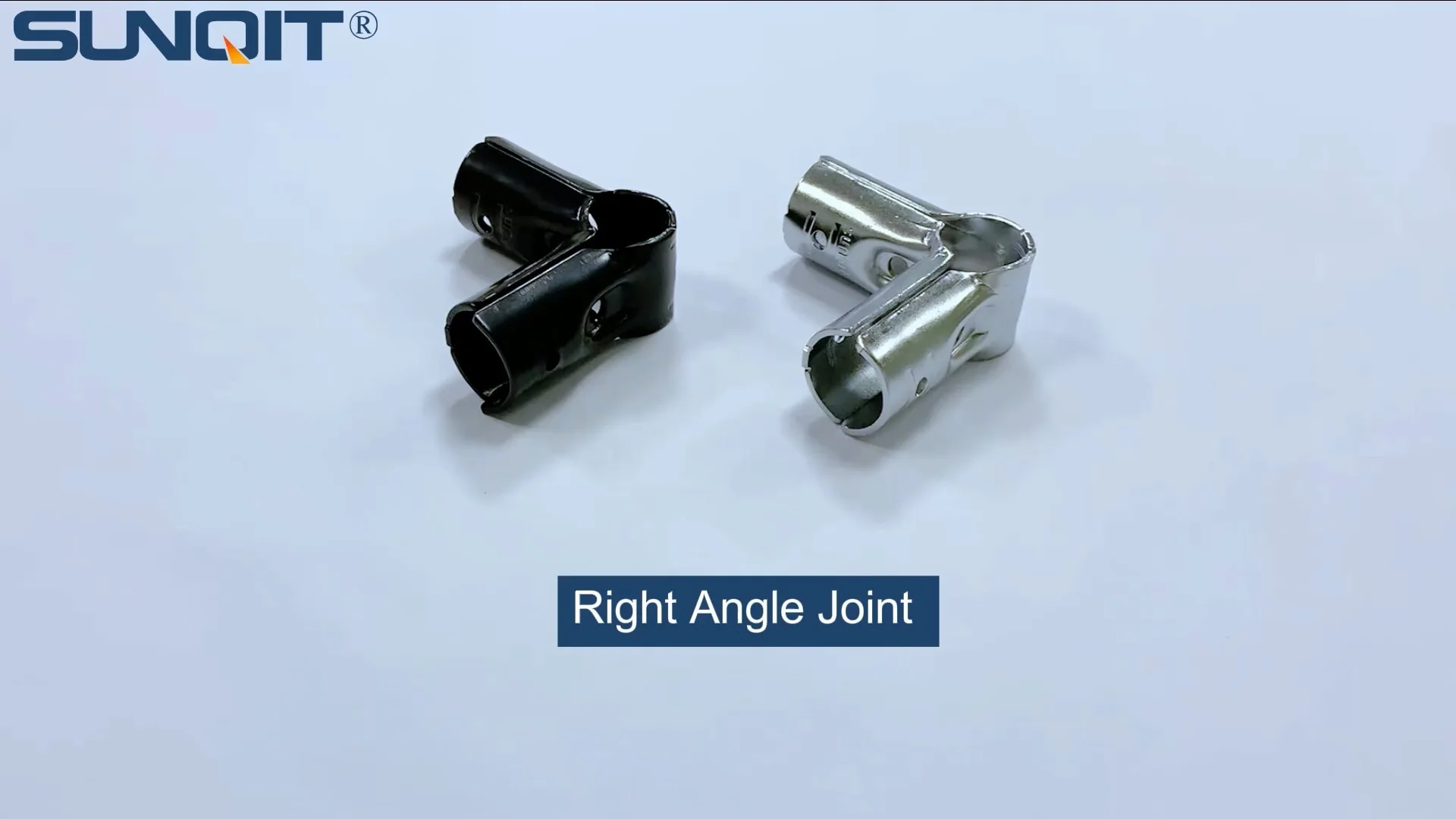
Three way lean pipe joint for 3 pcs 28MM lean pipe connection in straight angle, which used widely in workbench, flow rack, hand trolley frame connection.
Running a small manufacturing business often feels like walking a tightrope—balancing quality, efficiency, and budget is no easy feat. You need tools and systems that work as hard as you do, without draining your resources. That's where lean systems come in. Designed to eliminate waste, streamline workflows, and adapt to your changing needs, lean systems have become a lifeline for small shops looking to compete with larger players. And at the heart of these systems? The humble yet mighty three way lean pipe joint. These unassuming connectors are the glue that holds together everything from workbenches to material racks, making them a critical investment for any small manufacturer. In this article, we'll dive into why three way lean pipe joints matter, explore budget-friendly options that don't skimp on quality, and show you how to choose the right ones to build a lean ecosystem that grows with your business.
Why Lean Systems Are Non-Negotiable for Small Manufacturers
Let's start with the basics: What makes lean systems so essential for small shops? Unlike large corporations with deep pockets, small manufacturers can't afford to waste time, space, or materials. Every square foot of your facility, every minute of your team's day, and every dollar spent on supplies needs to contribute directly to productivity. Lean systems address this by focusing on three core principles: flow , flexibility , and frugality .
Take flow, for example. In a typical small workshop, materials might bounce from one corner to another—parts stored on a shelf across the room from the assembly station, tools scattered on cluttered workbenches, finished products piling up because there's no clear path to shipping. This chaos isn't just frustrating; it's costly. Workers spend more time moving than building, and delays stack up like dominoes. A well-designed lean system fixes this by creating a smooth, linear workflow. Materials arrive at the assembly line exactly when needed, tools are within arm's reach, and finished goods glide seamlessly to the next step—all thanks to structures like flow racks, conveyors, and ergonomic workbenches.
Then there's flexibility. Small manufacturers rarely stick to one product line forever. Maybe you start by making phone cases, but six months later, you pivot to laptop sleeves. Or a client asks for a custom order that requires reconfiguring your entire setup. Rigid, fixed structures—like welded steel workbenches or permanent shelving—can't keep up. Lean systems, built with modular components like lean pipes and joints, adapt in minutes. Need to extend a flow rack to accommodate larger parts? Swap out a few pipes and tighten a few joints. Want to add casters to a workbench so it can roll to a new station? Just bolt them on. This adaptability means you're not stuck with expensive equipment that becomes obsolete when your needs change.
And finally, frugality. Lean systems are designed to be cost-effective from the start. Instead of investing in custom-built machinery or one-size-fits-all furniture, you start with basic components and build only what you need. As your business grows, you add to your system incrementally. This "pay-as-you-go" approach keeps upfront costs low—a huge win for small manufacturers operating on tight budgets. Plus, many lean components are reusable. If you discontinue a product line, you can disassemble the old workbench and repurpose the pipes and joints to build something new. Waste not, want not.
The Three Way Lean Pipe Joint: Your System's Unsung Hero
If lean systems are the body of your workflow, three way lean pipe joints are the joints—literally. These small, often overlooked connectors are what turn simple pipes into complex, functional structures. A three way joint does exactly what its name suggests: it connects three lean pipes at once, allowing you to build sturdy, multi-directional frameworks. Think of it as a building block for adults—snap a few together, and suddenly you've got a workbench with shelves, a flow rack with multiple levels, or a conveyor support structure that can handle heavy loads.
But why three way joints specifically? Because they add versatility that two-way joints can't match. With a two-way joint, you're limited to straight lines or 90-degree angles. Three way joints open up a world of possibilities: T-shapes for branching off a main line, Y-shapes for creating triangular supports, or even complex configurations like multi-tiered racks. For small manufacturers, this versatility is a game-changer. You might start with a simple lean pipe workbench, but with three way joints, you can easily add side shelves for tools, a top rack for materials, or even a lower shelf for storage bins—all without buying a whole new workbench.
Another key benefit? No special tools required. Unlike welding or bolting, assembling with three way lean pipe joints is as simple as sliding a pipe into the joint and tightening a screw. Most joints use a setscrew or cam lever design, so even someone with no technical experience can put together a basic structure in under an hour. This saves you from hiring a professional installer or buying expensive equipment, which is a huge plus for small teams short on time and money.
Durability is also a big factor. While three way joints might look small, they're built to handle real-world manufacturing demands. High-quality joints are made from materials like steel or aluminum, with reinforced stress points to withstand the weight of tools, materials, and daily use. A well-made three way joint can support hundreds of pounds without bending or breaking, ensuring your lean structures stay stable and safe for years to come. And since they're designed to be tightened and re-tightened, you can easily fix loose connections before they become a problem—no need to replace the entire joint.

Budget-Friendly Three Way Lean Pipe Joint Options: Comparing Materials and Costs
Now, let's get to the part you've been waiting for: finding three way lean pipe joints that fit your budget. The good news is, there are options for every price point—but not all joints are created equal. To make the best choice, you'll need to balance upfront cost with long-term value. A cheap joint might save you a few dollars today, but if it cracks after six months, you'll end up spending more on replacements. On the flip side, an overpriced "premium" joint might have features you don't actually need, eating into your budget unnecessarily. Let's break down the most common materials and their pros, cons, and price ranges.
1. Steel Three Way Lean Pipe Joints: The Workhorse Option
Steel is the classic choice for lean pipe joints—and for good reason. It's strong, durable, and widely available, making it a go-to for small manufacturers on a budget. Steel three way joints typically cost between $2 and $5 per unit, depending on the size and finish. They're ideal for heavy-duty applications, like supporting flow racks loaded with metal parts or workbenches where workers stand for hours (the joints won't flex under constant weight).
One thing to watch for with steel joints is corrosion. If your facility is humid (like a food packaging plant) or handles liquids (like a automotive parts cleaner), plain steel can rust over time. To avoid this, look for chrome-plated steel joints . The chrome coating adds a thin layer of protection against moisture, extending the joint's life. Chrome-plated steel joints cost a bit more—usually $3 to $7 per unit—but the extra investment is worth it if you need rust resistance.
Steel joints are also compatible with most standard lean pipes, including PE-coated lean pipes (which we'll talk about later). This compatibility means you can mix and match components from different suppliers, giving you more flexibility to find the best deals.
2. Aluminum Three Way Lean Pipe Joints: The Lightweight Alternative
If you need something lighter than steel—maybe for mobile structures like turnover trolleys or workbenches on casters—aluminum three way joints are a great option. Aluminum is about 30% lighter than steel, making it easier to handle during assembly and reducing the load on casters or floor supports. It's also naturally corrosion-resistant, so you won't have to worry about rust, even in damp environments.
The tradeoff? Aluminum joints are slightly pricier than steel, ranging from $4 to $8 per unit. They're also not as strong as steel, so they're better suited for medium-weight applications—think storing plastic components or electronics, not heavy machinery parts. That said, for small manufacturers who prioritize mobility and cleanability (aluminum is easy to wipe down, making it popular in medical device or food processing shops), the extra cost is often justified.
3. Plastic-Coated Steel Three Way Joints: The Budget-Friendly Compromise
If you're looking for the lowest upfront cost, plastic-coated steel joints might be the way to go. These joints have a steel core for strength, covered in a thin layer of plastic (usually polyethylene) to add grip and protect against minor scratches. They're often sold in bulk packs, with prices as low as $1.50 per joint when you buy 50 or more.
Plastic-coated joints are best for light-duty use—like organizing small tools on a wall-mounted rack or building a temporary storage structure for seasonal products. They're not as durable as plain steel or aluminum, though. The plastic coating can chip if exposed to heavy impacts, and the steel core may start to rust if the coating is damaged. For long-term, high-use structures, we'd recommend investing in steel or aluminum. But for short-term projects or tight budgets, plastic-coated joints are a solid stopgap.
Comparing Your Options: A Quick Reference Table
| Joint Type | Price Range (Per Unit) | Best For | Load Capacity (Approx.) | Corrosion Resistance | Durability |
|---|---|---|---|---|---|
| Steel (Uncoated) | $2–$5 | Heavy loads, stationary structures | Up to 300 lbs per joint | Low (prone to rust in damp areas) | High (lasts 5–10 years with maintenance) |
| Chrome-Plated Steel | $3–$7 | Heavy loads, humid environments | Up to 300 lbs per joint | High (resistant to rust) | High (lasts 7–12 years with maintenance) |
| Aluminum | $4–$8 | Medium loads, mobile structures, clean environments | Up to 200 lbs per joint | High (naturally corrosion-resistant) | Medium-High (lasts 6–10 years with maintenance) |
| Plastic-Coated Steel | $1.50–$4 | Light loads, temporary structures | Up to 150 lbs per joint | Medium (plastic coating protects, but can chip) | Medium (lasts 3–5 years with maintenance) |

Real-World Examples: How Small Manufacturers Use Three Way Joints
To see how these joints work in practice, let's look at a few examples from small manufacturers who've built lean systems on a budget.
Example 1: The Electronics Repair Shop That Built a Custom Workbench
Maria runs a small electronics repair shop with five technicians. Her team was struggling with cluttered workbenches—screwdrivers, circuit boards, and test equipment were scattered everywhere, slowing down repairs. Maria wanted a solution that would keep tools organized, materials within reach, and still fit her $500 budget for new workstations.
She turned to lean pipe workbenches. Using 1.5mm PE-coated lean pipes (costing about $2 per foot) and chrome-plated steel three way joints ($5 each), her team built two custom workbenches in a weekend. Each workbench had a main surface for repairs, a lower shelf for storage bins, and a side rack with hooks for tools—all connected with three way joints. The total cost? $320, including casters so the workbenches could roll to different stations. "We saved over $1,000 compared to buying pre-made workbenches," Maria says. "And if we need to add a shelf or rearrange the layout, we just loosen a few joints and adjust."
Example 2: The Bakery Supply Company That Streamlined Material Storage
Jake's company makes custom cake decorating kits—think piping bags, fondant cutters, and sprinkles. His warehouse was a mess: boxes of sprinkles stacked on the floor, cutters stored in random bins, and employees tripping over loose materials. He needed a flow rack to organize inventory by product type, but pre-built racks cost $1,500 or more.
Instead, Jake built his own using aluminum three way joints ($6 each), aluminum lean pipes ($3 per foot), and plastic roller track guide rails (yellow, to match his brand). The flow rack had three levels, with each level divided into sections for different sprinkle colors. Using three way joints, he added side rails to prevent boxes from sliding off and angled the roller tracks so materials "flow" forward as the front box is removed. Total cost? $450. "The aluminum joints are light enough that we could assemble the rack without hiring help, and the corrosion resistance means we don't have to worry about sprinkles spilling and causing rust," Jake explains.
Example 3: The Toy Manufacturer That Built a Mini Conveyor System
Lina's toy company makes wooden blocks. Her team was assembling blocks on a table, then carrying finished boxes to the packaging station 20 feet away—a process that wasted 2 hours of labor daily. She needed a conveyor to bridge the gap but couldn't afford a $5,000 industrial conveyor.
Lina's solution? A DIY conveyor using steel three way joints ($3 each), steel roller track ($8 per foot), and a small motor from an old treadmill. The conveyor frame, built with three way joints and lean pipes, supported the roller track at a slight angle. As workers placed finished blocks on the track, they rolled down to the packaging station. Total cost: $280. "The three way joints made it easy to adjust the height of the conveyor so it lines up with both workstations," Lina says. "And if we need to extend it later, we can just add more track and joints."

Choosing the Right Supplier: How to Find Budget-Friendly Quality
Now that you know what type of three way joint to buy, the next step is finding a supplier who can give you the best value. For small manufacturers, this often means balancing three factors: price, minimum order quantity (MOQ), and quality.
Look for Wholesale Options
Many lean pipe suppliers offer wholesale pricing for bulk orders. For example, a single three way steel joint might cost $5, but if you buy 100, the price drops to $3 each. If you're planning to build multiple structures (like workbenches, flow racks, and a conveyor), buying in bulk can save you 30–40% on joints alone. Even if you don't need 100 joints right now, consider buying extras—you'll likely need them as your business grows, and storing a few joints takes up almost no space.
Check MOQs
Some suppliers have high MOQs—like 500 joints minimum—which isn't feasible for small manufacturers. Look for suppliers who cater to small businesses, with MOQs as low as 10 or 20 joints. Many lean pipe suppliers list their MOQs on their websites, but if not, don't hesitate to ask. A good supplier will work with you to find a quantity that fits your budget.
Ask About Sample Orders
Quality matters. A joint that bends under light pressure or has a setscrew that strips easily will cost you more in the long run, even if it's cheap upfront. Before placing a large order, ask for a sample joint. Test it by connecting three pipes and applying pressure—does it hold tight? Is the setscrew easy to tighten without slipping? If the sample feels flimsy, keep looking. Reputable suppliers will happily send samples because they're confident in their products.
Consider Local vs. International Suppliers
International suppliers (like those in China) often offer lower prices, but shipping costs and lead times can add up. If you need joints quickly, a local lean pipe supplier might be worth the slightly higher price—you'll get your order in days, not weeks, and you can inspect the products in person. On the other hand, if you're planning ahead, international suppliers can save you money, especially on bulk orders.
Maintaining Your Three Way Joints: Extend Their Life, Save Money
Once you've invested in three way joints, the last thing you want is to replace them prematurely. With basic maintenance, you can extend their lifespan by 2–3 years, saving hundreds of dollars in replacement costs. Here's how:
- Tighten connections regularly: Over time, vibrations from machinery or daily use can loosen setscrews. Once a month, walk around your lean structures and tighten any loose joints with a hex key. This prevents pipes from wobbling and reduces stress on the joint.
- Clean joints to prevent corrosion: Wipe steel joints with a dry cloth to remove dust and moisture. For aluminum joints, use a mild soap and water solution to remove grease or grime—avoid abrasive cleaners that can scratch the surface.
- replace damaged joints promptly: If a joint's setscrew strips, or the plastic coating chips (on plastic-coated joints), replace it immediately. A damaged joint weakens the entire structure, increasing the risk of collapse.
- Lubricate moving parts: If you're using swivel joints or joints with moving components (like those in conveyor systems), apply a drop of machine oil to the pivot points every 3 months. This reduces friction and prevents wear.
Beyond the Joint: Building a Complete Lean Ecosystem
Three way lean pipe joints are just the start. To get the most out of your lean system, you'll need to pair them with other components. Here are a few essentials to consider:
Lean Pipes
The pipes themselves are the backbone of your structure. PE-coated lean pipes (1.2mm or 1.5mm thick) are a popular choice—they're durable, affordable ($2–$3 per foot), and the plastic coating protects against scratches. For heavier loads, stainless steel pipes (2.0mm thick) are stronger but pricier ($5–$7 per foot).
Casters and Accessories
Add casters to workbenches or trolleys for mobility. Look for swivel casters with brakes ($8–$12 each) to keep structures stable when in use. Caster accessories like mounting plates or brake extensions can make installation easier.
Roller Tracks and Guide Rails
For flow racks or conveyors, roller tracks (like 40 steel roller track with yellow wheels) allow materials to slide smoothly. Guide rails (plastic or aluminum) keep items aligned and prevent jams.
Workbench Components
Top your lean pipe workbench with a durable surface, like an aluminum honeycomb panel ($25–$50, depending on size), which is lightweight and resistant to dents. Add accessories like tool hooks, bin rails, or monitor mounts to keep the workspace organized.
Conclusion: Invest in Joints, Invest in Your Future
For small manufacturers, every decision is a balancing act. But when it comes to three way lean pipe joints, the choice is clear: investing in quality, budget-friendly joints isn't just a purchase—it's an investment in your business's efficiency, flexibility, and growth. Whether you opt for steel, aluminum, or plastic-coated joints, the right connectors will help you build lean structures that adapt to your needs, reduce waste, and save money in the long run.
So, take the first step: Order a few sample joints, gather your team, and start small—build a single workbench or a mini flow rack. See how it transforms your workflow. Chances are, you'll wonder how you ever managed without it. And as your business grows, your lean system will grow with you—one joint at a time.