- Company Articles
- Products and Technology
- Solution
- Small Manufacturing Business Adopting Lean Pipe Clamp Chrome: Cost-Benefit Analysis

Small Manufacturing Business Adopting Lean Pipe Clamp Chrome: Cost-Benefit Analysis
Related Product
Lean Pipe Clamp Chrome
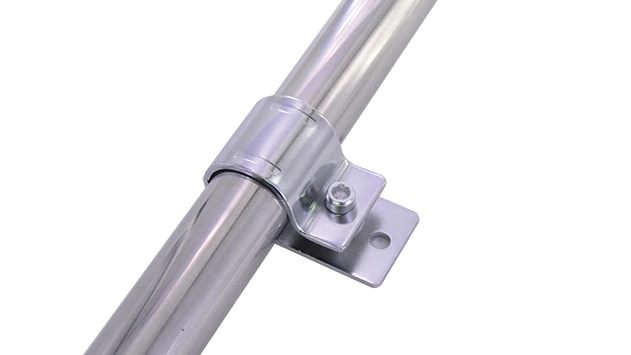
Lean pipe clamp is used for rack system hang monitor or other panel for workbenck, flowrack in production daily use.
Running a small manufacturing business today feels like walking a tightrope. On one side, there's the pressure to keep up with larger competitors—those with deep pockets for fancy equipment and sprawling production lines. On the other, there's the reality of tight budgets, limited floor space, and the constant need to pivot when customer demands shift. If you've ever found yourself staring at a clunky, fixed workbench that can't adapt to a new product line, or a welded flow rack that's collecting dust because it's too rigid to repurpose, you're not alone. These are the daily headaches that eat into profits and keep small manufacturers up at night. But what if there was a solution that didn't require a six-figure investment? Enter lean pipe clamp chrome—a-sounding component that's quietly revolutionizing how small shops approach efficiency, flexibility, and cost control.
What Even Is Lean Pipe Clamp Chrome?
Let's start with the basics. Lean pipe clamp chrome is part of the broader family of lean tube systems—modular building blocks designed to create everything from workbenches and flow racks to material trolleys and assembly lines. At its core, it's a steel pipe coated in chrome (hence the name) that pairs with a variety of joints, brackets, and accessories. Unlike traditional welded steel or bulky aluminum profile setups, these clamps and pipes are lightweight, easy to handle, and—most importantly—completely reconfigurable. Think of it as the "Lego for manufacturers": snap pieces together to build what you need today, then take it apart and rebuild tomorrow when your needs change.
The chrome coating isn't just for looks, either. It adds a layer of durability, resisting rust and scratches in busy shop environments where spills, grease, and constant use are par for the course. And because the system is modular, you're not stuck buying a "one-size-fits-none" prefab workbench. Instead, you pick the pipes, clamps, and accessories that fit your space, your products, and your workflow. For small businesses, this flexibility is a game-changer—but does it actually make financial sense? Let's dive into the numbers.
The Small Manufacturer's Dilemma: Traditional Setups vs. Lean Systems
Before we talk about lean pipe clamp chrome specifically, let's acknowledge the elephant in the shop: traditional manufacturing setups are expensive, rigid, and wasteful. Take a typical scenario: A small electronics assembler needs a workbench. They buy a fixed wooden or steel workbench for $500. Six months later, they land a new client with larger components—suddenly, the workbench is too short, or the surface isn't sturdy enough. Now they're out another $500 for a bigger bench, and the old one sits in a corner, collecting dust. Multiply that by flow racks, material trolleys, and assembly stations, and you're looking at thousands of dollars in sunk costs every year.
Then there's the issue of downtime. Welded steel racks or custom-built aluminum profile workbenches take days (or weeks) to design, order, and install. If your production line needs to shift to a new product, you're either stuck working around an inefficient setup or paying overtime to rush a replacement. For small shops where every hour of downtime eats into profit margins, this is a critical pain point.
Lean systems—powered by components like lean pipe clamp chrome—promise to solve these problems. But as a small business owner, you're probably thinking: "Sure, it sounds great, but isn't all this 'lean' stuff just another buzzword? Where's the proof that it actually saves money?" Let's break it down with a cost-benefit analysis that focuses on the metrics that matter most: initial investment, operational savings, productivity gains, and long-term durability.

Cost-Benefit Analysis: The Numbers Behind Lean Pipe Clamp Chrome
1. Initial Investment: Paying for What You Need (and Nothing More)
Let's start with the upfront cost—the first hurdle for any small business. Traditional fixed workbenches or welded flow racks can range from $300 to $1,000 each, depending on size and material. A basic lean pipe clamp chrome setup, on the other hand, might cost $200–$400 for a similar workbench, including pipes, clamps, joints, and a wooden or metal top. At first glance, that's not a huge difference—maybe even a bit more for the lean option. But here's the catch: with traditional setups, you're paying for a specific configuration. With lean pipe clamp chrome, you're paying for a system that can be reused.
For example, say you buy a lean pipe workbench for $350. Six months later, you need a material trolley instead. Instead of buying a new trolley for $400, you disassemble the workbench, reuse the pipes and clamps, and add a few new joints and casters—spending maybe $100 total. Over time, this "reuse factor" drastically lowers the effective cost per setup. Traditional systems can't compete here: once that fixed workbench is built, it's a workbench forever (or until it's thrown away).
| Aspect | Traditional Fixed Workbench | Lean Pipe Clamp Chrome Workbench |
|---|---|---|
| Initial Cost | $300–$1,000 (one-time use) | $200–$400 (reusable components) |
| Customization | Limited (requires cutting/welding) | Unlimited (no tools needed) |
| Scalability | Low (buy a new one to expand) | High (add pipes/clamps as needed) |
| Maintenance | High (repairs require welding/painting) | Low (replace individual parts) |
| Estimated Lifespan | 3–5 years (if unused, still obsolete) | 10+ years (reconfigured repeatedly) |
2. Operational Savings: Cutting Waste, Not Corners
Lean manufacturing is all about eliminating waste—and waste comes in many forms: wasted space, wasted time, wasted labor. Lean pipe clamp chrome systems attack all three. Let's take space first. Small shops rarely have extra square footage, so making every inch count is critical. A traditional flow rack might be 6 feet wide because that's the "standard" size, even if you only need 4 feet. With lean pipe clamp chrome, you build a flow rack that fits exactly your space—no more, no less. That extra 2 feet? Now you can add a small assembly station or store raw materials, turning dead space into productive space.
Then there's time. Reconfiguring a traditional setup takes days: you might need to hire a welder, wait for parts, or even shut down production. With lean pipe clamp chrome, a two-person team can disassemble a workbench and rebuild it as a material trolley in under an hour—no special tools, no contractors, no downtime. For a small business running on tight deadlines, that's hours of saved labor and avoided delays. Let's quantify that: if your shop pays $25/hour per worker, and reconfiguring a traditional setup takes 8 hours (vs. 1 hour with lean), you're saving $175 per reconfiguration. Do that 4 times a year, and you've saved $700—more than the cost of the initial lean setup.
3. Productivity Gains: When Ergonomics Meet Efficiency
Happy, comfortable workers are productive workers. Traditional workbenches are often "one-height-fits-all," leading to back strain, fatigue, and slower output. Lean pipe clamp chrome systems let you adjust heights, add shelves at eye level, or tilt surfaces to reduce wrist strain—all without tools. A study by the Occupational Safety and Health Administration (OSHA) found that ergonomic workstations can increase productivity by up to 15% by reducing worker fatigue and errors. For a small team of 5 workers each producing 100 units per day, a 15% boost means 75 extra units per day—adding up to 18,750 units per year (assuming 250 workdays). At a $10 profit per unit, that's $187,500 in additional profit—all from a more comfortable workspace.
Then there's material flow. A well-designed lean system uses gravity-fed flow racks (built with lean pipe clamp chrome and roller track) to bring materials directly to the assembly line, eliminating time wasted walking to storage. If a worker currently spends 10 minutes per hour fetching parts, that's 80 minutes per day (over 6 hours per week) of non-value-added time. With a flow rack, that time drops to 2 minutes per hour—saving 64 minutes per day, or nearly 5 hours per week. Over a year, that's 240 hours of recovered labor—enough to produce 2,400 more units (at 10 units per hour) and $24,000 in extra profit.
4. Durability & Longevity: Chrome Plating = Long-Term Value
At this point, you might be thinking: "This all sounds great, but isn't lean pipe clamp chrome just flimsy compared to welded steel or aluminum profile?" It's a fair question. The chrome-plated steel pipes are surprisingly sturdy—they can support up to 300 pounds per linear foot, more than enough for most small manufacturing tasks. And because the system is modular, if a pipe gets bent or a clamp wears out, you replace just that part—no need to junk the entire setup. A traditional welded workbench with a cracked leg? You're either paying to weld it (and hoping it holds) or buying a new one. With lean pipe clamp chrome, a replacement clamp costs $5, and you're back in business in 5 minutes.
The chrome coating also resists corrosion, a common issue in shops with humidity or occasional spills. Uncoated steel racks might start rusting after a year; chrome-plated ones can last 10+ years with minimal maintenance. For small businesses planning for the long haul, that longevity turns a "small purchase" into a multi-year investment.
Real-World Example: A Small Electronics Shop's Success Story
Let's put this all together with a real example (names changed for privacy). "TechCraft," a small electronics assembly shop with 8 employees, was struggling with inefficiency. They had three fixed workbenches, two welded flow racks, and a constant backlog of orders. Their biggest pain points: frequent product changes (they built custom circuit boards for clients), limited space, and high turnover due to worker fatigue.
In 2023, they invested $1,800 in lean pipe clamp chrome components: pipes, clamps, joints, casters, and a few roller track sections. They replaced their three fixed workbenches with two reconfigurable lean workbenches and built a custom flow rack that fit in a previously unused corner. Here's what happened in the first year:
- Setup Time: Reconfiguring for new products dropped from 8 hours to 45 minutes, saving 52 hours of labor ($1,300).
- Productivity: Ergonomic workstations reduced errors by 12% and increased output by 10%, adding $45,000 in revenue.
- Space Savings: The custom flow rack freed up 120 square feet, allowing them to add a third assembly station without expanding their lease.
- Turnover: Worker satisfaction improved, reducing turnover from 30% to 10% (saving $2,000 in hiring/training costs).
Total first-year benefits: $48,300. Initial investment: $1,800. ROI: 2,683%. Not bad for a system of pipes and clamps.
Is Lean Pipe Clamp Chrome Right for Your Small Business?
Lean pipe clamp chrome isn't a magic bullet, but it's a practical, affordable solution for small manufacturers that need flexibility, efficiency, and control over their costs. If you answer "yes" to any of these questions, it's worth considering:
- Do you frequently change product lines or adjust production processes?
- Is floor space limited, and do you struggle to optimize your layout?
- Are workers complaining about uncomfortable workstations or wasted time fetching materials?
- Do you avoid reconfiguring setups because of the cost or downtime involved?
For most small manufacturers, the answer is at least one "yes." And in those cases, lean pipe clamp chrome offers a rare win-win: lower costs, higher productivity, and a workspace that adapts as quickly as your business does. It's not about being "lean" for the sake of trendiness—it's about building a shop that works for you, not against you.
Final Thoughts: Small Changes, Big Results
In the world of manufacturing, it's easy to get caught up in the latest high-tech gadgets or multi-million-dollar automation systems. But for small businesses, the real competitive edge often comes from smarter, simpler solutions. Lean pipe clamp chrome is one of those solutions: unglamorous, affordable, and surprisingly powerful. It won't turn your shop into a Fortune 500 factory overnight, but it will help you work faster, waste less, and keep more money in your pocket—so you can focus on what really matters: growing your business. And in today's tight market, that's the ultimate cost-benefit win.