- Company Articles
- Products and Technology
- Product knowledge
- Small-Scale Manufacturing: Lean Pipe Clamp B for Cost-Effective Setups

Small-Scale Manufacturing: Lean Pipe Clamp B for Cost-Effective Setups
Related Product
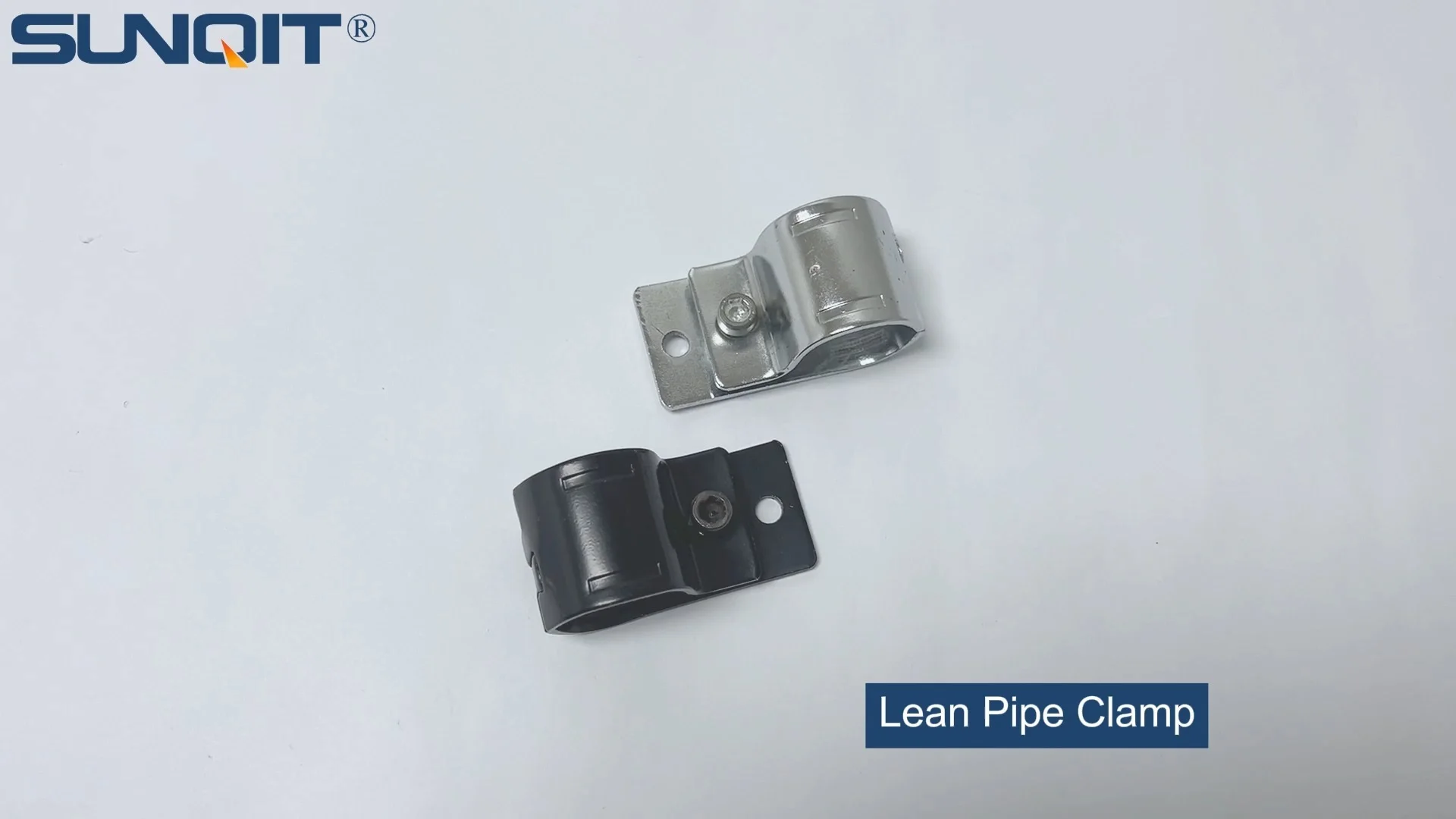
Lean Pipe Clamp
Lean pipe clamp is used for rack system hang monitor or other panel for workbenck, flowrack in production daily use.
How a simple connector is transforming workshops, one clamp at a time
The Small Manufacturer's Struggle: Doing More with Less
Running a small manufacturing shop—whether you're cranking out custom auto parts, assembling electronics, or crafting artisanal goods—often feels like solving a puzzle with half the pieces. You've got a tight budget, limited floor space, and a constant need to adapt: a new product line, a rush order, or a sudden shift in customer demand. Traditional workbenches, rigid metal racks, and fixed conveyor systems? They're like trying to fit a square peg in a round hole. They cost a fortune, take forever to set up, and if your needs change next month? You're stuck staring at a expensive, immovable obstacle.
What if there was a way to build workspaces, racks, and production lines that are as flexible as your business? Something that doesn't require a team of engineers or a second mortgage to install? Enter Lean Pipe Clamp B —a humble but mighty component that's quietly revolutionizing how small manufacturers build, adapt, and grow. It's not just a clamp; it's a ticket to leaner operations, lower costs, and a shop that can keep up with whatever comes next.
Lean Manufacturing 101: It's Not Just for Big Factories
You've probably heard the term "lean manufacturing" thrown around—usually in the context of massive auto plants or tech giants with endless resources. But lean principles aren't just for the big players. At its core, lean is about one thing: eliminating waste . Waste of time. Waste of space. Waste of money. For small shops, that's not just a buzzword—it's survival.
Think about it: If your workbench is too low, your team wastes time bending over. If your material rack is disorganized, you're hunting for parts instead of building products. If you have to tear down and rebuild a whole workstation because you're launching a new item, that's days of lost production. Lean manufacturing says: Build systems that adapt, not systems that restrict .
And that's where lean pipe systems come in. Lightweight, modular, and surprisingly tough, they're the backbone of flexible manufacturing. But even the best pipes are just pieces without the right connector. That's where Lean Pipe Clamp B steps up.

What Are Lean Pipe Systems, Anyway?
Let's start with the basics. Lean pipes—also called "lean tubes"—are exactly what they sound like: hollow tubes, usually made of aluminum, stainless steel, or coated steel, designed to be lightweight but strong. They're the building blocks of everything from workbenches to material racks to flow racks. But what makes them "lean" is their modularity. Unlike welded steel or fixed wooden structures, lean pipes connect with simple joints and clamps, so you can assemble, disassemble, and reconfigure them in minutes.
Imagine building with giant Tinkertoys, but for adults who need their creations to hold heavy tools, boxes of parts, or even entire assembly lines. That's lean pipe systems in a nutshell. And at the heart of that system? Connectors. Lots of them. But not all connectors are created equal. Some are flimsy, some are overcomplicated, and some… well, some are Lean Pipe Clamp B .

Meet Lean Pipe Clamp B: The Connector That Does the Heavy Lifting
Let's get up close with Lean Pipe Clamp B. At first glance, it might not look like much—a small, often metallic clamp with a few bolts and a cleverly designed grip. But don't let its simplicity fool you. This little connector is the reason lean pipe systems work so well for small shops.
So, what makes Lean Pipe Clamp B special? Let's break it down:
- Simplicity: No fancy tools, no welding, no engineering degree required. Tighten a few bolts, and it locks two pipes together securely. Even if you're not the handiest person in the shop, you can figure it out in 5 minutes.
- Strength: Despite its lightweight design, Lean Pipe Clamp B is built to hold. Whether you're mounting a shelf on a workbench or building a rack to store heavy boxes, it won't budge—until you want it to.
- Flexibility: Need to adjust the height of your workbench? Loosen the clamp, move the pipe, retighten. Done. Launching a new product that needs a wider work surface? Take apart the old setup and rebuild it in an hour. No need to buy a whole new bench.
- Cost: Compared to custom metal fabrication or pre-built industrial workbenches, Lean Pipe Clamp B (and the pipes it connects) is dirt cheap. You can build a basic workbench for a fraction of what a traditional one costs, and if you need to change it later? You're not throwing money away—just reusing the parts.
Think of it as the Swiss Army knife of workshop connectors. It's not just holding pipes together; it's holding your operation together, letting you pivot when you need to without breaking the bank.

Building Blocks: How Lean Pipe Clamp B Works with Other Components
Lean Pipe Clamp B rarely works alone. It's part of a ecosystem of pipes, joints, and accessories that turn a pile of parts into a fully functional workspace. Let's take a look at the key players and how they team up with our star connector:
| Component | What It Does | How Lean Pipe Clamp B Helps |
|---|---|---|
| Lean Pipe (Aluminum or Steel) | The "bones" of your setup—straight tubes that form the structure of workbenches, racks, and frames. | Clamp B securely joins pipes at angles (90°, 45°, or even custom angles) to build stable frames without welding. |
| Lean Pipe Workbench | A flat, sturdy surface for assembly, packaging, or testing products. | Clamp B connects the pipe legs to the tabletop frame, letting you adjust height or width as needed. |
| Flow Rack | A sloped rack with rollers that lets materials "flow" to workers (think: bins of screws or parts sliding down to the assembly line). | Clamp B attaches the roller tracks to the rack frame, ensuring the slope is just right for smooth, controlled movement. |
| Aluminum Profile | Thicker, more rigid aluminum rails used for heavier-duty setups or when you need extra stability. | Clamp B can grip aluminum profiles just as easily as lean pipes, expanding your design options. |
| Casters | Wheels that attach to the bottom of workbenches or racks, making them mobile. | Clamp B secures caster mounts to the pipe legs, so you can roll your workstation across the shop without it wobbling. |
The magic here is that none of these components are fixed. You could build a lean pipe workbench today, take it apart next week, and use the same pipes and Clamp B connectors to build a flow rack. It's like having a workshop that can rearrange itself to fit whatever project lands on your desk.
Real-World Impact: Small Shops, Big Results
Enough theory—let's talk about how Lean Pipe Clamp B actually changes the game for small manufacturers. Here are two fictional but realistic case studies of shops that swapped rigid setups for lean systems, with Clamp B as their secret weapon:
Case Study 1: The Toy Maker Who Needed to Pivot
Before: Maria runs a small toy company, "Tiny Treasures," out of a 500 sq. ft. garage. She started with a single product: wooden puzzle blocks. To assemble them, she bought a pre-built wooden workbench for $800. It was sturdy, but when she launched a new line of stuffed animals six months later, the bench was too low for sewing and too narrow for laying out fabric. She considered buying a second bench, but that would cost another $800 and take up precious space.
After: Maria stumbled on lean pipe systems and invested $350 in aluminum lean pipes, a handful of Lean Pipe Clamp B connectors, and a plywood tabletop. With Clamp B, she built a workbench that adjusted from 30" to 40" in height (perfect for both puzzles and sewing) and could expand from 2ft to 4ft wide by adding a few extra pipes. When the holiday rush hit and she needed a temporary packing station? She disassembled half the workbench, used the pipes and Clamp B to build a small packing table, then put it all back when things slowed down. Total cost for the flexible setup? Less than the single rigid bench. Space saved? Enough to add a storage rack (also built with Clamp B, of course).
Case Study 2: The Electronics Assembler Fighting Waste
Before: Raj's shop, "TechBits," assembles custom circuit boards for local startups. His biggest headache? Material handling. Parts were stored in bins on a fixed metal shelf across the room, so his two employees spent 20 minutes every hour walking back and forth to grab resistors, capacitors, and chips. He looked into conveyor systems, but quotes started at $5,000—way out of his budget.
After: Using Lean Pipe Clamp B, Raj built a simple flow rack from aluminum lean pipes, roller tracks, and a few pieces of plywood. The rack sloped gently from the storage shelf down to each assembly station, with bins of parts riding on the rollers. Clamp B held the roller tracks in place, ensuring the slope was steep enough to move the bins but not so steep they slid too fast. Now, parts roll right to his employees, cutting walk time by 90%. Total cost? Under $400. And when a startup ordered a larger circuit board that needed bigger bins? Raj just adjusted the roller tracks with Clamp B—no new rack needed.
These aren't isolated stories. Small manufacturers across industries are discovering that Lean Pipe Clamp B isn't just a tool—it's a mindset shift. It's about building for change , not just for today's needs.
Installation Made Simple: You Don't Need to Be a Pro
One of the biggest myths about lean pipe systems is that they require special skills or fancy tools. Let's bust that right now. Setting up a basic workbench with Lean Pipe Clamp B is easier than assembling a bookshelf from a big-box store (and way less likely to leave you with extra screws). Here's a quick step-by-step to prove it:
- Gather your parts: 4 aluminum lean pipes (for legs, say 36" long), 4 shorter pipes (for the tabletop frame, 24" each), Lean Pipe Clamp B connectors (8-10, depending on design), a plywood or metal tabletop, and a hex key (the only tool you'll need).
- Build the tabletop frame: Use Clamp B to connect the shorter pipes into a rectangle (two 24" pipes on the sides, two on the ends). Tighten the bolts just enough to hold the shape—you can tweak later.
- Add the legs: Attach the 36" pipes to each corner of the frame using Clamp B. Make sure they're straight (a level helps, but even a quick eye check works for small setups).
- Secure the tabletop: Lay the plywood on top of the frame and drill small holes (or use pipe clamps) to hold it in place. No need for heavy-duty hardware—Lean Pipe Clamp B's already holding the frame steady.
- Adjust and tighten: Stand back, make sure the bench is level, and give each Clamp B bolt a final tighten with the hex key. Done. Total time? 30 minutes, tops.
That's it. No welding, no power tools, no instruction manual with 50 confusing diagrams. Just a few pipes, some Clamp B connectors, and a hex key. And if you mess up? Loosen the clamps, adjust, and try again. It's that forgiving.
Cost Savings: Penny Wise, Pound Foolish? Not Here.
Let's talk numbers. You might be thinking, "Sure, lean pipes sound great, but isn't that initial cost still more than just nailing some 2x4s together?" Fair question. Let's break down the math for a small shop that needs a workbench, a storage rack, and a flow rack:
- Traditional setup: Pre-built workbench ($800) + metal storage rack ($300) + fixed flow rack ($500) = $1,600. And if you need to change any of it in a year? You're buying new, so that $1,600 is gone.
- Lean setup with Lean Pipe Clamp B: Aluminum pipes ($150) + Clamp B connectors ($50) + roller tracks for flow rack ($100) + plywood/secondhand tabletop ($50) = $350. If you need to reconfigure next year? You reuse 90% of the parts. Maybe spend $50 on extra pipes or clamps. Total for two years: $400 vs. $3,200 (if you'd replaced traditional setups twice). That's an 87% savings.
And that's not counting the hidden costs of rigid setups: the time wasted walking to get parts, the lost production when you can't adapt to a rush order, or the missed opportunities because you can't afford to experiment with a new product line. Lean Pipe Clamp B doesn't just save you money upfront—it keeps saving you money every month by making your shop smarter, faster, and more adaptable.
Beyond the Basics: Accessories That Boost Functionality
Once you've got the hang of Lean Pipe Clamp B, you can start adding accessories to supercharge your setup. Here are a few fan favorites among small manufacturers:
- Casters: Attach these wheeled wonders to the bottom of your lean pipe workbench or rack, and suddenly you've got a mobile workstation. Perfect for moving tools to the job site or reconfiguring your floor plan in minutes.
- Roller Tracks: These plastic or metal tracks with small wheels turn any rack into a flow rack, letting materials glide to where they're needed. Pair them with Clamp B to adjust the angle for different weights (heavier bins need a steeper slope).
- Aluminum Profile Accessories: If you need extra rigidity (say, for holding heavy machinery), swap some lean pipes for aluminum profile. Clamp B works with these too, giving you the best of both worlds: strength and flexibility.
- Tool Hooks and Holders: Drill a few holes in a scrap piece of wood, attach it to your workbench frame with Clamp B, and you've got a custom tool holder. No more hunting for your wrench or screwdriver.
The best part? Most of these accessories are dirt cheap and easy to add later. Start with the basics, then upgrade as your needs grow. Lean Pipe Clamp B makes it easy to layer in new features without rebuilding from scratch.
Future-Proofing Your Shop: Ready for Whatever Comes Next
Small manufacturing isn't static. One year, you're making 100 units a month; the next, you're up to 500. Or you switch from plastic parts to metal, or from small components to larger assemblies. Rigid setups lock you into your current state, but lean pipe systems with Lean Pipe Clamp B? They grow with you.
Need more workspace? Add a few extra pipes and Clamp B connectors to expand your workbench. Launching a new product that needs a taller rack? Swap out the short legs for longer pipes. Moving to a bigger shop? Disassemble everything, load it in a van, and rebuild in a day. It's like having a workshop that can shrink, grow, and transform—all without costing you a fortune.
And let's not forget about continuous improvement—the heart of lean manufacturing. With Lean Pipe Clamp B, you can experiment: Try a new flow rack design, adjust your workbench height to reduce worker fatigue, or build a temporary testing station for a prototype. If it works, keep it; if not, take it apart and try again. No risk, no waste, just progress.
Final Thoughts: Small Changes, Big Impact
At the end of the day, Lean Pipe Clamp B is more than a connector. It's a tool that puts small manufacturers back in control. It lets you stop fighting your workspace and start using it—adaptively, affordably, and without the stress of rigid, one-size-fits-all solutions.
So if you're tired of watching your budget disappear into fixed equipment that can't keep up with your business, or if you're ready to turn your shop into a flexible, efficient space that grows with you, give lean pipe systems a look. And when you do, keep an eye on Lean Pipe Clamp B—the unsung hero that's quietly transforming small-scale manufacturing, one clamp at a time.
Your shop, your rules, your budget. With Lean Pipe Clamp B, it's all possible.