- Company Articles
- Products and Technology
- Solution
- Small-Scale Production: Scaling Up with Modular Aluminum Workbench C

Small-Scale Production: Scaling Up with Modular Aluminum Workbench C
Related Product
Aluminum Workbench C
aluminum-tube-workbench-is-more-flexible-and-durable,-compared-with-traditional-pe/abs-coated-steel-tube.-it-is-easy-to-assemble,-anti-corrosion,-rust-protection,-and-recycle-use-after-disassemble.
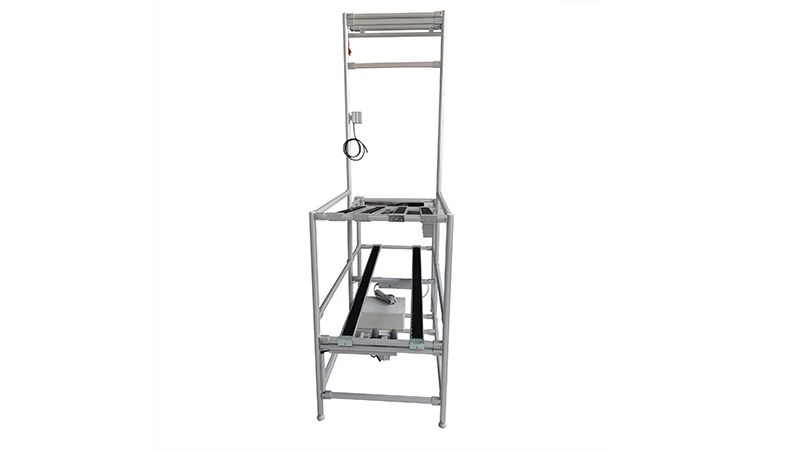
How a flexible, adaptable workbench is transforming the way small manufacturers grow
Walk into any small manufacturing shop, and you'll likely find the same quiet struggle playing out: the dream of growth bumping up against the reality of limited space, rigid equipment, and the need to pivot quickly. Whether you're assembling electronics, packaging small parts, or building custom components, the workbench is the heart of your operation. But what if that heart is too stiff to keep up with your business's pulse? For years, small-scale producers have made do with clunky, one-size-fits-all workbenches—heavy, hard to move, and nearly impossible to reconfigure when product lines change or demand spikes. That's where modular solutions like the Aluminum Workbench C come in. Designed with the chaos of small production in mind, this workbench isn't just a piece of furniture; it's a growth partner. Let's dive into how it's redefining what "scaling up" means for businesses that don't have the luxury of endless square footage or deep pockets.
The Problem with Traditional Workbenches: Why "One-Size-Fits-All" Fails Small Shops
Let's start with the obvious: traditional workbenches are built for stability, not adaptability. Think about the wooden or steel benches you might find in a decades-old factory—solid, heavy, and bolted to the floor. They work great… until they don't. For small manufacturers, the issues start early and compound quickly.
First, there's the space trap. A fixed bench takes up prime real estate, and if your product line shifts—say, from assembling 6-inch widgets to 12-inch gadgets—suddenly that bench is either too small or has wasted space. You can't shrink it, and adding a second bench means squeezing it into an already tight area, slowing down workflows as employees navigate around obstacles.
Then there's downtime. When you need to retool for a new project, traditional benches often require disassembly with power tools, or worse, replacement entirely. A week spent waiting for a new bench to arrive or a day lost to rearranging heavy equipment isn't just frustrating—it's costly. For a team of 10, even a single day of downtime can mean $5,000 or more in lost productivity, not counting the rush fees to meet delayed orders.
Durability is another double-edged sword. Steel benches rust; wooden ones warp. Over time, they degrade, but replacing them means another big expense. And let's not forget ergonomics. A bench that's too high for one worker and too low for another leads to fatigue, mistakes, and even injuries—hardly the foundation for scaling up.
In short, traditional workbenches are built for a world where production lines stay the same for years. But small businesses don't live in that world. They pivot, experiment, and grow in fits and starts. What they need is a workbench that can keep up.
Enter Modular Aluminum Workbench C: A Game-Changer for Adaptive Production
Modular Aluminum Workbench C isn't just a upgrade—it's a rethink of what a workbench should be. At its core is a simple idea: your workspace should adapt to you, not the other way around. Built from lightweight yet sturdy aluminum extrusion profile, this bench is designed to be reconfigured, expanded, or repurposed with minimal effort. Let's break down what makes it different.
First, the material: aluminum extrusion profile. Unlike steel, aluminum is light enough for two people to move (no forklift needed) but strong enough to support heavy tools, parts bins, and equipment. It's also resistant to rust and corrosion, so it holds up in messy environments—think oil, coolant, or dust. And because it's extruded, the profile comes with built-in T-slots—those handy grooves that run along the length of the bench's frame. These slots are the secret sauce: they let you attach accessories like tool hooks, shelves, or even small conveyor belts without drilling holes or welding. Need a new shelf? Slide a bracket into the T-slot, tighten a screw, and you're done. No tools, no hassle.
Workbench C (officially named "Workbench E (single deck-without caster)" in some catalogs, though we'll stick with "Workbench C" for simplicity) is also modular by design. It starts as a single deck, but you can add shelves, side extensions, or even stack multiple units if ceiling height allows. Want to turn it into a mobile station? Add casters (another T-slot accessory) and roll it to where it's needed. Need to split it into two smaller benches for a new project? Disassemble the joints, rearrange the aluminum profile sections, and you're back to work in under an hour.
Perhaps most importantly, it's built for small budgets. Aluminum extrusion profile is affordable compared to custom steel fabrication, and because you only buy what you need (and can add on later), there's no over-investing in space or features you don't use yet. It's scalability without the sticker shock.

Key Features of Aluminum Workbench C: Built for the Way Small Shops Actually Work
Let's get specific. What exactly makes Workbench C stand out in a crowded market of "modular" tools? Here are the features that matter most for small-scale production:
1. Lightweight but Heavy-Duty Aluminum Profile
The bench's frame is made from 2020 or 3030 aluminum extrusion profile—industry standards for strength and versatility. A 3030 profile (30mm x 30mm) can support up to 200 kg per linear meter, which means you can load it with power tools, metal parts, or even a small 3D printer without worrying about bending or warping. Yet, the entire bench (without accessories) weighs just 35-45 kg, so two people can move it across the shop in minutes. Compare that to a steel bench of the same size, which might weigh 150 kg or more—you'd need a pallet jack just to shift it an inch.
2. T-Slot Compatibility with Endless Aluminum Profile Accessories
The T-slots in the aluminum extrusion profile aren't just for show—they're a gateway to customization. Aluminum profile accessories like tool holders, LED light bars, bin rails, and monitor mounts slide right into these slots and lock in place with thumb screws. Need a place to hang pliers and screwdrivers? Add a tool rail. Want to keep parts organized? Snap in a set of plastic bins. Even specialized gear like ESD-safe mats (critical for electronics assembly) can be secured directly to the bench via T-slot brackets. The best part? These accessories are universal—mix and match from different suppliers, or swap them between benches as needs change.
3. Tool-Free Assembly and Reconfiguration
Forget wrenches, drills, or welding torches. Workbench C uses friction-fit joints and thumb screws to hold its aluminum profile frame together. Unbox it, align the profiles, slide in the joints, and tighten—you can have a basic setup ready in under 30 minutes. When you need to reconfigure, just loosen the screws, rearrange the sections, and retighten. A team of two could completely redesign the bench's layout (adding a shelf, extending the length, etc.) in an hour, compared to half a day for a traditional bench.
4. Lean System Integration
Lean manufacturing is all about eliminating waste—whether it's time, space, or motion. Workbench C is a lean system dream. Its modularity means you can design workflows that minimize unnecessary movement: place tools within arm's reach, position bins for "first in, first out" part flow, or even integrate roller tracks (another aluminum profile accessory) to feed parts directly to the bench. For example, a small electronics assembler using Workbench C might mount a roller track above the bench to slide circuit boards from the soldering station to the testing area, cutting down on walking time by 30%.
5. Durable, Low-Maintenance Design
Aluminum doesn't rust, and the extrusion profile's smooth surface is easy to wipe clean—no more scrubbing oil stains or paint splatters from wooden benches. Even the accessories, like plastic bin rails or steel tool hooks, are built to withstand daily use. With basic care (occasional tightening of screws, wiping down surfaces), Workbench C can last 10+ years, outliving traditional benches that might warp or rust after 3-5 years.

Traditional vs. Modular: How Workbench C Stacks Up
| Feature | Traditional Steel/Wood Bench | Aluminum Workbench C |
|---|---|---|
| Setup Time | 4-6 hours (including bolting to floor) | 20-30 minutes (tool-free assembly) |
| Reconfiguration Cost | $500+ (new parts, labor, downtime) | $0 (reuse existing parts, 1-hour labor) |
| Weight (Basic Model) | 150-200 kg | 35-45 kg |
| Lifespan | 3-5 years (rust, warping) | 10+ years (aluminum resists corrosion) |
| Space Efficiency | Fixed size; 20-30% wasted space on average | Adjustable; 5% or less wasted space |

Real-World Impact: How a Small Electronics Shop Boosted Output by 35% with Workbench C
Numbers tell a story, but real-life examples bring it home. Let's meet Precision Circuits, a 12-person electronics manufacturer in Ohio that builds custom circuit boards for medical devices. Before Workbench C, they were stuck in a cycle of inefficiency.
"We were running three product lines on traditional steel benches, and every time a client changed their design—even slightly—we'd spend a day rearranging," says Maria, Precision's production manager. "Our biggest issue was space: we had two benches taking up 80 sq ft, but half the surface area was empty because the parts bins were too big for the new, smaller boards we were making. We couldn't add a third bench without blocking the fire exit, so we were cramming workers into corners, and mistakes started happening."
In 2024, Maria's team switched to three Aluminum Workbench C units. Here's what changed:
- Faster reconfigurations: A design change that used to take 8 hours (disassembling the steel bench, moving tools, rerouting cables) now takes 45 minutes. "We just slide the T-slot shelves to the left, add a smaller bin rail, and we're back to building," Maria says.
- Space savings: By stacking shelves on two of the Workbench C units, Precision freed up 25 sq ft—enough to add a quality control station. "We used to have inspectors checking boards on a folding table in the break room; now they're right next to the assembly line, catching issues faster," Maria notes.
- Reduced downtime: Annual downtime from retooling dropped from 40 hours to 12 hours, translating to ~$14,000 in saved labor costs (based on $35/hour average wage).
- Higher output: With smoother workflows and less wasted motion, the team now assembles 35% more circuit boards per week—without adding staff.
"The best part? We didn't have to take out a loan to afford it," Maria adds. "We bought one bench first, saw the difference, then added two more over six months. It's scaling at our pace, not the other way around."
Beyond the Bench: Accessories That Turn Workbench C into a Complete System
A workbench is only as good as its ability to grow with you, and Workbench C's real power lies in its ecosystem of aluminum profile accessories. These add-ons transform a basic bench into a tailored workstation for almost any task:
Casters for Mobility
Add locking casters (via T-slot brackets) to turn Workbench C into a mobile station. Need to move it to the welding area for a day? Unlock the wheels and roll—no forklift required. Precision Circuits uses this feature to bring the bench to where parts are stored, cutting down on walking time.
Roller Tracks for Material Flow
Mount aluminum roller tracks above or beside the bench to slide parts from one station to the next. For example, a furniture manufacturer might use roller tracks to feed wooden panels from the cutting bench to the assembly Workbench C, reducing the need to carry heavy materials by hand.
ESD-Safe Add-Ons
For electronics or semiconductor work, ESD (electrostatic discharge) protection is critical. Workbench C can be outfitted with ESD-safe mats, grounding clips, and even ESD-rated bin rails—all attached via T-slots. This turns the bench into an ESD workstation without the cost of a specialized, fixed setup.
Shelving and Tool Racks
Stackable aluminum shelves double or triple storage space, while overhead tool racks keep frequently used gear (drills, screwdrivers, tape measures) within arm's reach. A mechanic's shop might use this to organize tools by project, so switching from car repairs to motorcycle tune-ups takes seconds, not minutes.
Getting Started: How to Bring Workbench C to Your Shop
Ready to make the switch? Here's a step-by-step guide to implementing Aluminum Workbench C in your production line:
1. Audit Your Needs
Start by mapping your current workflow: What tasks happen at the bench? How much space do they require? What tools or materials need to be within reach? Note pain points—like employees walking 20 feet to grab parts or struggling with a bench that's too low. This will help you design the right Workbench C setup.
2. Choose the Right Size and Accessories
Workbench C comes in standard lengths (4ft, 6ft, 8ft), but you can combine profiles to make custom sizes. For most small shops, a 6ft bench with a single shelf and caster wheels is a good starting point. Add accessories based on your audit: roller tracks if you need material flow, ESD mats for electronics, etc.
3. Assemble and Test
Set aside 30 minutes for assembly—no tools needed, but having a second pair of hands helps. Once built, run a test batch: have an employee simulate a full production cycle to see if the layout works. Adjust as needed (move a shelf, add a tool hook) before fully integrating it into your line.
4. Train Your Team
Teach employees how to reconfigure the bench: loosening T-slot screws, swapping accessories, and adjusting heights. The more comfortable they are with changes, the more likely they'll suggest improvements—like adding a bin rail for a new part or repositioning the bench to cut down on walking.
5. Iterate
Modular design thrives on iteration. Check in after a month: What's working? What's not? Add or swap accessories as needed. Maybe you realize a roller track would help, or that a second shelf cuts down on clutter. The goal is to keep refining until the bench feels like an extension of your team.
The Future of Small-Scale Production is Modular
Small manufacturers don't need to think small—they just need tools that grow with them. Aluminum Workbench C isn't just a workbench; it's a statement that your business deserves flexibility, efficiency, and scalability without the enterprise-level price tag. By swapping rigid, outdated workspaces for modular solutions built on aluminum extrusion profile and lean system principles, you're not just upgrading your shop—you're future-proofing it.
Imagine a production floor where a new product line doesn't mean a new bench, where space constraints dissolve because you can reconfigure on the fly, and where downtime is measured in minutes, not days. That's the reality Workbench C delivers. For small-scale producers ready to stop making do and start scaling up, the choice is clear: modular, adaptable, and built for the way you actually work.
So, what are you waiting for? Your bench shouldn't hold you back—it should push you forward.