- Company Articles
- Products and Technology
- Application Cases
- Small-Scale vs Large-Scale All Direction Roller Track Applications

Small-Scale vs Large-Scale All Direction Roller Track Applications
Related Product
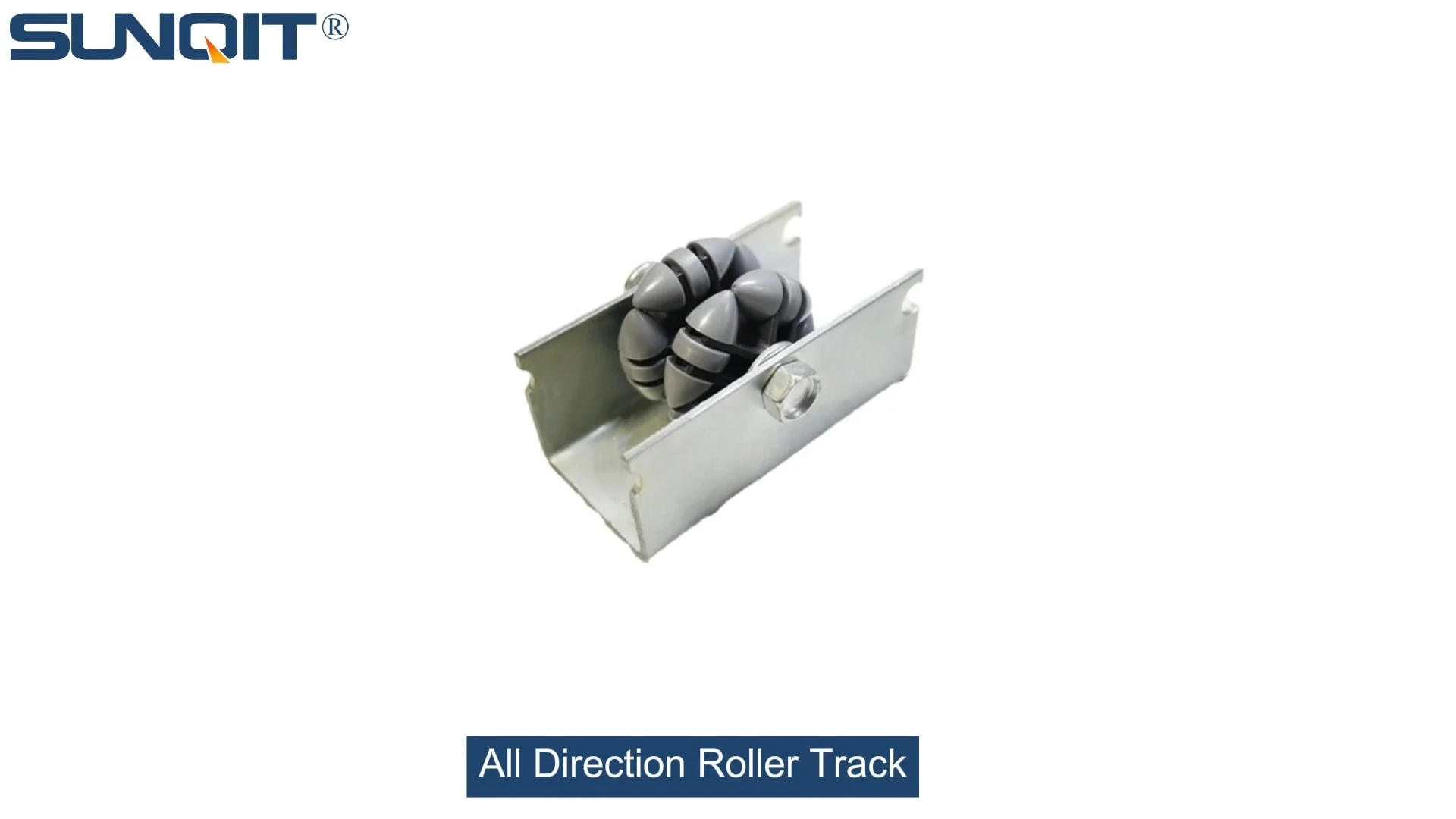
All Direction Roller Track
All direction roller track made of steel frame and multiple direction move wheel which will make boxes are always in contact with the rollers, reducing jams and enhancing flow reliability.
When it comes to optimizing material handling and workflow efficiency, few tools are as versatile as all direction roller tracks. But how do you decide whether a small-scale setup or a large-scale system is right for your operation? Let's dive into the details, real-world examples, and key factors that set these two applications apart—plus how they align with lean principles that keep your processes flexible and future-ready.
Understanding All Direction Roller Tracks: The Basics
Before we jump into the comparison, let's make sure we're on the same page about what all direction roller tracks actually are. These systems consist of small, rotating balls or rollers mounted on a flat surface, allowing materials, components, or even entire workpieces to glide smoothly in any direction—forward, backward, left, right, or diagonally. Unlike fixed-direction conveyors, they offer 360-degree movement, making them a go-to for spaces where agility and adaptability matter most.
What makes them so valuable? Think about the time wasted when operators have to lift, twist, or reposition heavy items manually. All direction roller tracks eliminate that friction, reducing physical strain and speeding up transfer times. And because they're often modular, they fit into both tight workstations and sprawling production lines—hence the need to distinguish between small-scale and large-scale uses.
Small-Scale All Direction Roller Track Applications: Precision in Compact Spaces
Small-scale applications are all about targeted efficiency in confined or specialized environments. These setups typically serve individual workstations, small assembly cells, or localized material transfer points. They're not meant to handle massive volumes or ultra-heavy loads, but they excel at making day-to-day tasks smoother, safer, and more consistent.
Where Do Small-Scale Systems Shine?
Let's look at industries where small-scale all direction roller tracks are game-changers:
Medical Device Assembly
In medical manufacturing, precision is non-negotiable. Imagine assembling intricate surgical tools or diagnostic equipment—each component is small, delicate, and often requires multiple steps at a single workstation. A small all direction roller track integrated into a lean pipe workbench allows technicians to slide parts effortlessly between stations without jostling or misalignment. For example, a lab testing kit assembly line might use a 2ft x 3ft roller track surface to move component trays from sorting to packaging, cutting down on manual handling errors by 30% or more.
Electronics and 3C Production
Consumer electronics—think smartphones, laptops, or smartwatches—demand tiny, precise parts. Small-scale roller tracks here often pair with ESD (electrostatic discharge) workbenches to protect sensitive components. A technician assembling circuit boards can glide a PCB panel across the roller track to access different tools or testing stations without lifting, reducing the risk of static damage and repetitive strain injuries. These setups are usually custom-built to fit the exact dimensions of the workspace, with roller tracks cut to size and mounted directly onto the workbench surface.
Small-Batch Manufacturing
Businesses producing custom machinery parts or low-volume specialty items rarely need massive conveyor systems. Instead, a small all direction roller track setup lets them handle variable workflows. A machine shop making custom gears, for instance, might use a roller track table to move raw materials from the lathe to the inspection station and then to packaging—all without reconfiguring the entire layout. Since these setups are lightweight and easy to install, they can be rearranged in hours if a new project requires a different workflow.
Key Traits of Small-Scale Roller Track Systems
So, what defines a small-scale application? Here are the hallmarks:
- Compact Size: Typically 1m² or smaller, designed to fit on workbenches, tables, or within tight cells.
- Light to Medium Loads: Handling 50kg to 200kg max—enough for component trays, small assemblies, or tools.
- Manual or Semi-Automatic: Often operated by hand, with minimal power integration (if any).
- Quick Setup & Reconfiguration: Modular design means you can add or remove sections with basic tools, no heavy machinery needed.
- Cost-Effective: Lower upfront investment compared to large systems, making them accessible for small businesses or departments with limited budgets.

Large-Scale All Direction Roller Track Applications: Powering High-Volume Production
On the flip side, large-scale all direction roller track applications are the workhorses of high-volume manufacturing and logistics. These systems span entire production lines, connect multiple workstations, or serve as hubs in warehouses and distribution centers. They're built to handle heavier loads, constant use, and integration with other automated systems like conveyors and robotic arms.
Industries Thriving with Large-Scale Roller Tracks
Large-scale setups are indispensable in sectors where speed, volume, and synchronization are critical:
Automotive Manufacturing
Car production lines are a masterclass in large-scale coordination. From chassis assembly to final inspection, vehicles (or their subassemblies, like engines or door panels) need to move seamlessly between stations. All direction roller tracks here are often part of a larger flow rack or conveyor system. For example, a truck assembly plant might use a 100ft-long roller track section to transfer vehicle frames between welding, painting, and upholstery stations. Since frames are heavy (500kg+), the roller tracks are reinforced with steel frames and high-load bearings, ensuring smooth movement even under constant stress.
Warehouse and Distribution Centers
E-commerce boom has made warehouse efficiency more critical than ever. Large-scale all direction roller tracks are often used in sorting areas or cross-docking zones, where packages need to be rerouted quickly. Imagine a 50ft x 30ft roller track platform in a fulfillment center: incoming packages arrive via conveyor, slide onto the roller track, and are directed to different outbound trucks by operators or automated guides. The 360-degree movement lets workers sort 20% more packages per hour compared to fixed conveyors, as they can redirect items without waiting for the system to reset.
Appliance Production
Manufacturing refrigerators, washing machines, or ovens involves moving large, bulky components—think stainless steel drums or glass door panels. Large-scale roller tracks here are often paired with lift tables or tilters to adjust heights as needed. A dishwasher assembly line might use a series of interconnected roller track sections to move the main cabinet from the frame station to the motor installation station, then to quality control. The modularity means if production shifts to a new model with a different cabinet size, the roller tracks can be extended or reconfigured without replacing the entire system.
Key Traits of Large-Scale Roller Track Systems
Large-scale applications stand out for these reasons:
- Expansive Layouts: Covering tens or hundreds of square meters, often spanning multiple production zones.
- Heavy-Duty Loads: Handling 200kg to several tons, depending on the reinforcement and roller design.
- Automation Integration: Paired with sensors, motors, or robotic arms for semi or fully automated operation.
- Structural Reinforcement: Built with industrial-grade materials like thick steel frames or aluminum extrusions for durability.
- Long-Term ROI Focus: Higher upfront costs, but designed to last decades with proper maintenance, offering savings through increased throughput.

Small-Scale vs. Large-Scale: A Side-by-Side Comparison
To really see how these two applications stack up, let's break down the key factors that matter most when choosing between them:
| Factor | Small-Scale Applications | Large-Scale Applications |
|---|---|---|
| Primary Goal | Optimize individual workstations or small cells | Streamline high-volume, end-to-end workflows |
| Typical Industry Focus | Medical devices, electronics (3C), small parts assembly | Automotive, appliances, warehousing, heavy machinery |
| Load Capacity | 50kg – 200kg per section | 200kg – 5,000kg+ per section |
| Installation Complexity | Simple; can be installed by in-house teams in hours | Complex; often requires professional installation and site prep (e.g., floor leveling) |
| Flexibility & Reconfiguration | Highly flexible; easy to disassemble and rearrange for new tasks | Flexible but requires more planning; modular sections can be added/removed, but full reconfigurations take time |
| Cost Structure | Lower upfront costs ($500 – $5,000); payback in months | Higher upfront costs ($10,000 – $100,000+); payback in years, but higher long-term savings |
| Maintenance Needs | Minimal; occasional cleaning and lubrication of rollers | Regular maintenance; inspections of bearings, motors, and structural components |
| Lean Principle Alignment | Focus on "sustainable improvement" at the workstation level | Focus on "reusable systems" and waste reduction in large-scale processes |

Choosing the Right Scale: It's About Your Unique Workflow
So, how do you decide whether small-scale or large-scale all direction roller tracks are right for your operation? Start by asking these questions:
- What's the size of the items you're moving? Small components = small-scale; large assemblies or heavy goods = large-scale.
- How much space do you have? Tight workbenches or small cells = small-scale; open warehouses or long production lines = large-scale.
- What's your production volume? Low to medium volume (hundreds per day) = small-scale; high volume (thousands per day) = large-scale.
- Do you need flexibility to change workflows often? Frequent changes = small-scale (easier to reconfigure); stable, long-term processes = large-scale.
- What's your budget timeline? Quick wins with lower costs = small-scale; long-term investment with higher throughput = large-scale.
And remember: it's not always an either/or choice. Many operations use both. A car manufacturer might have large-scale roller tracks for moving vehicle bodies and small-scale ones on the dashboard assembly workbench. A medical device plant could use small-scale tracks for component assembly and a mid-sized roller track system for moving finished products to packaging. The key is to align each system with the specific needs of that workflow segment.
The Lean Advantage: Why Modularity Matters for Both Scales
At the heart of both small and large-scale applications is the lean principle of "reusable," (sustainable improvement). All direction roller tracks, by nature, embody this—they're not one-and-done systems. Small-scale tracks can be expanded by adding more sections as your team grows. Large-scale systems can be reconfigured when product lines change, avoiding the waste of tearing out and replacing fixed infrastructure.
Take, for example, a 3C manufacturer that starts with small-scale roller tracks on 10 workbenches for phone assembly. As demand grows, they can connect those workbenches with larger roller track sections and even integrate a conveyor system—all without scrapping the original investment. That's the power of modular, lean solutions: they grow with you, adapting to new challenges instead of becoming obsolete.
Final Thoughts: All Direction Roller Tracks—Small or Large—Drive Efficiency
Whether you're assembling tiny circuit boards or moving heavy vehicle frames, all direction roller tracks are more than just tools—they're enablers of smarter, more efficient work. Small-scale systems turn frustrating, manual tasks into smooth, seamless workflows at the workstation level, while large-scale systems transform entire production lines into synchronized, high-throughput powerhouses.
The real magic, though, is in their ability to align with lean principles—reducing waste, improving safety, and adapting to change. So, no matter the scale, the goal is the same: to create a workflow that works for your team, not against them. And with the right roller track setup, that's not just possible—it's inevitable.