- Company Articles
- Products and Technology
- Solution
- Smart Factories: Integrating Sensors with Four Way Straight Lean Pipe Joint for Real-Time Monitoring

Smart Factories: Integrating Sensors with Four Way Straight Lean Pipe Joint for Real-Time Monitoring
Related Product
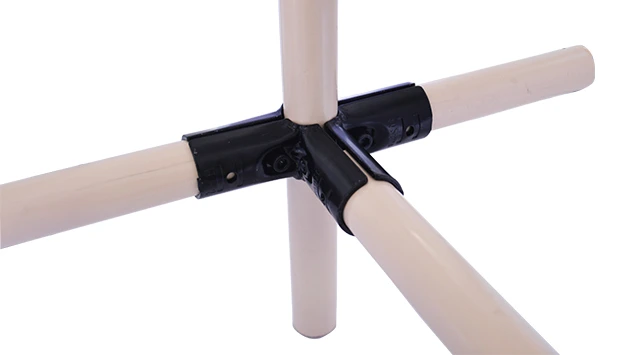
Four Way Straight Lean Pipe Joint
Four way lean pipe joint for 4 pcs 28MM lean pipe connection in straight angle, which used widely in workbench, flow rack, hand trolley frame connection.
Walk into a modern manufacturing facility today, and you'll notice a quiet revolution unfolding. The clunky, rigid workspaces of the past are giving way to flexible, adaptive environments where every tool, rack, and conveyor seems to "know" what's happening. At the heart of this transformation lies a deceptively simple component: the lean pipe. Combined with innovations like the four way straight lean pipe joint and smart sensor technology, these humble elements are redefining what smart factories can achieve—turning real-time monitoring from a buzzword into a daily reality that drives efficiency, cuts waste, and empowers teams to work smarter.
Lean Pipe Systems: The Backbone of Flexible Manufacturing
Before diving into sensors and joints, let's start with the basics: lean pipe systems. For decades, manufacturers have relied on lean pipes—lightweight, durable tubes typically made of steel with a plastic coating, or more recently, aluminum—to build everything from workbenches and flow racks to conveyors and turnover trolleys. What makes these systems so indispensable? Their modularity. Unlike fixed metal structures, lean pipe setups can be easily reconfigured, extended, or disassembled as production needs change. A factory producing smartphones today might repurpose the same lean pipe framework next month to assemble medical devices, all without major overhauls or downtime.
Take the flow rack, for example. A staple in lean manufacturing, a flow rack uses inclined roller tracks to let materials glide smoothly from the back to the front, ensuring first-in, first-out (FIFO) inventory management. Traditionally built with lean pipes and basic joints, these racks keep production lines supplied with parts, reducing the need for manual material handling. Similarly, workbenches constructed with lean pipes adapt to workers' heights and tool needs, minimizing fatigue and boosting productivity. In short, lean pipe systems are the Swiss Army knife of manufacturing—versatile, cost-effective, and inherently aligned with lean principles of eliminating waste and maximizing value.
The Four Way Straight Lean Pipe Joint: Small Part, Big Impact
If lean pipes are the bones of these flexible systems, then the joints are the connective tissue. And among the most critical joints is the four way straight lean pipe joint. As the name suggests, this component allows lean pipes to connect in four directions—typically up, down, left, and right—creating sturdy, multi-dimensional structures. Imagine building a flow rack with vertical supports, horizontal beams, and diagonal braces: the four way joint makes it possible to anchor all these pipes at a single point, ensuring stability without sacrificing flexibility.
But the four way straight lean pipe joint isn't just about holding pipes together. It's about enabling creativity. A maintenance team might use it to add a side arm to a workbench for tool storage; a production supervisor could extend a conveyor by linking new roller tracks to existing ones via these joints. In a world where manufacturing lines need to pivot quickly—say, shifting from 10-hour runs to 24-hour operations—the ability to modify structures on the fly is invaluable. And because these joints are standardized, factories don't need custom parts or specialized tools to make changes; a few wrenches and a team member with basic training are often enough.

Why Sensors Belong in Lean Pipe Joints
So, we have lean pipes and four way joints creating flexible structures. But how do we turn these physical setups into "smart" systems? The answer lies in sensors. Smart factories thrive on data—real-time insights into everything from material flow and equipment health to worker efficiency. Without data, managers are flying blind, relying on guesswork to spot bottlenecks or predict breakdowns. Sensors change that by turning passive structures into active data collectors.
But why integrate sensors with four way straight lean pipe joints specifically? Think about it: joints are the hubs where pipes meet, making them ideal mounting points for sensors. A joint at the corner of a flow rack, for instance, is perfectly positioned to monitor how quickly materials move through the rack. A joint on a conveyor roller track can detect vibration or misalignment, alerting teams to potential jams before they halt production. Even better, because the joints are part of the modular lean system, adding or moving sensors is as easy as reconfiguring the pipes themselves. No drilling into fixed metal frames, no rewiring entire sections—just clip a sensor onto a joint, and you're collecting data.

How It Works: Integrating Sensors with Four Way Straight Lean Pipe Joints
Integrating sensors with four way straight lean pipe joints isn't rocket science, but it does require careful planning. Here's a breakdown of the process, from choosing the right sensors to getting data where it matters most:
Step 1: Pick the right sensors for the job. Not all sensors are created equal. Depending on what you want to monitor, you might use:
- Proximity sensors: To detect if a bin or part is present on a flow rack or workbench.
- Vibration sensors: Mounted on joints near motors or roller tracks to spot unusual movement that could signal wear or misalignment.
- Load sensors: Built into joints supporting heavy equipment (like a conveyor) to monitor weight and prevent overloading.
- Light sensors: On roller tracks to count parts as they pass, ensuring accurate inventory tracking.
Step 2: Embed or mount the sensors. Some four way straight lean pipe joints now come with built-in sensor cavities, allowing for seamless integration. For older joints, external sensor mounts—often made of the same aluminum or plastic as the joint itself—clip onto the joint, keeping sensors secure without damaging the pipe. Wireless sensors are preferred here, as they eliminate messy cables and make reconfiguration easier.
Step 3: Connect to the IoT network. Once the sensors are in place, they need to send data somewhere. Most modern sensors use Bluetooth, Wi-Fi, or low-power wide-area networks (LPWAN) to transmit data to a central IoT platform. This platform acts as the brain, aggregating data from all sensors and turning it into actionable insights—think dashboards showing real-time flow rack stock levels or alerts when a conveyor joint's vibration exceeds safe levels.
Step 4: Integrate with existing systems. The best sensor data doesn't live in a silo. To be useful, it should feed into other tools: ERP systems for inventory management, CMMS (Computerized Maintenance Management Systems) for predictive maintenance, or even worker tablets for on-the-spot alerts. APIs (Application Programming Interfaces) make this integration possible, ensuring the lean pipe joint sensors talk to the software the factory already uses.
The Benefits: From Real-Time Insights to Tangible Results
At this point, you might be wondering: Does all this sensor integration actually make a difference? The short answer is yes—and the results are measurable. Let's look at three key benefits factories experience when they pair four way straight lean pipe joints with sensors:
1. Eliminating bottlenecks before they slow production. In a traditional setup, a manager might walk the floor once an hour to check on flow racks or conveyors. By the time they spot a bottleneck—a pileup of parts on a roller track, for example—production has already been delayed. With sensors, the system detects the slowdown immediately. A proximity sensor on a flow rack joint might notice that parts are taking 20% longer to move from the back to the front, triggering an alert to the line supervisor's tablet. The supervisor can then adjust the roller track angle or reassign a worker to clear the jam, all before the issue impacts downstream stations.
2. Predictive maintenance that cuts downtime. Equipment breakdowns are the bane of manufacturing. A seized conveyor motor or a cracked lean pipe joint can halt an entire line for hours, costing thousands in lost production. Sensors turn reactive maintenance into proactive care. Vibration sensors on conveyor joints, for instance, track normal operating patterns. If the vibration spikes suddenly, it could mean a bearing is wearing out or a roller is misaligned. The system sends an alert, and maintenance teams can replace the part during a scheduled break—no more emergency shutdowns.
3. Data-driven lean management. Lean manufacturing is all about continuous improvement, but improvement requires knowing where to focus. Sensor data provides that focus. Suppose a factory's goal is to reduce work-in-progress (WIP) inventory. Sensors on flow rack joints can track how long parts sit in each bin, revealing that one particular rack is consistently holding parts for twice as long as others. Digging into the data might show the rack is positioned too far from the assembly line, forcing workers to leave parts there while they complete other tasks. The solution? Reconfigure the lean pipe setup to move the rack closer—simple, effective, and guided by hard data.
Case Study: How a Automotive Supplier Cut Lead Times by 30% with Sensor-Equipped Lean Pipes
To see these benefits in action, let's look at a real-world example: a mid-sized automotive parts supplier we'll call "AutoFlex." Before integrating sensors, AutoFlex struggled with unpredictable lead times. Their production line relied on a series of flow racks and conveyors built with traditional lean pipes and basic joints. Parts often got stuck on roller tracks, inventory counts were done manually (and inaccurately), and maintenance teams spent hours troubleshooting issues after they occurred.
AutoFlex's solution? They upgraded their lean pipe system with four way straight lean pipe joints and added sensors to key points: proximity sensors on flow rack joints to monitor part levels, vibration sensors on conveyor roller track joints, and load sensors on workbench legs to track tool usage. The sensors fed data to a cloud-based IoT platform, which displayed real-time metrics on dashboards in the plant manager's office and on tablets carried by line supervisors.
The results were striking. Within three months, AutoFlex reduced lead times by 30%. The proximity sensors on flow racks eliminated stockouts by triggering alerts when parts ran low, ensuring assembly lines never waited for materials. Vibration sensors on conveyors cut downtime by 40% by catching misaligned rollers early. And load sensors on workbenches revealed that certain tools were underused, allowing AutoFlex to reallocate equipment and free up floor space. As the plant manager put it: "We didn't just add sensors—we gave our factory a voice. Now it tells us what's wrong before we even notice, and that's changed everything."
Traditional vs. Smart Lean Pipe Joints: A Quick Comparison
| Feature | Traditional Four Way Straight Lean Pipe Joint | Smart Four Way Straight Lean Pipe Joint (with Sensors) |
|---|---|---|
| Primary Function | Connects lean pipes in four directions; structural support | Connects pipes + collects real-time data (vibration, part flow, load, etc.) |
| Data Capability | None—passive component | Active data collection via integrated or mounted sensors |
| Maintenance Insight | Requires manual inspection for wear/damage | Alerts to potential issues (e.g., excess vibration, misalignment) |
| Flexibility | High (modular, reconfigurable) | Very high (modular + adaptable data collection as setup changes) |
| Cost | Lower upfront cost | Higher upfront cost, but ROI via reduced downtime/improved efficiency |
Overcoming Challenges: Making Sensor Integration Accessible
Of course, integrating sensors with lean pipe joints isn't without challenges. For smaller manufacturers, cost can be a barrier—sensors, IoT platforms, and wireless connectivity add upfront expenses. There's also the learning curve: not every factory has IT teams familiar with IoT setup or data analytics. But these challenges are becoming easier to overcome.
Today, sensor manufacturers offer affordable, plug-and-play options specifically designed for lean pipe systems. Many four way straight lean pipe joint suppliers now sell joints pre-fitted with sensor mounts, eliminating the need for custom fabrication. Cloud-based IoT platforms, too, have become more user-friendly, with drag-and-drop dashboards that require no coding. And for training, lean system suppliers often provide workshops or online resources to help teams get up to speed.
Another common concern is durability. Manufacturing floors are tough environments—dust, moisture, and occasional impacts can damage sensitive electronics. But modern industrial sensors are built to withstand these conditions, with rugged casings and IP67 or higher water/dust resistance ratings. Even better, because the sensors are mounted on joints (which are themselves durable), they're protected from accidental bumps better than if they were attached directly to pipes or racks.
The Future: Where Lean Pipes, Joints, and Sensors Go Next
As smart factories evolve, so too will the integration of lean pipes, four way straight lean pipe joints, and sensors. Here are three trends to watch:
1. AI-powered analytics. Right now, sensors collect data, and humans or basic algorithms analyze it. In the future, artificial intelligence (AI) will take over, identifying patterns humans might miss. Imagine an AI system that learns from months of sensor data on a flow rack, predicting not just when parts will run low, but why —and automatically adjusting production schedules to prevent stockouts.
2. Energy harvesting sensors. One limitation of wireless sensors is battery life. Future sensors might harvest energy from their environment—vibration from lean pipe joints, heat from nearby machinery—to power themselves, eliminating the need for battery replacements.
3. Digital twins. A digital twin is a virtual replica of a physical system. With sensor data from lean pipe joints, factories could create digital twins of their flow racks, conveyors, and workbenches. Managers could then test reconfigurations in the virtual world before making changes in the real one, reducing risk and speeding up innovation.
Conclusion: Lean Pipes, Smart Joints, and the Factory of the Future
The four way straight lean pipe joint might seem like a small part of the manufacturing puzzle, but when paired with sensors, it becomes a gateway to the smart factory of the future. These components turn passive structures into active data hubs, giving factories the real-time insights they need to stay competitive in a fast-paced world. Whether it's reducing downtime, cutting waste, or empowering workers with better tools, the combination of lean pipe systems and sensor technology proves that sometimes, the most powerful innovations are the ones that build on what already works.
For manufacturers ready to take the leap, the message is clear: you don't need to tear down your entire facility to go smart. Start small—add a few sensors to critical flow rack joints, monitor the data, and build from there. Before long, you'll wonder how you ever ran your factory without the "voice" of your lean pipe system guiding the way.