- Company Articles
- Products and Technology
- Solution
- Solving Space Constraints with Vertical Lean Pipe Joint Configurations

Solving Space Constraints with Vertical Lean Pipe Joint Configurations
Related Product
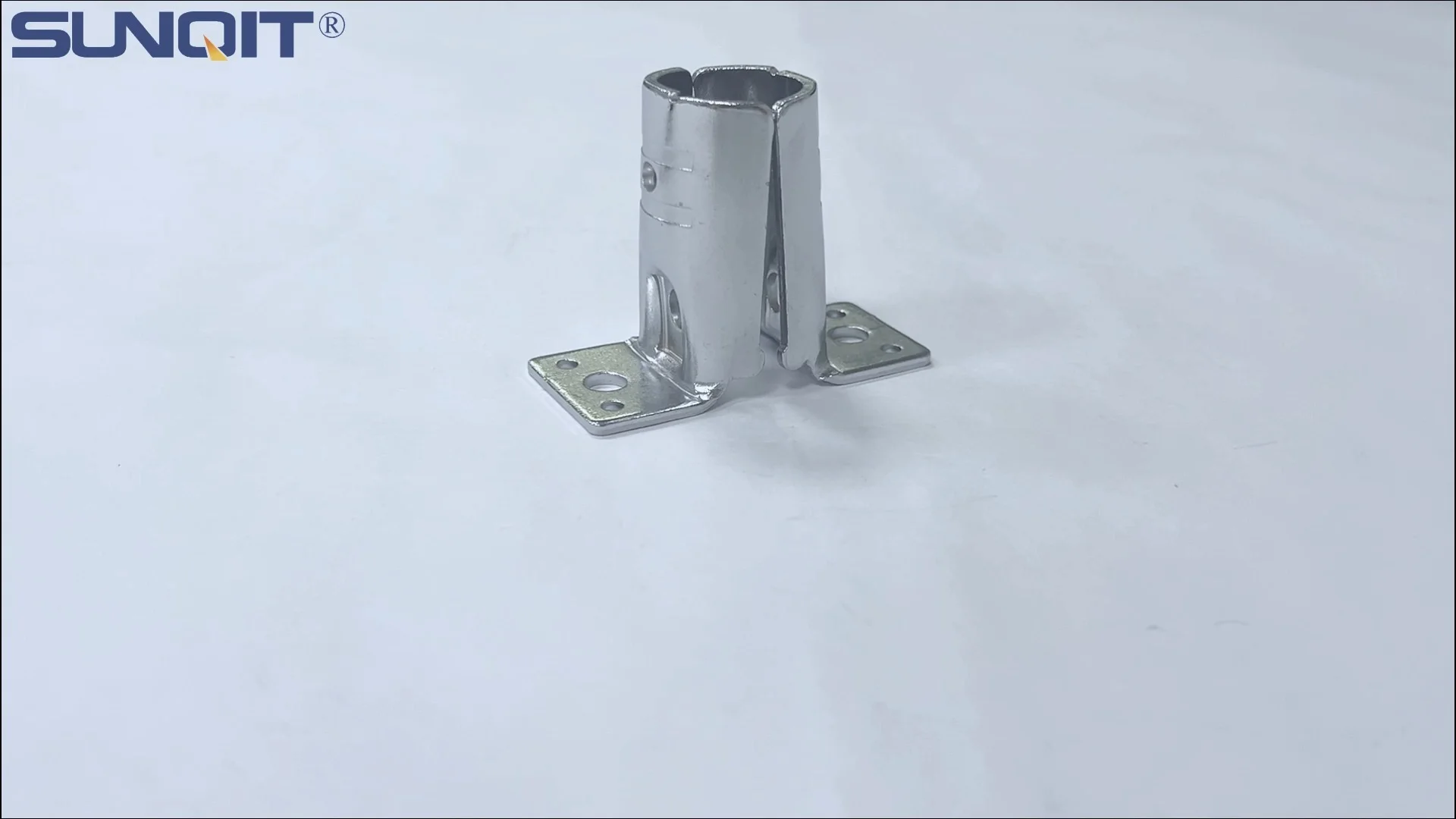
Vertical Lean Pipe Joint
Vertical lean pipe joint is used for 28mm lean pipe fixed on ground and keep it stable.
In the heart of every manufacturing, assembly, or logistics operation lies a silent opponent: wasted space. It creeps in unnoticed—through cluttered workbenches, sprawling material racks, and workflows that stretch horizontally instead of upward. For small to mid-sized businesses, in particular, relocating to a larger facility or expanding the current space is often cost-prohibitive. Even larger enterprises face pressure to optimize existing areas to reduce overhead and improve sustainability. The question then becomes: How do we transform cramped, inefficient workspaces into streamlined, productive environments without breaking the bank? The answer lies in rethinking one fundamental aspect of workspace design: going vertical with lean pipe joint configurations.
The Space Crisis: Why Horizontal Thinking Falls Short
Traditional workspace setups have long relied on horizontal expansion. A new material rack? Place it next to the old one. Need more workbenches? Line them up along the wall. This "spread out" approach made sense when land and square footage were cheap, but today's competitive landscape demands smarter solutions. Consider a typical electronics assembly workshop: components are stored in plastic bins on shelves that stretch 6 feet wide but only 3 feet high. Tools hang on walls at eye level, leaving the space above unused. Finished products pile up on tables that take up floor space, while workers navigate around fixed equipment that rarely moves. In such a setup, every square foot of floor space is a premium—and yet, 50% of the available vertical space often goes unused.
The consequences of this inefficiency are tangible. Workers spend extra time walking between stations, increasing fatigue and slowing down production. Material handling errors rise as parts get mixed up in overcrowded bins. Safety hazards multiply, with narrow walkways and cluttered floors raising the risk of trips and falls. Over time, these issues erode profitability and morale. The good news? Vertical lean pipe joint configurations offer a way to flip the script—turning underutilized airspace into valuable, functional real estate.
The Unsung Hero: Lean Pipe Joints and the Power of Modularity
At the core of any vertical lean system is the lean pipe joint —a deceptively simple component that unlocks endless possibilities. Unlike rigid, welded metal brackets or fixed plastic connectors, lean pipe joints are designed for flexibility. Made from durable materials like steel or aluminum, these joints feature multiple ports and rotating mechanisms that allow users to connect lean pipes (hollow tubes made of steel, aluminum, or plastic-coated steel) at various angles—90°, 45°, 135°, or even 180°. This modularity means that instead of building a fixed shelf that can only hold items at one height, you can create a vertical structure that adapts to your needs: adding a shelf here, extending a rail there, or reconfiguring the entire setup in hours, not days.
Imagine a standard lean pipe workbench —a staple in assembly lines worldwide. Traditionally, these workbenches are 30–36 inches high, with a flat surface and minimal storage below. But with the right lean pipe joints, that same workbench can evolve: vertical poles extend upward from the corners, supporting overhead shelves for tools, bins, or even small monitors. Side brackets connect to vertical pipes, holding tool hooks or component racks that once cluttered the desktop. Suddenly, the workbench isn't just a flat surface—it's a three-dimensional workspace that uses height to free up the floor and desktop below.
How Lean Pipe Joints Enable Vertical Design
The magic of lean pipe joints lies in their adaptability. Let's break down their key features:
- Tool-Free Assembly: Most lean pipe joints twist or clamp into place, requiring no welding, drilling, or specialized tools. This means workers can adjust the structure as needs change—no waiting for maintenance or contractors.
- (Multi-Angle Compatibility): Joints like the 90° crossing lean pipe joint or 135° aluminum pipe joint allow pipes to connect vertically, horizontally, or at odd angles, creating custom configurations that hug walls or fit into tight corners.
- Strength Without Bulk: Modern lean pipe joints, especially those made from aluminum or reinforced steel, support significant weight. A single vertical pole with sturdy joints can hold shelves loaded with 50+ pounds of materials, making them ideal for heavy-duty applications.
- Cost-Effective Scalability: Instead of replacing an entire rack when needs grow, simply add more pipes and joints to extend upward. This modularity reduces waste and lowers long-term costs.
When combined with lightweight, durable pipes—like aluminum lean pipe or plastic-coated steel—these joints become the building blocks of a vertical revolution.

From Cluttered to Vertical: A Step-by-Step Transformation
Adopting vertical lean pipe configurations isn't about tearing down existing setups and starting from scratch. It's about incremental, strategic changes that maximize vertical space while preserving workflow continuity. Let's walk through how a typical workshop might transform a problematic area—say, a material storage zone—using lean pipe joints, aluminum profiles, and a focus on verticality.
Step 1: Audit the Current Space – The first step is to map the existing storage area. Measure the floor space (e.g., 8ft wide x 10ft deep) and note the vertical clearance (e.g., 10ft high). Identify pain points: Are shelves only 4ft high? Are bins stacked horizontally, requiring workers to bend or reach awkwardly? How much of the 10ft vertical space is unused?
Step 2: Design the Vertical Structure – Using lean pipe joints, design a rack that extends upward. For example, replace a 4ft-high horizontal shelf unit with a vertical rack made of aluminum lean pipe and multi-angle fixed aluminum joints. The new rack might have 5 shelves instead of 2, each adjustable in height, and span only 3ft wide (instead of 8ft) by utilizing the full 8ft of vertical space.
Step 3: Integrate Mobility with Caster Wheels – To add flexibility, mount the vertical rack on a base with caster wheels . This allows the rack to be moved when not in use, freeing up floor space for other tasks. Lockable caster wheels ensure stability when loading or unloading materials.
Step 4: Optimize Accessibility – Use roller track and accessories (like plastic roller track guide rails) on the shelves to allow bins to slide forward, making items at the back easy to reach. Add swivel roller balls on the top shelf for quick access to frequently used parts. The result? A storage system that takes up 60% less floor space, holds 2.5x more materials, and reduces retrieval time by 30%.

Beyond Joints: Key Components of Vertical Lean Systems
While lean pipe joints are the backbone of vertical configurations, they work best when paired with complementary components. Let's explore three critical elements that enhance their effectiveness: aluminum profiles, roller track systems, and mobility solutions.
Aluminum Profiles: Strength, Lightweight, and Versatility
When building vertically, the choice of pipe material matters. Traditional steel lean pipes are strong but heavy, making them harder to adjust and install. Aluminum profile systems, by contrast, offer the perfect balance of strength and lightweight design. Aluminum extrusion profiles—hollow, with T-slot grooves along their length—are easy to cut, drill, and connect using specialized aluminum profile accessories. Their corrosion resistance makes them ideal for humid or cleanroom environments, while their sleek finish adds a professional look to any workspace.
For vertical applications, aluminum profiles shine. A 20mm x 20mm aluminum profile can support up to 150 pounds when mounted vertically, making it suitable for tool racks, overhead shelves, or even small conveyor systems. T-slot grooves allow for quick attachment of accessories like hooks, bins, or monitor mounts—no need for drilling or welding. This versatility means aluminum profiles can adapt to evolving needs: today's tool rack can become tomorrow's assembly jig with a few adjustments.
Roller Track Systems: Smooth Material Flow in Vertical Spaces
Vertical storage is only effective if materials are easy to access. This is where roller track and accessories come into play. Roller tracks—made of plastic, aluminum, or steel—feature small wheels that allow bins, boxes, or parts to glide smoothly, even when placed on upper shelves. For example, a vertical flow rack using plastic roller track guide rails (yellow or grey) can store components in a "first-in, first-out" (FIFO) system, with gravity feeding bins downward as items are removed. This eliminates the need for workers to climb ladders or stretch to reach high shelves, reducing ergonomic strain and improving efficiency.
Roller track placon mounts (used to connect rails to aluminum profiles) ensure stability, even when the rack is fully loaded. For vertical setups, "high" or "flat" placon mounts allow roller tracks to be attached directly to aluminum profiles at any height, creating custom flow paths. Whether used in lean pipe workbenches, material racks, or conveyor systems, roller tracks turn static vertical storage into dynamic, user-friendly solutions.
Mobility: Caster Wheels and the Freedom to Reconfigure
The most efficient vertical structure is one that can move when needed. Caster wheels and accessories add this critical mobility, transforming fixed racks and workbenches into flexible assets. Heavy-duty caster wheels with brakes can support vertical structures weighing several hundred pounds, allowing them to be rolled out of the way during deep cleaning, inventory checks, or workflow changes. For example, a vertical tool rack mounted on caster wheels can be positioned next to an assembly line during production hours and moved to a storage area overnight, freeing up floor space for other tasks.
Caster accessories like swivel locks and floor brakes ensure stability when the structure is in use, preventing accidental movement. When combined with aluminum profiles and lean pipe joints, caster wheels create a "mobile vertical" system that adapts to daily needs—no more being tied down by permanent fixtures.

Real-World Impact: Case Studies in Vertical Optimization
To understand the true value of vertical lean pipe joint configurations, let's look at two real-world examples—one from a small electronics assembly shop and another from a large automotive parts distributor.
Case Study 1: Small Electronics Shop Cuts Storage Footprint by 55%
A family-owned electronics assembly business in California faced a crisis: their 1,200 sq ft workshop was bursting at the seams. With 15 employees assembling circuit boards, space for component storage was so limited that parts were being stored in the break room. The owner considered renting a neighboring unit but hesitated at the $2,500/month cost. Instead, they invested in a vertical lean pipe system, including lean pipe joints, aluminum profiles, and roller track accessories.
The solution? Four custom vertical flow racks (each 3ft wide x 7ft high) mounted on caster wheels, using plastic roller track guide rails to store component bins. Overhead shelves above workbenches, supported by aluminum profiles, held tools and documentation. The result: the shop reduced material storage footprint from 400 sq ft to 180 sq ft, freeing up space for two additional assembly stations. Production output increased by 20% in the first quarter, and employee satisfaction scores rose as workers reported less fatigue from reduced walking.
Case Study 2: Automotive Distributor Boosts Throughput with Vertical Conveyors
A large automotive parts distributor in Texas struggled with slow order fulfillment in their 50,000 sq ft warehouse. Orders were picked from horizontal racks that stretched 200ft long, requiring pickers to walk miles daily. The company installed vertical conveyor systems using lean pipe joints, aluminum guide rails, and roller track connectors. The conveyors moved parts from ground-level picking stations to overhead sorting areas, reducing horizontal travel by 70%. Pickers now work in zones, with parts delivered to them via vertical chutes, cutting order processing time from 45 minutes to 15 minutes. The system paid for itself in 10 months through labor savings and increased order volume.
The Benefits: Why Vertical is the Future of Workspace Design
The success stories above highlight the tangible benefits of vertical lean pipe joint configurations. Let's distill these into five key advantages:
- Space Savings: By utilizing vertical space, businesses can reduce floor space usage by 30–60%, depending on the application. This eliminates the need for expansion and lowers rent or mortgage costs.
- Increased Productivity: Reduced walking time, faster material retrieval, and streamlined workflows translate to higher output with the same or fewer resources.
- Improved Ergonomics: Vertical systems with roller tracks and accessible shelves reduce bending, stretching, and lifting, lowering the risk of workplace injuries.
- Scalability: Modular components (joints, pipes, accessories) make it easy to expand or reconfigure systems as needs change, avoiding costly overhauls.
- Cost-Effectiveness: Compared to traditional fixed racking or custom metal fabrication, lean pipe systems cost 30–50% less upfront and offer higher long-term ROI through adaptability.
| Aspect | Traditional Horizontal Setup | Vertical Lean Pipe Joint Configuration | Key Improvement |
|---|---|---|---|
| Floor Space Usage | High (e.g., 8ft wide rack for 2 shelves) | Low (e.g., 3ft wide rack for 5 shelves) | 60% reduction in footprint |
| Material Capacity | Limited (e.g., 100 bins per 8ft rack) | High (e.g., 250 bins per 3ft vertical rack) | 150% increase in storage density |
| Worker Travel Time | High (long distances between stations) | Low (materials delivered vertically/nearby) | 30–70% reduction in walking time |
| Reconfiguration Cost | High (requires new racks, welding, contractors) | Low (tool-free adjustments with modular parts) | 80% lower reconfiguration costs |
| Safety Risk | High (cluttered floors, narrow walkways) | Low (organized, mobile setups with clear paths) | 50% reduction in reported incidents |
Conclusion: Building a Leaner, More Efficient Tomorrow
Space constraints in the workplace are not inevitable—they're a design challenge waiting to be solved. Vertical lean pipe joint configurations offer a proven, cost-effective way to transform cramped, inefficient spaces into hubs of productivity. By leveraging the modularity of lean pipe joints, the strength of aluminum profiles, the mobility of caster wheels, and the flow of roller track systems, businesses of all sizes can reclaim unused vertical space, boost productivity, and create safer, more engaging work environments.
The future of workspace design isn't about building bigger—it's about building smarter. It's about looking up and seeing opportunity where others see empty air. Whether you're running a small workshop or a large distribution center, vertical lean pipe systems empower you to do more with less, adapt to change, and stay competitive in a world where every square foot counts. So, take the first step: audit your space, identify the vertical potential, and start building a leaner, more efficient tomorrow—one joint, one pipe, one upward-reaching shelf at a time.