- Company Articles
- Products and Technology
- Application Cases
- Space Optimization with Aluminum Workbench C in Compact Manufacturing Facilities

Space Optimization with Aluminum Workbench C in Compact Manufacturing Facilities
Related Product
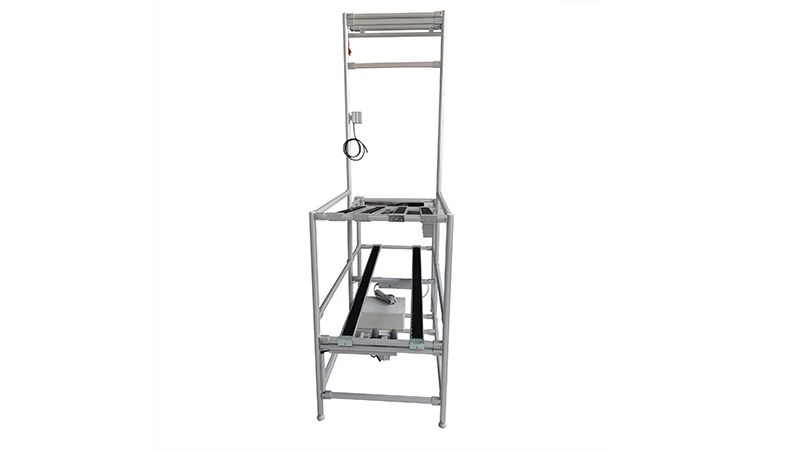
Aluminum Workbench C
aluminum-tube-workbench-is-more-flexible-and-durable,-compared-with-traditional-pe/abs-coated-steel-tube.-it-is-easy-to-assemble,-anti-corrosion,-rust-protection,-and-recycle-use-after-disassemble.
The Tug-of-War Between Space and Productivity in Modern Manufacturing
Walk into any small to mid-sized manufacturing facility, and you'll likely notice the same silent battle unfolding: the need to cram more productivity into every square foot without sacrificing safety, workflow, or employee well-being. In today's fast-paced production environments—where batch sizes shrink, customization demands grow, and floor space comes at a premium—traditional fixed workstations and clunky material handling systems often feel like relics of a bygone era. Workers navigate around bulky tables that can't be adjusted for new tasks. Materials pile up because there's no efficient way to route them to the point of use. And when a new project comes in, reconfiguring the layout means days of dismantling and rebuilding, eating into already tight deadlines.
This isn't just a logistical headache—it's a productivity killer. A recent study by the Manufacturing Performance Institute found that 62% of small manufacturers cite "limited floor space" as a top barrier to scaling operations. For teams in these facilities, the frustration is palpable: you know your team can produce more, but the physical constraints of your workspace are holding you back. The good news? The solution doesn't have to be a costly move to a larger facility or a complete overhaul of your production line. Sometimes, it starts with reimagining the most basic tool in your arsenal: the workbench.
This isn't just a logistical headache—it's a productivity killer. A recent study by the Manufacturing Performance Institute found that 62% of small manufacturers cite "limited floor space" as a top barrier to scaling operations. For teams in these facilities, the frustration is palpable: you know your team can produce more, but the physical constraints of your workspace are holding you back. The good news? The solution doesn't have to be a costly move to a larger facility or a complete overhaul of your production line. Sometimes, it starts with reimagining the most basic tool in your arsenal: the workbench.
Why Traditional Workbenches Fall Short in Compact Spaces
Let's face it: most traditional workbenches were designed for a different time. Heavy wooden or steel frames, fixed heights, and static layouts made sense when production lines rarely changed and "one-size-fits-all" was the norm. But in today's compact facilities, these features become liabilities. A fixed-height workbench might force a tall employee to hunch over for hours, while a shorter colleague strains to reach tools on a high shelf. A bulky steel frame, weighing 300+ pounds, can't be moved to accommodate a sudden rush order that requires rearranging the line. And when you add shelves, bins, or tool holders to these static setups, they quickly become clutter magnets, eating up precious horizontal space that could be used for assembly or material staging.
The problem isn't just about physical size, either. It's about rigidity. Traditional workbenches lock you into a single workflow, making it nearly impossible to adapt to new products, smaller batch sizes, or lean manufacturing principles like 5S (Sort, Set in Order, Shine, Standardize, Sustain). When your workspace can't flex, your team can't either—and that's when errors happen, delays stack up, and employee morale takes a hit.
The problem isn't just about physical size, either. It's about rigidity. Traditional workbenches lock you into a single workflow, making it nearly impossible to adapt to new products, smaller batch sizes, or lean manufacturing principles like 5S (Sort, Set in Order, Shine, Standardize, Sustain). When your workspace can't flex, your team can't either—and that's when errors happen, delays stack up, and employee morale takes a hit.

Introducing Aluminum Workbench C: A Lean Solution for Tight Spaces
Enter Aluminum Workbench C—a modular, lightweight, and highly adaptable workstation designed specifically to thrive in compact manufacturing environments. Unlike traditional workbenches, which treat space as an afterthought, Aluminum Workbench C puts space optimization at its core. Built with high-grade aluminum profile and precision-engineered accessories, it's a workbench that grows with your needs, shrinks when you need more room, and integrates seamlessly with other lean system tools like flow racks and conveyors.
But what makes Aluminum Workbench C different? Let's start with the material: aluminum. Unlike steel, aluminum offers an unbeatable strength-to-weight ratio. A typical Aluminum Workbench C (single deck, without casters) weighs in at just 65 pounds—light enough for two people to move with ease, but strong enough to support up to 500 pounds of tools, materials, and equipment. This lightweight design isn't just about portability; it's about flexibility. Need to reconfigure your line for a rush order? Simply unlock the casters (if equipped) or disassemble the frame in minutes, no heavy machinery required.
Then there's the modularity. Aluminum Workbench C is built using aluminum profile and aluminum profile accessories—think T-slot rails, adjustable shelves, and quick-connect joints—that let you customize the setup to your exact needs. Need a second shelf for small parts? Snap it into place. Want to add a tool rail above the work surface? Slide it into the T-slot and tighten a screw. Even the work surface itself can be swapped out: opt for a smooth aluminum honeycomb panel for assembly work, or a static-dissipative top if you're handling electronics (making it a versatile alternative to dedicated ESD workstations in space-strapped facilities).
But what makes Aluminum Workbench C different? Let's start with the material: aluminum. Unlike steel, aluminum offers an unbeatable strength-to-weight ratio. A typical Aluminum Workbench C (single deck, without casters) weighs in at just 65 pounds—light enough for two people to move with ease, but strong enough to support up to 500 pounds of tools, materials, and equipment. This lightweight design isn't just about portability; it's about flexibility. Need to reconfigure your line for a rush order? Simply unlock the casters (if equipped) or disassemble the frame in minutes, no heavy machinery required.
Then there's the modularity. Aluminum Workbench C is built using aluminum profile and aluminum profile accessories—think T-slot rails, adjustable shelves, and quick-connect joints—that let you customize the setup to your exact needs. Need a second shelf for small parts? Snap it into place. Want to add a tool rail above the work surface? Slide it into the T-slot and tighten a screw. Even the work surface itself can be swapped out: opt for a smooth aluminum honeycomb panel for assembly work, or a static-dissipative top if you're handling electronics (making it a versatile alternative to dedicated ESD workstations in space-strapped facilities).

Key Features of Aluminum Workbench C That Drive Space Optimization
Let's dive deeper into the features that make Aluminum Workbench C a game-changer for compact facilities. These aren't just "nice-to-haves"—they're practical solutions to the daily space challenges manufacturers face.
1. Vertical Space Utilization, Not Just Horizontal
Traditional workbenches waste vertical space, treating the area above the work surface as unused real estate. Aluminum Workbench C flips this script. Thanks to its aluminum profile frame, you can easily add overhead shelves, tool hooks, or even small flow racks directly above the work surface. For example, mounting a mini flow rack (3 rows, 3 floors) above the bench keeps frequently used materials within arm's reach without cluttering the tabletop. This alone can free up 15-20% of horizontal space—space that might otherwise be taken by separate material racks.
2. Tool-Less Reconfiguration in Minutes
One of the biggest time drains in compact facilities is reconfiguring workstations for new tasks. With Aluminum Workbench C, this process is streamlined. The aluminum profile accessories—like internal rotary aluminum joints and quick-lock brackets—allow you to adjust shelf heights, add side extensions, or even split the bench into two smaller units without drills, wrenches, or specialized tools. A team of two can completely rearrange a workstation in under 30 minutes, compared to hours (or even days) with traditional bolted-together workbenches.
3. Integration with Lean Material Flow Systems
A workbench doesn't exist in a vacuum—it's part of a larger ecosystem of material handling. Aluminum Workbench C is designed to play well with other lean system tools, like roller tracks and flow racks. For example, attaching a plastic roller track guide rail (yellow or grey) to the side of the bench creates a gravity-fed chute for finished parts, routing them directly to a downstream conveyor or inspection station. No more walking across the floor to drop off completed assemblies—parts flow smoothly, saving steps and reducing congestion.
4. Ergonomic Adjustability to Reduce Clutter
Clutter often starts with poor ergonomics. When tools and materials aren't within easy reach, workers compensate by piling items on the bench, creating messy, inefficient workspaces. Aluminum Workbench C addresses this with adjustable height options (some models offer manual or electric height adjustment) and customizable accessory placement. A worker assembling small electronics can lower the bench to 30 inches to reduce shoulder strain, while a colleague assembling larger components can raise it to 40 inches. Tool hooks can be positioned at elbow height, and bins for scrap materials can hang under the bench—keeping the surface clear and organized.
1. Vertical Space Utilization, Not Just Horizontal
Traditional workbenches waste vertical space, treating the area above the work surface as unused real estate. Aluminum Workbench C flips this script. Thanks to its aluminum profile frame, you can easily add overhead shelves, tool hooks, or even small flow racks directly above the work surface. For example, mounting a mini flow rack (3 rows, 3 floors) above the bench keeps frequently used materials within arm's reach without cluttering the tabletop. This alone can free up 15-20% of horizontal space—space that might otherwise be taken by separate material racks.
2. Tool-Less Reconfiguration in Minutes
One of the biggest time drains in compact facilities is reconfiguring workstations for new tasks. With Aluminum Workbench C, this process is streamlined. The aluminum profile accessories—like internal rotary aluminum joints and quick-lock brackets—allow you to adjust shelf heights, add side extensions, or even split the bench into two smaller units without drills, wrenches, or specialized tools. A team of two can completely rearrange a workstation in under 30 minutes, compared to hours (or even days) with traditional bolted-together workbenches.
3. Integration with Lean Material Flow Systems
A workbench doesn't exist in a vacuum—it's part of a larger ecosystem of material handling. Aluminum Workbench C is designed to play well with other lean system tools, like roller tracks and flow racks. For example, attaching a plastic roller track guide rail (yellow or grey) to the side of the bench creates a gravity-fed chute for finished parts, routing them directly to a downstream conveyor or inspection station. No more walking across the floor to drop off completed assemblies—parts flow smoothly, saving steps and reducing congestion.
4. Ergonomic Adjustability to Reduce Clutter
Clutter often starts with poor ergonomics. When tools and materials aren't within easy reach, workers compensate by piling items on the bench, creating messy, inefficient workspaces. Aluminum Workbench C addresses this with adjustable height options (some models offer manual or electric height adjustment) and customizable accessory placement. A worker assembling small electronics can lower the bench to 30 inches to reduce shoulder strain, while a colleague assembling larger components can raise it to 40 inches. Tool hooks can be positioned at elbow height, and bins for scrap materials can hang under the bench—keeping the surface clear and organized.
Did You Know?
According to the Lean Enterprise Institute, companies that optimize vertical space and integrate modular workstations with material flow systems report a 25% average reduction in floor space usage. For a 5,000 sq ft facility, that's 1,250 sq ft reclaimed—enough space to add a new production line or expand storage without moving to a larger location.

Aluminum Workbench C vs. Traditional Workbenches: A Space-Saving Comparison
To truly understand the space-saving impact of Aluminum Workbench C, let's put it head-to-head with a traditional steel workbench in a side-by-side comparison. The table below highlights key metrics for a typical 6-foot workstation, common in electronics, automotive, and small-part assembly facilities.
| Feature | Traditional Steel Workbench | Aluminum Workbench C | Space/Productivity Gain with Aluminum Workbench C |
|---|---|---|---|
| Weight (without casters) | 320 lbs | 65 lbs | 80% lighter; easier to move, reducing downtime during reconfiguration |
| Minimum Floor Space Required | 36 sq ft (6'L x 2.5'W + 2' clearance on all sides) | 28 sq ft (6'L x 2'W + 1.5' clearance on all sides, thanks to slimmer profile) | 22% less floor space per workstation |
| Vertical Storage Capacity | Limited (1-2 fixed shelves, often too high/low for easy access) | Unlimited (modular shelves, hooks, and flow racks; adjustable heights) | Up to 3x more vertical storage, reducing need for separate material racks |
| Time to Reconfigure for New Task | 4+ hours (requires tools, disassembly, and reassembly) | 25-30 minutes (tool-less adjustments with aluminum joints) | 90% faster reconfiguration, minimizing production delays |
| Integration with Flow Racks/Roller Tracks | Difficult (requires custom brackets or drilling into frame) | Seamless (compatible with standard aluminum profile accessories) | Eliminates need for separate material handling equipment, saving 10-15 sq ft per workstation |
Real-World Impact: How a 5,000 Sq Ft Electronics Plant Saved 600 Sq Ft with Aluminum Workbench C
Let's step into the shoes of Maria, the production manager at a small electronics manufacturer in Ohio. Her facility, a 5,000 sq ft space, was struggling to keep up with demand for custom circuit boards. The plant had 8 traditional steel workbenches, each taking up 36 sq ft, plus separate flow racks and material carts cluttering the floor. Workers were constantly tripping over carts, and reconfiguring for small-batch orders took half a day—time Maria couldn't afford to lose.
Maria's team decided to replace 6 of their traditional workbenches with Aluminum Workbench C units. Here's what happened next:
- Space Reclaimed: Each Aluminum Workbench C took up 28 sq ft, saving 8 sq ft per bench. With 6 benches, that's 48 sq ft. Plus, integrating flow racks and roller tracks directly into the workbenches eliminated 4 separate material racks, freeing another 552 sq ft. Total saved: 600 sq ft—enough to add a new inspection station and a small assembly line for rush orders.
- Productivity Boost: Reconfiguring for new orders dropped from 4 hours to 30 minutes. Workers reported less fatigue, thanks to adjustable heights and tools within reach. Defect rates fell by 12% because clutter was reduced, and parts were less likely to be damaged or misplaced.
- Employee Morale: "It sounds silly, but moving the workbenches ourselves—without waiting for maintenance—made us feel more in control," said Juan, a lead assembler. "And having everything I need right at my bench? It's like working in a space that was designed for me , not just the machines."
For Maria, the results spoke for themselves: "We didn't need to move to a bigger building. We just needed workstations that worked with our space, not against it. Aluminum Workbench C didn't just save us square footage—it saved us from expanding costs, too."
Maria's team decided to replace 6 of their traditional workbenches with Aluminum Workbench C units. Here's what happened next:
- Space Reclaimed: Each Aluminum Workbench C took up 28 sq ft, saving 8 sq ft per bench. With 6 benches, that's 48 sq ft. Plus, integrating flow racks and roller tracks directly into the workbenches eliminated 4 separate material racks, freeing another 552 sq ft. Total saved: 600 sq ft—enough to add a new inspection station and a small assembly line for rush orders.
- Productivity Boost: Reconfiguring for new orders dropped from 4 hours to 30 minutes. Workers reported less fatigue, thanks to adjustable heights and tools within reach. Defect rates fell by 12% because clutter was reduced, and parts were less likely to be damaged or misplaced.
- Employee Morale: "It sounds silly, but moving the workbenches ourselves—without waiting for maintenance—made us feel more in control," said Juan, a lead assembler. "And having everything I need right at my bench? It's like working in a space that was designed for me , not just the machines."
For Maria, the results spoke for themselves: "We didn't need to move to a bigger building. We just needed workstations that worked with our space, not against it. Aluminum Workbench C didn't just save us square footage—it saved us from expanding costs, too."
Beyond the Bench: How Aluminum Workbench C Fits into a Larger Lean System
While Aluminum Workbench C is a star player in space optimization, its true power shines when it's part of a cohesive lean system. In compact facilities, every tool and piece of equipment should work together to eliminate waste—whether that's wasted space, wasted movement, or wasted time. Here's how Aluminum Workbench C integrates with other key lean tools:
Flow Racks for Just-In-Time Material Delivery
Flow racks are the backbone of just-in-time (JIT) production, ensuring materials arrive at the workbench exactly when they're needed. Aluminum Workbench C can be paired with material rack B (3 rows, 3 floors) or smaller mini flow racks, mounted directly to the bench or positioned adjacent to it. Using roller tracks (like the 40 steel roller track with yellow wheels) to connect the flow rack to the bench creates a gravity-fed system: as a worker takes a part from the front, the next one slides forward, eliminating the need to walk to a distant storage area. This cuts down on foot traffic, reducing congestion in tight aisles.
Roller Tracks for Seamless Part Transfer
Moving finished parts from the workbench to the next station can be a logistical headache in compact spaces. Aluminum Workbench C solves this by integrating with roller tracks and swivel roller balls (1 inch or 0.5 inch). Attaching a plastic roller track guide rail to the bench's edge creates a smooth chute for parts, routing them directly to a conveyor or inspection table. For smaller components, stainless steel swivel roller balls (1 inch) embedded in the work surface allow workers to slide parts across the bench with minimal effort, reducing strain and speeding up transfer times.
Turnover Trolleys for Flexible Material Transport
Even with integrated flow racks, some materials need to be transported from storage to the workbench. Aluminum Workbench C pairs well with lightweight aluminum turnover trolleys, which can be stored under the bench when not in use. The trolleys, built with the same aluminum profile as the bench, are easy to maneuver in tight spaces and can be loaded directly from the bench, eliminating double-handling of materials.
Flow Racks for Just-In-Time Material Delivery
Flow racks are the backbone of just-in-time (JIT) production, ensuring materials arrive at the workbench exactly when they're needed. Aluminum Workbench C can be paired with material rack B (3 rows, 3 floors) or smaller mini flow racks, mounted directly to the bench or positioned adjacent to it. Using roller tracks (like the 40 steel roller track with yellow wheels) to connect the flow rack to the bench creates a gravity-fed system: as a worker takes a part from the front, the next one slides forward, eliminating the need to walk to a distant storage area. This cuts down on foot traffic, reducing congestion in tight aisles.
Roller Tracks for Seamless Part Transfer
Moving finished parts from the workbench to the next station can be a logistical headache in compact spaces. Aluminum Workbench C solves this by integrating with roller tracks and swivel roller balls (1 inch or 0.5 inch). Attaching a plastic roller track guide rail to the bench's edge creates a smooth chute for parts, routing them directly to a conveyor or inspection table. For smaller components, stainless steel swivel roller balls (1 inch) embedded in the work surface allow workers to slide parts across the bench with minimal effort, reducing strain and speeding up transfer times.
Turnover Trolleys for Flexible Material Transport
Even with integrated flow racks, some materials need to be transported from storage to the workbench. Aluminum Workbench C pairs well with lightweight aluminum turnover trolleys, which can be stored under the bench when not in use. The trolleys, built with the same aluminum profile as the bench, are easy to maneuver in tight spaces and can be loaded directly from the bench, eliminating double-handling of materials.
Choosing the Right Aluminum Workbench C: Customization for Your Unique Space
No two compact facilities are alike—so why settle for a one-size-fits-all workbench? Aluminum Workbench C comes in a range of configurations to match your specific needs, from single-deck setups for simple assembly to multi-tiered stations for complex manufacturing tasks. Here are a few popular options for space-constrained environments:
Workbench E (Single Deck, Without Casters)
Ideal for facilities where the workbench stays in one spot but needs to maximize vertical space. This model features a sturdy aluminum frame with a single work surface (available in aluminum honeycomb or ESD-safe options) and multiple T-slot rails for attaching shelves, hooks, or flow racks. It's lightweight enough to reposition occasionally but stable enough for heavy-duty tasks like mechanical assembly.
Aluminum Workbench C with Casters
For facilities that need frequent reconfiguration (e.g., job shops with changing orders), adding lockable casters transforms the bench into a mobile workstation. The casters, designed with soft rubber wheels, won't damage concrete floors and lock securely to prevent movement during use. When not in use, benches can be nested together to save space—perfect for facilities that double as storage areas during off-hours.
Double-Sided Aluminum Workbench C
In facilities where two workers need to collaborate on a task (e.g., inspection and assembly), a double-sided bench maximizes space by allowing two workstations in one footprint. With aluminum profile frames on both sides, each worker gets their own set of shelves, tools, and roller tracks, eliminating the need for two separate benches.
Workbench E (Single Deck, Without Casters)
Ideal for facilities where the workbench stays in one spot but needs to maximize vertical space. This model features a sturdy aluminum frame with a single work surface (available in aluminum honeycomb or ESD-safe options) and multiple T-slot rails for attaching shelves, hooks, or flow racks. It's lightweight enough to reposition occasionally but stable enough for heavy-duty tasks like mechanical assembly.
Aluminum Workbench C with Casters
For facilities that need frequent reconfiguration (e.g., job shops with changing orders), adding lockable casters transforms the bench into a mobile workstation. The casters, designed with soft rubber wheels, won't damage concrete floors and lock securely to prevent movement during use. When not in use, benches can be nested together to save space—perfect for facilities that double as storage areas during off-hours.
Double-Sided Aluminum Workbench C
In facilities where two workers need to collaborate on a task (e.g., inspection and assembly), a double-sided bench maximizes space by allowing two workstations in one footprint. With aluminum profile frames on both sides, each worker gets their own set of shelves, tools, and roller tracks, eliminating the need for two separate benches.
The Bottom Line: Investing in Space, Investing in Your Team
At the end of the day, space optimization in manufacturing isn't just about square footage—it's about people. A cramped, cluttered workspace doesn't just slow down production; it sends a message to your team that their comfort and efficiency aren't priorities. Aluminum Workbench C flips that script. It's a tool that says, "We've designed this space to help
you
do your best work."
For compact facilities, the benefits are clear: less wasted space, faster reconfiguration, seamless integration with lean systems like flow racks, and a workspace that adapts to your team—not the other way around. And while the upfront cost of aluminum workbenches may be slightly higher than traditional steel models, the return on investment is undeniable: reduced expansion costs, higher productivity, lower defect rates, and happier, more engaged employees.
So, if you're tired of watching your team struggle with bulky, outdated workstations—if you're ready to stop fighting your space and start using it—consider Aluminum Workbench C. It's not just a workbench. It's a space-saving, productivity-boosting, team-empowering solution that proves great things really do come in efficient packages.
For compact facilities, the benefits are clear: less wasted space, faster reconfiguration, seamless integration with lean systems like flow racks, and a workspace that adapts to your team—not the other way around. And while the upfront cost of aluminum workbenches may be slightly higher than traditional steel models, the return on investment is undeniable: reduced expansion costs, higher productivity, lower defect rates, and happier, more engaged employees.
So, if you're tired of watching your team struggle with bulky, outdated workstations—if you're ready to stop fighting your space and start using it—consider Aluminum Workbench C. It's not just a workbench. It's a space-saving, productivity-boosting, team-empowering solution that proves great things really do come in efficient packages.