- Company Articles
- Products and Technology
- Product knowledge
- Space-Saving Design: Aluminum Workbench C for Compact Workshop Layouts

Space-Saving Design: Aluminum Workbench C for Compact Workshop Layouts
Related Product
Aluminum Workbench C
aluminum-tube-workbench-is-more-flexible-and-durable,-compared-with-traditional-pe/abs-coated-steel-tube.-it-is-easy-to-assemble,-anti-corrosion,-rust-protection,-and-recycle-use-after-disassemble.
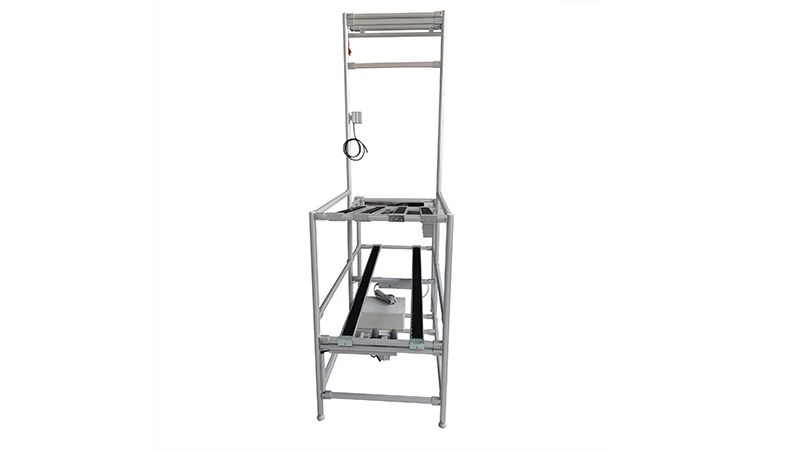
Walk into any compact workshop—whether it's a home garage, a small manufacturing cell, or a hobbyist's corner—and you'll likely spot the same challenge: space. Every square inch counts, and the line between a productive workspace and a cluttered mess often hinges on the tools and furniture you choose. Workbenches, in particular, are the heart of any workshop, but traditional options can feel like a necessary evil—bulky, fixed, and all too often the reason you're tripping over tools or struggling to fit that new shelf. But what if your workbench could do more than just hold your projects? What if it could actually save space, adapt to your needs, and grow with your workshop? Enter Aluminum Workbench C—a game-changer for anyone who's ever wished their workspace could work as hard as they do.
The Trouble with "One-Size-Fits-All" Workbenches
Let's start with the obvious: most workbenches aren't designed for small spaces. Wooden workbenches, while classic, are heavy, immovable, and often built with a "bigger is better" mindset. Steel workbenches, though durable, can be just as bulky, with fixed heights and permanent shelves that leave little room for flexibility. Even some so-called "compact" workbenches end up feeling like a compromise—too small to handle larger projects, too flimsy to support heavy tools, or too rigid to adapt when your workflow changes.
In a compact workshop, this rigidity is a dealbreaker. Maybe you need extra surface area for a weekend project but can't spare the space year-round. Or perhaps you shift between tasks—some days assembling small parts, other days cutting materials—and need your workbench to keep up. Traditional workbenches lock you into one layout, forcing you to choose between functionality and space. And in a workshop where every inch matters, that choice shouldn't have to be made.
Meet Aluminum Workbench C: Built for the Way You Actually Work
Aluminum Workbench C isn't just another workbench. It's a reimagining of what a workbench can be, designed from the ground up with compact spaces in mind. At its core is a simple but powerful idea: modularity without the mess . Instead of a fixed structure, it uses lightweight, high-strength aluminum extrusion profiles and aluminum pipe accessories to create a system that adapts to your space—not the other way around. Whether you need a slim, minimalist setup for daily tasks or a fully loaded workstation for a big project, Aluminum Workbench C scales up or down without wasting an inch.
But don't let the "aluminum" label fool you. This isn't a flimsy desk repurposed as a workbench. Aluminum extrusion profiles are engineered for strength—think aircraft-grade durability in a fraction of the weight of steel. That means Aluminum Workbench C can handle heavy tools, clamps, and projects without sagging, while still being light enough to reposition if you need to rearrange your workshop. It's the best of both worlds: sturdy enough for serious work, nimble enough for tight spaces.

Why Aluminum Extrusion Profiles Make All the Difference
To understand what sets Aluminum Workbench C apart, you need to look at the star of the show: aluminum extrusion profiles. These aren't your average metal tubes. Extruded aluminum is shaped by forcing heated aluminum through a die, creating uniform, precision-engineered profiles with built-in features like T-slots—long, narrow grooves that run along the length of the profile. These T-slots are the secret to the workbench's space-saving magic.
Unlike traditional workbenches with pre-drilled holes or welded shelves, T-slots let you attach aluminum pipe accessories—like brackets, shelves, tool holders, or even lighting—exactly where you need them, when you need them. No more drilling into the bench top or cluttering the surface with standalone tool organizers. Need a shelf for your drill? Slide a bracket into the T-slot, tighten a screw, and you're done. Finished with that project? Remove the shelf, and the T-slot stays smooth and unobtrusive, leaving your workbench surface clear. It's customization without commitment, and in a compact workshop, that's invaluable.
Aluminum extrusion profiles also shine when it comes to size. Aluminum Workbench C's base model starts at a slim 1200mm (width) x 600mm (depth)—small enough to fit in most corner spaces—yet the T-slot design means you can add extensions, side shelves, or overhead racks only when you need them. When the project is done, those add-ons come off, and your workbench shrinks back to its compact footprint. It's like having a expandable work surface that knows when to stay out of the way.

Key Features of Aluminum Workbench C: Space-Saving by Design
Let's break down the features that make Aluminum Workbench C a must-have for compact workshops. These aren't just bells and whistles—they're practical solutions to the daily headaches of working in tight quarters.
1. Ultra-Slim Footprint, No Compromise on Strength
At just 600mm deep, Aluminum Workbench C takes up 30% less floor space than a standard 900mm-deep wooden workbench. But don't mistake slim for weak. The aluminum extrusion profiles used in the frame are 40mm x 40mm—wide enough to distribute weight evenly, with a wall thickness of 2mm, ensuring it can handle up to 200kg of weight on the worktop. That's enough for power tools, metal sheets, or even a small milling machine. So you get a workbench that fits in the corner but doesn't back down from heavy-duty tasks.
2. Adjustable Height for Multitasking
Most workbenches come with a fixed height, forcing you to hunch or stretch depending on the task. Aluminum Workbench C solves this with adjustable legs, using aluminum pipe accessories called height-adjustable feet. These feet screw into the base of the workbench, letting you tweak the height from 750mm to 900mm in 10mm increments. Need to sit while assembling small parts? Lower it. Standing to use a circular saw? Raise it. This adaptability means you're not wasting space on a separate "sitting" and "standing" workbench—one Aluminum Workbench C does both.
3. Tool Integration That Clears the Clutter
Clutter is the enemy of space efficiency, and nowhere is that more true than on your workbench surface. Aluminum Workbench C uses aluminum pipe accessories to keep tools within arm's reach without crowding the top. Think T-slot-mounted tool hooks for hammers and wrenches, magnetic strips for screwdrivers, and even fold-down tool trays that tuck under the bench when not in use. One popular add-on is the "side rail"—a slim aluminum profile that attaches to the edge of the workbench, holding everything from tape measures to cable organizers. When you're done, the rail stays in place but doesn't take up surface space, keeping your bench clear for projects.
4. Optional Casters for Mobility (When You Need It)
Sometimes, the best way to save space is to move the workbench out of the way entirely. Aluminum Workbench C offers optional casters (sold separately) that attach to the base legs, turning it into a mobile workstation. The casters lock in place when you're working, so there's no wobble, but unlock with a tap of your foot when you need to roll the bench into a corner or out of the garage for cleaning. It's perfect for workshops where space doubles as a parking spot or storage area—just wheel it aside, and suddenly you've reclaimed 7 square feet of floor space.

Customization Without the Clutter: Aluminum Pipe Accessories in Action
What really makes Aluminum Workbench C a space-saving hero is how it uses aluminum pipe accessories to grow with your needs—without permanent additions. Let's say you're working on a month-long project that requires extra storage. Instead of buying a separate shelf (which would take up more space), you can add a "material rack B" (3 row and 3 floor) using aluminum pipe joints and brackets. The rack attaches directly to the side of the workbench via T-slots, adding vertical storage for lumber, tools, or parts. When the project ends, you detach the rack, and your workbench is back to its original slim profile.
Or maybe you need a roller track for sliding parts across the bench. Aluminum Workbench C works with plastic roller track guide rails (available in yellow or grey) that clip into the T-slots. No drilling, no glue—just snap them on when you need to move heavy items, then remove them when you're done. It's customization that's temporary, reversible, and 100% space-efficient. You're not stuck with features you'll never use again; you're building a workbench that changes as your projects do.
How Does Aluminum Workbench C Compare to Other Workbenches?
Still not convinced that Aluminum Workbench C is the right fit for your compact workshop? Let's put it head-to-head with two common alternatives: traditional wooden workbenches and standard steel workbenches. The table below breaks down how they stack up in key areas like space efficiency, weight, and adaptability.
| Feature | Aluminum Workbench C | Traditional Wooden Workbench | Standard Steel Workbench |
|---|---|---|---|
| Footprint (WxL) | 1200mm x 600mm (slim profile) | 1500mm x 900mm (bulky, fixed) | 1400mm x 800mm (wide base for stability) |
| Weight | 35kg (light enough to move with casters) | 80-100kg (immovable without help) | 60-70kg (heavy, hard to reposition) |
| Customization | Unlimited (T-slots + aluminum pipe accessories) | Limited (pre-drilled holes, permanent additions) | Basic (fixed shelves, few add-ons) |
| Space Efficiency | High (scales up/down with accessories) | Low (permanent size, no adaptability) | Medium (fixed size, some add-ons but bulky) |
| Durability | High (rust-resistant aluminum, scratch-proof top) | Medium (prone to warping, scratches, water damage) | High (rusts if not coated, heavy but sturdy) |
As you can see, Aluminum Workbench C outperforms traditional options in space efficiency and adaptability, while matching steel workbenches in durability. For compact workshops, that's a game-changing combination.
Real-World Stories: Compact Workshops, Big Results with Aluminum Workbench C
Don't just take our word for it—let's hear from workshop owners who've swapped their old workbenches for Aluminum Workbench C and never looked back.
Case Study 1: The Home Garage Turned Electronics Lab
Mark, a hobbyist electronics tinkerer, had a 10x12ft garage that doubled as his workshop. His old wooden workbench took up 40% of the space, leaving little room for his 3D printer and tool chest. "I could barely open the car door without hitting the bench," he says. After switching to Aluminum Workbench C, he reclaimed over 30 square feet. "I added a fold-down shelf for the 3D printer when I need it, then fold it up to park the car. The T-slots let me mount my soldering iron holder and parts bins right on the bench—no more digging through drawers. It's like having a workshop that shrinks when I don't need it."
Case Study 2: The Small-Batch Manufacturing Cell
A local furniture maker with a 200 sq ft production space was struggling to fit assembly, sanding, and finishing stations. Their steel workbench was heavy and fixed, limiting workflow. "We needed to rotate projects between stations, but the steel bench was a roadblock," explains the shop manager. Aluminum Workbench C with casters solved the problem. "Now we roll the bench to the assembly area in the morning, then wheel it to the sanding station in the afternoon. The aluminum profile is tough enough for clamping wood, and the slim depth lets us fit two workbenches where we used to have one. Productivity is up 25%—all because we stopped wasting space on a bench that couldn't move."
Installation & Maintenance: Simple, Even for Beginners
You might think a modular, aluminum extrusion-based workbench would be complicated to set up, but Aluminum Workbench C is designed for DIY assembly. The kit comes with pre-cut aluminum extrusion profiles, aluminum pipe joints, a hex key, and step-by-step instructions. Most users finish assembly in under 2 hours—no welding, no power tools required. The T-slots and aluminum pipe accessories snap or screw into place, so even if you're not handy, you can have a functional workbench by lunchtime.
Maintenance is just as easy. Aluminum is naturally rust-resistant, so a quick wipe with a damp cloth is all it takes to clean off sawdust, oil, or paint. The worktop (available in aluminum honeycomb or phenolic resin) resists scratches and heat, so you don't have to baby it. And if a part wears out—say, a caster wheel or a roller track connector—replacement aluminum pipe accessories are affordable and easy to swap in. Unlike wooden workbenches that warp or steel ones that rust, Aluminum Workbench C is built to last, with minimal upkeep.
Final Thoughts: A Workbench That Grows with Your Space
In a compact workshop, every decision comes down to trade-offs: Do I sacrifice functionality for space? Or clutter my workspace to get the tools I need? Aluminum Workbench C eliminates that choice. By combining lightweight aluminum extrusion profiles, modular aluminum pipe accessories, and a design focused on adaptability, it proves that you don't need a huge workshop to have a great workbench. You just need one that works with your space, not against it.
Whether you're a hobbyist in a home garage, a small manufacturer, or a crafter in a shared studio, Aluminum Workbench C is more than a piece of furniture—it's a space-saving partner. It's the workbench that knows your workshop is precious, and every inch deserves to be used wisely. So why settle for a bench that takes up space when you can have one that creates it?