- Company Articles
- Products and Technology
- Product knowledge
- Stainless Steel Swivel Roller Balls 1 Inch: Definition, Structure & Working Principle

Stainless Steel Swivel Roller Balls 1 Inch: Definition, Structure & Working Principle
Related Product
Stainless Steel Swivel Roller Balls 1 Inch
Swivel roller ball casters are convenient and flexible to roll,high-speed and stable operation, used for rotating and changing the direction of the conveyor.Ball transfer unit is made of high quality carbon steel, anti-corrosion and wear resistance.
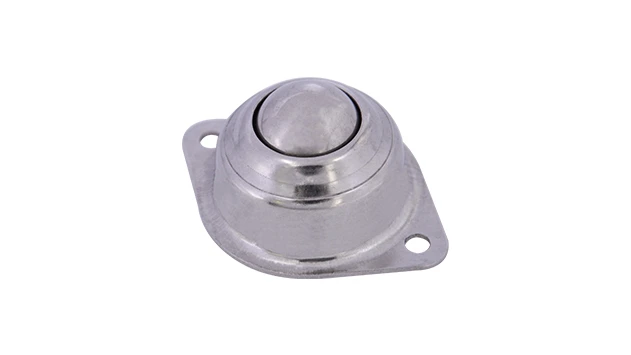
Walk into any modern manufacturing facility, and you'll notice a quiet hero keeping production lines moving: the stainless steel swivel roller ball. Specifically, the 1-inch variant has become a cornerstone in creating efficient, flexible workflows, from lean pipe workbenches to high-speed flow racks. These small, unassuming components play a huge role in reducing friction, improving material handling, and ultimately boosting productivity across industries like 3C assembly, medical device manufacturing, and automotive production. Let's dive into what makes these roller balls essential, how they're built, and why they're a staple in lean manufacturing systems.
What Are Stainless Steel Swivel Roller Balls 1 Inch?
At their core, 1-inch stainless steel swivel roller balls are compact, spherical components designed to enable smooth, multidirectional movement of materials. Unlike fixed rollers that only move in one direction, these balls rotate 360 degrees, allowing loads to glide horizontally, diagonally, or even in small circles with minimal effort. The "1-inch" refers to the diameter of the ball itself—a size that strikes a balance between load capacity and versatility, making it ideal for medium-weight applications common in assembly lines and warehouses.
Stainless steel is the material of choice here for good reason. Unlike plastic or mild steel alternatives, stainless steel (typically grade 304 or 316) resists rust, corrosion, and wear, even in harsh manufacturing environments where exposure to moisture, chemicals, or frequent cleaning is common. This durability ensures the roller balls maintain their performance over years of use, aligning perfectly with the "sustainable improvement" ethos of lean manufacturing.
Breaking Down the Structure: What Makes Them Tick?
While they may look simple, 1-inch stainless steel swivel roller balls are engineered with precision to deliver reliable performance. Let's break down their key components and how each part contributes to their functionality:
| Component | Material | Key Function |
|---|---|---|
| Swivel Ball | Stainless Steel 304/316 | Core rotating element enabling 360° movement; polished surface reduces friction |
| Housing Base | Aluminum Alloy or Galvanized Steel | Securely holds the ball in place; features mounting holes for attachment to workbenches/racks |
| Retaining Ring | Stainless Steel or Nylon | Prevents the ball from dislodging under load while allowing full rotation |
| Internal Bearings (Optional) | Steel or Ceramic | Enhances smooth rotation under heavy loads; common in industrial-grade models |
| Lubrication Layer | Food-Grade Grease or Dry Film Lubricant | Reduces friction between the ball and housing; extends lifespan |
One often-overlooked detail is the ball's surface finish. Most 1-inch stainless steel roller balls feature a mirror-like polish, which minimizes contact friction with materials. This is critical for preventing scratches on delicate components—say, a glass screen for a smartphone sliding across a lean pipe workbench—or reducing wear on the roller ball itself over time.
The housing base, usually made of lightweight aluminum alloy, is designed to integrate seamlessly with standard manufacturing setups. Many models include pre-drilled holes that align with common aluminum profile or lean pipe hole patterns, making installation a breeze. For example, mounting them to a flow rack or turnover trolley simply requires a few bolts, no specialized tools needed.

How Do They Work? The Science of Smooth Movement
The working principle of stainless steel swivel roller balls is elegantly simple: they convert sliding friction into rolling friction. When a load (like a bin of circuit boards or a component tray) is placed on top of multiple roller balls, the weight is distributed across each ball. As force is applied to move the load, the balls rotate, reducing the friction between the load and the surface by up to 80% compared to sliding on a flat table.
The 360° swivel capability is what truly sets these roller balls apart. Each ball acts as a tiny omnidirectional wheel, allowing the load to move in any direction without needing to be aligned with a track. This is especially useful in dynamic environments, like a lean pipe workbench where operators might need to pivot a product from one assembly step to the next or reposition a heavy tool with minimal effort.
Load capacity is another key factor. A single 1-inch stainless steel roller ball can typically support 50–100 pounds, depending on the design. When multiple roller balls are spaced evenly (common in flow racks or workbench surfaces), they can handle much heavier loads—think 500+ pounds for a full shelf of materials. This makes them versatile enough for everything from small electronic parts to larger mechanical components.

Where Do They Shine? Real-World Applications
Stainless steel swivel roller balls 1 inch are everywhere in manufacturing, often hiding in plain sight as part of larger systems. Here are some of their most common applications, and how they enhance productivity:
1. Lean Pipe Workbenches
On a lean pipe workbench—whether it's a single-deck Workbench E or a custom ESD workstation—roller balls are often embedded into the tabletop or mounted along the edges. This allows operators to slide components across the bench with one hand, freeing up the other for assembly tasks. In 3C assembly lines, where workers handle small, delicate parts like smartphone screens or circuit boards, this reduces fatigue and speeds up cycle times.
2. Flow Racks & Material Racks
Flow racks (like Material Rack B with 3 rows and 3 floors) rely on roller balls to create gravity-fed storage systems. When loaded from the back, materials slide forward to the picking end, ensuring first-in, first-out (FIFO) inventory management. The 1-inch balls are spaced to support standard bin sizes, so bins glide smoothly without jamming—critical for high-throughput environments like automotive part warehouses.
3. Turnover Trolleys & Conveyors
Turnover trolleys, used to transport materials between workstations, often feature roller ball tops. This allows workers to slide loads on and off the trolley without lifting, reducing the risk of injury. In conveyor systems, roller balls are sometimes used as transition points between different conveyor types (e.g., from a belt conveyor to a roller track), ensuring materials transfer smoothly without getting stuck.
Beyond these, you'll find them in medical device cleanrooms (where stainless steel's corrosion resistance meets hygiene standards), packaging lines (for aligning products before sealing), and even automated storage systems (as part of robotic picking stations). Their adaptability makes them a go-to for any scenario where "easy movement" translates to faster, safer work.
Why Choose Stainless Steel Swivel Roller Balls 1 Inch?
With so many material handling components available, why have these roller balls become a favorite in lean manufacturing? Here are their standout benefits:
- Durability That Lasts: Stainless steel resists rust, dents, and chemical damage, so they outlast plastic or coated steel alternatives—saving on replacement costs over time.
- Low Maintenance: No need for frequent lubrication (thanks to their pre-lubricated design) or cleaning beyond a quick wipe-down, keeping downtime to a minimum.
- Flexibility in Design: They work with any surface—wood, metal, aluminum profile—and integrate with existing systems like lean pipe joints or roller track connectors.
- Safety First: Smooth rolling reduces strain on workers, lowering the risk of musculoskeletal injuries from heavy lifting or pushing.
- Lean-Friendly: Their reusability and adaptability align with lean principles—easily reconfigure a workbench or flow rack by adding or moving roller balls as production needs change.
Pairing with Other Lean Components for Maximum Impact
Stainless steel swivel roller balls rarely work alone—they're part of a larger ecosystem of lean manufacturing tools. Here's how they team up with other components to create seamless workflows:
Aluminum Profiles & Lean Pipes: Mounting roller balls to aluminum profiles (like 4040 or 3030 series) creates modular work surfaces that can be adjusted in height or layout as needed. Lean pipe joints secure the profiles, while the roller balls add movement flexibility.
Roller Tracks & Flow Rails: In flow racks, roller balls often complement roller tracks (like the 40 steel roller track or 38 aluminum roller track). The tracks guide movement in a linear path, while the roller balls at the end allow for easy loading/unloading or direction changes.
Turnover Trolleys & Racks: When combined with turnover trolleys, roller balls transform static storage into mobile workstations. For example, a trolley with roller ball shelves can be wheeled directly to a lean pipe workbench, letting operators access materials without leaving their station.
Choosing the Right Roller Balls for Your Needs
Not all 1-inch stainless steel swivel roller balls are created equal. When selecting them for your facility, consider these factors:
- Load Requirements: Check the weight of the materials you'll be moving. Heavier loads may need reinforced housing or higher-grade stainless steel.
- Environment: In wet or corrosive settings (like food processing or marine manufacturing), opt for 316 stainless steel for extra corrosion resistance.
- Surface Compatibility: Ensure the mounting base fits your existing setup—aluminum profile holes, lean pipe spacing, or flow rack dimensions.
- ESD Needs: For electronics manufacturing (e.g., ESD workstations), look for conductive stainless steel options that dissipate static electricity, protecting sensitive components.
Final Thoughts: Small Component, Big Difference
Stainless steel swivel roller balls 1 inch may be small, but their impact on manufacturing efficiency is huge. By reducing friction, enabling multidirectional movement, and standing up to tough environments, they embody the lean manufacturing goal of "doing more with less." Whether they're part of a lean pipe workbench in a 3C assembly line or a flow rack in a medical warehouse, these roller balls keep production moving—quietly, reliably, and sustainably.
In a world where every second counts, it's the little innovations that often make the biggest difference. And when it comes to smooth, efficient material handling, 1-inch stainless steel swivel roller balls are proof that great things really do come in small packages.