- Company Articles
- Products and Technology
- Product knowledge
- Stainless Steel Swivel Roller Balls 1 Inch: How They Reduce Manual Labor in Production

Stainless Steel Swivel Roller Balls 1 Inch: How They Reduce Manual Labor in Production
Related Product
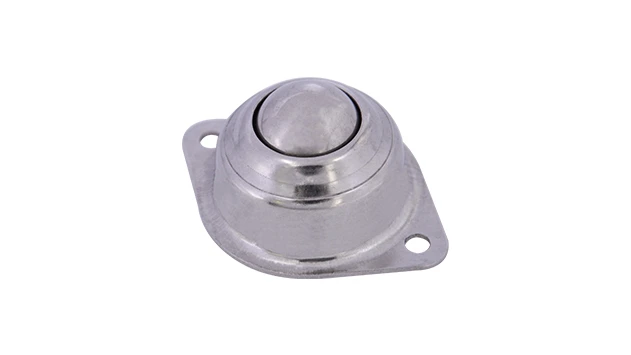
Stainless Steel Swivel Roller Balls 1 Inch
Swivel roller ball casters are convenient and flexible to roll,high-speed and stable operation, used for rotating and changing the direction of the conveyor.Ball transfer unit is made of high quality carbon steel, anti-corrosion and wear resistance.
Picture this: On a busy electronics assembly line, a worker bends over a workbench, straining to push a heavy tray of components across a wooden surface. Their hands grip tightly, muscles tensing with each slow, jerky movement. By mid-shift, fatigue sets in—speed drops, mistakes happen, and the risk of injury creeps up. Now, imagine that same tray gliding smoothly with just a light push, as if floating on air. That's the difference 1-inch stainless steel swivel roller balls make in production environments. These small but mighty components are quietly revolutionizing how manual labor is approached in factories, warehouses, and assembly lines, turning strenuous tasks into effortless actions and freeing up workers to focus on what truly matters: precision, quality, and innovation.
What Are 1-Inch Stainless Steel Swivel Roller Balls?
Before diving into their labor-saving magic, let's start with the basics. These roller balls are compact, spherical components typically made from high-grade stainless steel—chosen for its durability, corrosion resistance, and smooth surface. Each ball sits within a housing that allows 360-degree rotation, meaning they can move freely in any direction with minimal friction. At 1 inch in diameter, they strike the perfect balance: large enough to handle substantial weight (often up to 50kg per ball, depending on the design) yet small enough to fit into tight spaces on workbenches, racks, or conveyor systems.
What sets them apart from cheaper plastic alternatives? Stainless steel isn't just about shine—it's about longevity. In busy production settings where moisture, oils, or chemicals are present, plastic balls can warp, crack, or degrade over time. Stainless steel, on the other hand, stands up to daily wear, frequent cleaning, and harsh environments (think medical device manufacturing or food processing), ensuring consistent performance for years. This durability isn't just a bonus; it's a cost-saver, reducing the need for frequent replacements and maintenance.
The Core Role in Lean Production: Cutting Waste, Not Corners
In the world of manufacturing, "lean production" isn't just a buzzword—it's a philosophy centered on eliminating waste, improving efficiency, and creating sustainable workflows. One of the biggest hidden wastes in any production line is manual labor waste : the time, energy, and effort spent on tasks that could be simplified or automated. This is where 1-inch stainless steel swivel roller balls shine. By reducing the friction between materials and surfaces, they directly address this waste, turning physically demanding tasks into low-effort actions that align with lean principles like "continuous improvement" and "resource optimization."
Think about it: When moving a 20kg container across a flat surface without roller balls, a worker might exert 15-20kg of force. With roller balls, that force drops to just 2-3kg—an 85% reduction in physical strain. Multiply that by hundreds of movements per day, per worker, and the impact becomes staggering. Fatigue decreases, productivity rises, and the risk of musculoskeletal injuries (a leading cause of workplace downtime) plummets. It's lean in action: getting more done with less effort, and treating workers as valuable assets rather than replaceable labor.

Application 1: Lean Pipe Workbenches – Where Precision Meets Ease
Walk into any 3C assembly plant (think smartphones, laptops, or tablets), and you'll find lean pipe workbenches (lean pipe workbench) at the heart of production. These workbenches, built with modular aluminum pipes and joints, are designed for flexibility—easily reconfigured to match changing assembly needs. But even the most flexible workbench can't overcome a fundamental problem: the need to move tools, parts, and (semi-finished products) across its surface dozens of times per hour.
Enter 1-inch stainless steel swivel roller balls. When embedded into the surface of a lean pipe workbench, these balls transform it into a dynamic workspace where materials glide with minimal effort. For example, in a smartphone assembly line, a technician might need to shift a tray of circuit boards from one station to another multiple times. Without roller balls, each shift requires gripping and pushing, straining the wrists and arms. With roller balls, a gentle nudge sends the tray sliding smoothly to the next position, allowing the technician to keep their focus on soldering delicate components or inspecting for defects.
The benefits aren't just physical. Workers report feeling less drained at the end of shifts, leading to better concentration and fewer errors. A case study in a Chinese 3C factory found that after installing roller balls on 50 workbenches, assembly time per unit dropped by 12%, and rework rates (due to fatigue-related mistakes) decreased by 18%. "It's like night and day," one line supervisor noted. "Our team used to come to me complaining about sore backs; now, they're asking how we can add roller balls to more stations."

Application 2: Flow Racks – Let Gravity Do the Heavy Lifting
In warehouses and distribution centers, flow racks (flow rack) are the unsung heroes of "first-in, first-out" (FIFO) inventory management. These tilted racks allow materials to slide from the loading end to the picking end, ensuring older stock is used first and reducing waste. But without the right components, flow racks can become more of a hassle than a help. Sticky, jammed materials mean workers have to manually unclog the rack, pulling and tugging at boxes or bins—a frustrating, time-consuming task that defeats the purpose of FIFO.
Stainless steel swivel roller balls solve this problem by turning flow racks into self-sustaining systems. When mounted along the rails of a flow rack, these balls create a near-frictionless surface that lets materials glide downward under gravity, no human intervention needed. For example, in a medical device warehouse storing sterile kits, each box is loaded onto the high end of the rack and gently rolls to the picking front, ready for a nurse or technician to grab without bending, lifting, or reaching. The result? Picking time is cut by up to 30%, and the risk of damaging sensitive medical supplies (from rough handling) drops dramatically.
What about heavier items, like automotive parts or industrial tools? 1-inch stainless steel roller balls are up to the task. Their robust stainless steel construction can handle weights of 30kg or more per ball, making them ideal for metal components or bulky packages. In one automotive parts warehouse, replacing plastic rollers with stainless steel swivel balls reduced manual labor for restocking by 40%—workers no longer had to push or lift heavy bins onto the rack; they simply placed them at the top and let gravity (aided by the balls) do the rest.
Application 3: Conveyors – Smoothing the Path Between Processes
Conveyors (conveyor) are the arteries of production lines, moving materials from one process to the next. But even the most advanced conveyor systems hit snags—literally. When materials transition from one conveyor belt to another, or from a conveyor to a workbench, misalignment or friction can cause jams, delays, and damaged goods. This is where 1-inch stainless steel swivel roller balls act as "transition helpers," bridging gaps and ensuring a seamless flow.
Imagine a beverage bottling line: Bottles move along a main conveyor, then need to shift to a secondary line for labeling. Without roller balls, the transition might require a worker to manually guide each bottle, slowing down the entire line. With a strip of roller balls installed at the transfer point, bottles glide smoothly from one conveyor to the next, their momentum carrying them forward without sticking. This not only eliminates the need for a dedicated worker at the transition but also reduces bottlenecks, allowing the line to run at full capacity.
In food processing plants, where hygiene is non-negotiable, stainless steel roller balls are a game-changer. Unlike plastic or rubber alternatives, stainless steel is easy to clean and resistant to bacteria growth, meeting strict FDA standards. A meat packaging facility in Europe reported that after switching to stainless steel swivel balls on their conveyor transitions, cleaning time decreased by 25%, and the number of product recalls due to contamination dropped to zero. "We used to spend hours scrubbing plastic rollers that trapped food particles," said the plant manager. "Now, a quick wipe with a sanitizing cloth is all it takes."
Synergy with Lean Solutions: Building a Labor-Saving Ecosystem
While 1-inch stainless steel swivel roller balls are powerful on their own, their true potential shines when integrated into a broader lean solution. Companies like Sunqit specialize in designing custom lean systems that combine roller balls with lean pipe workbenches, flow racks, conveyors, and other components to create end-to-end workflows that minimize manual labor at every step. This isn't just about adding a few "gadgets"—it's about reimagining how work gets done.
Take a 3C assembly plant producing smartwatches. A custom lean solution might start with flow racks in the warehouse, where component bins roll smoothly to picking stations via roller balls. From there, the bins are placed on lean pipe workbenches (fitted with roller balls) where technicians assemble watch modules. Once assembled, the modules slide onto a conveyor (with roller ball transitions) that moves them to quality control, then to packaging. At every stage, manual labor is reduced: no lifting heavy bins, no pushing stuck trays, no guiding items through transitions. Workers become orchestrators of the process, not muscle-powered machines.
The beauty of these lean solutions is their adaptability. A medical device manufacturer might need roller balls that meet ESD (electrostatic discharge) standards to protect sensitive electronics, while a automotive plant might prioritize heavy-duty roller balls for metal parts. Sunqit's custom approach ensures that the roller balls, workbenches, racks, and conveyors are tailored to the industry's unique needs, creating a system that grows with the business and continues to reduce labor over time.
Real-World Impact: How Industries Are Cutting Labor Costs
Numbers tell the story best. Below is a snapshot of how 1-inch stainless steel swivel roller balls have reduced manual labor across three key industries, based on case studies and customer feedback:
| Industry | Application | Manual Labor Before Roller Balls | Improvements After Installation |
|---|---|---|---|
| 3C Assembly | Lean pipe workbenches for smartphone assembly | Workers spent 25% of shift pushing/pulling material trays; 10% of downtime due to fatigue. | Material handling time reduced by 40%; fatigue-related downtime dropped to 2%. |
| Medical Devices | Flow racks for sterile kit storage | Picking required 2 workers per rack; average 15 minutes per order. | 1 worker per rack; order picking time cut to 8 minutes (47% faster). |
| Automotive Parts | Conveyor transitions for metal components | 2 workers stationed at transitions to unjam parts; 5 jam-related delays per day. | 0 workers needed at transitions; 0 delays in 6 months of operation. |
These aren't just statistics—they're stories of workers who go home less tired, managers who meet production targets with ease, and businesses that stay competitive in a fast-paced global market. As one plant manager put it: "We didn't just buy roller balls; we invested in our team's well-being. And when your team feels valued, they perform better. It's a win-win."
Why Stainless Steel? The Material That Lasts
You might be wondering: Why stainless steel, and not plastic or aluminum? The answer lies in durability and versatility. Stainless steel is inherently resistant to rust, corrosion, and impact—critical in industrial environments where moisture, chemicals, or heavy use are common. A plastic roller ball might crack under the weight of a metal bin; an aluminum one might corrode in a humid warehouse. Stainless steel? It keeps rolling, year after year, with minimal maintenance.
This longevity translates to long-term cost savings. While stainless steel roller balls might have a slightly higher upfront cost than plastic alternatives, they rarely need replacement. A food processing plant in the US calculated that switching to stainless steel saved them $12,000 per year in replacement parts alone, not counting the labor saved from fewer maintenance shutdowns. Plus, stainless steel's smooth surface doesn't chip or degrade, ensuring consistent performance over time—no more sticky, uneven rolling as the balls wear down.
The Future of Manual Labor: Small Components, Big Change
As manufacturing evolves toward automation and Industry 4.0, it's easy to overlook the role of "small tech" in reducing manual labor. But 1-inch stainless steel swivel roller balls are a reminder that innovation doesn't always mean robots or AI. Sometimes, the most impactful solutions are the ones that work with human hands, making tasks easier, safer, and more efficient rather than replacing workers entirely.
In the end, the goal of lean production isn't just to cut costs—it's to create workplaces where people thrive. When workers no longer have to waste energy on strenuous, repetitive tasks, they can channel their skills into problem-solving, creativity, and quality control. And that's the real power of 1-inch stainless steel swivel roller balls: they don't just reduce manual labor—they elevate the human element of production, turning factories into spaces where technology and humanity work in harmony.
So the next time you see a smooth-gliding tray on a workbench or a bin rolling effortlessly down a flow rack, take a moment to appreciate the small, shiny heroes making it happen. Stainless steel swivel roller balls 1 inch might be tiny, but their impact on reducing manual labor is nothing short of revolutionary.