- Company Articles
- Products and Technology
- Application Cases
- Stainless Steel Swivel Roller Balls 1 Inch in Automotive Manufacturing: Key Uses

Stainless Steel Swivel Roller Balls 1 Inch in Automotive Manufacturing: Key Uses
Related Product
Stainless Steel Swivel Roller Balls 1 Inch
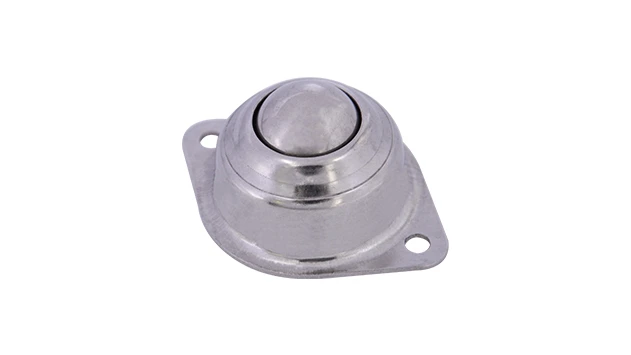
Swivel roller ball casters are convenient and flexible to roll,high-speed and stable operation, used for rotating and changing the direction of the conveyor.Ball transfer unit is made of high quality carbon steel, anti-corrosion and wear resistance.
Step onto the floor of a modern automotive manufacturing plant, and you'll immediately notice the rhythm of precision—robots assembling components with millimeter accuracy, workers moving materials with seamless coordination, and every process optimized to eliminate waste. In this high-stakes environment, even the smallest components play a critical role in keeping operations running smoothly. One such unsung hero? The 1-inch stainless steel swivel roller ball . These unassuming spheres, often integrated into larger systems like flow racks, conveyors, and workbenches, are the silent force behind the efficiency that defines today's automotive production lines. Let's dive into how these tiny but mighty components are transforming automotive manufacturing, and why they've become a cornerstone of lean systems worldwide.
What Are Stainless Steel Swivel Roller Balls, Anyway?
Before we explore their uses, let's get familiar with the star of the show. Stainless steel swivel roller balls—sometimes called "ball transfer units"—are small, spherical components mounted in a housing that allows them to rotate 360 degrees. The 1-inch size, in particular, strikes a balance between load capacity and flexibility, making it ideal for handling the medium-to-heavy parts common in automotive manufacturing. Crafted from high-grade stainless steel, they're built to resist corrosion, withstand repeated impacts, and operate smoothly even in dusty or oily factory environments.
But what really sets them apart is their ability to turn static surfaces into dynamic, friction-free zones. When mounted on a flat surface or integrated into a rack or conveyor, these roller balls let materials glide with minimal effort—whether you're sliding a 20-pound engine part across a workbench or moving a pallet of components along an assembly line. This simple mechanism might seem basic, but in a industry where seconds add up to thousands of dollars in productivity, it's nothing short of revolutionary.
Why 1 Inch? Why Stainless Steel? The Automotive Advantage
Automotive manufacturing isn't just about making cars—it's about making cars consistently , safely , and profitably . That's why every component choice matters, and the 1-inch stainless steel swivel roller ball checks all the boxes:
| Feature | Why It Matters in Automotive |
|---|---|
| 1-inch diameter | Supports weights up to 50-100 lbs per ball (depending on housing), perfect for automotive parts like brake assemblies, door panels, and transmission components. |
| Stainless steel construction | Resists rust from coolant, oil, and cleaning agents—critical in environments where moisture and chemicals are part of daily operations. |
| 360° swivel capability | Allows parts to move in any direction, reducing the need for lifting or repositioning (a major plus for worker ergonomics and speed). |
| Low friction operation | Minimizes effort to move materials, cutting down on manual labor and fatigue during long shifts. |
In short, these roller balls are designed to thrive in the tough conditions of automotive plants while delivering the precision and durability that manufacturers demand. Now, let's explore where they're making the biggest impact.

Key Uses in Automotive Manufacturing: Where Roller Balls Shine
From the moment raw materials arrive at the factory to the final inspection of a finished vehicle, 1-inch stainless steel swivel roller balls are hard at work. Here are their most critical roles:
1. Streamlining Material Handling with Flow Racks
Walk through any automotive parts warehouse, and you'll likely see rows of flow racks —tilted shelves where components "flow" from the back to the front as items are picked. These racks are the backbone of just-in-time (JIT) inventory systems, ensuring parts are always within reach of assembly line workers. And at the heart of these flow racks? You guessed it: 1-inch stainless steel swivel roller balls.
Imagine a flow rack stocked with brake calipers, each weighing around 15 pounds. Without roller balls, workers would have to reach deep into the rack, pull the caliper forward, and lift it out—wasting time and straining their backs. With roller balls, the caliper slides forward effortlessly as the front item is removed, thanks to gravity and the low-friction glide of the balls. This not only speeds up picking times but also reduces the risk of repetitive strain injuries—a win for both productivity and worker well-being.
Automotive plants often customize these flow racks to fit specific parts, and 1-inch roller balls are versatile enough to adapt. Whether the rack is holding small sensors or larger components like alternators, the balls ensure smooth, consistent movement, even when racks are loaded to capacity.
2. Powering Conveyors: The Lifeline of Assembly Lines
Automotive assembly lines are marvels of engineering, with vehicles moving from station to station as workers add everything from wiring harnesses to wheels. But what moves the parts to the line? Conveyor systems —and many of these systems rely on 1-inch stainless steel swivel roller balls to keep materials flowing.
Take, for example, the "pick-to-light" conveyors that feed components to workers at each assembly station. These conveyors use a series of roller balls mounted on a flat or slightly inclined surface, allowing bins of screws, bolts, or gaskets to slide directly to the worker. Because the balls swivel, workers can easily reposition the bin with a light push, keeping their focus on the task at hand rather than wrestling with heavy containers.
In more complex setups, roller balls are integrated into "transfer tables"—sections where conveyors meet or change direction. Instead of using belts or chains (which can jam or require frequent maintenance), these tables use a grid of 1-inch roller balls to let pallets or part trays glide smoothly from one conveyor to another. This is especially useful in automotive plants, where assembly lines often have multiple branches (e.g., one line for sedans, another for SUVs) that need to merge or split without interrupting flow.
3. Enhancing Workbenches: Where Precision Meets Productivity
The assembly line isn't the only place where automotive magic happens. Workbenches—where technicians assemble sub-components like dashboards or suspension parts—are equally critical. Here, 1-inch stainless steel swivel roller balls transform static work surfaces into dynamic workstations that adapt to the task at hand.
Consider a workstation where workers assemble door panels, which can weigh up to 30 pounds. Without roller balls, moving the panel to access different bolts or clips would require lifting and twisting—slow and potentially dangerous. With a workbench embedded with 1-inch roller balls, the panel floats on the surface, allowing the worker to rotate it, tilt it, or slide it with one hand while using the other to install components. This level of flexibility cuts assembly time by up to 20%, according to industry studies, and reduces errors caused by awkward positioning.
Many automotive plants also use these roller balls in ESD workbenches (electrostatic discharge-safe workstations) for handling sensitive electronics like airbag controllers or infotainment systems. The stainless steel construction of the roller balls ensures they don't generate static electricity, protecting delicate components from damage—another example of how these small parts contribute to quality control.
4. Simplifying Quality Control and Inspection
In automotive manufacturing, quality control is non-negotiable. Every part—from a single screw to an entire engine block—must meet strict standards before it moves to the next stage. 1-inch stainless steel swivel roller balls play a key role here, too, by making inspection processes faster and more accurate.
Imagine inspecting a car door for dents or paint defects. The door, which might weigh 40 pounds, needs to be rotated, tilted, and examined from every angle. Placing it on a table fitted with 1-inch roller balls lets inspectors maneuver the door with minimal effort, ensuring they don't miss a single flaw. Similarly, in parts testing—like checking the alignment of a steering column—roller balls allow technicians to adjust the part's position smoothly, making measurements more precise and repeatable.
Even in automated inspection stations, roller balls are invaluable. Robotic arms can place parts on roller-ball-equipped surfaces, where the balls allow the part to self-center or rotate into the correct position for cameras or sensors to scan. This reduces the need for complex robotic programming and speeds up inspection cycles.
5. Supporting Lean Manufacturing: Waste Reduction in Action
At its core, automotive manufacturing is a masterclass in lean system principles—eliminating waste, optimizing flow, and continuously improving processes. 1-inch stainless steel swivel roller balls align perfectly with this philosophy, addressing three key types of waste: motion, time, and labor.
- Motion waste: By letting materials glide instead of requiring lifting or dragging, roller balls reduce unnecessary movement for workers. A study by the Manufacturing Institute found that factories using roller balls in workbenches and flow racks saw a 35% reduction in "non-value-added motion" by workers.
- Time waste: In assembly lines, seconds matter. Roller balls cut down on the time it takes to move parts, from picking to positioning. For example, a plant assembling transmissions reported a 12% increase in units per hour after retrofitting workbenches with 1-inch roller balls.
- Labor waste: When materials move more easily, fewer workers are needed to handle them. A single worker can manage a larger section of a flow rack or conveyor line, freeing up others to focus on skilled tasks like quality checks or complex assembly.
But lean isn't just about cutting costs—it's about adaptability. Automotive plants frequently reconfigure production lines to launch new models or adjust to market demand. Stainless steel swivel roller balls make this reconfiguration easy: they can be unbolted from one surface and reinstalled elsewhere, making them a reusable, sustainable solution that aligns with the "circular economy" goals many manufacturers now prioritize.

Beyond the Line: Other Surprising Uses in Automotive Plants
While flow racks, conveyors, workbenches, and inspection stations are the primary uses, 1-inch stainless steel swivel roller balls pop up in other clever ways around automotive facilities:
Pallet handling: Loading docks often use roller-ball-equipped platforms to slide heavy pallets of parts onto forklifts or into storage. The 1-inch size handles the weight of fully loaded pallets (up to 2,000 lbs when multiple balls are used) without buckling.
Tool storage: Tool carts with roller-ball tops let mechanics quickly slide heavy toolboxes or equipment on and off, keeping essential tools within reach during repairs or maintenance.
Packaging and shipping: After vehicles are assembled, parts like spare tires or accessories are packed into boxes. Roller-ball tables in shipping areas let workers slide these boxes onto trucks or sorting conveyor lines with minimal effort.
The Bottom Line: Why Automotive Manufacturers Can't Afford to Overlook These Balls
At the end of the day, automotive manufacturing is a business—and every investment must deliver a return. 1-inch stainless steel swivel roller balls might seem like a small expense, but their impact on the bottom line is significant. Consider this: a mid-sized automotive plant with 10 assembly lines could save over $200,000 annually by reducing labor time, cutting down on worker injuries, and increasing throughput—all thanks to these tiny components.
But beyond the numbers, they represent something bigger: the power of smart, simple solutions in a complex industry. In a world of AI-driven robots and advanced automation, it's easy to overlook the basics. But as automotive manufacturers continue to push for greater efficiency, sustainability, and safety, the 1-inch stainless steel swivel roller ball remains a reminder that sometimes, the most innovative solutions are the ones that let things… just glide.
Final Thoughts: The Future of Roller Balls in Automotive Manufacturing
As electric vehicles (EVs) and autonomous driving technologies reshape the automotive industry, the demand for flexible, efficient manufacturing processes will only grow. EV batteries, for example, are heavier and more delicate than traditional engine components—making the load capacity and smooth movement of 1-inch roller balls even more valuable. Meanwhile, the shift toward modular production (where vehicles are built from interchangeable parts) will require flow racks and conveyors that can adapt to new part sizes and weights—something stainless steel roller balls, with their durability and reusability, are uniquely suited to handle.
So the next time you see a car rolling off the lot, take a moment to appreciate the unseen heroes that helped build it. From the flow racks stocked with parts to the workbenches where technicians assemble components, 1-inch stainless steel swivel roller balls are there, quietly keeping the wheels of automotive manufacturing turning—one smooth glide at a time.