- Company Articles
- Products and Technology
- Procurement Guidelines
- Stainless Steel Swivel Roller Balls 1 Inch: Key Factors to Consider Before Purchase

Stainless Steel Swivel Roller Balls 1 Inch: Key Factors to Consider Before Purchase
Related Product
Stainless Steel Swivel Roller Balls 1 Inch
Swivel roller ball casters are convenient and flexible to roll,high-speed and stable operation, used for rotating and changing the direction of the conveyor.Ball transfer unit is made of high quality carbon steel, anti-corrosion and wear resistance.
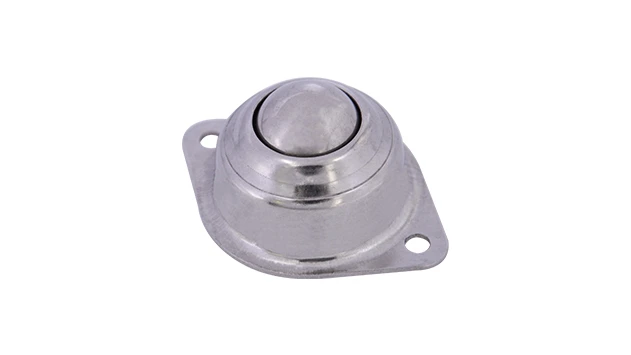
In the world of manufacturing, it's often the smallest components that make the biggest difference. Take the 1 inch stainless steel swivel roller balls, for example—these tiny, unassuming parts are the unsung heroes behind smooth material flow, efficient workstation operations, and seamless production lines. Whether you're setting up a new flow rack, upgrading a conveyor system, or building a custom lean pipe workbench, choosing the right swivel roller balls can mean the difference between a friction-free workflow and a frustrating, error-prone process. But with so many options on the market, how do you know which ones are right for your needs? Let's break down the key factors you should keep in mind before making a purchase, so you can avoid costly mistakes and build a system that truly supports your team's efficiency.
1. Material Quality: Not All "Stainless Steel" Is Created Equal
When shopping for stainless steel swivel roller balls, the first thing to check is the material itself. You might think "stainless steel" is a universal term, but the reality is that different grades and finishes can drastically impact performance—especially in demanding manufacturing environments. Let's start with the basics: stainless steel is prized for its corrosion resistance, but that resistance depends on the alloy. The two most common grades you'll encounter are 304 and 430, and understanding their differences is crucial.
304 vs. 430: Which Grade Fits Your Environment?
Grade 304 stainless steel, often called "food-grade" stainless, contains nickel and chromium, giving it excellent resistance to rust, acids, and moisture. This makes it ideal for environments like medical device manufacturing, pharmaceutical labs, or food processing facilities—places where cleanliness and corrosion resistance are non-negotiable. Imagine a medical equipment assembly line where even a tiny rust spot could compromise product safety; 304 roller balls would be the reliable choice here, standing up to frequent cleaning with harsh disinfectants without deteriorating.
On the other hand, grade 430 stainless steel is more budget-friendly but has lower nickel content, making it less resistant to extreme moisture or chemicals. It's a solid option for dry, indoor environments like electronics assembly lines or automotive parts storage, where exposure to water or corrosive substances is minimal. The key here is to match the grade to your workspace conditions—overspending on 304 for a dry workshop might not be necessary, but skimping on 430 for a humid warehouse could lead to premature rust and frequent replacements.
On the other hand, grade 430 stainless steel is more budget-friendly but has lower nickel content, making it less resistant to extreme moisture or chemicals. It's a solid option for dry, indoor environments like electronics assembly lines or automotive parts storage, where exposure to water or corrosive substances is minimal. The key here is to match the grade to your workspace conditions—overspending on 304 for a dry workshop might not be necessary, but skimping on 430 for a humid warehouse could lead to premature rust and frequent replacements.
Surface Finish: Smoothness Matters for Material Flow
Beyond the grade, pay attention to the surface finish of the roller balls. A rough or uneven finish can create friction, causing materials to stick or move inconsistently—exactly what you're trying to avoid with a swivel roller system. Look for balls with a polished finish (often labeled as "mirror polish" or "brushed finish"), which reduces friction and makes cleaning easier. In high-precision settings like 3C assembly, where delicate circuit boards or small components are sliding across a workbench, a smooth surface can prevent scratches or snags that damage products.
Real-World Example: A consumer electronics manufacturer was struggling with frequent jams on their flow rack, where smartphone cases were getting stuck mid-slide. After inspecting, they realized the culprit was low-quality roller balls with a rough surface finish. Switching to 304 stainless steel balls with a polished finish eliminated the jams, increasing their (picking efficiency) by 20% and reducing product damage by nearly half.
2. Load Capacity: Don't Underestimate Your Needs
One of the biggest mistakes buyers make is choosing roller balls based solely on size (1 inch, in this case) without checking the load capacity. Just because two balls are the same diameter doesn't mean they can handle the same weight—and overloading them is a recipe for disaster. Let's break down what you need to know to avoid this pitfall.
Static vs. Dynamic Load: Know the Difference
Load capacity specs usually list two numbers: static load (the weight a ball can support when stationary) and dynamic load (the weight it can handle while moving). For example, a ball might have a static load of 50 lbs but a dynamic load of only 30 lbs. Why the difference? When materials are sliding or rolling, the force exerted on the balls is uneven—think of a heavy cart hitting a roller track; the initial impact is harder than just sitting still. Ignoring dynamic load can lead to bent balls, cracked housings, or even system failure during operation.
To calculate your needs, start by estimating the average weight of the items that will pass over the roller balls. If you're using them on a workbench for assembling small 3C parts (like phone chargers), a lower dynamic load (around 20-30 lbs) might suffice. But if they're part of a conveyor system moving automotive components (like engine parts), you'll need a much higher capacity—sometimes 100 lbs or more per ball.
To calculate your needs, start by estimating the average weight of the items that will pass over the roller balls. If you're using them on a workbench for assembling small 3C parts (like phone chargers), a lower dynamic load (around 20-30 lbs) might suffice. But if they're part of a conveyor system moving automotive components (like engine parts), you'll need a much higher capacity—sometimes 100 lbs or more per ball.
Spacing and Distribution: It's a Team Effort
Remember: the total load isn't just on one ball—it's distributed across multiple balls in your system. For example, a flow rack with 1 inch roller balls spaced 4 inches apart can support more weight than one with balls spaced 8 inches apart. When planning your setup, work with your supplier to determine the optimal spacing based on your average load. A good rule of thumb: the heavier the items, the closer the spacing. This ensures no single ball bears too much weight, extending the life of the entire system.

3. Application Compatibility: Will They Work with Your Existing System?
You've checked the material and load capacity—now it's time to make sure the 1 inch stainless steel swivel roller balls play well with your existing setup. After all, even the highest-quality balls won't help if they don't fit your lean pipe system, flow rack, or workbench. Here's what to verify before buying.
Fitting Your Lean Pipe System or Aluminum Profile
Most manufacturing facilities use lean pipe systems (often with aluminum or steel pipes) or aluminum profiles to build workbenches, flow racks, and conveyor frames. The roller balls you choose need to attach securely to these structures—so check the mounting hardware compatibility. For example, some balls come with threaded stems that screw into pre-drilled holes in aluminum profiles, while others require clips or brackets that attach to lean pipes. If you're using a standard lean pipe system with 28mm or 30mm pipes, make sure the ball's mounting bracket is designed to clamp onto that size without slipping.
If you're building a custom setup, don't hesitate to ask your supplier for samples or technical drawings. A reputable lean solution provider will be happy to help you test compatibility—saving you from ordering hundreds of balls that don't fit your frames.
If you're building a custom setup, don't hesitate to ask your supplier for samples or technical drawings. A reputable lean solution provider will be happy to help you test compatibility—saving you from ordering hundreds of balls that don't fit your frames.
ESD Sensitivity: A Must for Electronics Manufacturing
If you work in electronics manufacturing (like 3C assembly or semiconductor production), electrostatic discharge (ESD) is a critical concern. Static electricity can fry sensitive components, costing thousands in damaged goods. While stainless steel itself is conductive, not all roller balls are designed for ESD protection. Look for balls labeled as "ESD-safe" or check if they come with conductive coatings or grounding features. These balls help dissipate static charge, keeping your products safe as they slide across workbenches or conveyor systems.
Pro Tip: If your workspace requires ESD protection, pair ESD-safe roller balls with an ESD workstation or ESD workbench for full coverage. This creates a complete static-controlled environment, from the work surface to the material flow system.

4. Durability and Maintenance: Long-Term Value Over Short-Term Savings
No one wants to replace roller balls every few months—that's a hassle, disrupts production, and eats into your budget. Durability and ease of maintenance are key factors that separate high-quality balls from cheap knockoffs. Here's what to look for to ensure your investment lasts.
Ball Retention and Housing Quality
The roller ball itself is only as good as the housing that holds it. Low-quality housings (often made of thin plastic or weak metal) can crack or warp under load, causing balls to pop out or seize up. Opt for housings made of thick, durable materials like reinforced nylon or aluminum—these can withstand daily wear and tear, even in high-traffic areas. Additionally, check the ball retention mechanism: some designs use a snap ring or retaining plate to keep the ball in place, while others rely on friction. Snap rings are more secure for heavy loads, as they prevent the ball from dislodging during use.
Maintenance Needs: How Easy Is It to Keep Them Rolling?
Even the best roller balls need occasional maintenance, but some are easier to care for than others. Stainless steel is naturally low-maintenance, but in dusty or oily environments (like mechanical workshops), balls can accumulate debris that causes (jamming). Look for designs with sealed bearings or lubrication ports—sealed bearings keep dirt out, while lubrication ports let you add oil or grease without disassembling the housing. For busy facilities with little downtime, this can save hours of maintenance work over the life of the system.
Avoid balls with complex disassembly requirements; if you need a special tool just to clean or replace a ball, you're more likely to put off maintenance until it's too late. Simple, user-friendly designs mean your team can keep the system running smoothly with minimal effort.
Avoid balls with complex disassembly requirements; if you need a special tool just to clean or replace a ball, you're more likely to put off maintenance until it's too late. Simple, user-friendly designs mean your team can keep the system running smoothly with minimal effort.
5. Supplier Reliability: More Than Just a Vendor
Finally, don't overlook the importance of choosing the right supplier. A reliable supplier isn't just a place to buy products—they're a partner who understands your manufacturing needs and can help you find the best solutions. Here's what to look for when evaluating potential suppliers.
Industry Experience and Customization Capabilities
Look for suppliers with deep experience in manufacturing, especially in your specific industry. A supplier who specializes in lean solutions for 3C assembly will understand your need for precision and ESD safety, while one focused on (warehousing and logistics) will know how to optimize flow rack systems for heavy loads. Additionally, check if they offer customization—sometimes off-the-shelf roller balls aren't perfect for your unique setup, and a supplier who can adjust ball hardness, housing design, or mounting options will help you get the exact performance you need.
Quality Control and Testing
Ask about the supplier's quality control processes. Do they test each batch of roller balls for load capacity, surface finish, and corrosion resistance? Can they provide certificates (like ISO 9001) to back up their claims? A supplier who skips these steps is more likely to deliver inconsistent products—some balls might work great, others might fail prematurely. Reputable suppliers stand behind their products with warranties and are transparent about their testing methods.
Conclusion: Small Parts, Big Impact on Lean Manufacturing
Choosing the right 1 inch stainless steel swivel roller balls might seem like a small decision, but it has a ripple effect across your entire operation. From smoother material flow and fewer jams to longer system life and lower maintenance costs, the right balls lay the groundwork for efficient, lean manufacturing. By focusing on material quality, load capacity, compatibility, durability, and supplier reliability, you can avoid common pitfalls and invest in a solution that supports your team's goals for years to come.
Remember, lean production is all about eliminating waste—whether that's wasted time from jams, wasted money from frequent replacements, or wasted effort from poor system design. The right swivel roller balls help you do just that, turning even the smallest component into a tool for greater efficiency. So take the time to evaluate your needs, ask questions, and partner with a supplier who understands manufacturing as well as you do. Your production line (and your bottom line) will thank you.
Remember, lean production is all about eliminating waste—whether that's wasted time from jams, wasted money from frequent replacements, or wasted effort from poor system design. The right swivel roller balls help you do just that, turning even the smallest component into a tool for greater efficiency. So take the time to evaluate your needs, ask questions, and partner with a supplier who understands manufacturing as well as you do. Your production line (and your bottom line) will thank you.