- Company Articles
- Products and Technology
- Product knowledge
- Stainless Steel vs. 40 Steel Roller Track White Wheel: Corrosion Resistance

Stainless Steel vs. 40 Steel Roller Track White Wheel: Corrosion Resistance
Related Product
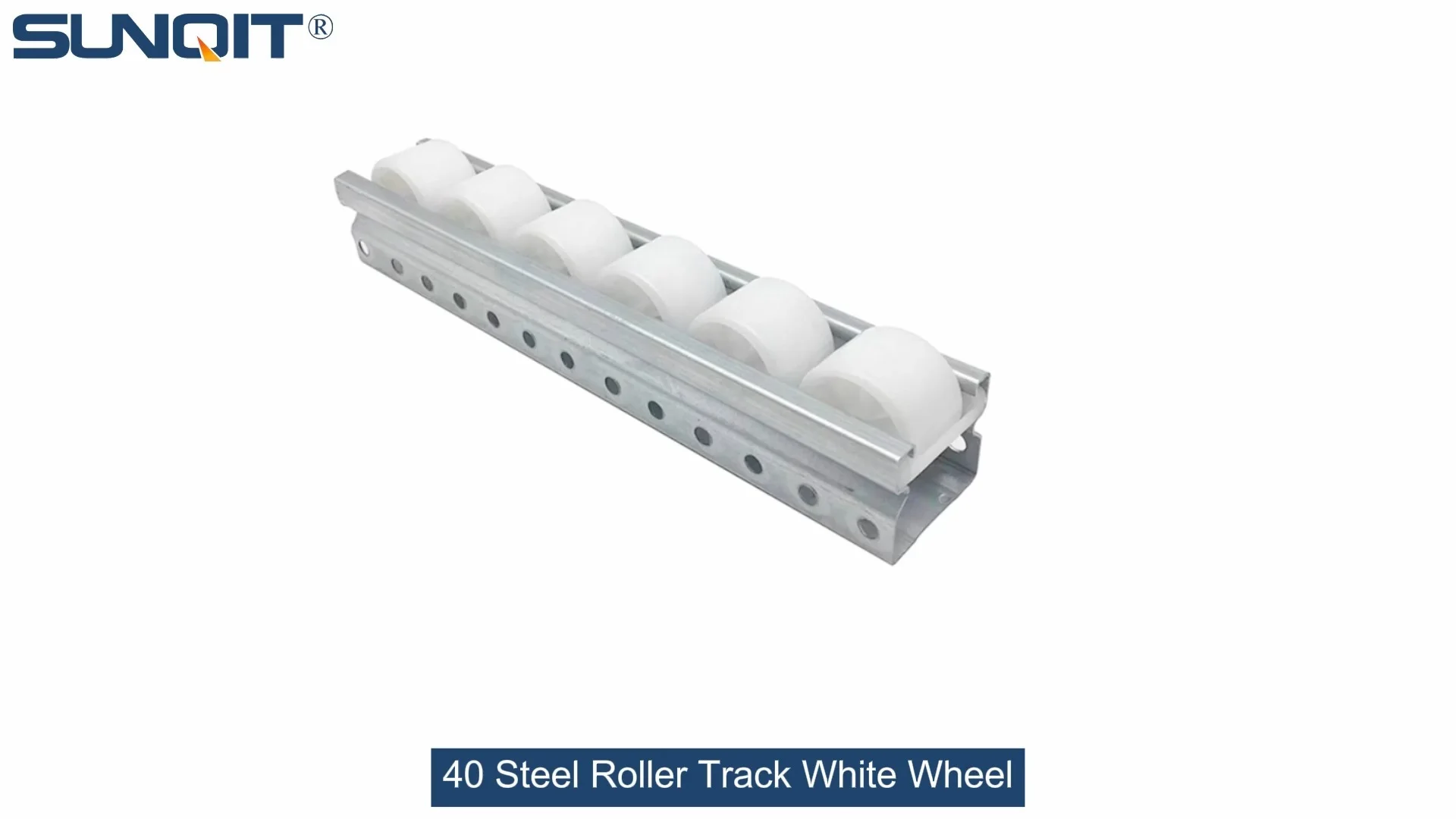
40 Steel Roller Track White Wheel
The roller track can be installed with multiple accessories to create different slopes and configurations of flow racks.All steel conveyor 40 roller track accessories are engineered to perfectly fit the sliding rail.
Roller tracks are the silent workhorses of modern manufacturing lines, quietly moving components from one station to the next, ensuring that production flows smoothly without interruptions. But not all roller tracks are created equal—especially when it comes to one critical factor: corrosion resistance. Whether you're running a 3C assembly line, a medical device factory, or a food processing plant, the choice between stainless steel roller tracks and 40 steel roller tracks with white wheels can make a huge difference in your operation's efficiency, maintenance costs, and overall lifespan. In this article, we'll dive deep into these two options, comparing their corrosion resistance properties, real-world applications, and how they fit into a lean solution for your manufacturing needs. Roller tracks are also key components of conveyor systems, so understanding their corrosion resistance is essential for building reliable, long-lasting conveyors.
What Is Stainless Steel Roller Track?
Stainless steel roller tracks are part of the stainless steel pipe series, crafted from high-quality stainless steel alloys—usually 304 or 316 grade. These alloys contain chromium, which forms a thin, invisible passive layer on the surface when exposed to oxygen. This layer acts as a shield, preventing rust and corrosion from taking hold, even when the track is exposed to moisture, chemicals, or harsh cleaning agents.
One of the key benefits of stainless steel roller tracks is their exceptional durability in challenging environments. For example, in a medical device manufacturing facility, where equipment must be sanitized regularly with strong disinfectants, stainless steel tracks hold up perfectly. They don't rust, they're easy to clean, and they maintain their structural integrity over time. In food processing plants, where moisture and acidic substances are common, stainless steel is the go-to choice because it doesn't react with these elements, ensuring both product safety and long-term performance.
Another advantage is their reusability. As part of a lean system, stainless steel roller tracks can be repurposed or modified as your production needs change, aligning with the "sustainable improvement" that lean manufacturing emphasizes. They don't degrade quickly, so you won't have to replace them as often, reducing waste and saving costs in the long run.
Stainless steel roller tracks are also resistant to temperature fluctuations, making them suitable for both high-temperature and low-temperature environments. This versatility is a major plus for industries that operate in extreme conditions.
What Is 40 Steel Roller Track White Wheel?
40 steel roller track white wheel is a cost-effective alternative, made from 40 carbon steel that's coated with a white protective layer—typically a powder coating. This coating serves as a barrier against corrosion, protecting the underlying steel from moisture and minor environmental factors.
The white powder coating not only adds corrosion resistance but also gives the track a clean, professional look, which is ideal for environments like 3C assembly lines or electronic manufacturing facilities where aesthetics and a controlled environment are important. The 40 steel base provides strength and load-bearing capacity, making these tracks suitable for most general manufacturing applications where the environment isn't overly harsh.
However, it's important to note that the protective coating is not as robust as the passive layer on stainless steel. If the coating gets scratched or chipped, the underlying steel can start to rust, especially if exposed to moisture or chemicals. That's why these tracks are best used in controlled environments where they won't be subjected to frequent harsh cleaning or extreme humidity.
Despite this limitation, 40 steel roller track white wheel is a popular choice for many manufacturers because of its affordability. It offers a good balance between performance and cost, making it a great option for budget-conscious operations that don't face extreme corrosion risks.
Corrosion Resistance Comparison
To help you make an informed decision, let's compare the corrosion resistance properties of these two roller tracks side by side. The salt spray test (ASTM B117) is a common method to evaluate corrosion resistance—here's how they stack up:
| Factor | Stainless Steel Roller Track | 40 Steel Roller Track White Wheel |
|---|---|---|
| Material Composition | 304/316 stainless steel with 18-20% chromium (304) or 16-18% chromium (316) | 40 carbon steel with white polyester powder coating |
| Core Corrosion Resistance Mechanism | Passive chromium oxide layer that self-heals when damaged (if oxygen is present) | Physical barrier from powder coating; no self-healing property—scratch = rust risk |
| Resistance to Moisture | Excellent—withstands constant water exposure without rusting | Good—only if coating is intact; vulnerable to rust in high humidity if scratched |
| Resistance to Chemicals | High—resists most acids, alkalis, and disinfectants (316 grade is better for harsh chemicals) | Low—coating can be damaged by strong chemicals, leading to rust |
| Salt Spray Resistance (ASTM B117) | 304: >1000 hours; 316: >2000 hours (no visible rust) | 200-500 hours (starts showing rust spots after this period) |
| Maintenance Requirements | Low—only regular cleaning with mild detergents; no coating touch-ups needed | Moderate—inspect monthly for scratches/chips; touch up coating immediately if damaged |
| Expected Lifespan in Harsh Environments | 10+ years (minimal degradation) | 3-5 years (needs replacement due to corrosion) |
| Cost Point | Higher initial cost (2-3x more than 40 steel) | Lower initial cost (budget-friendly option) |
| Best For | Medical, food processing, chemical handling | 3C assembly, dry manufacturing, warehouse storage |
This table clearly shows that stainless steel roller tracks outperform 40 steel white wheel tracks in terms of corrosion resistance, especially in challenging environments. However, the 40 steel option offers a more budget-friendly solution for less demanding applications. It's all about finding the right balance for your specific needs.
Roller Track and Accessories: A Complete Corrosion-Resistant System
It's not just the roller tracks themselves—you also need to consider the accessories that go with them. For a fully corrosion-resistant system, the accessories (like connectors, brackets, and casters) should match the corrosion resistance of the tracks.
For stainless steel roller tracks, we offer stainless steel accessories that are just as corrosion-resistant as the tracks. This ensures that the entire system holds up well in harsh environments. For example, stainless steel connectors won't rust, even when exposed to moisture or chemicals, so the track remains stable and functional over time.
For 40 steel roller track white wheel, we offer coated accessories that complement the track's coating. These accessories are designed to work seamlessly with the white wheel tracks, providing a cohesive look and adequate corrosion resistance for controlled environments.
Choosing the right accessories is an important part of building a reliable roller track system. It ensures that every component works together to minimize corrosion and maximize performance, aligning with your lean system's goals of eliminating waste and improving efficiency.
Real-World Applications: Which One Fits Your Industry?
Let's take a look at some real-world scenarios and case studies to understand how these tracks perform in different industries:
Medical Device Manufacturing
Medical device factories require strict hygiene standards, and equipment must be cleaned with powerful disinfectants regularly. Stainless steel roller tracks are the only viable option here because they resist corrosion from these chemicals and are easy to sanitize. Using 40 steel white wheel tracks would lead to rapid corrosion and potential contamination, which is unacceptable in this industry.
Case Study: Medical Device Factory Downtime Reduction
A leading medical device manufacturer was using 40 steel white wheel tracks in their assembly line. They noticed frequent downtime due to rusted tracks, which caused jams and required monthly replacements. After switching to stainless steel roller tracks, they saw a 50% reduction in downtime and haven't had to replace any tracks in over a year. The initial investment was higher, but the long-term savings far outweighed the cost.
3C Assembly Line
3C assembly lines (like those producing smartphones or laptops) operate in controlled environments with low humidity and minimal exposure to chemicals. 40 steel roller track white wheel is a great fit here—it's cost-effective, has a clean look, and performs well under these conditions. The white color also helps workers spot any debris or defects on the track easily, aligning with lean's focus on quality control.
Case Study: 3C Manufacturer Cost Savings
A 3C assembly plant was considering stainless steel tracks but was concerned about the cost. They opted for 40 steel roller track white wheel instead. After two years of operation, they haven't experienced any corrosion issues, and they saved 30% on their initial equipment cost compared to using stainless steel. The white color of the tracks also helped their quality control team spot debris quickly, reducing defects by 15%.
Food Processing Plant
Food processing plants are high-moisture environments where equipment is cleaned with acidic or alkaline solutions. Stainless steel roller tracks are essential here because they don't rust or react with these substances, ensuring food safety. 40 steel tracks would rust quickly, leading to product contamination and downtime.
Automotive Parts Manufacturing
Automotive parts factories often have moderate humidity and use oil-based lubricants. Depending on the specific area, both options can work. For areas where parts are washed with water, stainless steel is better. For dry assembly areas, 40 steel white wheel tracks are a cost-effective choice.
How Corrosion Resistance Impacts Your Lean System
Lean manufacturing is all about eliminating waste—waste of time, waste of money, and waste of materials. Corrosion in roller tracks contributes to all three types of waste:
Waste of Time
Corroded tracks can cause jams or slow down the movement of components, leading to downtime. In a lean system, every minute of downtime is a loss. Stainless steel tracks minimize this risk because they're less likely to corrode, ensuring smooth production flow.
Waste of Money
Replacing corroded tracks frequently adds to your operational costs. Stainless steel tracks have a longer lifespan, so you spend less on replacements over time. Even though the initial cost is higher, the total cost of ownership is lower in the long run. 40 steel tracks are cheaper upfront, but their shorter lifespan means higher replacement costs if used in harsh environments.
Waste of Materials
Corroded tracks can shed rust particles, which can contaminate products (especially in sensitive industries like electronics or medical). This leads to scrap and rework, which are major wastes in lean manufacturing. Stainless steel tracks prevent this contamination, reducing material waste.
Choosing the right roller track is an important part of a lean solution. It ensures that your production line runs efficiently, minimizes waste, and aligns with the "sustainable improvement" of lean manufacturing. Stainless steel tracks are ideal for long-term sustainability, while 40 steel white wheel tracks are perfect for cost-efficient operations in controlled environments.
Choosing the Right Roller Track for Your Needs
When deciding between stainless steel and 40 steel roller track white wheel, consider the following factors:
Environment
- If your facility has high moisture, uses harsh chemicals, or requires strict hygiene (like medical or food processing), go with stainless steel.
- If your facility is controlled, with low humidity and minimal chemical exposure (like 3C assembly), 40 steel white wheel is a good choice.
Budget
- If you have a higher budget and need long-term durability, stainless steel is the way to go.
- If you're looking for a cost-effective solution for less demanding environments, 40 steel white wheel is ideal.
Industry Requirements
- Some industries (like medical or food) have regulations that require corrosion-resistant materials. Make sure to check these regulations before making a decision.
As a leading lean solution provider, we offer both options to meet the diverse needs of our customers. Whether you need stainless steel roller tracks for a harsh environment or 40 steel white wheel tracks for a controlled assembly line, we have the right products to help you optimize your lean system. Our team of experts can also help you assess your specific needs and recommend the best solution for your operation.
Conclusion
Corrosion resistance is a critical factor when choosing roller tracks for your manufacturing line. Stainless steel roller tracks offer superior corrosion resistance, making them ideal for harsh environments like medical, food, and chemical processing. They're durable, easy to clean, and align with lean's focus on sustainability and long-term improvement. 40 steel roller track white wheel is a cost-effective alternative for controlled environments where corrosion risk is low—it offers a good balance between performance and cost, making it a popular choice for budget-conscious operations.
By understanding the differences between these two options and assessing your specific needs, you can make an informed decision that aligns with your lean system goals—reducing waste, improving efficiency, and ensuring long-term sustainability. Remember, the right roller track isn't just a component; it's an investment in the smooth operation of your production line. Whether you choose stainless steel or 40 steel white wheel, make sure to consider the entire system, including roller track and accessories, to ensure maximum corrosion resistance and performance.