- Company Articles
- Products and Technology
- Product knowledge
- Stainless Steel vs Nylon: Choosing Materials for Swivel Stem Caster Wheels with Brake

Stainless Steel vs Nylon: Choosing Materials for Swivel Stem Caster Wheels with Brake
Related Product
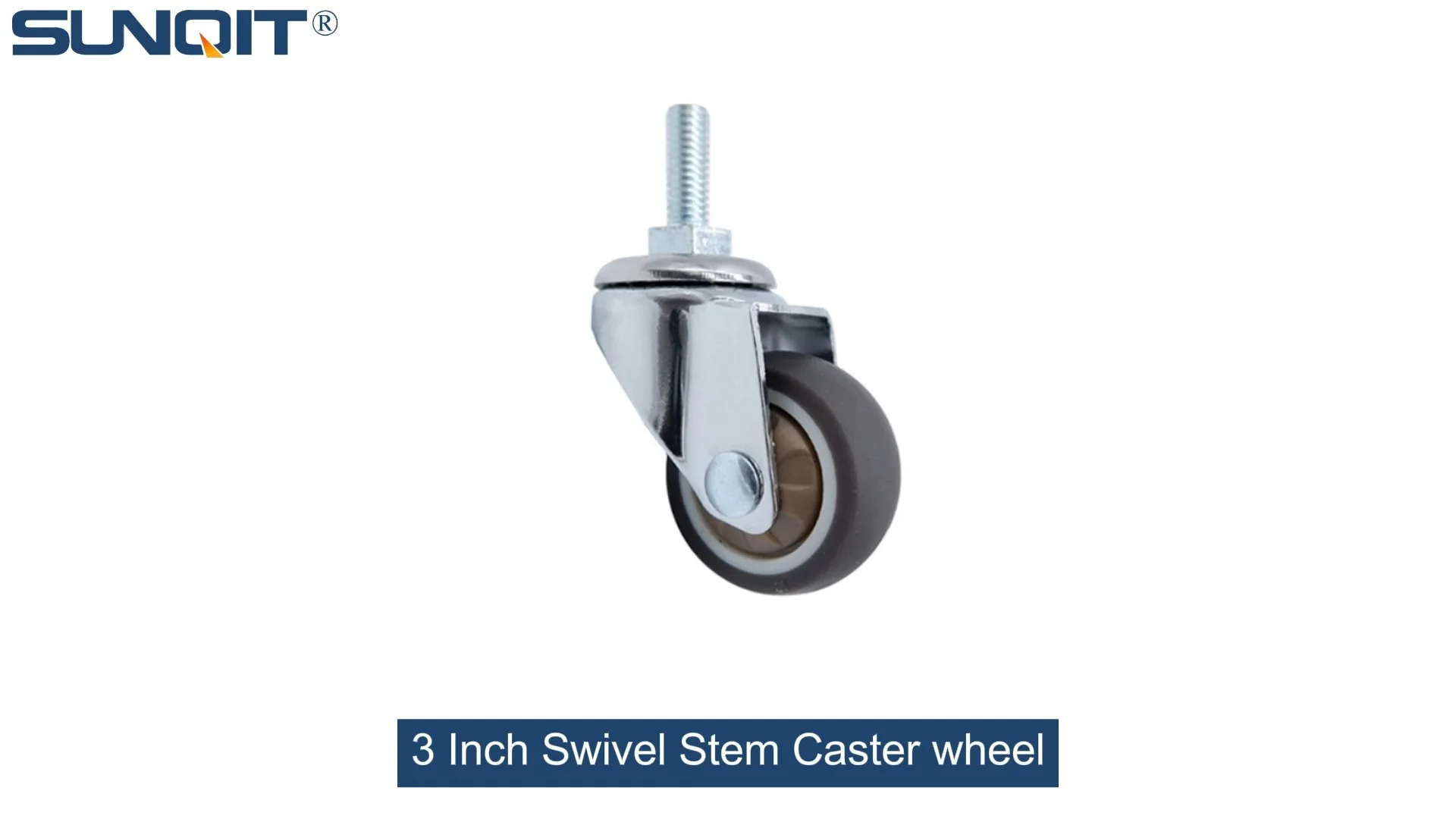
Swivel Stem Caster wheel
360 Degree Swivel Stem Caster. Threaded-post mount design, castors diameter 3 inch.Each swivel caster wheels loading 70KGS. Heavy enough and widely suit for carts, chairs, cabinet, flow rack, workbench, turnover rolley.
Walk into any bustling manufacturing plant, warehouse, or even a busy retail stockroom, and you'll quickly notice a silent workhorse keeping operations moving: the caster wheel . From heavy-duty turnover trolleys ferrying raw materials to lightweight carts gliding between workbenches, these small but mighty components are the unsung heroes of workflow efficiency. Among the most critical types are swivel stem caster wheels with brake —versatile, maneuverable, and equipped with a vital stopping mechanism that ensures safety and control. But when it comes to choosing the right material for these wheels, two options dominate the conversation: stainless steel and nylon. Which one is right for your needs? Let's dive in.
The Role of Swivel Stem Caster Wheels with Brake in Modern Workspaces
Before we compare materials, let's first understand why swivel stem caster wheels with brake are so indispensable. Unlike fixed casters, which only roll forward and backward, swivel casters pivot 360 degrees, making tight turns and precise positioning a breeze—essential in crowded workspaces where every inch of floor space counts. The "stem" refers to their mounting style: a rigid or threaded stem that inserts into a socket or bracket, often used on equipment like workbenches, medical carts, or mobile shelving. The brake, typically a foot-operated lever, locks the wheel in place, preventing unwanted movement during loading, unloading, or when the equipment is stationary.
In lean system environments—where the goal is to minimize waste and maximize productivity—these casters shine. Imagine a production line where assembly stations are reconfigured daily to adapt to new orders. Swivel stem casters with brake allow workers to quickly move workbenches into optimal positions, then lock them down to ensure stability during tasks. In hospitals, they let nurses adjust medication carts with ease, braking instantly to prevent rollaways near patient beds. Even in home workshops, they turn static tool chests into mobile workstations. Simply put, they're the backbone of flexibility.
But here's the catch: not all caster wheels are created equal. The material of the wheel itself directly impacts performance, durability, and cost. Stainless steel and nylon each bring unique strengths and weaknesses to the table, and choosing the wrong one can lead to frequent replacements, safety hazards, or unnecessary expenses. Let's break down each material's properties, applications, and trade-offs.
Stainless Steel Swivel Stem Caster Wheels with Brake: The Heavy-Duty Contender
What Makes Stainless Steel Stand Out?
Stainless steel is a alloy of iron, chromium, and often nickel or manganese, prized for its exceptional strength and resistance to corrosion. When used in swivel stem caster wheels with brake , it's typically formed into a solid or semi-solid wheel, sometimes with a rubber or polyurethane tread for added grip (though the core remains stainless steel). The brake mechanism, often made of stainless steel or reinforced with it, is designed to withstand high force without bending or warping.
One of stainless steel's biggest advantages is its load capacity. These wheels are built to handle heavy weights—think 500 pounds or more per caster. In industrial settings where equipment like metalworking workbenches or large material racks need to be moved, stainless steel casters won't buckle under pressure. Their strength also translates to longevity: unlike softer materials, they resist dents, cracks, and deformation, even when subjected to frequent impacts (like a trolley slamming into a loading dock).
Corrosion Resistance: A Game-Changer for Harsh Environments
Stainless steel's chromium content forms a thin oxide layer on its surface, acting as a barrier against rust and corrosion. This makes it ideal for environments where moisture, chemicals, or extreme temperatures are present. Food processing plants, for example, use stainless steel casters on sanitizing carts because they can withstand daily washdowns with hot water and caustic cleaners without rusting. Similarly, pharmaceutical facilities rely on them to maintain sterile conditions, as stainless steel doesn't harbor bacteria or degrade when exposed to disinfectants.
Temperature tolerance is another standout feature. Stainless steel wheels can handle extreme heat (up to 1,000°F in some cases) and cold without losing structural integrity. This makes them suitable for foundries, bakeries, or freezers—places where nylon might melt or become brittle.
The Downside of Stainless Steel: Weight, Noise, and Cost
For all its strengths, stainless steel isn't perfect. First, it's heavy. A single stainless steel caster wheel can weigh twice as much as a nylon one of the same size, adding extra bulk to equipment. This isn't a problem for forklifts or industrial machinery, but for manual carts pushed by workers, the added weight can lead to fatigue over time.
Noise is another issue. Stainless steel wheels, especially those without a rubber tread, tend to clatter loudly on hard floors like concrete. In quiet environments—think libraries or office supply rooms—this can be a major drawback, disrupting concentration or violating noise regulations.
Finally, cost. Stainless steel is more expensive to produce than nylon, so these casters often come with a higher price tag. For small businesses or applications with light loads, the extra durability might not justify the added expense.

Nylon Swivel Stem Caster Wheels with Brake: The Lightweight, Versatile Alternative
Nylon: More Than Just a Plastic
Nylon, a synthetic polymer, has come a long way since its invention in the 1930s. Today's industrial nylon casters are often reinforced with fibers (like glass or carbon) to boost strength, making them a viable alternative to metal in many scenarios. Nylon swivel stem caster wheels with brake are lightweight, quiet, and designed to protect floors—three qualities that make them a favorite in diverse settings.
Lightweight is key here. Nylon wheels are significantly lighter than stainless steel, reducing the effort needed to push or pull carts. This is a boon for retail stockrooms, where employees might move hundreds of pounds of inventory daily, or in hospitals, where nurses need to maneuver carts quickly without straining. The reduced weight also means less wear and tear on the equipment itself—less stress on the stem, brackets, and caster accessories like bearings and axles.
Quiet Operation and Floor Protection
If noise is a concern, nylon is the clear winner. Unlike stainless steel, which clangs and echoes, nylon wheels roll smoothly and quietly, even on hard surfaces. This makes them ideal for offices, schools, or residential settings where a peaceful environment is a priority. Imagine a hotel housekeeping cart gliding down a hallway at night—nylon casters ensure guests aren't disturbed by loud rolling sounds.
Nylon is also gentle on floors. Its soft, non-marking tread won't scratch hardwood, tile, or polished concrete, a critical feature in retail stores, museums, or showrooms where aesthetics matter. Stainless steel, by contrast, can leave scuff marks or even indentations if overloaded, leading to costly floor repairs.
Chemical Resistance and Affordability
While stainless steel excels in extreme corrosion resistance, nylon holds its own against many common chemicals, oils, and solvents. This makes it suitable for laboratories (where spills of mild acids or bases might occur), janitorial carts (exposed to cleaning solutions), or beauty salons (where hair products and dyes are present). Just note: nylon can degrade in very strong acids or high temperatures (above 200°F), so it's not a one-size-fits-all solution for chemical exposure.
Cost is another major advantage. Nylon casters are generally more affordable than stainless steel, making them a budget-friendly choice for small businesses, startups, or applications with light to medium loads. For example, a home workshop cart or a mobile printer stand might not need the heavy-duty strength of stainless steel—nylon will do the job just fine at a fraction of the cost.
The Limitations of Nylon: Load Capacity and Heat Sensitivity
Nylon's Achilles' heel? Load capacity. While reinforced nylon can handle moderate weights (up to 300 pounds per caster in some cases), it's no match for stainless steel when it comes to heavy loads. A 1,000-pound industrial mixer mounted on nylon casters might cause the wheels to crack or flatten over time, leading to instability and safety risks.
Heat is another enemy. Nylon softens at high temperatures, so it's not suitable for ovens, foundries, or anywhere near open flames. Even prolonged exposure to direct sunlight in a hot warehouse can cause nylon wheels to warp or lose shape, compromising their performance.

Stainless Steel vs. Nylon: A Side-by-Side Comparison
To help you visualize the differences, let's put stainless steel and nylon swivel stem caster wheels with brake head-to-head in a comparison table:
| Feature | Stainless Steel Swivel Stem Caster Wheels with Brake | Nylon Swivel Stem Caster Wheels with Brake | Best For |
|---|---|---|---|
| Material Composition | Alloy of iron, chromium, and nickel; often with rubber or polyurethane tread | Synthetic polymer, sometimes reinforced with glass/carbon fibers | N/A |
| Load Capacity | Heavy-duty: 500–2,000+ lbs per caster | Light to medium-duty: 100–500 lbs per caster |
Stainless steel: Industrial machinery, metalworking equipment
Nylon: Retail carts, medical trolleys, office furniture |
| Temperature Resistance | Excellent: -40°F to 1,000°F (-40°C to 538°C) | Limited: -40°F to 200°F (-40°C to 93°C) |
Stainless steel: Bakeries, foundries, freezers
Nylon: Climate-controlled warehouses, offices |
| Corrosion Resistance | Highly resistant to rust, moisture, and chemicals | Resistant to mild chemicals, oils, and water; vulnerable to strong acids |
Stainless steel: Food processing, marine environments
Nylon: Janitorial carts, beauty salons |
| Noise Level | Loud (without tread); clatters on hard floors | Quiet; smooth, non-marking roll |
Stainless steel: Noisy industrial settings
Nylon: Libraries, hospitals, residential areas |
| Floor Protection | Poor; may scratch or scuff floors | Excellent; soft tread prevents damage |
Stainless steel: Concrete warehouses, rough surfaces
Nylon: Retail stores, polished floors |
| Cost | Higher (2–3x more than nylon) | Lower (budget-friendly for light use) |
Stainless steel: Long-term industrial use
Nylon: Short-term projects, light loads |

5 Key Factors to Consider When Choosing
Now that you understand the pros and cons of each material, how do you decide which is right for your specific application? Here are five critical factors to weigh:
1. Load Requirements
Start with the basics: How much weight will the caster need to support? If you're moving a 500-pound workbench loaded with tools, stainless steel is the safer bet. For a 100-pound mail cart, nylon will work just fine and save you money.
2. Environment
Where will the caster be used? A chemical plant with frequent spills needs stainless steel's corrosion resistance. A hospital with polished floors and strict noise rules calls for nylon. A bakery with high temperatures? Stainless steel again. Consider temperature, moisture, chemicals, and floor type.
3. Mobility and Maneuverability
Will the equipment be moved manually or by machine? If workers are pushing carts all day, the lightweight nature of nylon will reduce fatigue. If it's towed by a forklift, stainless steel's durability is worth the extra weight.
4. Longevity and Maintenance
How long do you need the casters to last? Stainless steel will outlast nylon in harsh conditions, but it requires more maintenance (e.g., lubricating bearings to prevent rust). Nylon is low-maintenance but may need replacement sooner under heavy use.
5. Budget
Finally, consider cost. If you're on a tight budget and have light loads, nylon is the way to go. If you can invest upfront for long-term durability, stainless steel will pay off in fewer replacements and repairs.
Real-World Examples: When to Choose Which
Let's look at a few scenarios to put this into context:
Scenario 1: A Commercial Kitchen Prep Cart
A busy restaurant kitchen needs a cart to move ingredients, pots, and pans between stations. The cart is washed daily with hot water and sanitizing chemicals, and the floor is polished concrete. Loads rarely exceed 300 pounds. Best choice: Stainless steel . Its corrosion resistance stands up to daily washdowns, and while nylon is quieter, the kitchen's ambient noise makes the clatter a non-issue. Plus, stainless steel can handle occasional heavy pots without warping.
Scenario 2: A Retail Store Stockroom Cart
A clothing store uses a cart to move boxes of inventory from the loading dock to the sales floor. The floor is hardwood, and the cart is pushed by staff multiple times a day. Loads are light (100–200 pounds). Best choice: Nylon . It's quiet, won't scratch the hardwood, and is affordable enough to replace if needed. The light load means nylon's weight limit isn't a concern.
Scenario 3: A Laboratory Equipment Trolley
A research lab needs a trolley to transport sensitive equipment (balances, microscopes) between workstations. The lab has strict noise rules, and the floor is tile. Loads are moderate (200–300 pounds), and there's a risk of occasional spills of mild acids. Best choice: Nylon . Its quiet operation and floor protection are critical, and it can handle mild chemicals. Stainless steel would be overkill here.
The Bottom Line: It's All About Your Unique Needs
At the end of the day, there's no "better" material—only the better material for your situation. Stainless steel swivel stem caster wheels with brake are the workhorses of heavy industry, thriving in harsh environments and under extreme loads. Nylon casters, on the other hand, are the versatile, budget-friendly option for light to medium use, where noise, floor protection, and maneuverability take precedence.
When making your decision, take the time to assess your environment, load requirements, and long-term goals. Talk to suppliers about caster accessories that can enhance performance—like sealed bearings for stainless steel casters (to reduce maintenance) or reinforced treads for nylon (to boost load capacity). And don't forget to test them in your workspace if possible—real-world use often reveals nuances that specs alone can't capture.
Whether you choose stainless steel or nylon, one thing is clear: investing in high-quality swivel stem caster wheels with brake is an investment in efficiency, safety, and peace of mind. After all, in a world where every second counts, the last thing you need is a caster wheel that fails to roll—or stop—when you need it most.