- Company Articles
- Products and Technology
- Product knowledge
- Standard vs. Custom Castor Fixed Plates: When to Choose Custom

Standard vs. Custom Castor Fixed Plates: When to Choose Custom
Related Product
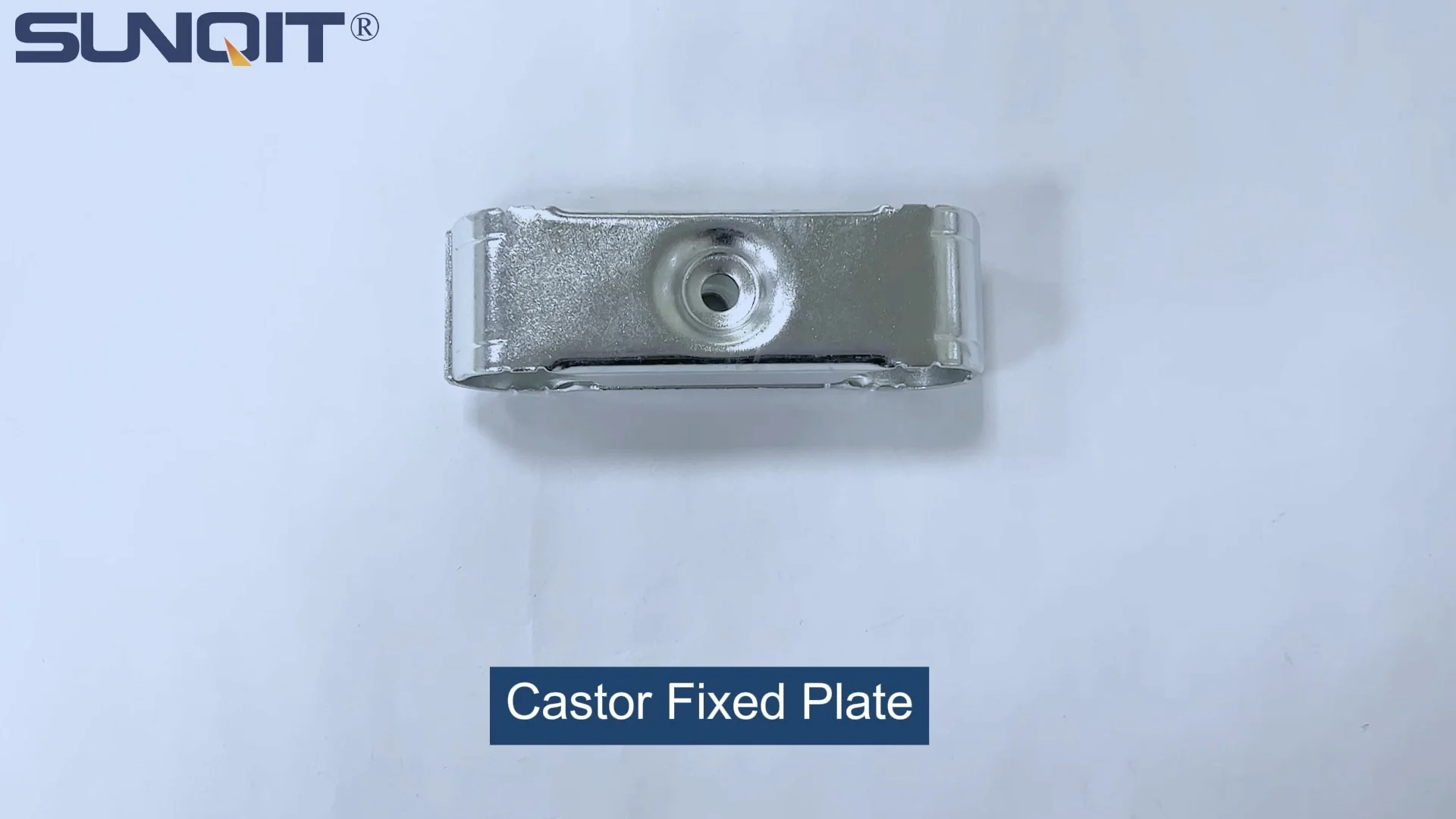
Castor Fixed Plate
Castor fixed plate, used for castor installation, one castor need two pcs castor plate to fix under the workbench, flow rack, and hand trolley.
Maria, the operations manager at a mid-sized electronics warehouse in Ohio, was at her wit's end. Three months into their busy season, her team had already reported five instances of wobbly carts—one even tipped over, spilling components and causing a two-hour delay. "It's like the carts are fighting us," one of her lead handlers grumbled during a morning huddle. "The wheels lock up, the bases creak, and half the time, we're worried about damaging the products." After inspecting the carts, Maria noticed the issue wasn't the caster wheels themselves, but the metal plates holding them in place: the
caster fixed plates
were bent, misaligned, and clearly struggling under the daily load of 300-pound shipments. "We bought these carts off the shelf last year," she sighed. "I guess 'one-size-fits-all' doesn't work when your operation runs 12-hour shifts."
What Are Castor Fixed Plates, Anyway?
Before diving into the standard vs. custom debate, let's get clear on what caster fixed plates are—and why they matter. Think of them as the unsung heroes of material handling: the metal (or sometimes plastic) brackets that bolt caster wheels to carts, racks, workbenches, or machinery. They're the critical link between the wheel and the equipment, responsible for distributing weight evenly, absorbing shocks from uneven floors, and ensuring stability during movement. Without a sturdy, well-fitted fixed plate, even the best caster wheel will underperform—leading to wobbly carts, premature wear, and safety risks like the ones Maria's team faced.
Most caster fixed plates are made from durable materials like steel, aluminum, or stainless steel, chosen for their strength and resistance to corrosion. They come in various shapes (square, rectangular, round) and sizes, with pre-drilled holes to match common caster wheel mounts. But here's the catch: not all operations are "common." When your equipment handles unusual loads, operates in harsh environments, or has unique dimensions, a standard fixed plate might not cut it. That's where custom solutions come in.
Most caster fixed plates are made from durable materials like steel, aluminum, or stainless steel, chosen for their strength and resistance to corrosion. They come in various shapes (square, rectangular, round) and sizes, with pre-drilled holes to match common caster wheel mounts. But here's the catch: not all operations are "common." When your equipment handles unusual loads, operates in harsh environments, or has unique dimensions, a standard fixed plate might not cut it. That's where custom solutions come in.
Standard Castor Fixed Plates: The Go-To for Routine Needs
Standard caster fixed plates are the workhorses of the material handling world. Produced in bulk by manufacturers, they're designed to fit the most common caster wheel sizes, load capacities, and equipment types. Walk into any industrial supply store, and you'll find shelves lined with these plates—steel rectangles with four pre-drilled holes, aluminum squares rated for 200-500 pounds, or lightweight plastic options for lighter-duty tasks like office chairs.
Why choose standard? For starters, they're affordable. Mass production drives down costs, making them ideal for small businesses, startups, or operations with tight budgets. They're also readily available: no waiting weeks for production—you can pick one up today and have your cart back in service by tomorrow. And because they're standardized, they're easy to replace. If a plate bends or cracks, you can swap it out with minimal downtime.
But standard plates have limits. They're built for "average" scenarios: average load weights (usually 200-800 pounds), average floor conditions (smooth concrete), and average equipment dimensions. If your needs fall outside that range—say, you need a plate that can handle 1,200 pounds, or fit a custom-built cart with non-standard mounting holes—standard options will leave you frustrated. They also offer little flexibility in materials; if your warehouse uses corrosive cleaning agents, a standard steel plate might rust quickly, while a stainless steel version could be hard to find in the size you need.
Why choose standard? For starters, they're affordable. Mass production drives down costs, making them ideal for small businesses, startups, or operations with tight budgets. They're also readily available: no waiting weeks for production—you can pick one up today and have your cart back in service by tomorrow. And because they're standardized, they're easy to replace. If a plate bends or cracks, you can swap it out with minimal downtime.
But standard plates have limits. They're built for "average" scenarios: average load weights (usually 200-800 pounds), average floor conditions (smooth concrete), and average equipment dimensions. If your needs fall outside that range—say, you need a plate that can handle 1,200 pounds, or fit a custom-built cart with non-standard mounting holes—standard options will leave you frustrated. They also offer little flexibility in materials; if your warehouse uses corrosive cleaning agents, a standard steel plate might rust quickly, while a stainless steel version could be hard to find in the size you need.
Example: When Standard Works
A local bakery uses small utility carts to move flour sacks and mixing bowls between stations. The carts rarely carry more than 150 pounds, and the kitchen floors are smooth tile. For them, a standard 4x4-inch steel caster fixed plate (rated for 250 pounds) is perfect. It's cheap, easy to replace if it gets scratched by a stray rolling pin, and available at the hardware store down the street. No need to overcomplicate things with custom parts here.

Custom Castor Fixed Plates: Built for Your Unique Reality
Custom caster fixed plates are the opposite of "one-size-fits-all." They're designed and manufactured to your exact specifications: dimensions, load capacity, material, finish, and even mounting hole patterns. Need a plate that's 7.3 inches long (not 7 or 8) to fit a custom workbench? No problem. Require a stainless steel plate with a rubberized coating to prevent scratching delicate lab equipment? Done. Have a cart that operates in a freezer, where standard steel would crack in sub-zero temperatures? A custom aluminum plate with reinforced edges can handle it.
The process typically starts with a conversation: you share your challenges (load weight, environment, equipment design), and the manufacturer engineers a plate to solve them. They might use CAD software to design the plate, test it for stress points, and even prototype it before full production. The result? A component that fits like a glove, performs better, and lasts longer in your specific conditions.
Of course, this tailored approach comes with trade-offs. Custom plates cost more—sometimes 2-3x the price of standard options—due to design time, small-batch production, and specialized materials. They also take longer: while standard plates ship in days, custom orders can take 2-6 weeks, depending on complexity. But for many businesses, the investment pays off. When Maria finally called a caster accessories supplier to discuss custom plates, she realized: "We were spending $200 a month replacing bent standard plates and losing hours to delays. A custom plate that lasts 3x longer? That's a no-brainer."
The process typically starts with a conversation: you share your challenges (load weight, environment, equipment design), and the manufacturer engineers a plate to solve them. They might use CAD software to design the plate, test it for stress points, and even prototype it before full production. The result? A component that fits like a glove, performs better, and lasts longer in your specific conditions.
Of course, this tailored approach comes with trade-offs. Custom plates cost more—sometimes 2-3x the price of standard options—due to design time, small-batch production, and specialized materials. They also take longer: while standard plates ship in days, custom orders can take 2-6 weeks, depending on complexity. But for many businesses, the investment pays off. When Maria finally called a caster accessories supplier to discuss custom plates, she realized: "We were spending $200 a month replacing bent standard plates and losing hours to delays. A custom plate that lasts 3x longer? That's a no-brainer."
Example: When Custom Saves the Day
A medical device manufacturer in California faced a unique problem: their sterile processing carts needed to glide over uneven hospital floors (think: thresholds between rooms, slightly raised tile edges) while carrying 500-pound loads of autoclaved instruments. Standard fixed plates caused the carts to jolt, risking damage to delicate tools. A custom solution solved it: the manufacturer designed a plate with a reinforced center ridge to absorb shocks, paired with extra-wide mounting holes to align with the cart's unique frame. The result? Smoother movement, zero tool damage, and a 40% reduction in cart maintenance costs.

Standard vs. Custom: A Side-by-Side Comparison
Still on the fence? Let's break down the key differences between standard and custom caster fixed plates to help you decide:
| Factor | Standard Castor Fixed Plates | Custom Castor Fixed Plates |
|---|---|---|
| Cost | Lower upfront cost (typically $10-$50 per plate) | Higher upfront cost (typically $50-$200+ per plate) |
| Lead Time | Immediate (in-stock at most suppliers) | 2-6 weeks (design, prototyping, production) |
| Load Capacity | Limited to common ratings (200-800 lbs) | Tailored to your needs (up to 5,000+ lbs) |
| Material Options | Basic materials (steel, aluminum, plastic) | Specialized materials (stainless steel, coated steel, reinforced aluminum) |
| Fit | "Close enough" for standard equipment | Precision-fit to your unique equipment dimensions |
| Durability in Harsh Environments | Limited (may rust, crack, or wear in extreme temps/chemicals) | Enhanced (materials and design chosen for your environment) |
| Best For | Low-to-medium loads, standard equipment, routine operations | Heavy loads, custom equipment, harsh environments, safety-critical tasks |

When to Choose Custom: 5 Scenarios Where "Good Enough" Isn't Enough
So, when does custom make sense for your operation? Here are five red flags that standard plates might be holding you back:
1. You're replacing plates more than twice a year. If your fixed plates are bending, cracking, or corroding within months, you're throwing money away on replacements. A custom plate built with thicker steel or corrosion-resistant material (like stainless steel) will outlast standard options, saving you long-term costs.
2. Your equipment handles "non-standard" loads. Whether it's 1,000-pound machinery parts or fragile electronics that can't tolerate vibration, standard plates often max out at 800 pounds. Custom plates can be engineered with reinforced edges, thicker gauges, or even ribbed designs to distribute weight and reduce stress.
3. Your environment is "hostile." Warehouses with salt air (near the coast), factories with chemical spills, or freezers with sub-zero temps can destroy standard steel plates. Custom options let you choose materials like galvanized steel (for rust resistance) or aluminum (for cold-weather flexibility) to match your environment.
4. Your equipment is custom-built (or just old). If you're using a vintage workbench, a one-of-a-kind cart, or machinery with non-standard mounting holes, standard plates will never align perfectly. A custom plate with tailored hole patterns or dimensions ensures a snug fit, eliminating wobble and extending the life of your equipment.
5. Safety is non-negotiable. In industries like healthcare, aerospace, or construction, even a minor cart failure can lead to injuries or costly product damage. Custom plates undergo rigorous testing (think: stress analysis, load testing) to meet strict safety standards, giving you peace of mind that standard off-the-shelf parts can't match.
1. You're replacing plates more than twice a year. If your fixed plates are bending, cracking, or corroding within months, you're throwing money away on replacements. A custom plate built with thicker steel or corrosion-resistant material (like stainless steel) will outlast standard options, saving you long-term costs.
2. Your equipment handles "non-standard" loads. Whether it's 1,000-pound machinery parts or fragile electronics that can't tolerate vibration, standard plates often max out at 800 pounds. Custom plates can be engineered with reinforced edges, thicker gauges, or even ribbed designs to distribute weight and reduce stress.
3. Your environment is "hostile." Warehouses with salt air (near the coast), factories with chemical spills, or freezers with sub-zero temps can destroy standard steel plates. Custom options let you choose materials like galvanized steel (for rust resistance) or aluminum (for cold-weather flexibility) to match your environment.
4. Your equipment is custom-built (or just old). If you're using a vintage workbench, a one-of-a-kind cart, or machinery with non-standard mounting holes, standard plates will never align perfectly. A custom plate with tailored hole patterns or dimensions ensures a snug fit, eliminating wobble and extending the life of your equipment.
5. Safety is non-negotiable. In industries like healthcare, aerospace, or construction, even a minor cart failure can lead to injuries or costly product damage. Custom plates undergo rigorous testing (think: stress analysis, load testing) to meet strict safety standards, giving you peace of mind that standard off-the-shelf parts can't match.
Example: The Cost of "Good Enough"
A construction company in Texas used standard caster fixed plates on their tool carts, which often carried 900-pound loads of power tools. Every three months, the plates would bend, requiring replacements ($45 each, plus labor). After a cart tipped over and injured a worker, the company switched to custom plates rated for 1,500 pounds. The upfront cost was $120 per plate, but replacements dropped to once every 18 months, and worker compensation claims fell by 70%. "We were paying for 'good enough' with our team's safety," the safety manager later admitted. "Custom wasn't a luxury—it was a necessity."
Beyond the Plate: How Custom Solutions Impact Your Whole Operation
Choosing custom caster fixed plates isn't just about upgrading a single component—it's about optimizing your entire workflow. When Maria's warehouse switched to custom plates, the changes rippled beyond sturdier carts:
Faster handling times: The carts glided more smoothly, cutting loading/unloading time by 15%. "We're not fighting the equipment anymore," one handler noted. "It's like night and day."
Reduced downtime: Plate replacements dropped from once a month to once a year, freeing up maintenance staff to focus on other tasks.
Happier teams: With fewer delays and frustrations, employee morale improved. "It sounds small, but not worrying about the cart tipping makes the job less stressful," a team member told Maria during a follow-up survey.
Lower long-term costs: While the custom plates cost $80 each (vs. $30 for standard), the savings from reduced downtime, fewer replacements, and happier employees more than offset the upfront expense. "We're on track to recoup the investment in six months," Maria calculated.
The lesson? Caster fixed plates might seem like minor parts, but they're foundational to how your operation runs. Skimping on them can cost you in ways that show up on your balance sheet—and in your team's daily experience.
Faster handling times: The carts glided more smoothly, cutting loading/unloading time by 15%. "We're not fighting the equipment anymore," one handler noted. "It's like night and day."
Reduced downtime: Plate replacements dropped from once a month to once a year, freeing up maintenance staff to focus on other tasks.
Happier teams: With fewer delays and frustrations, employee morale improved. "It sounds small, but not worrying about the cart tipping makes the job less stressful," a team member told Maria during a follow-up survey.
Lower long-term costs: While the custom plates cost $80 each (vs. $30 for standard), the savings from reduced downtime, fewer replacements, and happier employees more than offset the upfront expense. "We're on track to recoup the investment in six months," Maria calculated.
The lesson? Caster fixed plates might seem like minor parts, but they're foundational to how your operation runs. Skimping on them can cost you in ways that show up on your balance sheet—and in your team's daily experience.
How to Start the Custom Process (Without Overcomplicating It)
If you're ready to explore custom caster fixed plates, here's how to get started:
1. Document your pain points. Note when and why your current plates fail: Is it under heavy loads? On uneven floors? In humid conditions? Take photos of bent plates, measure the equipment dimensions, and track how often you replace them. The more details you have, the better the manufacturer can tailor the solution.
2. Find a supplier who specializes in custom caster accessories . Not all suppliers offer custom work, so look for ones with engineering teams and a track record in material handling. Ask for references from businesses similar to yours—e.g., a supplier who works with warehouses will understand your needs better than a general hardware store.
3. Be clear about your budget and timeline. Custom solutions take time, so plan ahead. If you need plates in a hurry, ask if the supplier offers rush prototyping (though this may add cost). Also, be upfront about how much you can spend—they may suggest cost-saving tweaks (e.g., a hybrid design with standard and custom elements) that still solve your problem.
4. Test before scaling. Most suppliers will create a prototype for you to test. Use it in your daily operations for a week or two, then gather feedback from your team. Does it solve the wobble? Hold up under load? Adjustments at this stage are easier (and cheaper) than after full production.
Remember: Custom doesn't have to mean "over-the-top." Even small tweaks—like adding an extra mounting hole or switching to a thicker gauge—can make a big difference. A good supplier will work with you to balance customization with practicality. "We didn't need a space-age design," Maria laughs. "Just a plate that fit our carts and didn't bend. The supplier made it simple."
1. Document your pain points. Note when and why your current plates fail: Is it under heavy loads? On uneven floors? In humid conditions? Take photos of bent plates, measure the equipment dimensions, and track how often you replace them. The more details you have, the better the manufacturer can tailor the solution.
2. Find a supplier who specializes in custom caster accessories . Not all suppliers offer custom work, so look for ones with engineering teams and a track record in material handling. Ask for references from businesses similar to yours—e.g., a supplier who works with warehouses will understand your needs better than a general hardware store.
3. Be clear about your budget and timeline. Custom solutions take time, so plan ahead. If you need plates in a hurry, ask if the supplier offers rush prototyping (though this may add cost). Also, be upfront about how much you can spend—they may suggest cost-saving tweaks (e.g., a hybrid design with standard and custom elements) that still solve your problem.
4. Test before scaling. Most suppliers will create a prototype for you to test. Use it in your daily operations for a week or two, then gather feedback from your team. Does it solve the wobble? Hold up under load? Adjustments at this stage are easier (and cheaper) than after full production.
Remember: Custom doesn't have to mean "over-the-top." Even small tweaks—like adding an extra mounting hole or switching to a thicker gauge—can make a big difference. A good supplier will work with you to balance customization with practicality. "We didn't need a space-age design," Maria laughs. "Just a plate that fit our carts and didn't bend. The supplier made it simple."
Final Thoughts: Invest in What Moves Your Business Forward
At the end of the day, the choice between standard and custom caster fixed plates depends on your unique needs. For small, routine tasks with standard equipment, standard plates are practical and cost-effective. But when your operation relies on heavy loads, unique equipment, or safety-critical performance, custom plates aren't a splurge—they're an investment in your team, your efficiency, and your bottom line.
Maria's warehouse is now six months into using custom plates, and the difference is clear. "The carts glide, the team doesn't complain, and we haven't had a single delay due to equipment issues," she says. "I wish I'd done this sooner instead of assuming 'standard' was good enough."
So, ask yourself: Are your current caster fixed plates helping your operation run smoothly, or are they holding you back? If it's the latter, it might be time to explore custom solutions. After all, the right tools—even the small, unsung ones—can make all the difference in how well your business moves forward.
Maria's warehouse is now six months into using custom plates, and the difference is clear. "The carts glide, the team doesn't complain, and we haven't had a single delay due to equipment issues," she says. "I wish I'd done this sooner instead of assuming 'standard' was good enough."
So, ask yourself: Are your current caster fixed plates helping your operation run smoothly, or are they holding you back? If it's the latter, it might be time to explore custom solutions. After all, the right tools—even the small, unsung ones—can make all the difference in how well your business moves forward.