
In the world of industrial design and manufacturing, it's often the smallest components that hold the biggest impact. Take, for example, the humble end cap—those unassuming pieces that seal the ends of aluminum extrusion profiles. While they might not grab headlines like high-tech machinery or cutting-edge robotics, end caps play a critical role in ensuring safety, durability, and functionality in everything from workbenches and material racks to conveyor systems and lean manufacturing setups. Today, we're zeroing in on a specific but widely used component: the 2040 aluminum profile end cap. More importantly, we're diving into the age-old question for engineers, facility managers, and DIY enthusiasts alike: Should you opt for standard or heavy-duty end caps? Let's unpack the details, compare the options, and help you make the right choice for your project.
First Things First: Understanding the 2040 Aluminum Profile
Before we jump into end caps, let's take a moment to appreciate the star of the show: the 2040 aluminum extrusion profile. If you've ever walked through a factory, assembled a workbench, or even visited a modern office with modular furniture, chances are you've encountered this versatile workhorse. The "2040" in its name refers to its cross-sectional dimensions: 20 millimeters in width and 40 millimeters in height. This specific sizing strikes a perfect balance between strength and flexibility, making it a staple in industries ranging from automotive and electronics to logistics and aerospace.
What makes the 2040 profile so popular? For starters, its T-slot design—those longitudinal grooves running along its length—allows for easy integration with other aluminum profile accessories, like joints, brackets, casters, and yes, end caps. This modularity means you can build almost anything: a custom workstation, a material rack for inventory, a lightweight conveyor system, or even a protective guardrail around machinery. It's no wonder 2040 profiles are a cornerstone of lean system setups, where adaptability and efficiency are paramount.
But here's the thing: an aluminum profile is only as good as its components. Without the right accessories, that 2040 extrusion might look unfinished, pose safety risks, or fail to stand up to daily wear and tear. And that's where end caps come in.
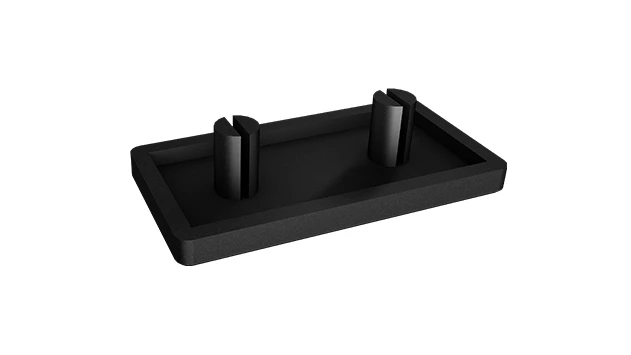
Why End Caps Matter: More Than Just a "Finishing Touch"
At first glance, end caps might seem like a purely aesthetic addition—something to make the profile look neat and polished. And while they do enhance visual appeal, their purpose goes far beyond looks. Let's break down their key roles:
- Safety First: Aluminum extrusion profiles, by nature, have sharp, unfinished edges at their ends. Without end caps, these edges can cause cuts, scrapes, or snags on clothing, gloves, or skin—especially in high-traffic areas like production floors or warehouses. End caps act as a buffer, softening these edges and reducing the risk of workplace injuries.
- Debris and Dust Protection: The T-slots in aluminum profiles are designed to hold accessories, but they also act like tiny funnels for dust, dirt, and debris. Over time, this buildup can jam slots, making it hard to install or adjust brackets and joints. End caps seal off the ends, preventing unwanted particles from entering and keeping the profile's internal channels clean.
- Moisture and Corrosion Resistance: In humid environments, outdoor setups, or areas prone to spills (like food processing plants or labs), moisture can seep into open profile ends. This can lead to internal corrosion, especially in untreated aluminum. End caps create a barrier, reducing the risk of rust and extending the profile's lifespan.
- Structural Integrity: While end caps aren't load-bearing in the traditional sense, a well-fitted cap can add minor structural support by preventing the profile's ends from deforming under stress. This is especially true in profiles used for lightweight frames or shelving, where even small deformations can throw off alignment.
Now that we understand why end caps are essential, let's focus on the two main types available for 2040 profiles: standard and heavy-duty. While they share the same core purpose, their design, materials, and performance differ significantly—making each better suited for specific applications.

Standard vs. Heavy-Duty: What's the Difference?
At their most basic, standard and heavy-duty 2040 aluminum profile end caps are distinguished by their construction, durability, and intended use. Let's start by defining each:
Standard 2040 Aluminum Profile End Caps
Standard end caps are the workhorses of everyday applications. They're designed for low to moderate use environments where cost-effectiveness and ease of installation are priorities. Most standard end caps are made from lightweight plastics like polypropylene (PP) or polyethylene (PE). These materials are affordable, flexible, and resistant to common chemicals, making them ideal for indoor, climate-controlled settings.
In terms of design, standard end caps typically feature a simple, one-piece construction with a slight taper that allows for a snug "snap-fit" installation—no tools required. They're often available in neutral colors like black, white, or gray to blend in with most aluminum profiles, though some manufacturers offer custom colors for branding or aesthetic purposes.
Heavy-Duty 2040 Aluminum Profile End Caps
Heavy-duty end caps, as the name suggests, are built to withstand more abuse. They're engineered for high-traffic, industrial, or outdoor environments where the end cap will face frequent impact, extreme temperatures, or exposure to harsh substances. Unlike standard caps, heavy-duty versions are often made from reinforced materials: think ABS (acrylonitrile butadiene styrene), glass-filled nylon, or even lightweight aluminum alloys.
Design-wise, heavy-duty caps tend to have thicker walls, reinforced edges, and a more robust locking mechanism. Some feature ribbed interiors for added strength, while others use a screw-on design instead of snap-fit to ensure they stay in place under stress. They're also heavier than standard caps—a small detail that translates to better impact resistance and longevity.

Side-by-Side: Standard vs. Heavy-Duty End Caps
To make the choice clearer, let's compare the two types across key factors. The table below breaks down their features, benefits, and limitations:
| Feature | Standard 2040 End Caps | Heavy-Duty 2040 End Caps |
|---|---|---|
| Primary Material | Polypropylene (PP) or polyethylene (PE) | ABS, reinforced nylon, or aluminum alloy |
| Wall Thickness | 0.8–1.2mm | 1.5–3.0mm |
| Impact Resistance | Low to moderate (withstands light bumps) | High (resists heavy impacts and drops) |
| Temperature Range | -20°C to 60°C (suitable for indoor use) | -30°C to 85°C (handles outdoor and industrial heat) |
| Chemical Resistance | Resists mild chemicals (detergents, water) | Resists oils, solvents, and industrial cleaners |
| Installation | Snap-fit (no tools needed; quick and easy) | Snap-fit or screw-on (tighter fit; may require light pressure) |
| Cost (Per Unit) | $0.50–$1.50 | $2.00–$5.00 |
| Best For | Office workstations, light-duty material racks, indoor shelving | Factory floors, heavy machinery, outdoor setups, high-traffic areas |
When to Choose Standard End Caps: The Case for Affordability and Simplicity
Standard end caps shine in scenarios where budget, ease of use, and basic protection are the top priorities. Let's explore their best applications and benefits in more detail:
Ideal Environments for Standard End Caps
If your project involves indoor, low-traffic settings, standard caps are likely more than sufficient. Think: office workstations built with aluminum profile frames, home workshops with light tool storage, or retail displays where the profiles are mostly decorative. In these cases, the end caps will rarely face heavy impacts or exposure to harsh elements, so their lightweight, cost-effective design is a perfect match.
Another sweet spot for standard caps is temporary or semi-permanent setups. For example, trade show booths, pop-up event structures, or prototype workbenches that might be disassembled and reassembled frequently. Since standard caps are cheap and easy to replace, you won't mind if a few get lost or damaged during teardown.
Pros of Standard End Caps
- Budget-Friendly: At just $0.50–$1.50 per unit, standard caps are significantly cheaper than heavy-duty options. For large projects—say, outfitting a warehouse with hundreds of 2040 profile shelves—this cost difference adds up quickly, freeing up funds for other critical components like brackets or casters.
- Lightweight and Easy to Install: Their snap-fit design means you can install them in seconds with no tools. Just align the cap with the profile end and press firmly until it clicks into place. This is a huge time-saver for DIYers or teams working on tight deadlines.
- Versatile Colors: Standard caps often come in a range of colors, from classic black and white to bold hues like blue or red. This makes it easy to color-code workstations (e.g., red for "danger zones," blue for "assembly areas") or match brand aesthetics.
- Low Maintenance: Since they're made of plastic, standard caps don't rust or corrode. A quick wipe with a damp cloth is usually enough to keep them clean and looking new.
Potential Drawbacks
Of course, standard caps aren't without limitations. Their biggest downside is durability. In high-traffic industrial settings—like a factory floor where forklifts or pallet jacks might brush against profiles—standard caps can crack or pop off under impact. They also struggle with extreme temperatures: leave them in direct sunlight or near a heat source, and they may warp over time. Finally, while they resist mild chemicals, exposure to oils, solvents, or strong cleaners can cause discoloration or brittleness.
When to Choose Heavy-Duty End Caps: Investing in Long-Term Durability
Heavy-duty end caps are the choice when "good enough" isn't enough. They're built to thrive in tough, high-stakes environments where failure isn't an option. Let's break down their best uses and advantages:
Ideal Environments for Heavy-Duty End Caps
Heavy-duty caps are designed for industrial and outdoor settings where the profiles face constant wear and tear. This includes manufacturing plants with automated machinery, warehouses with heavy foot and vehicle traffic, outdoor storage racks exposed to rain and UV rays, and cleanrooms or labs where chemical resistance is a must. They're also a smart choice for safety-critical applications, like guardrails around machinery or edge protection on workbenches used for heavy assembly.
Another scenario where heavy-duty caps excel is in lean system setups. Lean manufacturing relies on efficiency and minimal downtime, so components that need frequent replacement are a liability. Heavy-duty caps, with their long lifespan, reduce maintenance interruptions and keep production lines running smoothly.
Pros of Heavy-Duty End Caps
- Unmatched Durability: Thanks to their reinforced materials and thicker walls, heavy-duty caps can withstand impacts that would shatter standard caps. drop a tool on one, and it'll likely bounce off without a scratch. This durability translates to a longer lifespan—often 3–5 times that of standard caps in the same environment.
- Extreme Condition Resistance: Whether it's freezing temperatures in a refrigerated warehouse, scorching heat near industrial ovens, or exposure to oils and solvents in a mechanic's shop, heavy-duty caps hold their own. Their broad temperature range (-30°C to 85°C) and chemical resistance make them versatile for harsh settings.
- Enhanced Safety: In high-risk areas, the last thing you want is a loose or broken end cap exposing sharp edges. Heavy-duty caps' secure fit (especially screw-on varieties) reduces the risk of accidental dislodging, keeping workers safer.
- Professional Aesthetic: Let's not overlook looks—heavy-duty caps often have a sleeker, more robust appearance than their standard counterparts. This can give industrial setups a more polished, professional vibe, which matters for client tours or regulatory inspections.
Potential Drawbacks
The main tradeoff with heavy-duty caps is cost. At $2.00–$5.00 per unit, they're 2–5 times pricier than standard options. For small projects, this might not sting, but for large-scale installations, it can increase material costs significantly. They're also slightly harder to install: while some still snap on, others require screws or bolts, which takes extra time and tools. Finally, their added weight (though minimal) can be a hassle if you're transporting or handling profiles frequently.
Choosing the Right End Cap: A Step-by-Step Guide
Now that you understand the differences between standard and heavy-duty 2040 end caps, how do you decide which one is right for your project? Here's a simple framework to guide your choice:
Step 1: Assess Your Environment
Start by evaluating where the 2040 profiles will be used. Ask yourself:
- Is the setup indoor or outdoor? (Outdoor = heavy-duty, to resist weather.)
- Will the profiles be near heat sources, chemicals, or moisture? (Yes = heavy-duty.)
- How much foot or vehicle traffic will the area see? (High traffic = heavy-duty.)
For example, a 2040 profile used as a frame for an indoor office desk would do fine with standard caps. But a profile used as a guardrail in a busy factory? Heavy-duty is non-negotiable.
Step 2: Estimate Impact and Wear
Next, think about how much abuse the end caps will take. Will they be bumped by equipment? Stepped on? Exposed to falling objects? If the answer to any of these is "yes," heavy-duty caps are worth the investment. For example, end caps on a material rack in a warehouse where boxes are constantly slid on and off will face more impact than caps on a stationary shelf in a closet.
Step 3: Set Your Budget
While heavy-duty caps offer better performance, they're not always necessary. If your project is on a tight budget and the environment is low-risk, standard caps will get the job done. However, if long-term durability and safety are priorities, view heavy-duty caps as an investment—they'll save you money in replacement costs down the line.
Step 4: Check Compatibility
Not all end caps fit all 2040 profiles. Aluminum extrusion profiles can vary slightly in tolerances between manufacturers, so it's important to buy caps designed for your specific profile brand or model. Most suppliers will list compatibility (e.g., "fits all standard 20x40mm T-slot profiles") in the product description—always double-check this before purchasing.
Real-World Scenarios: Making the Choice in Action
To bring this all to life, let's look at a few hypothetical (but realistic) scenarios and see which end cap would work best:
Scenario 1: A Small Electronics Workshop
Setup: A home-based workshop with three 2040 aluminum profile workbenches for assembling circuit boards. The workbenches are indoors, in a climate-controlled room, and see light use (mostly hand tools and small components).
Recommendation: Standard end caps. The low traffic and indoor environment mean minimal impact, so standard caps' basic protection and affordability are ideal. Plus, their snap-fit installation will save time when setting up the workbenches.
Scenario 2: A Automotive Manufacturing Plant
Setup: A factory floor with 2040 profile conveyor systems, material racks, and workstations for assembling car parts. The area sees heavy foot traffic, forklift activity, and occasional spills of oil and cleaning solvents.
Recommendation: Heavy-duty end caps. The high impact risk (forklifts, dropped tools) and chemical exposure make standard caps too fragile. Heavy-duty caps will withstand the abuse and reduce maintenance downtime.
Scenario 3: An Outdoor Farmers' Market Stall
Setup: A collapsible stall frame made of 2040 profiles, used weekly at outdoor farmers' markets. The frame is exposed to rain, sun, and occasional wind gusts, and is disassembled/reassembled each week.
Recommendation: Heavy-duty end caps. While the stall is temporary, outdoor exposure to UV rays and moisture would degrade standard plastic caps quickly. Heavy-duty caps' weather resistance ensures they'll last season after season.
Final Thoughts: The Right Cap for the Right Job
At the end of the day, the choice between standard and heavy-duty 2040 aluminum profile end caps boils down to your specific needs. Standard caps are the budget-friendly, easy-to-use option for low-impact, indoor settings, while heavy-duty caps are the durable, long-lasting choice for industrial, high-traffic, or outdoor environments.
Remember: end caps might be small, but they play a big role in safety, functionality, and longevity. By taking the time to assess your environment, estimate wear and tear, and factor in budget, you'll ensure you're choosing the cap that keeps your aluminum profiles—and your project—running smoothly for years to come.
So, whether you're building a simple shelf or outfitting a entire factory, don't overlook the power of the end cap. It's the small detail that makes a big difference.