- Company Articles
- Products and Technology
- Product knowledge
- Standard vs. Heavy-Duty Lean Pipe Clamp B Chrome: Application Scenarios

Standard vs. Heavy-Duty Lean Pipe Clamp B Chrome: Application Scenarios
Related Product
Lean Pipe Clamp B Chrome
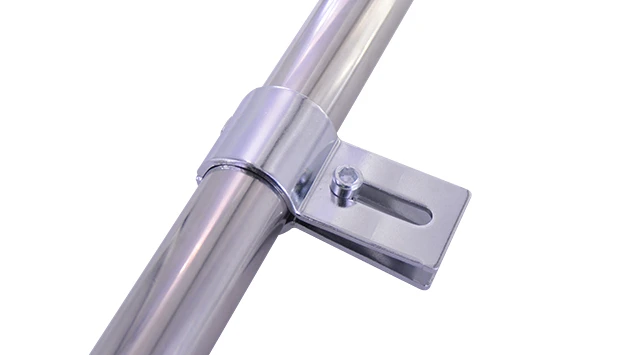
Lean pipe clamp is used for turnover trolley, workbench, flowrack adjust the frame or fix some accessory.
The Unsung Heroes of Lean Manufacturing: Why Clamps Matter
Walk into any modern manufacturing facility, and you'll likely notice a symphony of moving parts—conveyors humming, workbenches organized with precision, and material racks stocked to the brim. What you might not immediately see, though, are the tiny components holding it all together: the lean pipe clamps. These unassuming pieces are the backbone of lean systems, quietly ensuring that workbenches stay stable, flow racks maintain their structure, and assembly lines run without a hitch. In the world of lean manufacturing, where efficiency and adaptability are king, choosing the right clamp isn't just a detail—it's a decision that impacts productivity, safety, and even long-term operational costs.
Today, we're zooming in on two critical players in this space: the Standard Lean Pipe Clamp B Chrome and its Heavy-Duty counterpart. While they might look similar at first glance, their differences are night and day when it comes to performance, durability, and suitability for specific tasks. Whether you're setting up a new production line, upgrading an existing workbench, or designing a custom flow rack, understanding these differences will help you avoid costly mistakes and build a system that grows with your needs.
What Is a Lean Pipe Clamp B Chrome, Anyway?
Before we dive into the comparison, let's get clear on what a Lean Pipe Clamp B Chrome actually is. At its core, it's a specialized fastening device designed to connect lean pipes (also known as "lean tubes")—hollow metal pipes commonly used in constructing workbenches, material racks, and production cells. The "B Chrome" designation refers to its specific design (Type B) and chrome-plated finish, which adds corrosion resistance and a sleek, professional look.
But these clamps are more than just metal brackets. They're engineered to provide a secure, adjustable connection between pipes, allowing for quick assembly and disassembly. This adjustability is key to lean manufacturing principles, where flexibility—being able to reconfigure workspaces on the fly—is essential. A well-designed clamp ensures that even as your production needs change, your infrastructure can adapt without requiring a complete overhaul.
Now, let's break down the two variants we're focusing on: the Standard and Heavy-Duty Lean Pipe Clamp B Chrome. Both are part of the broader family of lean pipe joints, but their intended uses are worlds apart.
Standard vs. Heavy-Duty: A Closer Look at the Differences
To truly understand which clamp is right for your project, we need to examine their specs, design, and performance side by side. Let's start with the basics.
Material Thickness & Strength: The Foundation of Durability
The first major difference lies in the material itself. The Standard Lean Pipe Clamp B Chrome is typically made from medium-gauge steel, with a thickness of around 1.2mm to 1.5mm. This makes it lightweight and easy to handle, which is great for applications where weight is a concern or where frequent adjustments are needed. The Heavy-Duty version, on the other hand, steps things up with a thicker steel construction—often 2.0mm to 2.5mm. This extra thickness translates to significantly higher tensile strength, allowing it to withstand more stress without bending or warping.
But thickness isn't the only factor. Both clamps feature a chrome-plated finish, but the Heavy-Duty variant often uses a thicker plating layer (0.015mm vs. 0.010mm for the Standard). This not only enhances corrosion resistance—critical in humid or chemical-exposed environments—but also improves scratch resistance, ensuring the clamp maintains its integrity even with frequent handling or contact with tools.
Load Capacity: How Much Weight Can They Really Handle?
Perhaps the most critical difference between the two clamps is their load-bearing capacity. The Standard Clamp B Chrome is designed for light to medium-duty tasks, with a typical maximum load rating of 50kg to 80kg per clamp. This makes it ideal for applications like small parts storage, lightweight workbenches, or temporary assembly stations where the load is consistent and not overly heavy.
The Heavy-Duty Clamp B Chrome, by contrast, is built for the big leagues. With a load capacity ranging from 120kg to 180kg per clamp, it's the go-to choice for heavy machinery mounting, bulk material racks, or workbenches that hold power tools, large components, or multiple layers of inventory. To put this in perspective: a Standard clamp might struggle to support a fully loaded tool chest on a workbench, while a Heavy-Duty clamp would handle it with ease, even over years of use.
Design Nuances: Grip, Adjustability, and Compatibility
Beyond raw strength, the design of each clamp affects how they perform in real-world settings. The Standard Clamp B Chrome features a slimmer profile, with a more compact jaw design that makes it easier to fit into tight spaces. Its grip mechanism relies on a single setscrew, which is sufficient for light loads but may require occasional re-tightening if the clamp is jostled or vibrated (common in high-traffic areas).
The Heavy-Duty variant, however, often includes a reinforced jaw with a serrated inner surface, which bites into the lean pipe more aggressively, reducing slippage. It also typically uses a dual-setscrew design—one to secure the pipe and a secondary screw to lock the jaw in place. This "double-locking" feature is a game-changer for stability, especially in applications where the load shifts (like on a moving conveyor or a turnover trolley). Additionally, Heavy-Duty clamps are often compatible with thicker lean pipes (up to 32mm outer diameter) compared to Standard clamps (which usually top out at 28mm), making them more versatile for larger-scale projects.
| Feature | Standard Lean Pipe Clamp B Chrome | Heavy-Duty Lean Pipe Clamp B Chrome | Key Takeaway |
|---|---|---|---|
| Steel Thickness | 1.2mm – 1.5mm | 2.0mm – 2.5mm | Heavy-Duty offers 30-50% higher strength. |
| Chrome Plating Thickness | 0.010mm | 0.015mm | Heavy-Duty resists corrosion and scratches better. |
| Load Capacity (per clamp) | 50kg – 80kg | 120kg – 180kg | Heavy-Duty handles 2-3x more weight. |
| Grip Mechanism | Single setscrew, smooth jaw | Dual setscrews, serrated jaw | Heavy-Duty provides superior grip and stability. |
| Compatible Pipe Diameter | 20mm – 28mm | 25mm – 32mm | Heavy-Duty works with larger, thicker pipes. |
Application Scenarios: Where Each Clamp Shines
Now that we've covered the specs, let's explore real-world scenarios where choosing the right clamp makes all the difference. From lean pipe workbenches to flow racks, each application has unique demands—and understanding these demands will help you pick the perfect clamp for the job.
Scenario 1: Lean Pipe Workbenches – Light Assembly vs. Heavy-Duty Manufacturing
Lean pipe workbenches are the workhorses of many factories, used for everything from electronics assembly to automotive part fitting. For a light assembly workbench—say, one used to assemble small circuit boards or package medical devices—the Standard Clamp B Chrome is more than sufficient. The workbench here might have a plywood or lightweight aluminum top, with a few bins for screws and tools, and a maximum load of 30kg to 40kg. The Standard clamp's compact design allows for easy customization (adding shelves or tool hooks), and its lower cost helps keep the overall workbench budget in check.
But swap that out for a heavy-duty manufacturing workbench—one used to assemble engine components, weld metal parts, or mount hydraulic tools—and the Heavy-Duty Clamp B Chrome becomes non-negotiable. These workbenches often feature steel tops, built-in vice grips, and may hold power tools like drills or grinders that weigh 15kg or more each. Add in the weight of the materials being worked on (e.g., a 50kg engine block), and the total load per section of the workbench can easily exceed 100kg. Here, the Standard clamp would risk bending under the stress, leading to wobbling, instability, and even safety hazards. The Heavy-Duty clamp's reinforced design ensures the workbench stays rock-solid, even during intense, all-day use.
Scenario 2: Flow Racks – Small Parts vs. Bulk Materials
Flow racks are another staple of lean manufacturing, designed to keep materials moving smoothly from storage to production. For a flow rack used to store small parts—think screws, nuts, or plastic components in lightweight bins—the Standard Clamp B Chrome is a practical choice. These racks typically have 2-3 levels, with each level holding bins that weigh 5kg to 10kg. The Standard clamp's lightweight construction keeps the rack itself from being too heavy (important for mobility, if the rack is on casters), and its adjustability allows for easy reconfiguration if bin sizes change.
Now consider a flow rack in a warehouse or distribution center, tasked with holding bulk materials like metal sheets, large plastic molds, or packaged goods weighing 20kg to 40kg per bin. A single level of such a rack might hold 5-6 bins, totaling 100kg to 240kg. In this case, the Standard clamp would be a liability. Over time, the constant weight and the slight flexing of the rack (as bins are loaded and unloaded) could cause the clamps to loosen or even fail, leading to collapsed shelves and damaged inventory. The Heavy-Duty Clamp B Chrome, with its higher load capacity and serrated grip, ensures the rack's uprights and crossbars stay firmly connected, even under the stress of daily loading and unloading.
Scenario 3: Conveyor Systems – Light Conveyance vs. Heavy-Duty Transport
Conveyors are the arteries of production lines, moving parts from one station to the next. For light-duty conveyors—like those used to transport empty boxes, paper products, or small electronics—the Standard Clamp B Chrome works well. These conveyors often have plastic or aluminum frames, with lightweight roller tracks that carry items weighing less than 10kg. The Standard clamp's slim profile fits easily between rollers, and its setscrew design allows for quick alignment if the conveyor needs to be adjusted for different product sizes.
Heavy-duty conveyors, however—those used to transport automotive parts, large appliances, or pallets—demand the Heavy-Duty Clamp B Chrome. These conveyors feature steel frames, heavy-duty roller tracks, and may carry loads of 50kg to 150kg per item. The constant vibration from the conveyor motor, combined with the weight of the products, puts immense stress on the frame connections. A Standard clamp here would likely loosen over time, leading to misalignment of the rollers, jamming, and costly downtime. The Heavy-Duty clamp's dual-setscrew design and thicker steel construction keep the frame rigid, ensuring smooth, uninterrupted operation even in high-throughput environments.
Scenario 4: Turnover Trolleys – Lightweight Hauling vs. Heavy-Duty Transport
Turnover trolleys are used to move materials between stations, and their clamp needs depend entirely on what they're hauling. A lightweight trolley used to transport office supplies or empty bins might use the Standard Clamp B Chrome. These trolleys are often made with aluminum pipes, have a plastic top, and weigh less than 20kg when empty. The Standard clamp's low weight helps keep the trolley easy to push, and its adjustability makes it simple to add or remove shelves as needed.
But for a turnover trolley in a manufacturing plant, designed to carry heavy tools, welding equipment, or loaded material bins (total weight 150kg+), the Heavy-Duty Clamp B Chrome is a must. These trolleys have steel frames, solid rubber casters, and need to withstand rough handling (e.g., being pushed over uneven floors or loaded onto trucks). The Heavy-Duty clamp ensures the trolley's structure doesn't flex or twist under the load, preventing parts from shifting during transport and reducing the risk of accidents.
Choosing the Right Clamp: A Practical Decision Guide
With all these differences in mind, how do you decide whether to go with the Standard or Heavy-Duty Lean Pipe Clamp B Chrome for your project? Here's a step-by-step guide to help you make the call:
Step 1: Calculate the Total Load Per Clamp
Start by estimating the maximum weight that will be placed on the structure you're building (workbench, rack, conveyor, etc.). Divide this total weight by the number of clamps supporting it to get the load per clamp. If the result is under 80kg, the Standard clamp is likely sufficient. If it's over 80kg, or if there's any uncertainty (e.g., occasional overloading), opt for the Heavy-Duty clamp.
Step 2: Consider the Environment
Where will the structure be located? If it's in a dry, temperature-controlled area (like an office or electronics assembly room), the Standard clamp's corrosion resistance is adequate. But if it's in a humid warehouse, near chemicals, or outdoors, the Heavy-Duty clamp's thicker chrome plating will offer better protection against rust and degradation.
Step 3: Evaluate Usage Frequency and Intensity
How often will the structure be used, and how roughly? A temporary setup or one used occasionally (e.g., a seasonal storage rack) can get by with Standard clamps. But for structures used 8+ hours a day, every day, or subject to frequent vibration, impacts, or reconfiguration (like a busy production line workbench), the Heavy-Duty clamp's durability will save you from constant repairs and replacements.
Step 4: Think About Future Adaptability
Plans change, and your needs today might not be the same tomorrow. If you anticipate needing to upgrade the structure (e.g., adding more shelves, increasing load capacity) down the line, investing in Heavy-Duty clamps now can save you the hassle of replacing them later. The extra upfront cost is often offset by the long-term flexibility.
The Bottom Line: Clamps That Fit Your Needs
At the end of the day, there's no "better" clamp—only the right clamp for the job. The Standard Lean Pipe Clamp B Chrome excels in light to medium-duty applications where cost, flexibility, and compact design are priorities. It's the workhorse of small-scale projects, temporary setups, and environments with minimal stress.
The Heavy-Duty Lean Pipe Clamp B Chrome, on the other hand, is the heavyweight champion for high-load, high-stress, and high-frequency applications. Its thicker steel, higher load capacity, and reinforced design make it the smart choice for anyone building structures that need to stand the test of time, even under the toughest conditions.
By taking the time to assess your load requirements, environment, and long-term goals, you'll be able to choose between these two clamps with confidence—ensuring your lean system is not just efficient today, but adaptable and reliable for years to come. After all, in lean manufacturing, the strongest systems are built on the strongest foundations—and sometimes, those foundations start with something as small as a clamp.