- Company Articles
- Products and Technology
- Product knowledge
- Steel vs Aluminum Lean Pipe Clamps: Which Material Performs Better?

Steel vs Aluminum Lean Pipe Clamps: Which Material Performs Better?
Related Product
Lean Pipe Clamp
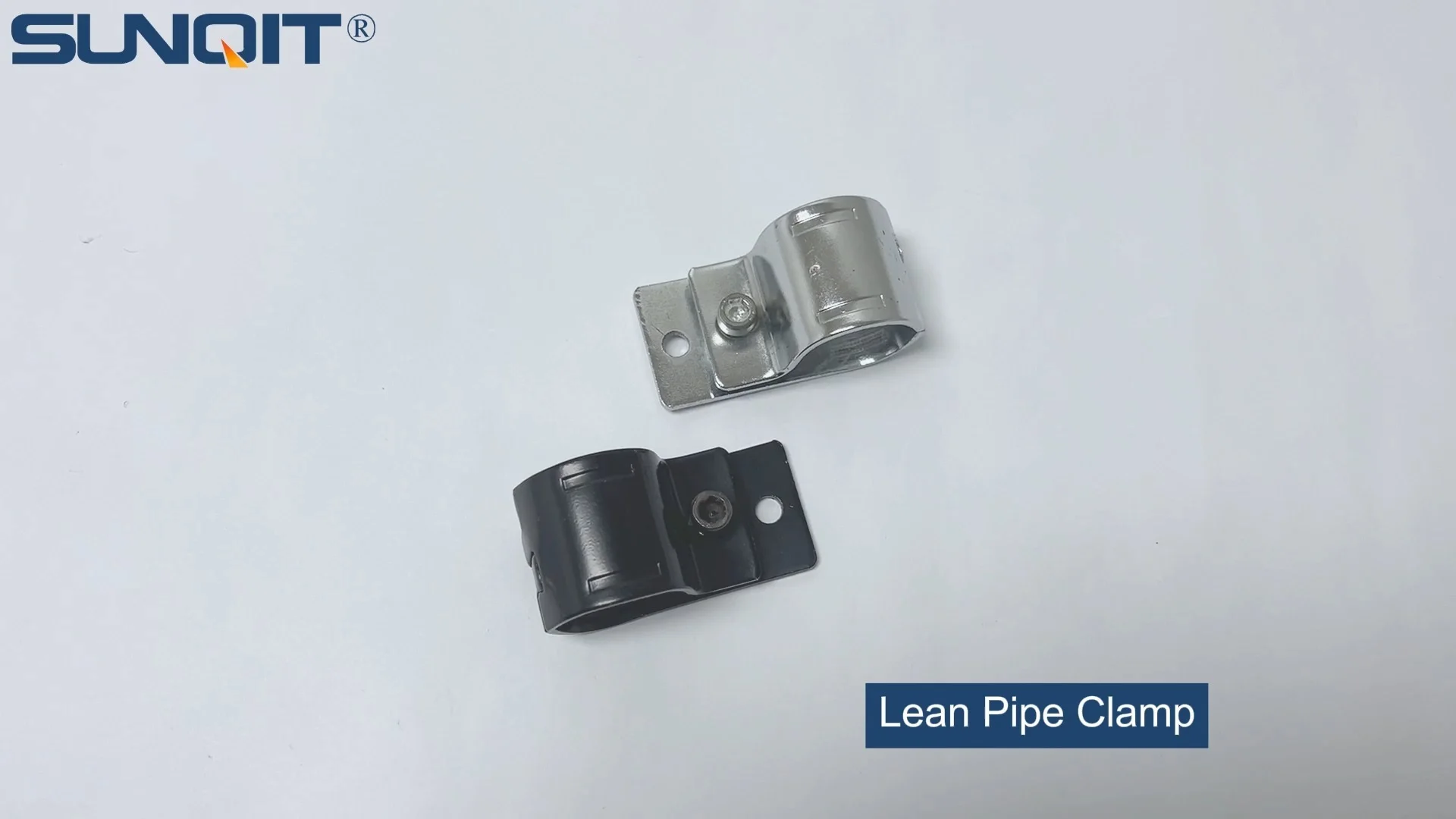
Lean pipe clamp is used for rack system hang monitor or other panel for workbenck, flowrack in production daily use.
In the world of lean manufacturing, where efficiency, flexibility, and durability are the cornerstones of success, every component in your workspace matters—especially the ones that hold everything together. Lean pipe clamps, often overlooked but critically important, are the unsung heroes that transform simple tubes into robust workbenches, material racks, and production lines. But here's the question that keeps facility managers and operations teams up at night: when it comes to lean pipe clamps, should you choose steel or aluminum? Both materials have their loyal advocates, but the answer isn't as simple as "one size fits all." In this deep dive, we'll explore the nuances of steel and aluminum lean pipe clamps, breaking down their strengths, weaknesses, and real-world performance to help you make the best choice for your unique needs. Whether you're building a new workbench, upgrading a conveyor system, or revamping your entire production floor, understanding the differences between these two materials could save you time, money, and headaches down the line.
Why Lean Pipe Clamps Matter: The Backbone of Lean Systems
Before we jump into the steel vs. aluminum debate, let's take a moment to appreciate why lean pipe clamps are so vital. In lean manufacturing, the goal is to eliminate waste, streamline workflows, and adapt quickly to changing demands. Lean pipe systems—composed of tubes, joints, and clamps—are designed to be modular, allowing you to reconfigure workstations, racks, and trolleys with minimal effort. But none of this flexibility would be possible without the clamps that secure the joints. A weak clamp can lead to wobbly workbenches, unstable material racks, or even safety hazards. A durable, well-designed clamp, on the other hand, ensures that your structures stay rigid under load, maintain alignment over time, and can withstand the daily wear and tear of a busy factory floor.
Think of it this way: if your lean system is a human body, the tubes are the bones, and the clamps are the ligaments and tendons. They might not be the most visible part, but their strength and reliability determine how well the entire system functions. This is especially true when you consider components like caster wheels—if the clamps holding your trolley's frame together are flimsy, even the sturdiest caster wheel won't prevent wobbling or instability. So, choosing the right clamp material isn't just about cost; it's about ensuring the safety of your team, the longevity of your equipment, and the efficiency of your operations.
Steel Lean Pipe Clamps: The Heavyweight Contender
Material Basics: Strength and Durability First
Steel has been a staple in manufacturing for decades, and for good reason. When we talk about steel lean pipe clamps, we're often referring to variants within the stainless steel pipe series —a material prized for its exceptional strength and resistance to corrosion. Stainless steel clamps are typically made from alloys containing iron, chromium, and nickel, which form a protective oxide layer on the surface, shielding the metal from rust and degradation. This makes them ideal for environments where moisture, chemicals, or heavy loads are part of the daily routine.
One of the key advantages of steel clamps is their tensile strength. A standard steel lean pipe joint can withstand significantly higher loads than its aluminum counterpart, making it the go-to choice for heavy-duty applications. Imagine a material rack B (3 row and 3 floor) loaded with metal components or automotive parts—steel clamps would provide the stability needed to keep that rack from sagging or shifting over time. Similarly, in workbenches used for assembly tasks that involve pounding, drilling, or heavy tool storage, steel clamps ensure the structure remains solid, even under repeated stress.
Corrosion Resistance: Battling the Elements
While steel is strong, not all steel is created equal. Carbon steel, for example, is prone to rust if exposed to moisture, which is why most industrial-grade lean pipe clamps opt for stainless steel. The chromium content in stainless steel reacts with oxygen to form a passive layer that self-heals when scratched, making it resistant to rust and staining. This is a game-changer in environments like food processing facilities, where frequent cleaning with water or sanitizers is required, or in outdoor warehouses where clamps are exposed to rain and humidity.
That said, stainless steel isn't entirely immune to corrosion. In highly acidic or salty environments (like coastal factories), even stainless steel may show signs of wear over time. But for most general manufacturing settings, it's more than up to the task. Plus, stainless steel clamps require minimal maintenance—no need for painting or coating—just an occasional wipe-down to keep them looking clean and functioning smoothly.
The Downside: Weight and Flexibility
If steel has a Achilles' heel, it's weight. Steel clamps are significantly heavier than aluminum ones, which can make assembling or reconfiguring lean systems more labor-intensive. Imagine a team of workers trying to move a turnover trolley equipped with steel clamps and a fully loaded workbench—every extra pound adds up, increasing the risk of strain injuries and slowing down the process. This weight also limits the portability of structures; while caster wheels can help, the overall heft of steel components makes frequent repositioning a chore.
Another consideration is flexibility. Steel is rigid, which is great for stability but not so great if you need to make minor adjustments on the fly. Aluminum, as we'll see later, offers more "give" in certain applications, allowing for slight tweaks without compromising structural integrity. Steel clamps also tend to be bulkier, which can limit design flexibility in tight spaces. If you're working with a compact production line or need to build a workbench with intricate configurations, the size of steel clamps might restrict your options.

Aluminum Lean Pipe Clamps: The Lightweight Innovator
Material Basics: Lightweight Strength
Aluminum has surged in popularity in recent years, thanks to its unique combination of lightness and strength. Aluminum lean pipe clamps are typically made from high-grade aluminum alloys (often 6061 or 6063), which are heat-treated to enhance their mechanical properties. These alloys offer a impressive strength-to-weight ratio—while aluminum is about one-third the weight of steel, it still provides enough tensile strength for most medium-duty applications. This makes aluminum clamps a favorite for projects where portability and ease of assembly are top priorities.
Picture this: a team tasked with setting up a temporary assembly line for a seasonal product. With aluminum clamps, they can quickly connect tubes, add shelves, and attach caster wheels to create mobile workstations—all without needing heavy lifting equipment. The lightweight nature of aluminum also reduces shipping costs, as more clamps can fit into a single package, and lowers the risk of workplace injuries during installation. For companies that frequently reconfigure their production floors or need to move equipment between facilities, aluminum clamps are a logistical dream.
Corrosion Resistance: A Natural Advantage
Like stainless steel, aluminum has a natural resistance to corrosion, but it achieves this through a different mechanism. When exposed to air, aluminum forms a thin layer of aluminum oxide, which acts as a barrier against moisture and chemicals. Unlike steel's oxide layer, aluminum's is transparent, so it doesn't affect the material's appearance. This makes aluminum clamps ideal for indoor environments with moderate humidity, such as electronics manufacturing facilities or cleanrooms, where aesthetics and corrosion resistance are equally important.
However, aluminum's corrosion resistance has limits. In highly alkaline environments or when in contact with certain metals (like copper), aluminum can suffer from galvanic corrosion. To mitigate this, many aluminum clamps are anodized—a process that thickens the oxide layer, enhancing both corrosion resistance and durability. Anodized aluminum clamps also come in a variety of colors, allowing you to color-code workstations or match your facility's branding, which is a nice bonus for visual management in lean systems.
Design Flexibility: Sleek and Adaptable
Aluminum's malleability is another key advantage. Aluminum lean pipe clamps can be precision-machined into sleek, low-profile designs that take up less space than steel clamps. This is especially useful when building workbenches or material racks where every inch of space counts. For example, a workbench E (single deck-without caster) designed for electronics assembly might require tight clearances between components—aluminum clamps would allow for a cleaner, more compact setup without sacrificing stability.
Aluminum clamps also pair well with other lightweight materials, such as aluminum honeycomb panels or plastic roller track guide rails, creating systems that are both strong and easy to maneuver. This versatility extends to customization: aluminum can be easily drilled, cut, or modified to fit unique project requirements, whereas steel often requires specialized tools and more effort to adjust. For teams that value agility and innovation, aluminum clamps open up a world of design possibilities.

Steel vs. Aluminum: A Head-to-Head Comparison
| Factor | Steel Lean Pipe Clamps | Aluminum Lean Pipe Clamps |
|---|---|---|
| Strength | High tensile strength; ideal for heavy loads (up to 500+ kg per joint) | Moderate tensile strength; suitable for medium loads (up to 200-300 kg per joint) |
| Weight | Heavy (3x denser than aluminum); harder to transport and assemble | Lightweight (1/3 the weight of steel); easy to handle and reconfigure |
| Corrosion Resistance | Excellent (stainless steel); resistant to rust, moisture, and mild chemicals | Good (natural oxide layer); better in dry/indoor environments; anodized versions offer enhanced protection |
| Cost | Higher initial cost; lower long-term maintenance | Lower initial cost; may require replacement sooner in heavy-duty use |
| Design Flexibility | Bulky; limited to heavy-duty, rigid structures | Sleek, low-profile; easy to customize and integrate with other lightweight materials |
| Maintenance | Minimal; occasional cleaning to remove debris | Low; anodized versions may require touch-ups if scratched |
| Best For | Heavy loads, high-stress environments, outdoor/harsh conditions | Light to medium loads, portable systems, frequent reconfiguration, indoor clean environments |

Real-World Applications: When to Choose Steel, When to Choose Aluminum
Steel Clamps: Heavy-Duty and High-Stress Environments
Steel clamps shine in scenarios where strength and durability are non-negotiable. Let's take the automotive industry, for example. A typical automotive assembly line involves moving heavy parts like engines, transmissions, and chassis components. Material racks loaded with these parts need to withstand constant vibration, frequent loading/unloading, and the weight of thousands of pounds of metal. Here, steel clamps (part of the stainless steel pipe series) are the clear choice—they ensure the racks remain stable, preventing parts from falling and injuring workers.
Another example is the aerospace industry, where precision and safety are critical. Workbenches used for assembling aircraft components must be rock-solid to ensure accuracy during measurements and installations. Steel clamps provide the rigidity needed to keep the workbench level and stable, even when technicians are using heavy tools or applying force during assembly. Similarly, in foundries or metalworking shops, where clamps are exposed to high temperatures and abrasive materials, steel's heat resistance and toughness make it the only viable option.
Aluminum Clamps: Lightweight and Agile Workspaces
Aluminum clamps, on the other hand, excel in environments that prioritize flexibility and portability. Consider a electronics manufacturing facility that produces smartphones or laptops. The production lines here are often reconfigured to accommodate new models, and workstations need to be moved to different areas of the factory. Aluminum lean pipe clamps make it easy to build modular workbenches with caster wheels, allowing teams to shift layouts in hours rather than days.
Retail and e-commerce warehouses are another area where aluminum clamps shine. With the rise of omnichannel retail, warehouses need to quickly adapt to seasonal demand spikes, adding temporary picking stations or sorting racks. Aluminum clamps, paired with lightweight aluminum honeycomb panels and plastic roller track guide rails, create systems that are easy to assemble, disassemble, and store when not in use. They're also ideal for order fulfillment workbenches, where workers need to move quickly and the load on the bench is relatively light (boxes of clothing, small electronics, etc.).
The Middle Ground: Hybrid Systems
Sometimes, the best solution isn't steel or aluminum—it's both. Many facilities opt for hybrid lean systems, using steel clamps for the base structure (where strength is critical) and aluminum clamps for upper levels or accessories (where weight and flexibility matter). For example, a material rack B (3 row and 3 floor) might use steel clamps for the bottom two levels (holding the heaviest items) and aluminum clamps for the top level (holding lighter components). This approach balances durability and portability, ensuring the rack is stable while keeping the overall weight manageable.
Another hybrid strategy is to use steel clamps in fixed structures (like permanent workbenches) and aluminum clamps in mobile units (like turnover trolleys). This way, you get the best of both worlds: the longevity of steel where you need it most, and the agility of aluminum where you need to move quickly. It's a creative solution that acknowledges that most manufacturing environments aren't one-dimensional—and neither should your clamp choices.
Choosing the Right Clamp: A Decision Framework
Step 1: Assess Your Load Requirements
The first question to ask is: how much weight will your lean system need to support? If you're building a workbench for assembling small parts (like circuit boards), aluminum clamps will likely suffice. But if you're constructing a rack to hold engine blocks or steel sheets, steel clamps are non-negotiable. Be sure to factor in dynamic loads too—if the structure will be moved (with caster wheels) or subjected to vibrations (near machinery), you'll need a clamp that can handle sudden shifts in weight.
Step 2: Evaluate Your Environment
Next, consider where the clamps will be used. Is the area dry or humid? Are there chemicals, salt, or food products involved? Steel clamps are better for wet, corrosive, or high-temperature environments, while aluminum works well in clean, dry, or indoor settings. If you're unsure, ask your supplier for material samples and test them in your environment for a few weeks—better to be safe than sorry.
Step 3: Consider Flexibility Needs
How often will you need to reconfigure your lean system? If you're setting up a permanent production line that won't change for years, steel clamps are a solid investment. But if you're in an industry with frequent product changes (like consumer electronics) or seasonal demand swings, aluminum clamps' lightweight and easy adjustability will save you time and labor.
Step 4: Calculate Total Cost of Ownership
While aluminum clamps are cheaper upfront, steel clamps often have a lower total cost of ownership over time. Steel lasts longer, requires less maintenance, and can handle more abuse, which means you won't need to replace them as frequently. On the flip side, if you're a startup with limited capital or need to scale quickly, aluminum clamps' lower initial cost might be more appealing. Be sure to factor in installation costs too—aluminum clamps are faster to assemble, which can reduce labor expenses.
Conclusion: It's About What Works for You
At the end of the day, there's no "winner" in the steel vs. aluminum lean pipe clamp debate—only the best choice for your specific needs. Steel clamps are the heavyweights, offering unmatched strength and durability for high-load, harsh environments. Aluminum clamps are the sprinters, providing lightweight agility and flexibility for dynamic workspaces. And hybrid systems? They're the strategists, blending the best of both to meet complex demands.
The key is to look beyond the material itself and focus on your goals: What are you trying to build? How will it be used? What are your long-term plans for your facility? By answering these questions, you'll be able to choose clamps that not only hold your lean system together but also support your team's efficiency, safety, and success. Whether you go with steel, aluminum, or a mix, remember: the best clamp is the one that helps you achieve your lean manufacturing goals—no more, no less.
So, the next time you're standing in front of a shelf of lean pipe clamps, take a moment to think about the bigger picture. That small, unassuming clamp is more than just a piece of metal—it's a building block for a more efficient, productive, and adaptable workspace. Choose wisely, and it will serve you well for years to come.