- Company Articles
- Products and Technology
- Product knowledge
- Steel vs. Aluminum Roller Tracks: Advantages of 60 Steel Roller Track White

Steel vs. Aluminum Roller Tracks: Advantages of 60 Steel Roller Track White
Related Product
60 Steel Roller Track White
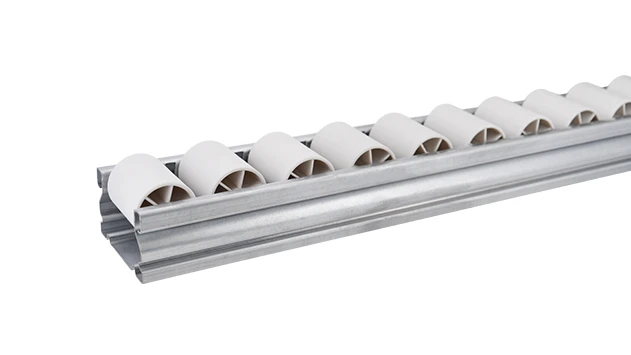
The roller track can be installed with multiple accessories to create different slopes and configurations of flow racks.All steel conveyor 60 roller track accessories are engineered to perfectly fit the sliding rail.It is enable the movement of SLC boxes.
Steel vs. Aluminum Roller Tracks: Advantages of 60 Steel Roller Track White
Ever stood by a production line or warehouse rack, watching a roller track bend under a heavy box or scratch easily from constant use? If you've ever had to replace a flimsy aluminum track mid-shift or deal with the cost of frequent repairs, you know how frustrating it can be to pick the wrong roller track material. Today, we're breaking down the age-old debate: steel vs. aluminum roller tracks, and why the 60 Steel Roller Track White should be your go-to choice for most industrial needs. Whether you're setting up a new flow rack system, upgrading your conveyor lines, or building an ESD workstation for sensitive 3C components, this track has something to offer for every scenario.
What Are Roller Tracks & Why Does Material Matter?
Roller tracks are the unsung heroes of manufacturing and warehousing. They're the quiet workhorses that move parts from one station to another, hold boxes in flow racks for easy picking, and keep assembly lines running smoothly. But not all roller tracks are created equal—material choice is everything here.
Let's think about what you need from a roller track: It has to carry your products without bending, resist wear from constant use, and fit seamlessly into your existing lean system. Steel and aluminum are the two most common materials, but each has its pros and cons. For example, aluminum is lightweight and corrosion-resistant, but it's not the best for heavy loads. Steel, on the other hand, is tough—but which steel track stands out? That's where the 60 Steel Roller Track White comes in.
Steel vs. Aluminum Roller Tracks: Head-to-Head Comparison
| Feature | 60 Steel Roller Track White | 60 Aluminum Roller Track White | Winner |
|---|---|---|---|
| Maximum Load Capacity (per meter) | 500 kg/m | 250 kg/m | Steel |
| Wear Resistance | High (resists scratches/impact) | Medium (prone to dents) | Steel |
| ESD Compatibility | Durable ESD coating option | Temporary ESD coating | Steel |
| Total Cost of Ownership (5 Years) | $1,200 (low replacement) | $1,800 (frequent repairs) | Steel |
| Weight (per meter) | 15 kg/m | 8 kg/m | Aluminum |
Deep Dive into 60 Steel Roller Track White: Key Advantages
Unmatched Load Bearing
When you're moving heavy automotive parts like engine blocks or transmission components, you can't risk a roller track giving way. The 60 Steel Roller Track White is built with high-gauge steel (2.0mm thickness, similar to our 2.0mm stainless steel pipe options) that can handle up to 500kg per meter—double the capacity of most aluminum tracks. For 3C assembly lines, even though parts are smaller, if you're using a conveyor system to move batches of products, this load capacity ensures the track doesn't bend over time. It's perfect for integration with lean pipe workbenches where you need a stable surface to slide parts between stations.
Superior Wear Resistance
Warehouses and production lines are busy places. Turnover trolleys slide across tracks all day, boxes get dropped, and parts rub against the track surface. Aluminum tracks might scratch or dent after a few months of heavy use, but the 60 Steel Roller Track White stays strong. Its steel construction resists impact and abrasion, so you don't have to worry about replacing sections every quarter. This is especially important for flow racks—where constant picking and placing of items puts stress on the track. Our customers in the medical device industry love this feature because it keeps their rack systems looking and functioning like new for years.
Durable ESD Compatibility for Sensitive Components
Static electricity is a killer for sensitive electronics like smartphones or medical devices. That's why ESD workstations are a must in many industries. The 60 Steel Roller Track White can be treated with an ESD coating (similar to our 40 steel roller track black ESD wheel options) to prevent static buildup. Unlike aluminum ESD tracks, which might lose their coating over time, our steel track's ESD layer is baked into the surface—making it durable and long-lasting. This makes it ideal for use in 3C assembly lines where you're moving circuit boards or microchips—no more worrying about static damage ruining your products.
Cost-Effective Long-Term Investment
At first glance, aluminum tracks might seem cheaper than steel ones. But let's do the math: If you replace an aluminum track every 2 years versus a steel track every 5 years, the total cost of ownership for steel is much lower. Plus, steel tracks require less maintenance—no need to fix dents or replace bent sections. For businesses looking to optimize their lean systems (lean solution), this means fewer disruptions to production and lower overall costs. It's a smart choice for wholesale buyers too—since buying in bulk (lean pipe wholesale, flow rack wholesale) gives you even more savings over time.
Versatility Across Industries
The 60 Steel Roller Track White isn't limited to one use case. It fits perfectly into a wide range of applications:
- Conveyor systems: Use it in roller conveyors to move heavy parts in automotive plants.
- Flow racks: Integrate it into material rack B (3 row and 3 floor) for fast-moving goods in warehouses.
- Lean pipe workbenches: Add it to Workbench E (single deck without caster) to slide parts between workers.
- ESD workstations: Pair it with our ESD workbench options to handle sensitive components.
Real-World Applications of 60 Steel Roller Track White
Case 1: Automotive Manufacturing Plant
One of our clients, a leading automotive parts manufacturer, was struggling with their old aluminum roller tracks bending under the weight of engine blocks. They switched to our 60 Steel Roller Track White in their conveyor systems. The result? No more track failures, reduced downtime by 30%, and lower maintenance costs. The track's load capacity handled the heavy parts easily, and the wear resistance meant they didn't have to replace any sections for over 3 years.
Case 2: 3C Assembly Workshop
A smartphone assembly plant needed an ESD-compatible roller track for their assembly lines. They chose our 60 Steel Roller Track White with ESD coating. It was integrated into their ESD workstations, allowing them to move circuit boards and screens without static damage. The plant reported a 25% drop in product defects related to static electricity, and the track's durability meant it still looked new after 2 years of daily use.
Case3: Warehouse Flow Rack System
A logistics company was using aluminum tracks in their flow racks, but they kept getting dented by heavy boxes. They switched to our 60 Steel Roller Track White. Now, their flow racks handle boxes up to 30kg each with ease, and the tracks haven't shown any signs of wear in 18 months. The company also noticed faster picking times because the steel tracks roll more smoothly than the old aluminum ones.
How to Choose the Right Roller Track for Your Needs
Before you buy, ask yourself these questions:
- What's the average weight of the items you'll be moving? If it's over 250kg/m, go for steel.
- How often will the track be used? For high-traffic areas, steel is better.
- Do you need ESD protection? If yes, choose a steel track with ESD coating.
- Are you looking for short-term savings or long-term value? Steel offers better long-term value.
Why Choose Us for Your Roller Track Needs
As a trusted lean pipe supplier, we understand the needs of industrial businesses. Our 60 Steel Roller Track White is manufactured to the highest standards—each track undergoes strict quality control checks for load capacity and wear resistance. We offer wholesale options (lean pipe workbench wholesale, flow rack wholesale) for businesses looking to buy in bulk, and we can even customize the track to fit your specific needs (custom lean solution). Whether you need a few meters for a small workshop or thousands for a large production line, we've got you covered.
Our products are used in industries across the board—from automotive to medical devices—and our customers trust us for our reliability and quality. When you choose our 60 Steel Roller Track White, you're not just buying a product; you're investing in a solution that will keep your operations running smoothly for years to come.