- Company Articles
- Products and Technology
- Product knowledge
- Straight Lean Pipe Joint Square End Chrome: Core Components of Lean Tube Systems

Straight Lean Pipe Joint Square End Chrome: Core Components of Lean Tube Systems
Related Product
Straight Lean Pipe Joint Square End Chrome
Straight lean pipe joint square end, one side connect with 28mm round pipe, the other side connect with square tube.
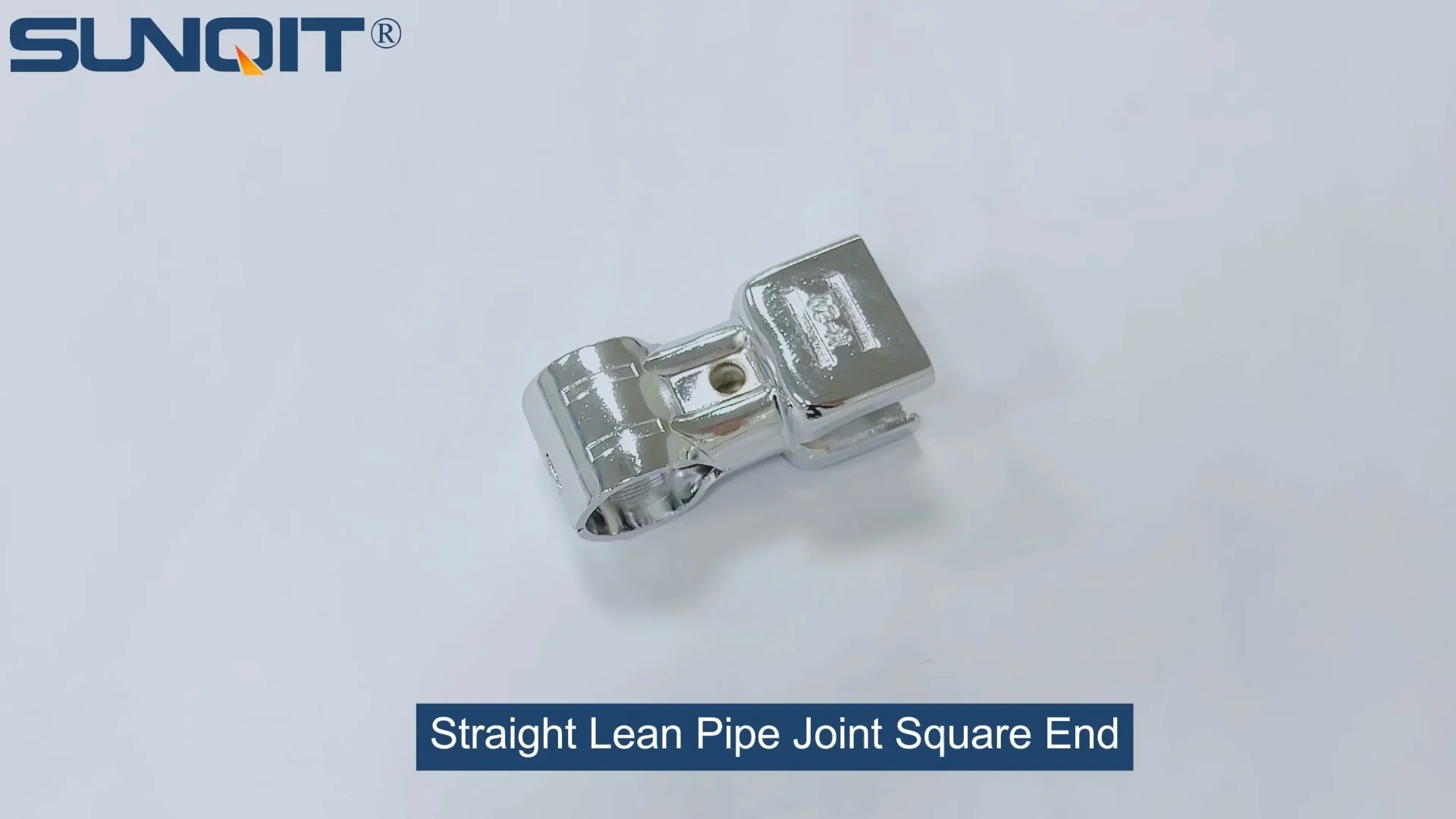
Walk into any modern manufacturing facility, and you'll quickly notice the rhythm of efficiency: workbenches hum with activity, materials glide smoothly along flow racks, and teams adapt seamlessly to shifting production needs. Behind this harmony lies a network of unassuming yet critical components—none more essential than the straight lean pipe joint square end chrome. Far more than just a "connector," this small but mighty part is the backbone of lean tube systems, enabling the flexibility, durability, and modularity that define today's most productive workspaces. Let's dive into why this joint matters, how it shapes lean manufacturing, and why it's become a staple for businesses aiming to streamline operations and reduce waste.
What Is the Straight Lean Pipe Joint Square End Chrome, Anyway?
At first glance, you might mistake it for just another metal fitting. But the straight lean pipe joint square end chrome is engineered with a specific purpose: to link lean pipes (or aluminum lean pipes) into stable, adjustable structures that form the basis of workbenches, trolleys, flow racks, and more. Its name gives away key details: "straight" means it connects pipes in a linear path, "square end" refers to its flat, stable connection point, and "chrome" highlights its corrosion-resistant, sleek finish. But beyond the basics, this joint is a masterclass in functional design—built to balance strength, ease of use, and adaptability.
Think of it as the "glue" that holds lean systems together, but with a twist: unlike glue, it's reversible. Need to reconfigure a workbench to fit a new product line? Disassemble the joint, adjust the pipes, and reassemble—no tools required (or just a simple wrench, at most). This flexibility is why it's a favorite among manufacturers, warehouses, and even labs where layouts change frequently. It turns rigid, fixed structures into dynamic, evolving workspaces that grow with your needs.
Key Features That Make This Joint Stand Out
Not all lean pipe joints are created equal. The straight lean pipe joint square end chrome sets itself apart with features that address real-world challenges in manufacturing and material handling. Let's break down what makes it indispensable:
- Chrome-Plated Durability: Chrome isn't just for looks. The chrome plating adds a layer of protection against rust, scratches, and daily wear—critical in busy environments where spills, humidity, or heavy use are common. This means the joint lasts longer, reducing replacement costs and downtime.
- Square End Stability: Unlike rounded or angled joints, the square end design creates a flush, secure connection with pipes. This minimizes wobble, even under heavy loads, making it ideal for workbenches that hold tools, assemblies, or raw materials. A stable base translates to safer workspaces and fewer errors in precision tasks.
- Universal Compatibility: This joint plays well with others—specifically, standard lean pipes (often 28mm in diameter) and aluminum lean pipes. Whether your facility uses traditional steel pipes or lightweight aluminum, the square end chrome joint connects them without fuss. It also pairs with other accessories like casters, roller tracks, and brackets, expanding its utility across different structures.
- Tool-Free (or Low-Tool) Assembly: Tired of hunting for specialized tools to build or adjust structures? This joint often features a quick-lock mechanism or simple bolt-on design that lets workers assemble or reconfigure systems in minutes. For example, some models use a hand-tightened screw to clamp onto pipes, eliminating the need for power tools and speeding up setup.
- High Load Capacity: Don't let its size fool you. A well-made straight lean pipe joint square end chrome can support significant weight—often up to 50kg per joint, depending on the pipe material and setup. This makes it suitable for heavy-duty applications like material racks, where stability under load is non-negotiable.

How It Integrates with Lean Systems: More Than Just a Connector
Lean manufacturing is all about eliminating waste—whether that's wasted time, space, or resources. The straight lean pipe joint square end chrome embodies this philosophy by enabling three core principles of lean systems:
1. Modularity: In traditional manufacturing, building a new workbench or trolley meant custom fabrication—cutting metal, welding, painting. This was time-consuming, expensive, and left little room for changes. With the square end chrome joint, you can build structures using standardized lean pipes and joints, then reconfigure them as needed. A workbench today can become a turnover trolley tomorrow, simply by adjusting the pipe lengths and joint positions. This modularity slashes lead times for new setups and reduces the need to buy entirely new equipment.
2. Flexibility: Production lines rarely stay the same. New products, seasonal demand, or process improvements often require layout changes. The square end chrome joint's easy disassembly makes adjustments painless. For example, a electronics manufacturer might need to add a second shelf to a workbench to accommodate larger circuit boards. With this joint, workers can loosen a few connections, add a pipe segment, and secure it—all in under 10 minutes. No downtime, no hassle, just a workspace that adapts on the fly.
3. Waste Reduction: By enabling reusable, adjustable structures, the joint reduces waste in two ways: first, it minimizes scrap from custom-built, one-time-use equipment. Second, it cuts down on inventory—instead of storing multiple specialized trolleys or racks, you can repurpose existing components. Over time, this adds up to significant cost savings and a smaller environmental footprint.

Compatibility: Working in Harmony with Lean Pipes and Aluminum Lean Pipes
A joint is only as good as the pipes it connects, and the straight lean pipe joint square end chrome is designed to pair perfectly with two of the most common materials in lean systems: traditional lean pipes and aluminum lean pipes.
Traditional Lean Pipes: These are typically steel pipes coated in plastic (often PE) for durability and grip. The square end chrome joint's inner diameter is sized to fit standard 28mm lean pipes snugly, creating a tight connection that resists slipping. The chrome finish also complements the plastic coating, adding a professional look to structures.
Aluminum Lean Pipes: For facilities prioritizing lightweight structures (e.g., medical labs, cleanrooms, or assembly lines where workers move trolleys by hand), aluminum lean pipes are a game-changer. They're lighter than steel but still strong, and the square end chrome joint works seamlessly with them. The joint's clamp design adjusts to aluminum's slightly different texture, ensuring a secure hold without damaging the pipe's surface.
This cross-compatibility is key. It means facilities can mix and match materials—using steel pipes for heavy-duty workbenches and aluminum for mobile trolleys—without needing different joints for each. It simplifies inventory management and gives teams the freedom to choose the best material for each task.
Real-World Applications: From Workbenches to Flow Racks
To understand the joint's impact, let's look at how it's used in everyday structures. Take the humble workbench—a staple in any production line. A typical workbench built with straight lean pipe joints square end chrome might have a frame of interconnected pipes, a wooden or metal top, and accessories like tool hooks or shelves. The joints ensure the frame stays stable even when workers lean on it, set heavy tools down, or bump into it during shifts. And if the workbench needs to be taller, shorter, or wider? Adjust the pipe lengths and reposition the joints—no need to buy a new bench.
Another common application is flow racks , which use gravity to move materials from one workstation to the next. These racks rely on sloped roller tracks, supported by lean pipes connected via square end joints. The joints keep the tracks aligned, ensuring materials glide smoothly without jamming. In warehouses, this translates to faster order fulfillment and fewer bottlenecks.
Turnover trolleys are another example. These mobile carts transport materials between stations, and their frames depend on joints to stay rigid while rolling over uneven floors. The square end design prevents the pipes from twisting, even when the trolley is loaded with heavy boxes or components. And since the joints are easy to disassemble, damaged trolleys can be repaired quickly by replacing just the broken joint or pipe—no need to scrap the entire cart.
How It Compares to Other Lean Pipe Joints
The straight lean pipe joint square end chrome isn't the only joint in the lean systems toolkit. There are 90° fixed joints, swivel joints, and three-way joints, each with its own purpose. So when should you choose the straight square end chrome model? Let's compare it to a common alternative: the 90° fixed lean pipe joint.
| Feature | Straight Lean Pipe Joint Square End Chrome | 90° Fixed Lean Pipe Joint |
|---|---|---|
| Connection Type | Linear (straight line) | Right angle (90° turn) |
| Best For | Extending structures horizontally/vertically; straight sections of workbenches, racks, or trolleys | Corners, L-shaped frames, or connecting perpendicular pipes (e.g., workbench legs to top frame) |
| Adjustability | High—can be rotated or repositioned along the pipe | Low—fixed at 90°, limited rotation |
| Load Capacity | High (supports linear weight distribution) | High (supports corner/vertical loads) |
| Common Use Case | Adding length to a flow rack or workbench shelf | Building the corner of a trolley frame or workbench base |
The takeaway? The straight square end joint is your go-to for linear connections and flexibility, while 90° joints excel at corners. Many structures use both—for example, a workbench might have straight joints along its length and 90° joints at its corners. Together, they create a balanced, adaptable frame.
The Benefits of Choosing Chrome-Plated Joints
You might wonder: why chrome? After all, there are painted or uncoated joints available. Chrome plating offers two key advantages that make it worth the investment:
1. Corrosion Resistance: Manufacturing environments aren't always gentle. Spills, humidity, or exposure to chemicals can take a toll on metal components. Chrome plating acts as a barrier, preventing rust and deterioration. This is especially important in food processing, pharmaceuticals, or cleanrooms where hygiene and longevity are non-negotiable.
2. Easy Cleaning: Chrome's smooth, non-porous surface is a breeze to wipe down. In facilities with strict cleanliness standards (like electronics manufacturing, where dust can damage components), this saves time on maintenance. A quick wipe with a damp cloth removes dirt, grease, or debris—no scrubbing required.
Additionally, chrome has a professional, polished look thats the appearance of workspaces. While this might seem like a minor point, a clean, well-organized facility can boost employee morale and impress clients or auditors.
Why Lean System Suppliers Prioritize This Joint
If you've ever worked with a lean system supplier , you've probably noticed they stock this joint in bulk. That's because it's a foundational component—one that customers ask for repeatedly. Suppliers know that businesses don't just buy joints; they buy solutions to inefficiency. By offering reliable, high-quality square end chrome joints, suppliers empower their clients to build the lean systems they need without compromising on durability or flexibility.
Suppliers also appreciate the joint's consistency. Since it's standardized, they can stock large quantities without worrying about compatibility issues. This means faster shipping times and fewer backorders—critical for businesses that need to set up new lines or repair existing ones quickly.
Final Thoughts: Small Component, Big Impact
The straight lean pipe joint square end chrome might not grab headlines, but it's the unsung hero of lean manufacturing. It turns ordinary pipes into extraordinary structures that adapt, endure, and evolve with your business. Whether you're building a simple workbench or a complex flow rack system, this joint ensures your setup is stable, flexible, and built to last. It reduces waste, saves time, and creates workspaces that put efficiency first—all while being easy to use and affordable.
So the next time you walk through a smoothly running facility, take a closer look at the workbenches, trolleys, and racks. Chances are, you'll spot the square end chrome joints holding it all together. And now you'll know: those small, shiny connectors are more than just parts—they're the key to a leaner, more productive future.