- Company Articles
- Products and Technology
- Product knowledge
- Straight Lean Pipe Joint Square End Chrome: Environmental Benefits of Reusable Design

Straight Lean Pipe Joint Square End Chrome: Environmental Benefits of Reusable Design
Related Product
Straight Lean Pipe Joint Square End Chrome
Straight lean pipe joint square end, one side connect with 28mm round pipe, the other side connect with square tube.
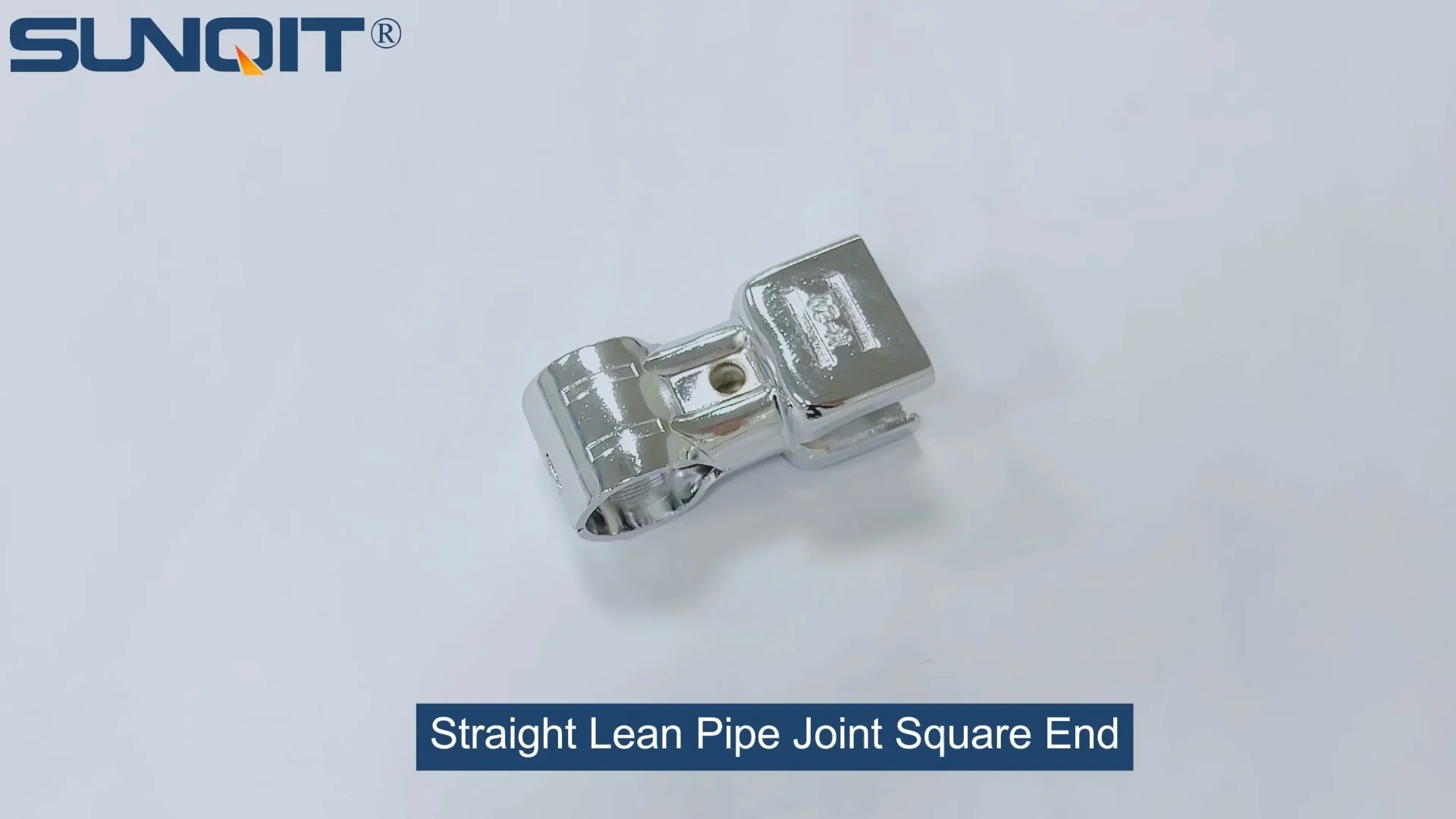
In the fast-paced world of manufacturing, where efficiency and productivity often take center stage, there's a quiet revolution unfolding—one that prioritizes the health of our planet just as much as the bottom line. At the heart of this movement lies the concept of lean system s, which aim to eliminate waste, streamline processes, and create more sustainable workflows. But what truly makes these systems impactful isn't just the big-picture strategies; it's the small, often overlooked components that hold everything together. Today, we're shining a light on one such component: the Straight Lean Pipe Joint Square End Chrome. This unassuming piece of hardware, with its focus on reusability, is quietly reshaping how manufacturers approach sustainability—one joint at a time.
The Rise of Lean Systems: More Than Just Efficiency
Before diving into the specifics of the Straight Lean Pipe Joint Square End Chrome, let's take a step back to understand why lean system s have become a cornerstone of modern manufacturing. Born from the Toyota Production System in the mid-20th century, lean manufacturing was initially about cutting waste—whether that waste was excess inventory, unnecessary movement, or idle time. But as the world grappled with climate change and resource depletion, lean evolved. Today, it's as much about environmental responsibility as it is about operational efficiency. A truly lean system doesn't just save time and money; it saves resources, reduces emissions, and minimizes the footprint left behind by production processes.
Central to this evolution is the idea of modularity. Unlike rigid, one-size-fits-all production setups of the past, modern lean systems are built using interchangeable components that can be reconfigured, repurposed, and reused. This flexibility isn't just convenient for adapting to changing production needs—it's a game-changer for sustainability. When a factory needs to shift from assembling smartphones to medical devices, for example, it doesn't have to tear down entire workstations and buy new ones. Instead, it can rearrange existing components, reducing the demand for raw materials and the waste generated by discarding old equipment.
Why Joints Matter: The Unsung Heroes of Lean Systems
If lean pipe s are the bones of a lean system, then joints are the connective tissue. They're the pieces that hold pipes, workbenches, flow racks, and conveyor systems together, enabling the creation of everything from simple material carts to complex assembly lines. But not all joints are created equal. Traditional joints—often made of cheap plastic or welded steel—are designed for single-use or limited lifespans. Once a production line is dismantled, these joints are often too damaged, corroded, or poorly designed to be reused. They end up in landfills, contributing to the 2.01 billion tons of municipal solid waste generated globally each year, according to the World Bank.
This is where the Straight Lean Pipe Joint Square End Chrome stands out. Crafted with durability and reusability in mind, this joint isn't just a temporary fix. It's a long-term investment in sustainability. Let's break down what makes its design so environmentally impactful.

Straight Lean Pipe Joint Square End Chrome: Engineered for Reusability
At first glance, the Straight Lean Pipe Joint Square End Chrome might seem like any other industrial fastener. But a closer look reveals thoughtful engineering that prioritizes both functionality and environmental responsibility. Let's start with the basics: its construction. Made from high-quality steel with a chrome plating, this joint is built to withstand the wear and tear of busy factory floors. Chrome isn't just for aesthetics—it adds a layer of corrosion resistance, ensuring the joint remains intact even in humid or dusty environments. This durability means the joint can be disassembled, moved, and reassembled dozens of times without losing its grip or structural integrity.
Then there's the "square end" design. Unlike rounded joints, which can slip or loosen over time, the square end creates a snug, secure fit when attached to lean pipe s. This precision reduces the need for over-tightening (which can damage threads) and ensures that when it's time to reconfigure a workstation, the joint can be easily loosened without stripping or breaking. Think of it like a well-designed puzzle piece: it fits perfectly when needed, and comes apart cleanly when it's time to rearrange.
But perhaps the most innovative aspect of this joint is its compatibility with a wide range of lean pipe accessories . From caster wheels to roller tracks, from workbench frames to material racks, this joint works seamlessly with hundreds of components. This versatility means that even as production needs change, the joint doesn't become obsolete. A joint used to build a turnover trolley today can be repurposed next month to construct a flow rack, and then again next year to assemble a conveyor system. This adaptability drastically extends the joint's lifespan, reducing the need for constant replacement.
The Environmental Impact: From Raw Materials to End-of-Life
To truly appreciate the environmental benefits of the Straight Lean Pipe Joint Square End Chrome, let's trace its lifecycle—from the moment raw materials are extracted to the day it's finally retired. This lifecycle assessment (LCA) helps us understand how reusability translates to real-world sustainability gains.
1. Reduced Raw Material Extraction
Every time a joint is reused, it eliminates the need to mine, process, and manufacture a new one. Steel production, for example, is energy-intensive: it requires mining iron ore, transporting it to mills, and melting it in furnaces that emit CO2. The World Steel Association reports that steelmaking accounts for about 7% of global greenhouse gas emissions. By reusing a single Straight Lean Pipe Joint Square End Chrome multiple times, manufacturers reduce the demand for new steel, indirectly lowering emissions and conserving finite resources like iron ore and coal.
2. Minimized Waste in Manufacturing
Traditional joints often suffer from poor quality control, leading to high rejection rates during production. Plastic joints may crack during molding; welded steel joints may have weak spots that fail testing. These defective parts are discarded, adding to manufacturing waste. The Straight Lean Pipe Joint Square End Chrome, however, is produced with strict quality standards. Its chrome plating process is precise, and its square end design is tested for fit and durability. This reduces the number of defective units, cutting down on waste generated during manufacturing.
3. Extended Lifespan = Less Landfill Waste
The average lifespan of a traditional plastic joint is 6–12 months, while welded steel joints might last 2–3 years before becoming corroded or deformed. In contrast, the Straight Lean Pipe Joint Square End Chrome, with its chrome coating and robust steel core, can last 10 years or more with proper care. Let's do the math: if a factory uses 1,000 joints per year, a traditional joint would require 10,000 replacements over a decade. With the reusable chrome joint, that number drops to just 1,000. That's 9,000 fewer joints in landfills—each one taking centuries to decompose, if they decompose at all.
4. Lower Transportation Emissions
Every time a factory orders new joints, those components are shipped from suppliers, often across long distances. This transportation contributes to carbon emissions. By reusing existing joints, manufacturers reduce the frequency of orders, cutting down on the number of trucks, ships, or planes needed to deliver replacements. Over time, these savings add up, especially for large-scale operations with global supply chains.

Comparing Traditional Joints vs. Straight Lean Pipe Joint Square End Chrome
To put these benefits into perspective, let's compare the environmental impact of the Straight Lean Pipe Joint Square End Chrome with two common alternatives: plastic snap-on joints and welded steel joints. The table below breaks down key factors like lifespan, reusability, waste generation, and carbon footprint.
| Environmental Factor | Plastic Snap-On Joints | Welded Steel Joints | Straight Lean Pipe Joint Square End Chrome |
|---|---|---|---|
| Lifespan | 6–12 months | 2–3 years | 10+ years |
| Reusability | Low (breaks easily during disassembly) | Very Low (welds crack when dismantled) | High (can be disassembled and reused 50+ times) |
| Waste Generated (per 10-year period) | 10 joints per original unit | 4 joints per original unit | 1 joint per original unit |
| Carbon Footprint (production + transportation) | High (frequent replacement requires constant manufacturing and shipping) | Medium (steel production is energy-intensive, but longer lifespan reduces frequency) | Low (single production + minimal replacement needs) |
| End-of-Life Impact | Non-biodegradable; sits in landfills for centuries | Corrodes over time; releases heavy metals into soil/water | Recyclable (chrome-plated steel can be melted down and repurposed) |
The data speaks for itself: the Straight Lean Pipe Joint Square End Chrome outperforms traditional alternatives across every environmental metric. But its impact doesn't stop at the joint itself. When paired with other sustainable components like aluminum lean pipe , it becomes part of a larger ecosystem that amplifies sustainability gains.
Aluminum Lean Pipe and Accessories: A Synergistic Approach to Sustainability
While the Straight Lean Pipe Joint Square End Chrome is a star player in sustainable manufacturing, it rarely works alone. Most lean systems combine joints with aluminum lean pipe —a lightweight, durable material that complements the joint's reusability. Aluminum is inherently eco-friendly: it's 100% recyclable, and recycling it requires just 5% of the energy needed to produce new aluminum, according to the Aluminum Association. When you pair aluminum lean pipes with reusable chrome joints, you create a system where every component is designed to be repurposed, recycled, or both.
Consider a typical workstation built with aluminum lean pipes and Straight Lean Pipe Joints. When the workstation is no longer needed, the joints can be loosened, the pipes disassembled, and both components can be used to build a new flow rack or turnover trolley. Even if the pipes or joints eventually wear out, they can be recycled. Aluminum pipes melt down into new material, while chrome-plated steel joints are shredded and repurposed into new steel products. This closed-loop system drastically reduces the "take-make-waste" cycle that plagues traditional manufacturing.
But it's not just about pipes and joints. The lean pipe accessories that accompany them—like caster wheels, roller tracks, and workbench surfaces—are also evolving to prioritize sustainability. Many accessories are now made from recycled plastics or biodegradable materials, and their designs are standardized to ensure compatibility with reusable joints. For example, a plastic roller track guide rail, once damaged, can be easily swapped out without replacing the entire flow rack, thanks to the secure fit provided by the Straight Lean Pipe Joint Square End Chrome.
Real-World Impact: How Factories Are Reducing Waste with Reusable Joints
Talk of sustainability is meaningful, but nothing illustrates impact like real-world examples. Let's look at two case studies of manufacturers that switched to the Straight Lean Pipe Joint Square End Chrome and saw tangible environmental benefits.
Case Study 1: Automotive Parts Manufacturer in Michigan
A mid-sized automotive parts factory in Michigan was struggling with high waste costs and frequent production line reconfigurations. Every time the factory shifted to producing a new part, it had to dismantle old workstations and build new ones, resulting in piles of discarded plastic joints and bent steel pipes. In 2022, the factory partnered with a lean pipe supplier to transition to aluminum lean pipes and Straight Lean Pipe Joint Square End Chrome. Within a year, the results were striking:
- Waste sent to landfills decreased by 65%, saving the factory $42,000 in disposal fees.
- The need to purchase new joints dropped by 80%, reducing the factory's carbon footprint by an estimated 12 tons of CO2 annually (equivalent to taking 2.6 cars off the road).
- Workstation reconfiguration time decreased by 40%, as workers no longer had to struggle with damaged or stuck joints.
Case Study 2: Electronics Assembly Plant in Vietnam
An electronics plant in Vietnam, which produces circuit boards for smartphones, was facing pressure from international clients to reduce its environmental impact. The plant relied heavily on welded steel workbenches, which were difficult to modify and generated significant waste when outdated. After switching to a lean system built with aluminum lean pipes and Straight Lean Pipe Joints, the plant reported:
- A 70% reduction in raw material purchases for workstations, as 90% of joints and pipes were reused during reconfigurations.
- A 50% decrease in energy use for manufacturing setup, as less time and electricity were spent on welding and cutting steel.
- Improved employee satisfaction, with workers noting that the modular system was easier to adjust to their needs, reducing fatigue and increasing productivity.
These case studies highlight a key point: sustainability and profitability don't have to be at odds. By investing in reusable components like the Straight Lean Pipe Joint Square End Chrome, manufacturers can reduce costs, improve efficiency, and meet increasingly strict environmental regulations—all while doing their part to protect the planet.
Overcoming Challenges: Making the Switch to Reusable Joints
Of course, transitioning to reusable joints isn't without its challenges. For many manufacturers, the upfront cost is a barrier. Chrome-plated steel joints are more expensive than cheap plastic alternatives, and convincing decision-makers to invest in long-term sustainability can be difficult. However, as the case studies above show, the return on investment (ROI) is clear. The Michigan automotive factory, for example, recouped its initial investment in reusable joints within 14 months through reduced waste and material costs.
Another challenge is training. Workers accustomed to using traditional joints may need time to learn how to properly assemble and disassemble reusable ones. Over-tightening, for instance, can damage the threads on chrome joints, reducing their reusability. To address this, many lean pipe supplier s offer training sessions and instructional materials, teaching teams how to handle joints correctly to maximize their lifespan.
Finally, there's the issue of standardization. With so many types of lean pipes and joints on the market, ensuring compatibility can be tricky. That's why choosing a reputable supplier is crucial. Suppliers that specialize in lean systems often offer standardized components—like the Straight Lean Pipe Joint Square End Chrome—that work seamlessly with their own aluminum lean pipe s and accessories, eliminating compatibility issues and ensuring that joints can be reused across multiple applications.
Future Trends: The Next Frontier in Lean System Sustainability
As the demand for sustainable manufacturing grows, the future of lean systems looks bright—and the Straight Lean Pipe Joint Square End Chrome is poised to play a central role. Here are a few trends to watch:
1. Smart Joints with Tracking Technology
Imagine a joint embedded with a small RFID tag that tracks its lifespan, usage history, and maintenance needs. This technology could help manufacturers optimize reuse, ensuring that joints are retired only when necessary and recycled properly. Some suppliers are already experimenting with this, and early trials show it could extend joint lifespans by an additional 20%.
2. Bio-Based Coatings
While chrome plating is durable, the plating process can release harmful chemicals. Researchers are developing bio-based coatings made from plant oils or recycled materials that offer similar corrosion resistance without the environmental downside. These coatings could make the Straight Lean Pipe Joint Square End Chrome even more eco-friendly in the years to come.
3. Circular Economy Partnerships
More manufacturers are partnering with suppliers to create "joint take-back" programs, where used joints are returned, refurbished, and resold at a discount. This not only reduces waste but also makes reusable joints more accessible to small and medium-sized factories with limited budgets.
Conclusion: Small Joints, Big Impact
In the grand scheme of manufacturing, the Straight Lean Pipe Joint Square End Chrome may seem like a tiny piece of the puzzle. But as we've explored, its impact is anything but small. By prioritizing reusability, durability, and compatibility, this joint is helping to transform the industry—one workstation, one flow rack, one factory at a time. It's a reminder that sustainability doesn't always require massive overhauls or cutting-edge technology. Sometimes, the most meaningful change comes from reimagining the everyday components we've long taken for granted.
As consumers, regulators, and businesses continue to demand more from manufacturing, the message is clear: the future belongs to systems that work with the planet, not against it. The Straight Lean Pipe Joint Square End Chrome is a step in that direction—a small but powerful tool in the fight for a more sustainable world. So the next time you walk through a factory, take a moment to look at the joints holding everything together. You might just be looking at the future of manufacturing.