- Company Articles
- Products and Technology
- Product knowledge
- Straight Lean Pipe Joint Square End Chrome in 3C Assembly Lines: Boosting Production Flexibility

Straight Lean Pipe Joint Square End Chrome in 3C Assembly Lines: Boosting Production Flexibility
Related Product
Straight Lean Pipe Joint Square End Chrome
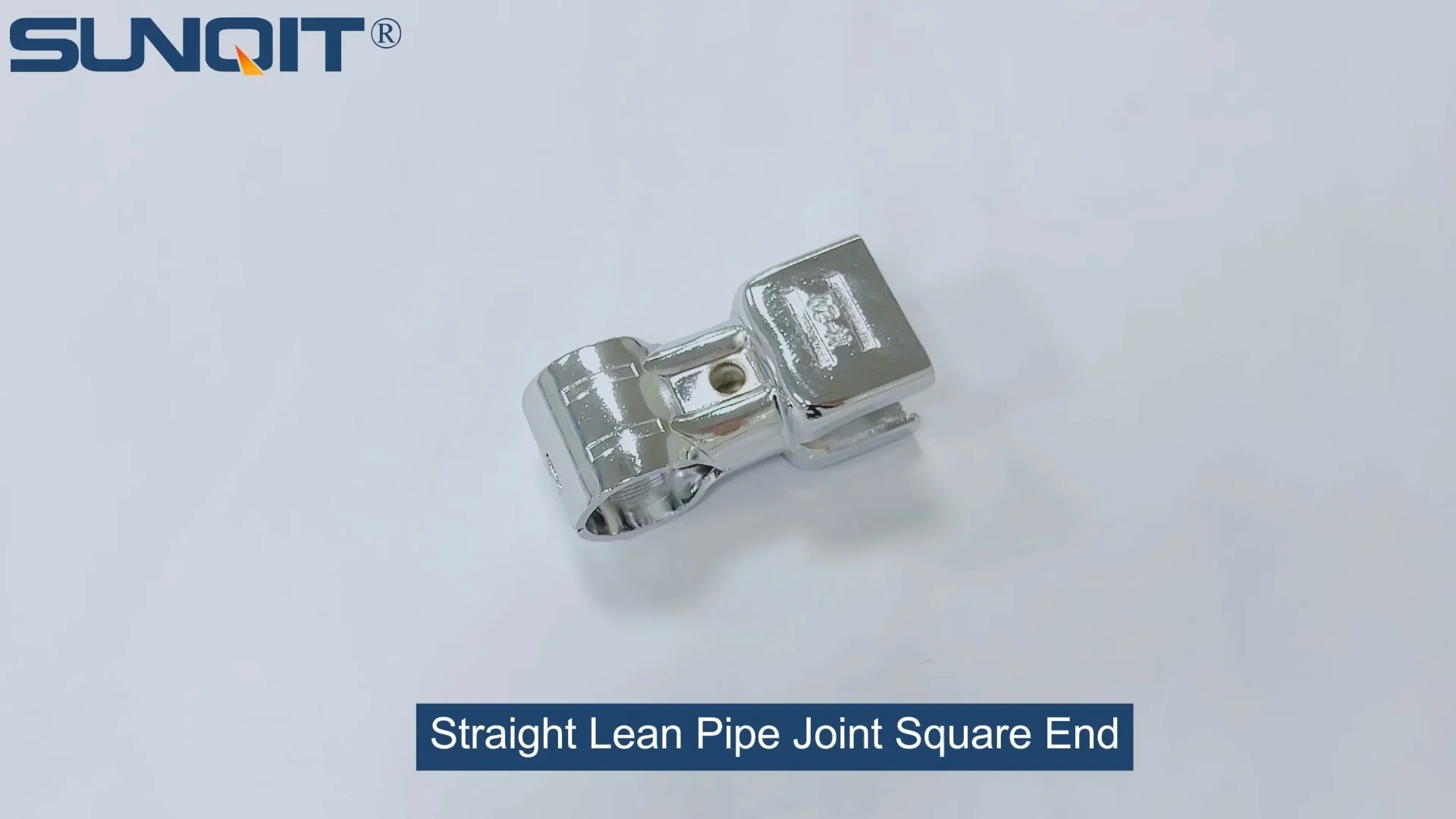
Straight lean pipe joint square end, one side connect with 28mm round pipe, the other side connect with square tube.
Let's start with a scenario we've all heard (or lived) in manufacturing: A 3C factory floor—think smartphones, laptops, wearables—where the production schedule is tighter than a well-torqued bolt. The design team just greenlit a new model, and suddenly, the assembly line that worked perfectly for last month's product feels like trying to fit a square peg into a round hole. Retooling takes forever, workers grumble about rigid workstations, and deadlines loom. Sound familiar? Here's the thing: The problem might not be your team, your machines, or even your process. It could be something as small, yet critical, as the pipe joints holding your workspace together. Today, we're diving into one unsung hero changing the game: the straight lean pipe joint square end chrome. Spoiler: It's not just a "part"—it's the flexibility your assembly line has been begging for.
The 3C Manufacturing Grind: Why Flexibility Isn't a Luxury Anymore
First, let's ground ourselves in the reality of 3C production. Unlike, say, automotive manufacturing, where a model might stick around for 5–7 years, 3C products turn over faster than a bakery's croissant display. A new smartphone model hits the market every 6–12 months; smartwatches get updates even quicker. Each iteration brings new components, new assembly steps, and new space requirements. One month, you're assembling 6-inch screens; the next, 6.7-inch foldables. Your line needs to pivot—fast.
Here's what that pivot typically looks like with old-school setups: Welded steel frames that take a team of contractors to modify. Bolted joints that rust or seize up, requiring power tools and brute force to adjust. Workbenches that can't be raised or lowered without disassembling half the line. Flow racks that only fit last quarter's component bins, not the new, bulkier ones. The result? Downtime measured in days, not hours. And in 3C, downtime isn't just lost productivity—it's lost market share.
"We used to spend an entire weekend reconfiguring our workbenches for a new product launch," says Mark, a production manager at a mid-sized electronics plant I spoke with last year. "By Monday, the team was already behind, and the rush to catch up led to more errors. It was a vicious cycle."
Enter lean manufacturing principles. At its core, lean is about eliminating waste—including the waste of rigid, unadaptable infrastructure. And that's where components like the straight lean pipe joint square end chrome come in. They're not just about connecting pipes; they're about building a system that bends without breaking.
Meet the Joint: What Makes the Straight Lean Pipe Joint Square End Chrome Different?
Let's get up close with this little powerhouse. First, the basics: It's a connector designed to join lean pipes (those modular, often aluminum or steel tubes you see in modern workstations) at straight angles, with a square end and a chrome-plated finish. But don't let the simplicity fool you. The "square end" detail? That's intentional. Unlike rounded joints, which can slip or require extra clamps, the square design locks pipes into place with precision, reducing wobble—critical when you're handling delicate circuit boards or tiny screws.
Then there's the chrome plating. In 3C environments, where static electricity (ESD) can fry sensitive electronics, chrome isn't just for shine. It's conductive, helping dissipate static charges—something plastic or uncoated steel joints often fail at. And let's talk durability: Chrome resists corrosion from the oils, coolants, and occasional spills common on factory floors. I've seen these joints hold up in 12-hour shift environments for years, still tightening smoothly when adjustments are needed.
But the real magic? Installation. Traditional welded joints? Permanent. Bolted joints? Require tools, torque specs, and often a second pair of hands. This chrome square end joint? Hand-tightenable. Most models use a cam lever or a simple hex key—no power tools, no contractors. A single worker can disconnect, reposition, and reconnect a section of pipe in under 5 minutes. "It's like building with advanced Legos," Mark. "Our line leads can now tweak workstations on the fly, between shifts, without waiting for maintenance. That alone cut our reconfiguration time by 70%."

From Joint to System: How It Powers Lean Pipe Workbenches and Flow Racks
A joint is only as good as the system it builds. Let's zoom out and see how this chrome square end joint integrates into two staples of 3C assembly: lean pipe workbenches and flow racks.
Lean Pipe Workbenches: Where Precision Meets Adaptability
The workbench is the heart of any assembly line. It's where workers spend 8+ hours a day, soldering, testing, and assembling. In 3C, that means it needs to be ergonomic (adjustable height for different workers), organized (built-in tool holders, ESD mats), and—you guessed it—flexible. A workbench for soldering might need a heat-resistant top; one for quality control needs extra lighting and magnifying glasses. With traditional benches, swapping out these features meant rebuilding from scratch. With a lean pipe workbench built using square end chrome joints? It's a matter of unscrewing a few joints and adding new components.
Take, for example, a "workbench E (single deck-without caster)" from common lean system catalogs. Typically, it's a basic frame with a single work surface. But with the right joints, you can add side shelves for tools, overhead racks for component bins, or even adjust the height by swapping out pipe lengths. The square end joints ensure that every addition stays stable—no wobbly shelves when you're placing a 20-pound test fixture. And because the joints are ESD-friendly, you can integrate grounding straps directly into the frame, protecting those pricey microchips from static damage.
Flow Racks: Keeping Materials Moving Without the Friction
Now, let's talk about material flow. In lean manufacturing, "flow" is king—components should move to the worker, not the other way around. That's where flow racks (or "material rack B (3 row and 3 floor)" setups) shine. These racks use gravity or roller tracks to slide bins from the back to the front, ensuring workers always have what they need within arm's reach.
But here's the catch: If your flow rack's angle is off, bins get stuck. If the shelf spacing is wrong, you can't fit the new, taller component trays. Traditional flow racks? Fixed angles, fixed shelves. The chrome square end joint changes that. Because it connects pipes so securely, you can adjust the rack's incline by simply repositioning the support pipes—no cutting, no welding. Need to add a fourth row? Screw in a few more joints and pipes. The result? A flow rack that adapts to your bins, not the other way around.
One plant I visited last year used these joints to build a "dynamic flow rack" for their smartphone battery assembly line. When battery sizes increased by 15%, instead of replacing the entire rack, they adjusted the shelf height and roller track angle in under an hour. "We used to stockpile old racks in the warehouse 'just in case,'" the facility manager told me. "Now, we repurpose them. It's saved us thousands in storage and replacement costs."

The Numbers Speak: Traditional vs. Chrome Square End Joints (A Quick Comparison)
Words are great, but let's get concrete. Below is a breakdown of how this joint stacks up against traditional options. Think of it as your cheat sheet for why the upgrade is worth it:
| Feature | Traditional Pipe Joints | Straight Lean Pipe Joint Square End Chrome |
|---|---|---|
| Installation Time | 20–30 minutes per joint (requires welding/heavy tools) | 2–5 minutes per joint (hand-tightenable with basic tools) |
| Reconfiguration Flexibility | Low—permanent or requires cutting/welding | High—easily disassembled and reassembled |
| ESD Compatibility | Often poor (plastic joints) or inconsistent (uncoated steel) | Excellent—chrome plating conducts static, preventing buildup |
| Durability | Prone to rust, seized bolts, or weld fatigue over time | Chrome resists corrosion; square design reduces stress on joints |
| Cost Over Time | High—frequent replacements, downtime, and storage of old parts | Low—reusable, reduces downtime, and eliminates need for spare racks |
*Based on industry averages and case studies from lean system suppliers.
Real-World Impact: A Day in the Life (With the New Joints)
Let's paint a picture of what this looks like on the ground. Meet Lisa, a line lead at a 3C plant that switched to square end chrome joints six months ago. Her team assembles smartwatch motherboards—a process that requires ultra-fine precision and frequent changes to accommodate new sensor layouts.
"Before the new joints, if engineering sent a revised motherboard layout, we'd have to stop production for half a day," Lisa explains. "The old workbenches had fixed tool rails, so we'd need to drill new holes or weld on extensions. Now? I grab a hex key, loosen the joints, slide the tool rail to the new position, and tighten. Done in 20 minutes. The workers don't even need to leave their stations."
Then there's material handling. Lisa's team uses a flow rack loaded with tiny component bins—resistors, capacitors, IC chips. Last month, the supplier changed bin sizes to a slimmer design. "With the old rack, the bins would tip because the shelves were too wide," she says. "Now, I just adjusted the side rails using the square end joints—moved them in by 2 inches. The rollers still glide smoothly, and the bins stay put. No more spills, no more wasted time hunting for fallen parts."
And the ESD benefit? "We used to have a static-related failure every week or two—costing us hundreds in damaged components," Lisa adds. "Since switching to chrome joints, which ground the entire workbench, we've had zero. That alone paid for the joint upgrade in three months."
Beyond 3C: Why This Joint Matters for Lean Systems Everywhere
While we've focused on 3C, the beauty of this joint is its versatility. Lean systems span industries—automotive, medical devices, aerospace—and the need for flexibility is universal. A medical device manufacturer might need to reconfigure cleanroom workstations for a new implant design; an aerospace supplier might adjust flow racks to handle larger turbine parts. In each case, the square end chrome joint delivers the same benefits: speed, stability, and sustainability (since components are reused, not replaced).
Take aluminum lean pipe systems, for example. Aluminum is lightweight, corrosion-resistant, and increasingly popular in lean setups. Pairing aluminum pipes with square end chrome joints creates a system that's both strong and agile—perfect for environments where weight matters, like mobile workstations or overhead racks. "We use aluminum pipes with these joints for our turnover trolleys," says a logistics manager I know. "They're light enough for one person to move, but the joints keep the structure rigid—no squeaking or shifting, even with heavy loads."
The Future of Lean: Where Joints Meet AI and Automation
As manufacturing gets smarter, with AI-driven demand forecasting and collaborative robots (cobots), the need for adaptable infrastructure will only grow. Imagine a factory where your ERP system predicts a surge in demand for a particular product and automatically triggers a reconfiguration of your assembly line—all while workers are on their lunch break. That future isn't as far as you think, and it starts with modular components like the square end chrome joint.
Cobots, for instance, often need custom work envelopes—specific heights and reach distances. A rigid workstation can't adapt to a cobot's changing needs, but a lean pipe workbench with adjustable joints? It can. Similarly, AI-powered inventory systems might dictate smaller, more frequent material deliveries, requiring flow racks that shrink or expand based on real-time stock levels. The square end joint makes that level of dynamic adjustment possible.
Wrapping Up: Small Joint, Big Impact
At the end of the day, manufacturing is about solving problems—big and small. The straight lean pipe joint square end chrome might seem like a small solution, but in the fast-paced world of 3C and beyond, small solutions add up to big wins: less downtime, happier workers, better product quality, and a bottom line that can keep up with the competition.
So, the next time your assembly line feels stuck, don't just look at the machines or the process. Look at the joints holding it all together. You might be surprised by how much flexibility—and success—can flow from something as simple as the right connection.
After all, in lean manufacturing, the best systems aren't built on rigidity. They're built on the ability to adapt—one joint at a time.