- Company Articles
- Products and Technology
- Product knowledge
- Straight Lean Pipe Joint Square End Chrome: Load Capacity and Structural Integrity

Straight Lean Pipe Joint Square End Chrome: Load Capacity and Structural Integrity
Related Product
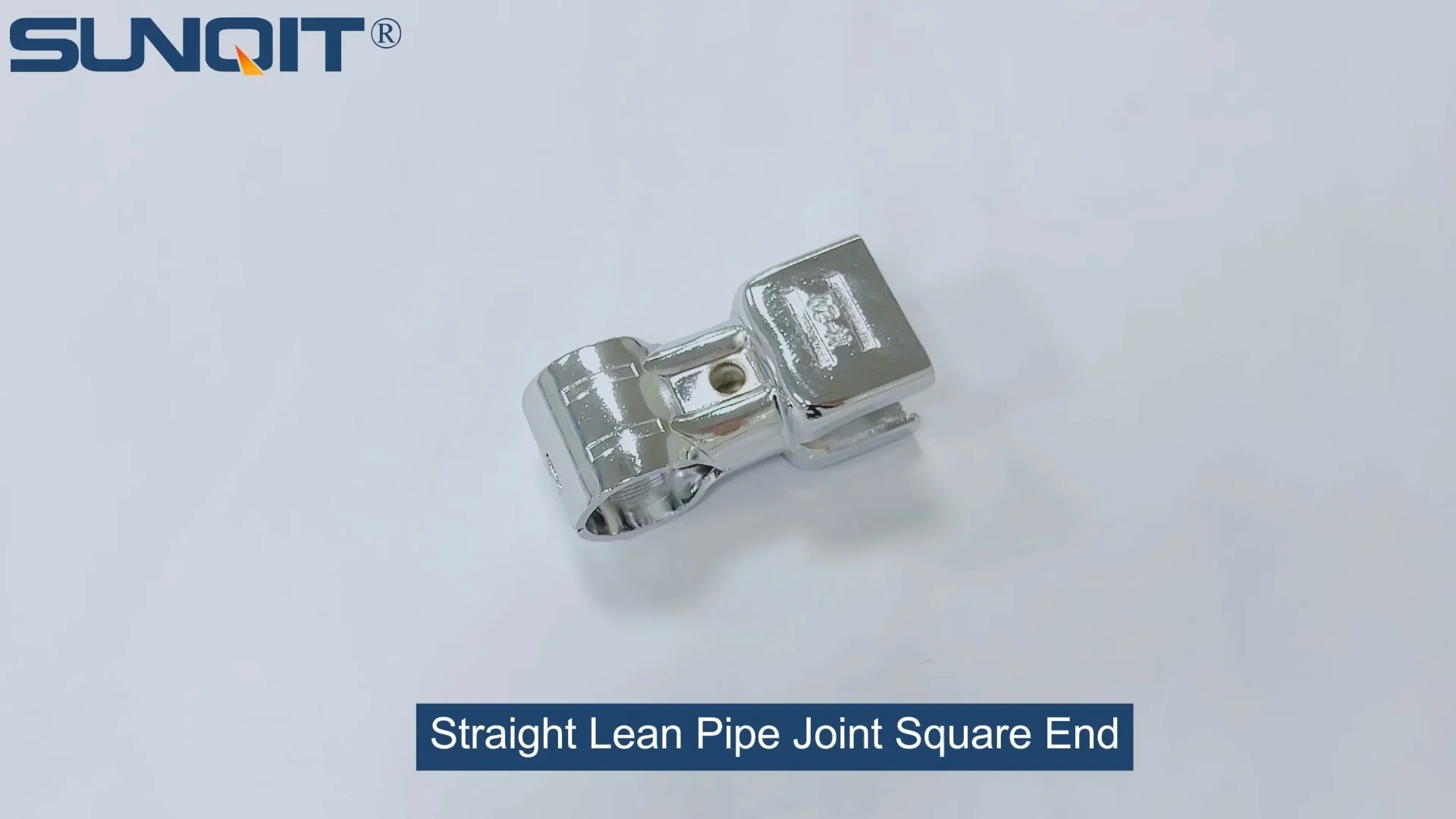
Straight Lean Pipe Joint Square End Chrome
Straight lean pipe joint square end, one side connect with 28mm round pipe, the other side connect with square tube.
In the bustling world of manufacturing, where every second counts and efficiency is the name of the game, there's a quiet hero working behind the scenes: the components that hold everything together. You might not notice them at first glance, but walk through any production floor, and you'll see their handiwork—sturdy workbenches where assemblers piece together products, flow racks that glide materials from station to station, and custom structures that adapt to ever-changing workflows. Today, we're shining a spotlight on one such unsung hero: the straight lean pipe joint square end chrome. This small but mighty connector plays a pivotal role in ensuring that lean pipe systems are not just flexible, but also robust enough to handle the demands of daily operations. Let's dive into what makes this joint special, how it delivers on load capacity, and why its structural integrity matters for your team's productivity.
Understanding Lean Pipe Systems: More Than Just Pipes
Before we zoom in on the joint itself, let's take a step back and talk about the bigger picture: lean pipe systems. If you've ever walked through a factory, warehouse, or even a logistics hub, you've likely seen these systems in action. They're the modular structures made from pipes and joints that form workbenches, material racks, conveyors, and turnover trolleys. What makes them "lean" is their ability to adapt—quickly, cost-effectively, and without the need for specialized tools. Unlike fixed metal structures, lean pipe systems can be reconfigured in hours (not days) to match new production needs, making them a favorite for teams focused on continuous improvement.
At the heart of these systems are two key components: the pipes and the joints. The pipes—often made of steel, aluminum, or stainless steel—provide the framework, while the joints are the connectors that hold the pipes in place. Think of it like building with Tinkertoys, but on an industrial scale. And just like in Tinkertoys, the strength of the entire structure depends on how well those connectors work. A weak joint can turn a sturdy workbench into a wobbly liability; a well-engineered one can transform a basic setup into a reliable, long-lasting asset.
The Role of Joints in Lean Pipe Systems: The Silent Connectors
Joints are the unsung backbone of lean pipe systems. They do more than just "connect" pipes—they distribute weight, absorb vibrations, and maintain alignment, even when the system is under stress. Imagine assembling a workbench where each shelf holds 50kg of tools and components. If the joints connecting the vertical pipes to the horizontal shelves are flimsy, that shelf might sag over time, or worse, collapse. That's not just a safety risk; it's a productivity killer. Workers would have to stop what they're doing to fix the structure, materials might get damaged, and deadlines could slip. In short, joints aren't just parts—they're guardians of efficiency.
This is where the lean pipe joint comes into play. Designed specifically for the demands of lean manufacturing, these joints are engineered to balance flexibility with strength. They come in various shapes and sizes: 90-degree fixed joints for right angles, swivel joints for adjustable angles, and the star of today's discussion—the straight lean pipe joint square end chrome. Each type has a job, but the square end chrome variant stands out for its unique combination of durability and precision, making it a go-to choice for heavy-duty applications.

Spotlight on the Straight Lean Pipe Joint Square End Chrome: Design and Engineering
Let's get up close with the straight lean pipe joint square end chrome. First, its name gives away some key details: "straight" means it's designed to connect pipes in a straight line (no angles here), "square end" refers to the flat, squared-off edges that meet the pipes, and "chrome" is the protective plating that coats the surface. But there's more to it than just labels—this joint is a product of careful engineering, built to solve specific challenges in industrial settings.
Starting with the material: most straight lean pipe joints square end chrome are made from high-grade steel. Steel is chosen for its tensile strength—its ability to resist breaking under tension—which is critical when the joint is holding up heavy loads. The square end design is no accident, either. Unlike rounded or tapered ends, a square end creates a larger contact area with the pipe, distributing stress more evenly across the connection. Think of it like placing a book flat on a table versus standing it on its spine: the flat surface spreads the weight out, reducing pressure points.
Then there's the chrome plating. At first glance, chrome might seem like a cosmetic choice, but in a factory environment, it's a workhorse feature. Chrome is highly resistant to corrosion, which is a big deal in settings where moisture, oils, or chemicals are present. A non-chrome joint might start to rust after months of exposure, weakening the metal and compromising the connection. Chrome acts as a shield, keeping the steel underneath intact and ensuring the joint stays strong for years. It also makes the joint easier to clean—just a quick wipe with a cloth removes dust and grime, preventing buildup that could hide wear and tear.

Load Capacity: How Much Can It Handle?
When it comes to industrial components, one question always rises to the top: "How much weight can it hold?" For the straight lean pipe joint square end chrome, the answer depends on a few key factors, but in general, it's built to handle heavy loads—often far more than the average joint in its class. Let's break down what influences its load capacity and why it outperforms many alternatives.
First, the material thickness. High-grade steel isn't just strong; it's also thick enough to withstand pressure without bending. Most square end chrome joints have a steel core with a thickness of 2-3mm, which might not sound like much, but in structural terms, that extra millimetre can mean the difference between supporting 100kg and 200kg. Combine that with the square end design, which spreads the load across the pipe, and you've got a joint that doesn't just "hold" weight—it distributes it, reducing strain on any single point.
Another factor is the connection method. These joints typically use set screws or bolts to lock onto the pipe, creating a tight, secure fit. When installed correctly, the screw digs into the pipe's surface (or into a pre-drilled hole), creating a mechanical bond that resists slipping. This is crucial for load capacity—if the joint slips, even a little, the entire structure becomes unstable. The square end ensures the pipe sits flush against the joint, so the screw has a solid surface to grip, minimizing the risk of slippage.
To put this in real-world terms, let's consider a common application: a workbench. A typical assembly workbench might have a top shelf loaded with tools, parts bins, and a laptop for instructions—easily 150-200kg. The legs of that workbench are connected to the horizontal supports using joints like the square end chrome. If each joint can handle 250kg (a common rating for high-quality models), the workbench isn't just stable—it's over-engineered, giving workers peace of mind that their workspace won't falter mid-task.
Structural Integrity: Ensuring Stability in Every Operation
Load capacity is important, but it's only half the story. A joint might hold a heavy load once, but what happens after months of use? What if it's jostled, vibrated, or exposed to temperature changes? That's where structural integrity comes in—the ability of a component to maintain its shape, strength, and functionality over time. For the straight lean pipe joint square end chrome, structural integrity is built into every detail.
Vibration resistance is a big one. On a production floor, machinery is always running—conveyors hum, drills whir, and robots move with precision. All that vibration can loosen connections over time, turning a tight joint into a wobbly one. But the square end chrome joint's design fights back. The square end creates a snug fit, and the chrome plating reduces friction, so the joint doesn't wear down as it vibrates. The steel core is also rigid enough to absorb minor shocks without bending, ensuring the connection stays true even after years of use.
Corrosion resistance, thanks to the chrome plating, is another pillar of its integrity. In factories where humidity is high (like food processing or automotive plants with water-based coolants), rust is a constant threat. A rusted joint isn't just unsightly; it's a ticking time bomb. Rust weakens the steel, making it brittle and prone to cracking. But with chrome, the joint stays rust-free, preserving its strength and ensuring it doesn't become a weak link in the structure.
Lastly, there's the matter of alignment. A joint that doesn't keep pipes straight can throw off an entire system. For example, in a flow rack, if the horizontal rails aren't perfectly aligned, materials might get stuck, slowing down the workflow. The square end design of this joint ensures pipes are connected in a straight line, with no gaps or angles, keeping everything aligned and functional. It's the kind of precision that makes a production manager's job easier—no more adjusting rails or fixing misaligned shelves; the joint does the work for you.
Real-World Applications: Where the Square End Chrome Joint Shines
Theory is great, but let's talk about how the straight lean pipe joint square end chrome performs in the real world. Walk into any manufacturing plant that uses lean pipe systems, and you'll find it hard at work in a few key areas—each time proving why it's a favorite among engineers and facility managers.
Take workbenches, for example. In electronics assembly, where delicate components are handled daily, a stable work surface is non-negotiable. A wobbly bench could lead to dropped parts or misaligned solder joints, costing time and money. The square end chrome joint ensures the workbench legs and frame stay rock-solid, even when an assembler leans on the edge or places a heavy toolbox on the shelf. One electronics manufacturer in Michigan reported that after switching to these joints, they saw a 30% reduction in workbench-related incidents—no more sagging shelves or loose legs, just consistent stability.
Flow racks are another common application. These racks use gravity to move materials from the back to the front, making it easy for workers to grab what they need without bending or reaching. But for gravity to work, the racks must be slightly angled and perfectly aligned. The square end chrome joint ensures the horizontal rails (which hold the rollers) are straight and level, so boxes and bins glide smoothly instead of getting stuck. A automotive parts supplier in Texas shared that after upgrading their flow racks with these joints, material flow speed increased by 15%—meaning workers spent less time waiting for parts and more time assembling cars.
Even custom structures benefit from this joint's strength. Many factories build one-of-a-kind setups, like mobile carts for transporting heavy machinery or elevated platforms for storage. These structures often carry irregular loads, which can stress joints unevenly. The square end chrome joint's ability to distribute weight and resist corrosion makes it ideal for these unique projects. A aerospace manufacturer in Washington used them to build a custom trolley for engine parts, which weighed over 500kg when fully loaded. The joints held firm for years, with no signs of wear—proving that even in extreme cases, they deliver.
Comparing with Other Lean Pipe Joints: Why Choose Square End Chrome?
To truly appreciate the straight lean pipe joint square end chrome, it helps to see how it stacks up against other common joints. Let's compare it to two popular alternatives: the 90° fixed lean pipe joint (a staple for right-angle connections) and the swivel lean pipe joint (known for flexibility). The table below breaks down their load capacity, best uses, and pros and cons.
| Joint Type | Typical Load Capacity (kg) | Material | Best For | Pros | Cons |
|---|---|---|---|---|---|
| Straight Lean Pipe Joint Square End Chrome | 200-300 | Chrome-plated steel | Heavy-duty straight connections (workbenches, flow racks, long spans) | High load capacity, corrosion-resistant, precise alignment, easy to clean | Not ideal for angles, slightly higher cost than basic joints |
| 90° Fixed Lean Pipe Joint | 150-200 | Zinc-plated steel | Right-angle connections (shelves, vertical supports) | Great for corners, affordable, easy to install | Lower load capacity than square end chrome, prone to rust without chrome |
| Swivel Lean Pipe Joint | 100-150 | Plastic or zinc-plated steel | Adjustable angles (tilted shelves, custom workstations) | Flexible, lightweight, easy to reconfigure | Lowest load capacity, plastic versions may crack under heavy loads |
As the table shows, the square end chrome joint stands out for its load capacity and durability, making it the top choice for heavy-duty, straight-line applications. While the 90° joint is great for corners and the swivel joint offers flexibility, neither can match the square end chrome's ability to handle weight or resist corrosion. For teams that need reliability above all else—especially in high-traffic, high-moisture environments—this joint is worth the investment.
Maintenance and Longevity: Keeping Your Joints in Top Shape
Even the strongest joint needs a little care to stay at its best. The good news is that the straight lean pipe joint square end chrome is low-maintenance, thanks to its chrome plating and robust design. With just a few simple steps, you can ensure it lasts for years—saving you time and money on replacements.
First, regular inspections. Once a month, take a quick look at the joints in your lean pipe systems. Check for signs of rust (though chrome makes this rare), loose screws, or bending. If a screw is loose, tighten it with a wrench—don't overdo it, but make sure it's snug. If you see any cracks in the steel or peeling chrome, replace the joint immediately; a damaged joint is a weak joint, and it's not worth the risk.
Cleaning is another easy task. Dust and grime can build up on the joint over time, especially in busy factories. A quick wipe with a dry cloth or a damp rag (avoid harsh chemicals, which can damage the chrome) will keep it looking new and prevent buildup that could hide issues like loose screws. For joints in extra-dirty environments (like woodworking shops or metal fabrication), a soft brush can help remove stubborn debris from crevices.
Lastly, avoid overloading. Even though the square end chrome joint can handle 200-300kg, it's important to stay within the recommended load capacity for your specific setup. If you're unsure, check the manufacturer's guidelines or test the structure with gradually increasing weight. Overloading isn't just hard on the joint—it can damage the pipes and other components, leading to a costly domino effect.
Conclusion: Investing in Quality for Smoother Operations
At the end of the day, the straight lean pipe joint square end chrome is more than just a piece of metal—it's an investment in your team's productivity, safety, and peace of mind. In a world where manufacturing margins are tight and competition is fierce, the small components often make the biggest difference. A joint that stays strong, resists corrosion, and keeps your workbenches and flow racks stable isn't just a "nice-to-have"—it's a necessity.
Whether you're building a new lean pipe system or upgrading an old one, choosing the right joint matters. The square end chrome joint offers the kind of reliability that lets your team focus on what they do best: making great products. No more stopping to fix wobbly shelves, no more worrying about rusted connections, no more lost time due to structural failures. It's the kind of component that works so well, you forget it's there—until you realize how much easier it makes your day.
So the next time you walk through your production floor, take a moment to appreciate the straight lean pipe joint square end chrome. It might not have a flashy name or a starring role in your company's marketing materials, but it's out there, day in and day out, holding things together. And in manufacturing, that's the ultimate measure of success.