- Company Articles
- Products and Technology
- Product knowledge
- Straight Lean Pipe Joint Square End Chrome: The Backbone of Reusable Lean Systems

Straight Lean Pipe Joint Square End Chrome: The Backbone of Reusable Lean Systems
Related Product
Straight Lean Pipe Joint Square End Chrome
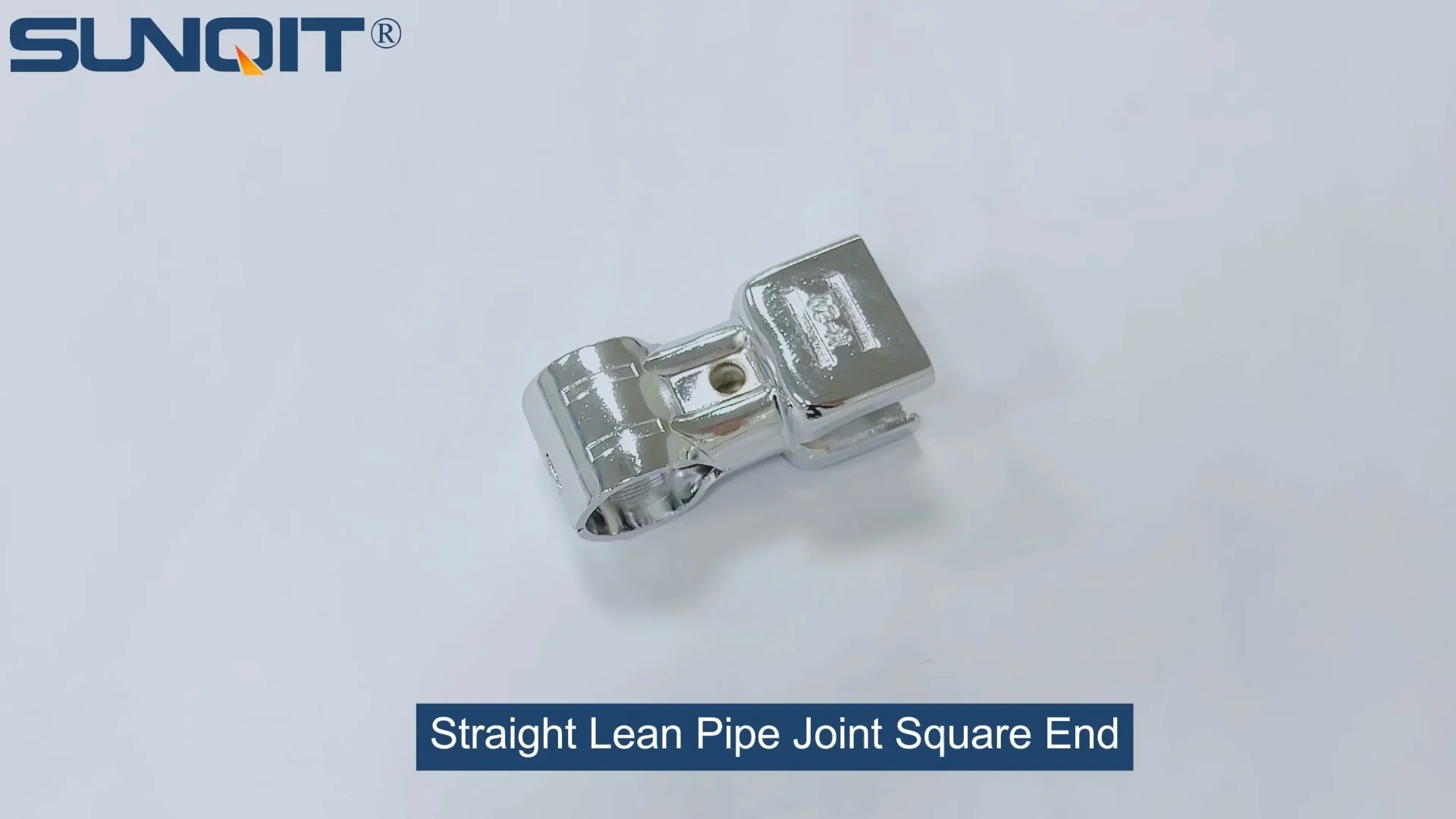
Straight lean pipe joint square end, one side connect with 28mm round pipe, the other side connect with square tube.
The Evolution of Lean Manufacturing: From Rigidity to Reusability
Walk into any modern manufacturing facility today, and you'll likely notice a shift—gone are the days of heavy, fixed production lines bolted to the floor, resistant to change. Instead, you'll find workspaces that adapt, evolve, and reconfigure at the drop of a hat: workbenches that adjust for new product sizes, flow racks that reroute materials overnight, and assembly stations that transform to meet sudden demand spikes. This flexibility isn't just a trend; it's the cornerstone of lean manufacturing, a philosophy built on eliminating waste, boosting efficiency, and empowering teams to do more with less.
But here's the thing: flexibility doesn't happen by accident. Behind every adaptable workspace is a system of components designed to work together seamlessly, and at the heart of that system lies a humble yet critical part: the Straight Lean Pipe Joint Square End Chrome . It's not the flashiest tool on the factory floor, but ask any plant manager, and they'll tell you—this small, unassuming joint is what turns a static setup into a dynamic, reusable lean system. In this article, we'll dive deep into why this joint matters, how it integrates with key components like lean pipe workbenches and flow racks , and why choosing the right lean system supplier can make or break your lean manufacturing goals.
Meet the Unsung Hero: What Is the Straight Lean Pipe Joint Square End Chrome?
Let's start with the basics. The Straight Lean Pipe Joint Square End Chrome is a connecting component designed to link lean pipes (often made of steel, aluminum, or plastic-coated materials) into sturdy, configurable structures. Its name gives away its key features: "straight" because it aligns pipes in a linear path, "square end" for a flush, stable connection, and "chrome" for a durable, corrosion-resistant finish. But beyond these surface-level details, its design holds the secret to its role as a lean system workhorse.
Imagine holding one in your hand: it's compact, maybe 2-3 inches long, with a square base that fits snugly against the end of a lean pipe. The chrome plating glints under factory lights, not just for show—chrome adds a layer of protection against rust and wear, crucial in environments where spills, humidity, or frequent handling are common. The square end isn't just about aesthetics, either; it ensures the joint sits flat against the pipe, eliminating wobble and creating a stronger bond than rounded alternatives. Inside, there's a threaded mechanism or a clamping system (depending on the design) that locks the joint to the pipe without welding or drilling. That's right—no heavy tools, no permanent modifications, just a secure connection that can be taken apart and reassembled in minutes.
But why does this matter? In lean manufacturing, time is money, and downtime is the enemy. Traditional production setups rely on welded frames or bolted connections, which take hours (or days) to install and even longer to modify. If your team needs to reconfigure a workbench to accommodate a new product, you're looking at shutdowns, lost productivity, and costly labor. The Straight Lean Pipe Joint Square End Chrome changes that. It turns assembly into a modular puzzle—pieces that fit together quickly, stay strong under pressure, and come apart just as easily when it's time for a change.

Reusability Redefined: How This Joint Powers Lean System Flexibility
At the core of lean manufacturing is the principle of "reusability." Lean systems aren't just about making things faster—they're about making resources go further. A single set of components should be able to adapt to multiple tasks, reducing the need for new equipment and cutting down on waste. The Straight Lean Pipe Joint Square End Chrome is engineered with this principle in mind, and its impact ripples through every level of the production process.
Let's break down its key contributions to reusability:
1. Tool-Free Assembly and Disassembly
Most versions of this joint use a simple clamping or twisting mechanism. To attach it to a lean pipe, you slide the pipe into the joint, tighten a screw or lever, and you're done. No welding torches, no drills, no specialized training required. This means a team can assemble a basic workbench in under an hour, or take apart a flow rack and rebuild it in a new location by lunchtime. For example, if a electronics manufacturer suddenly needs to shift production from smartphones to tablets, their lean pipe workbench —built with these joints—can be adjusted for the larger device size in minutes, not days.
2. Durability That Withstands Repeated Use
Reusability only works if components hold up over time. Chrome plating isn't just for looks; it's a hard, wear-resistant layer that protects the joint from scratches, dents, and corrosion. The square end design distributes weight evenly, so even after dozens of assemblies and disassemblies, the joint maintains its grip. Compare that to plastic joints, which can crack under stress, or uncoated steel joints that rust after exposure to moisture. A single Straight Lean Pipe Joint Square End Chrome can last for years, outliving multiple production cycles and justifying its initial cost many times over.
3. Compatibility Across Components
A lean system is only as flexible as its ability to mix and match parts. This joint isn't picky—it works with a wide range of lean pipes, from standard steel to lightweight aluminum lean pipe , and even integrates with accessories like casters, shelves, and roller tracks. Need to add a shelf to your workbench? Attach a joint to the side pipe, add a crossbar, and you're set. Want to turn a static rack into a mobile trolley? Swap out fixed feet for caster wheels using the same joints. This compatibility turns a collection of parts into a versatile toolkit, where the only limit is your team's creativity.

Building Better Workspaces: Integrating the Joint with Lean Pipe Workbenches and Flow Racks
To truly understand the value of the Straight Lean Pipe Joint Square End Chrome, let's look at two of its most common partners: lean pipe workbenches and flow racks. These are the workhorses of the factory floor, and without a reliable joint, they'd be little more than rigid, one-use structures. With it, they become dynamic tools that adapt to your team's needs.
Lean Pipe Workbenches: Where Precision Meets Flexibility
A lean pipe workbench is more than just a table—it's a command center for assembly, inspection, or packaging. It needs to be sturdy enough to support heavy tools, customizable enough to hold parts bins and monitors, and adjustable enough to keep workers comfortable (ergonomics matter!). The Straight Lean Pipe Joint Square End Chrome makes all of this possible.
Consider a typical setup: the frame is built from aluminum lean pipes, connected by these chrome joints. The square ends ensure the legs are perfectly vertical, so the bench doesn't wobble, even when loaded with 200+ pounds of equipment. Need a shelf for tools? Add a horizontal pipe using a T-joint (paired with our straight joint) and secure it at the ideal height. Want to mount a monitor arm? Attach a clamp to a vertical pipe via the joint, and adjust as needed. When the workbench needs to move? Swap out fixed feet for casters (using the same joints) and roll it to a new location. And if the company expands, the bench can be extended by adding more pipes and joints—no need to buy a whole new unit.
One electronics manufacturer we worked with (let's call them TechFlow) used these joints to build 12 workbenches for their circuit board assembly line. Six months later, they introduced a new, larger circuit board. Instead of buying 12 new benches, they simply disassembled the existing ones, added longer pipes, and reassembled them—saving over $15,000 in equipment costs. That's the power of reusability.
Flow Racks: Streamlining Material Movement, One Joint at a Time
Flow racks are the unsung heroes of material handling, using gravity to slide parts from the loading end to the picking end, reducing the need for manual lifting. But a flow rack is only as efficient as its structure, and that's where the Straight Lean Pipe Joint Square End Chrome shines. These joints form the frame of the rack, holding the roller tracks (another key component) at a precise angle to ensure smooth, consistent flow.
For example, a automotive parts supplier might use a flow rack to store plastic components for car interiors. The rack's frame, built with chrome joints and aluminum lean pipes, is angled slightly downward. Roller tracks—attached to the frame via the joints—guide the parts gently to the front, where workers can grab them without bending or reaching. If the supplier starts stocking larger components, the rack can be reconfigured: adjust the angle by moving the joints, add sturdier pipes, or extend the length by adding more sections. The joints ensure the frame stays stable, even with heavier parts, and the chrome finish resists the grease and oil common in automotive plants.
What's more, these joints work seamlessly with roller track connectors (another component in the lean toolkit), allowing for custom track lengths and configurations. A bakery, for instance, might use a flow rack with shorter roller tracks (connected via joints) to hold small pastry boxes, while a furniture manufacturer uses longer tracks for large wooden panels. The joint adapts to both, proving that one component can serve countless industries.
Why Quality Matters: Choosing the Right Lean System Supplier
You've heard the saying: "A chain is only as strong as its weakest link." In lean systems, that link is often the supplier. A cheap, poorly made joint can turn a flexible workspace into a safety hazard. Imagine a flow rack loaded with 50-pound parts, held together by flimsy joints that snap under pressure. The result? Damaged parts, injured workers, and costly downtime. That's why partnering with a reputable lean system supplier is non-negotiable.
So, what should you look for in a supplier? Here are the key factors:
1. Material Quality: Chrome Plating and Steel Thickness
Not all chrome joints are created equal. A quality supplier uses high-grade steel for the joint body, with a thickness of at least 1.5mm to ensure strength. The chrome plating should be at least 0.0005 inches thick (that's 5 microns), enough to resist scratches and corrosion. Ask for material certificates—reputable suppliers will happily provide test reports proving their chrome meets industry standards for durability.
2. Precision Engineering: Square Ends and Consistent Sizing
A "square end" joint that's even slightly off-square can throw off an entire structure. Quality suppliers use precision machining to ensure the ends are perfectly 90-degree angles, and the internal clamping mechanism aligns with standard pipe sizes (1.5 inches, 2 inches, etc.). This consistency means pipes fit snugly every time, reducing wobble and improving safety.
3. Testing and Certification: Beyond the Sales Pitch
A good supplier doesn't just say their joints are strong—they prove it. Look for suppliers who test their products for load capacity (how much weight the joint can hold), cycle testing (how many assemblies/disassemblies it can withstand), and corrosion resistance (salt spray tests, for example). Certifications like ISO 9001 (quality management) or RoHS (environmental safety) are also red flags—if a supplier can't show these, walk away.
4. Customer Support: More Than Just a Sale
Lean systems can get complex, and even the best components need guidance. A great supplier offers more than just parts—they provide design support, assembly tips, and troubleshooting help. For example, if you're building a custom lean pipe workbench and aren't sure how many joints you need, a good supplier will walk you through the calculations. If a joint fails unexpectedly, they'll replace it quickly, no questions asked. This level of support turns a transaction into a partnership, ensuring your lean system continues to perform for years.
Traditional vs. Lean: A Comparison Table
| Feature | Traditional Fixed Systems (Welded/bolted) | Lean Systems with Straight Lean Pipe Joint Square End Chrome |
|---|---|---|
| Assembly Time | 8-12 hours for a basic workbench | 30-60 minutes for a basic workbench |
| Reconfiguration Time | Days (requires cutting/welding) | Hours (tool-free disassembly/reassembly) |
| Cost Over 5 Years | High (needs replacement for new tasks) | Low (reusable across multiple tasks) |
| Durability | High, but permanent (can't adapt) | High, with reusability (adapts to changes) |
| Safety | Stable, but rigid (no shock absorption) | Stable and flexible (joints absorb minor impacts) |
| Environmental Impact | High (scrapped when obsolete) | Low (reused, reducing waste) |
As the table shows, lean systems with the right joints aren't just more flexible—they're smarter, more cost-effective, and better for the planet. Traditional setups lock you into one way of working; lean systems with the Straight Lean Pipe Joint Square End Chrome set you free to innovate.
The Future of Lean Manufacturing: Why This Joint Will Remain Essential
Manufacturing is changing. Small-batch production, rapid prototyping, and customization are becoming the norm, thanks to technologies like 3D printing and AI-driven demand forecasting. In this environment, rigid systems simply can't keep up. Factories need to pivot quickly, and that means their equipment must pivot with them.
The Straight Lean Pipe Joint Square End Chrome is perfectly positioned to meet this future. Its simplicity—tool-free assembly, durable design, compatibility with other components—makes it a timeless solution. As more manufacturers adopt "lights-out" (automated) facilities, these joints will play a role in building flexible robot workstations that can be reconfigured for different tasks. As sustainability becomes a priority, their reusability will reduce waste, aligning with corporate ESG goals.
Even as new materials emerge—like carbon fiber lean pipes or advanced composites—the basic need for a reliable, reusable joint won't change. The Straight Lean Pipe Joint Square End Chrome sets the standard, proving that sometimes, the most innovative solutions are the ones that stand the test of time.
Conclusion: The Backbone of a Lean Future
The Straight Lean Pipe Joint Square End Chrome isn't just a part—it's a philosophy made tangible. It embodies the lean principles of flexibility, efficiency, and respect for people (by making their work easier and safer). It turns a collection of pipes, shelves, and rollers into a system that adapts, grows, and evolves with your business.
Whether you're building a lean pipe workbench for a small workshop or a network of flow racks for a large factory, this joint is the backbone that holds it all together. And when paired with a trusted lean system supplier , it becomes a tool that drives innovation, reduces costs, and ensures your team is ready for whatever the future of manufacturing brings.
So the next time you walk through a factory and see a workspace that seems to "breathe" with the needs of the team, take a closer look. Chances are, there's a Straight Lean Pipe Joint Square End Chrome holding it all together—quietly, reliably, and ready for whatever comes next.