- Company Articles
- Products and Technology
- Application Cases
- Straight Lean Pipe Joint Square End in Automotive Manufacturing: Efficiency Boosters

Straight Lean Pipe Joint Square End in Automotive Manufacturing: Efficiency Boosters
Related Product
Straight Lean Pipe Joint Square End
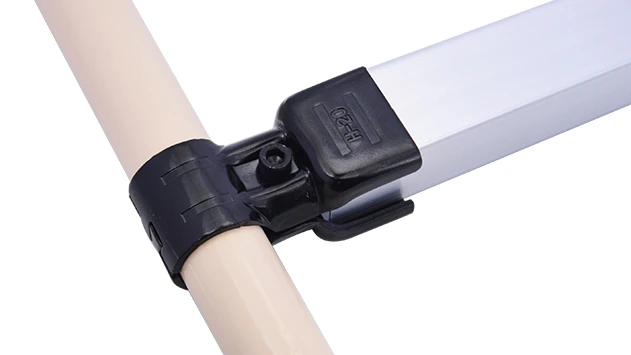
Straight lean pipe joint square end, one side connect with 28mm round pipe, the other side connect with square tube.
The Race for Efficiency in Automotive Manufacturing
Walk into any modern automotive manufacturing plant, and you'll feel the pulse of precision. Conveyors hum with rhythm, robots pivot with surgical accuracy, and teams of workers move in synchronized motion to assemble everything from engine components to dashboard panels. But beneath this orchestrated chaos lies a constant challenge: how to do more with less. Less time, less waste, less effort—and more output, more quality, more consistency. In an industry where profit margins hinge on fractions of a second and millimeters of precision, efficiency isn't just a goal; it's the lifeblood of survival.
Automotive plants face unique hurdles. Production lines must adapt to frequent model changes, with new vehicle designs requiring reconfigured workstations and material flows. Downtime during retooling can cost thousands of dollars per minute. Ergonomics matter, too—workers spending hours at a poorly designed workbench risk fatigue, errors, and even injury, all of which drag down productivity. And then there's the ever-present pressure to reduce waste: excess inventory, unnecessary movement, and inefficient material handling are silent profit killers that lean manufacturing aims to eliminate.
Enter lean systems: a philosophy turned practice that focuses on streamlining processes, empowering workers, and optimizing flow. At the heart of these systems are modular, adaptable tools—think workbenches that can be reconfigured in minutes, conveyors that adjust to new part sizes, and flow racks that keep materials within arm's reach. But what holds these systems together? What component ensures that a workbench stays stable during a 12-hour shift, or that a conveyor doesn't jam when a heavy transmission housing glides across it? Often, it's something small enough to fit in the palm of your hand: the straight lean pipe joint square end.
Lean Systems: The Backbone of Modern Manufacturing
Before diving into the specifics of the straight lean pipe joint square end, let's take a step back to understand the role of lean systems in automotive manufacturing. Lean isn't just a buzzword; it's a mindset that originated in Toyota's production facilities in the mid-20th century, where the goal was to eliminate "muda"—the Japanese term for waste. Over time, lean principles have evolved, but their core remains the same: create more value for customers with fewer resources.
In automotive plants, lean systems manifest in tangible ways. Workstations are arranged to minimize movement, so a worker doesn't have to walk 10 feet to grab a wrench. Materials flow continuously from one station to the next, reducing inventory buildup. And perhaps most importantly, these systems are flexible . When a new hybrid model requires a different battery assembly process, the production line shouldn't need a complete overhaul. Instead, workbenches, conveyors, and racks should adapt quickly, without extensive downtime or costly custom fabrication.
This flexibility is where lean pipe comes into play. Lean pipe—often made of steel or aluminum, with a plastic coating for durability and grip—is the building block of these modular systems. Lightweight yet strong, it can be cut to length, combined with joints, and assembled into almost any structure: workbenches, flow racks, material trolleys, or even temporary storage solutions. But lean pipe alone is just a tube. To turn it into a functional system, you need joints that connect pipes securely, allow for adjustments, and withstand the rigors of daily use. And among these joints, the straight lean pipe joint square end stands out for its unique combination of stability and versatility.

Meet the Unsung Hero: Straight Lean Pipe Joint Square End
At first glance, a straight lean pipe joint square end might seem unremarkable. It's a small, often metal component with a square-shaped end designed to fit snugly into the end of a lean pipe, and a threaded hole or clamping mechanism to secure it to another pipe or structure. But looks can be deceiving. This unassuming joint is the glue that holds lean systems together, ensuring that the workbench a mechanic relies on doesn't wobble mid-assembly, or that a flow rack loaded with engine parts doesn't collapse under pressure.
What makes the square end design special? Unlike rounded or tapered joints, the square end creates a flush, stable connection between pipes. When you're building a workbench, for example, a square end joint ensures that the legs align perfectly with the tabletop frame, eliminating the "rocking" that can occur with ill-fitting joints. This stability isn't just about comfort; it's about precision. A stable workbench means a worker can torque a bolt to exact specifications without the tool slipping, reducing errors and rework.
Material matters, too. Most straight lean pipe joints square end are made of high-grade steel or aluminum, with a corrosion-resistant finish to withstand the oily, sometimes humid environment of an automotive plant. Some are even ESD (electrostatic discharge) safe, a critical feature when assembling sensitive electronics like airbag sensors or infotainment systems, where static electricity could damage components. The clamping mechanism—often a setscrew or lever—allows for quick assembly and disassembly, so a team can reconfigure a workstation in minutes instead of hours.
Key Features of Straight Lean Pipe Joint Square End:
- Square End Design: Ensures flush, stable connections between lean pipes, reducing wobble and misalignment.
- Durable Materials: Steel or aluminum construction with corrosion-resistant coatings for longevity in harsh plant environments.
- Quick-Connect Mechanism: Setscrews or levers allow for tool-free assembly, cutting reconfiguration time from hours to minutes.
- Compatibility: Works with standard lean pipe sizes (often 28mm or 30mm diameter), making it easy to integrate with existing systems.
- Load Capacity: Engineered to support heavy loads, with some models rated for up to 500kg per joint, ideal for automotive components like transmissions or batteries.
But perhaps the biggest advantage of the straight lean pipe joint square end is its versatility. It's not limited to one type of structure. Use it to build a workbench with a custom height for ergonomic comfort (no more hunching over for shorter workers or stooping for taller ones). Pair it with aluminum guide rails to create a conveyor that transports door panels from painting to assembly. Or combine it with roller tracks to build a flow rack that delivers screws, washers, and bolts to the line exactly when they're needed. In short, it's a multi-tool in the lean manufacturing toolkit.
Transforming Workbenches: From Static to Adaptive
Workbenches are the command centers of automotive manufacturing. This is where mechanics assemble engine components, electricians wire harnesses, and inspectors check for defects. A poorly designed workbench can slow down production, increase errors, and even lead to workplace injuries. But with the right lean pipe and joints—especially the straight lean pipe joint square end—workbenches become dynamic, adaptable tools that evolve with the needs of the line.
Consider the example of a powertrain assembly line at a mid-sized automotive plant. A few years ago, the line produced only gasoline engines. Today, it assembles both gasoline and hybrid engines, which have different component sizes and assembly steps. Retooling the workbenches for each engine type used to take a full weekend, requiring maintenance crews to disassemble old workstations and weld new ones from scratch. Now, with lean pipe workbenches built using straight lean pipe joint square end, the team can reconfigure the line in a single shift.
Here's how it works: The base workbench frame is made of 28mm steel lean pipe, connected with square end joints. The tabletop is a lightweight aluminum honeycomb panel, easy to lift and replace. When switching from a gasoline to a hybrid engine, workers loosen the setscrews on the square end joints, adjust the height of the legs to accommodate the taller hybrid battery, and swap out the tabletop for one with built-in tool holders sized for hybrid-specific wrenches. The entire process takes less than two hours, and because the square end joints ensure stability, the new configuration is just as secure as the old one.
Ergonomics are another area where the straight lean pipe joint square end shines. A one-size-fits-all workbench might work for some workers, but not for all. Imagine a line with workers ranging in height from 5'2" to 6'4". A workbench set at 36 inches high is perfect for someone of average height, but painful for a shorter worker who has to reach up, or a taller worker who has to hunch down. With square end joints, managers can adjust the height of each workbench leg individually, ensuring every worker has a station tailored to their body. Studies show that ergonomically optimized workstations reduce fatigue by up to 30%, leading to fewer errors and higher productivity.
And let's not forget accessories. Straight lean pipe joint square end are compatible with a range of add-ons: tool hooks that keep wrenches within arm's reach, LED light bars to illuminate the workspace, and even small conveyors (called "mini roller tracks") that deliver parts directly to the bench. These accessories attach to the joints via T-slots or clamp-on brackets, turning a basic workbench into a fully integrated assembly hub.
Conveyor Systems: Smoother Flow with Precision Joints
Conveyors are the arteries of an automotive plant, carrying parts from stamping to welding, painting to final assembly. When a conveyor jams or breaks down, the entire line can grind to a halt. Traditional conveyors often use fixed, welded frames that are difficult to repair or reconfigure. But lean conveyor systems, built with lean pipe and straight lean pipe joint square end, offer a more flexible, durable alternative.
A typical lean conveyor might consist of a frame made of aluminum lean pipe, with roller tracks mounted on top to carry parts. The frame's stability depends entirely on the joints connecting the pipes. Here, the square end design is critical. Conveyors vibrate as parts move across them; over time, this vibration can loosen poorly connected joints, leading to misalignment and jams. Straight lean pipe joint square end, with their flush, tight fit, resist this vibration. The square shape prevents the pipes from twisting in the joints, ensuring the roller tracks stay level and parts glide smoothly.
Adaptability is another advantage. Automotive plants often run multiple shifts, with different parts moving through the same conveyor system. A morning shift might transport small components like door handles, while the afternoon shift moves larger parts like hoods. With traditional conveyors, changing the track width or height would require custom fabrication. With lean conveyors, workers can adjust the frame using square end joints: loosen the setscrews, slide the pipes to the new width, and retighten. The whole process takes 15 minutes, not days.
Maintenance is simpler, too. In a welded conveyor frame, a single cracked pipe means cutting out the damaged section and welding in a new one—a job for skilled technicians. With lean pipe and square end joints, a damaged pipe can be replaced by any line worker with a wrench. Just loosen the joints, slide out the old pipe, and insert a new one. This reduces downtime from hours to minutes, a critical factor in meeting production deadlines.
Take the example of a door panel conveyor at a plant in Michigan. The line used to have a welded steel conveyor that frequently jammed when panels with different curvature passed through. The maintenance team spent 4-5 hours per week adjusting the tracks. After switching to a lean conveyor with straight lean pipe joint square end, they reconfigured the frame to include adjustable side guides. Now, when a new door panel design is introduced, workers adjust the guides using the square end joints, and jams have dropped by 90%. Maintenance time? Less than 30 minutes per week.
Flow Racks: Organizing Materials with Stability
In automotive manufacturing, "first in, first out" (FIFO) material flow is critical to avoiding inventory waste. Flow racks—tilted racks with roller tracks that allow materials to slide forward as the front item is taken—are designed to enforce FIFO. But a flow rack is only as good as its structure. If the rack sags under the weight of parts, the rollers won't function properly, and materials can get stuck, leading to delays.
Straight lean pipe joint square end are the secret to building sturdy, adaptable flow racks. The square end joints ensure that the vertical supports and horizontal rails align perfectly, distributing weight evenly across the structure. This is especially important for heavy parts like brake calipers or suspension components, which can weigh 15-20 pounds each. A flow rack with misaligned joints might hold 10 parts before sagging; with square end joints, the same rack can hold 20 or more without issue.
Flexibility is key here, too. A plant might need a flow rack with 3 levels for small parts one month, then reconfigure it to 2 levels for larger parts the next. With square end joints, workers can adjust the height of the shelves by simply moving the horizontal rails up or down the vertical supports and retightening the joints. No drilling, no welding—just a few turns of a wrench.
Space optimization is another benefit. Automotive plants are often tight on floor space, so flow racks need to fit into odd corners or along narrow aisles. Lean pipe flow racks, built with square end joints, can be customized to fit any space. Need a rack that wraps around a support column? Cut the lean pipe to length, connect with square end joints at 90-degree angles, and add roller tracks. The result is a rack that uses otherwise wasted space, keeping materials close to the line and reducing worker travel time.
Traditional Joints vs. Straight Lean Pipe Joint Square End: A Comparison
| Feature | Traditional Welded Joints | Straight Lean Pipe Joint Square End |
|---|---|---|
| Assembly Time | 4-6 hours for a basic workbench (requires welding equipment and skilled labor) | 30-60 minutes for the same workbench (tool-free assembly with basic hand tools) |
| Reconfiguration Ease | Nearly impossible; requires cutting and rewelding | Simple; loosen setscrews, adjust pipes, retighten |
| Stability | High, but only if welded correctly; prone to warping if not cooled properly | Consistently high; square end design ensures flush, wobble-free connections |
| Durability | High, but welded joints can crack under repeated vibration | High; corrosion-resistant materials and secure clamping resist wear and tear |
| Cost Over Time | Higher; requires ongoing welding repairs and custom fabrication for changes | Lower; reusable joints reduce need for new materials, and quick reconfigurations cut downtime |
The Future of Lean Manufacturing: Innovations in Joint Technology
As automotive manufacturing evolves—with electric vehicles, autonomous driving systems, and Industry 4.0 connectivity—lean systems will need to keep pace. And that means innovations in the components that power these systems, including the straight lean pipe joint square end.
One emerging trend is smart joints equipped with sensors. Imagine a workbench joint that can detect when it's loose, sending an alert to the maintenance team's tablet before a failure occurs. Or a conveyor joint with a built-in RFID tag that tracks how many times it's been reconfigured, helping managers predict wear and schedule replacements proactively. These "connected" joints could revolutionize predictive maintenance, reducing unplanned downtime even further.
Sustainability is another focus. Manufacturers are exploring recycled materials for lean pipe and joints, without sacrificing strength. Aluminum, already lightweight and recyclable, is becoming more popular as plants aim to reduce their carbon footprint. Some suppliers are even developing biodegradable plastic coatings for lean pipe, reducing the environmental impact of end-of-life disposal.
Finally, customization will become more accessible. With 3D printing, plants could one day print custom square end joints on-site, tailored to unique applications—like a joint with a built-in cable management channel for workstations with electronic tools. This would reduce lead times for specialized components and allow for even more flexibility in lean system design.
Conclusion: Small Joints, Big Impact
In the grand scheme of automotive manufacturing—where robots cost millions and assembly lines stretch for acres—it's easy to overlook the small components. But as we've explored, the straight lean pipe joint square end is anything but small in impact. It's the reason a workbench stays stable during a marathon shift, a conveyor keeps parts flowing without jams, and a flow rack adapts to new materials overnight. It's the unsung hero that turns rigid production lines into flexible, efficient systems capable of meeting the ever-changing demands of the automotive industry.
For plant managers, the message is clear: investing in quality lean components like the straight lean pipe joint square end isn't just about buying a part—it's about investing in efficiency, flexibility, and the well-being of your team. It's about turning weekends of retooling into afternoons of reconfiguration. It's about reducing errors, cutting downtime, and staying competitive in a fast-paced industry.
So the next time you walk through an automotive plant, take a closer look at the workbenches, conveyors, and flow racks. Chances are, you'll spot the square end joints holding them together—quietly, reliably, and efficiently. And remember: sometimes, the smallest parts make the biggest difference.