- Company Articles
- Products and Technology
- Product knowledge
- Straight Lean Pipe Joint Square End: Key Design Features for Lean Manufacturing

Straight Lean Pipe Joint Square End: Key Design Features for Lean Manufacturing
Related Product
Straight Lean Pipe Joint Square End
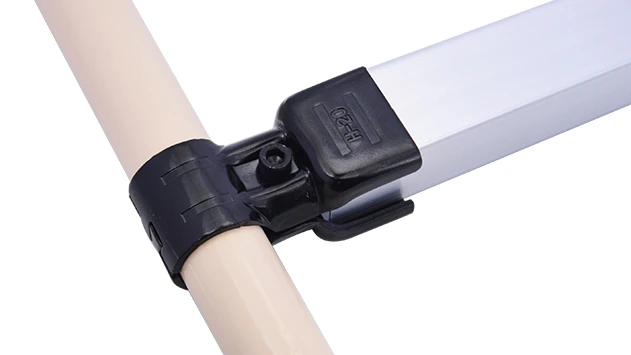
Straight lean pipe joint square end, one side connect with 28mm round pipe, the other side connect with square tube.
In the fast-paced world of manufacturing, where efficiency and adaptability can make or break a business, lean principles have become more than just a buzzword—they're a way of life. At the heart of lean manufacturing lies the relentless pursuit of waste reduction, continuous improvement, and creating value for customers. But here's the thing: lean isn't just about processes and workflows. It's also about the physical tools and infrastructure that support those processes. And if there's one unsung hero in that infrastructure, it's the humble lean pipe joint . Specifically, the Straight Lean Pipe Joint Square End has emerged as a game-changer, quietly revolutionizing how teams build, adapt, and optimize their workspaces. In this article, we'll dive into the design features that make this joint indispensable for lean systems, explore how it integrates with lean pipe and lean pipe workbench setups, and explain why choosing the right lean pipe supplier matters more than you might think.
Why Lean Manufacturing Relies on the Right Tools
Before we zoom in on the Square End Joint, let's take a step back. Lean manufacturing, born from the Toyota Production System, is built on five core principles: value, value stream, flow, pull, and perfection. To put these principles into action, manufacturers need workspaces that can keep up. Rigid, one-size-fits-all setups? They're the antithesis of lean. Instead, lean systems demand flexibility—workstations that can be reconfigured in hours (not weeks), material racks that adapt to new product lines, and trolleys that move seamlessly between stations without breaking a sweat.
This is where lean pipe systems shine. Made from durable materials like steel, aluminum, or stainless steel, lean pipes (sometimes called "kitchen pipes" for their humble origins) are lightweight yet strong. When paired with the right joints and accessories, they become the building blocks of everything from workbenches and flow racks to assembly lines and storage solutions. But here's the catch: the entire system is only as strong as its weakest link. And that link? Often, it's the joint connecting the pipes. A flimsy joint can turn a "flexible" workstation into a wobbly liability. A poorly designed joint can turn a 10-minute reconfiguration into a two-hour headache. That's why the design of the joint itself—specifically, features like the square end—matters so much.
The Straight Lean Pipe Joint Square End: Design Features That Drive Lean Success
At first glance, a pipe joint might seem like a simple piece of hardware. But the Square End Joint is a masterclass in intentional design. Every curve, material choice, and functional detail is engineered to solve the pain points of traditional joints. Let's break down its key features and why they matter for lean operations.
1. The Square End: Stability That Doesn't Compromise Flexibility
Traditional pipe joints often have rounded or hexagonal ends, which can slip or rotate under heavy loads. The Square End Joint, as the name suggests, features a square-shaped connection point where the pipe meets the joint. This design does two critical things: first, it creates a larger surface area of contact between the pipe and the joint, distributing weight more evenly. Second, the square shape acts as a "lock," preventing the pipe from twisting or shifting once tightened. Imagine building a lean pipe workbench for assembling delicate electronics—you don't want the shelf holding your tools to rotate mid-task. The square end eliminates that risk, keeping the structure stable even when bumped or loaded with heavy equipment.
But here's the beauty: stability doesn't mean rigidity. Unlike welded joints (which are permanent and require cutting to reconfigure), the Square End Joint uses set screws or clamping mechanisms to secure the pipe. Loosen the screws, slide the pipe, retighten—and you've got a whole new configuration. It's the best of both worlds: rock-solid when you need it, adaptable when you don't.
2. Material Science: Durability for the Long Haul
Lean manufacturing isn't just about short-term fixes—it's about long-term sustainability. A joint that wears out after six months? That's waste. The Square End Joint is typically crafted from high-grade materials like aluminum alloy or zinc-plated steel, chosen for their strength, corrosion resistance, and ability to withstand repeated assembly and disassembly. Aluminum joints, for example, are lightweight (great for mobile trolleys) and resist rust, making them ideal for cleanrooms or humid environments. Steel joints, on the other hand, offer extra tensile strength for heavy-duty applications, like supporting loaded flow racks in automotive plants.
Many Square End Joints also feature protective coatings, like powder coating or PE (polyethylene) layers, which add an extra barrier against scratches, chemicals, and daily wear. This durability isn't just about longevity—it's about cost-effectiveness. A well-made joint might cost a few dollars more upfront, but it eliminates the need for frequent replacements, reducing both downtime and material waste over time. That's lean thinking in action.
3. Universal Compatibility: Works Seamlessly with Lean Pipe and Accessories
A lean system is rarely just pipes and joints. It's a ecosystem of components: casters for mobility, roller tracks for material flow, shelves for storage, and brackets for tool holders. The Square End Joint is designed to play well with all of them. Most models are compatible with standard lean pipe diameters (often 28mm or 30mm), but many also work with aluminum profiles, stainless steel pipes, and even accessories like caster wheels or roller track connectors.
For example, if you're building a flow rack to move parts from one workstation to another, the Square End Joint can connect the vertical support pipes to the horizontal roller tracks. Its square shape ensures the tracks stay perfectly aligned, preventing jams as parts glide down. If you later decide to add a shelf above the rack, the joint can easily accommodate an additional cross-pipe—no need for special adapters or custom parts. This universal compatibility is key for lean systems, where the ability to mix and match components keeps reconfiguration fast and affordable.
4. Tool-Free Assembly: Saving Time, Reducing Frustration
In lean manufacturing, time is currency. Every minute spent fumbling with tools is a minute not spent adding value. Traditional joints often require wrenches, hex keys, or even welding equipment to assemble—skills that not every team member has, and tools that aren't always within arm's reach. The Square End Joint, by contrast, is designed for tool-free or minimal-tool assembly. Many models use hand-tightened screws or quick-clamp mechanisms, allowing anyone on the shop floor to assemble or disassemble a structure in minutes.
Imagine this scenario: Your team just got a rush order for a new product, and the current lean pipe workbench is too narrow to accommodate the larger components. With Square End Joints, two operators can loosen the screws, slide the pipes to widen the bench by 12 inches, retighten, and be back to work in under 15 minutes. No need to call maintenance. No need to wait for a specialist. That's the power of tool-free design—it puts the ability to improve the workspace directly into the hands of the people using it, which is exactly what lean's "continuous improvement" principle is all about.
5. ESD Protection: A Must for Sensitive Manufacturing
For industries like electronics manufacturing, where static electricity can fry circuit boards or damage sensitive components, ESD (Electrostatic Discharge) protection is non-negotiable. Many Square End Joints are now available in ESD-safe versions, made with conductive materials or coatings that dissipate static charges. This feature isn't just a "nice-to-have"—it's a critical safety and quality control measure. When paired with an ESD workbench or ESD workstation, these joints ensure that the entire system meets industry standards for static protection, reducing the risk of costly product defects.

How the Square End Joint Transforms Lean Pipe Applications
To truly appreciate the Square End Joint, let's look at how it performs in real-world lean setups. From workbenches to trolleys, its design features translate directly to better performance, flexibility, and efficiency.
Lean Pipe Workbenches: The Backbone of the Shop Floor
The lean pipe workbench is the heart of many manufacturing operations—a place where assembly, testing, and packaging happen. A well-designed workbench should be sturdy enough to support tools and materials, ergonomic (adjustable height is a plus), and adaptable to different tasks. Square End Joints make this possible. By securely connecting the legs, shelves, and cross-braces, they ensure the workbench doesn't wobble during use. If a team member needs a taller surface for a new project, the joints can be loosened, pipes repositioned, and the bench raised in minutes. Add a shelf for extra storage? Just attach a new pipe segment to the existing joints. Even accessories like tool hooks or monitor mounts can be clamped to the joints without compromising stability.
Flow Racks and Roller Tracks: Keeping Materials Moving
In lean systems, "flow" is everything. Materials should move smoothly from storage to assembly to shipping, with minimal manual handling. Flow racks, which use gravity to feed parts to workers, are a staple of this approach. The Square End Joint ensures that the roller tracks (whether plastic, aluminum, or steel) are mounted at a precise angle, so parts glide evenly without getting stuck. Its stability also prevents the rack from shifting under the weight of loaded bins, which is crucial for maintaining the track's alignment over time. And if production needs change—say, a new part requires a wider track—the joints make it easy to add or remove sections without rebuilding the entire rack.
Turnover Trolleys and Material Handling
Turnover trolleys (also called "utility carts") are the workhorses of material transport, shuttling parts between stations or from storage to the line. A wobbly trolley isn't just inefficient—it's a safety hazard. The Square End Joint's square design and secure grip keep the trolley's frame rigid, even when navigating uneven floors or tight corners. When paired with heavy-duty casters, these joints ensure the trolley can carry significant loads without flexing or twisting. And if the trolley needs to be repurposed (e.g., from carrying small parts to larger assemblies), the joints allow for quick adjustments to the shelf heights or frame width.
Traditional vs. Square End Joints: A Comparison
Still not convinced the Square End Joint is worth the investment? Let's compare it to traditional pipe joints in key areas that matter for lean operations:
| Feature | Traditional Pipe Joints | Straight Lean Pipe Joint Square End |
|---|---|---|
| Design | Rounded or hexagonal ends; limited contact with pipes. | Square end with larger contact area; prevents rotation. |
| Assembly Time | Often requires tools (wrenches, hex keys); 20-30 minutes for a basic frame. | Tool-free or minimal tools; 5-10 minutes for the same frame. |
| Stability | Prone to slipping or wobbling under heavy loads. | Superior stability; handles 20-30% more weight without flexing. |
| Reconfiguration Ease | Time-consuming; risk of damaging threads during disassembly. | Quick and easy; screws loosen without stripping. |
| Compatibility | Often limited to specific pipe sizes or brands. | Works with standard lean pipes, aluminum profiles, and accessories. |
| Cost Over Time | Higher long-term costs due to replacements and downtime. | Lower total cost of ownership; durable design reduces replacements. |
Choosing the Right Lean Pipe Supplier: Why Quality Matters
Now that you understand the Square End Joint's benefits, let's talk about where to get it. Not all lean pipe supplier s are created equal. A cheap, low-quality joint might save you a few dollars upfront, but it can cost you in the long run—through frequent replacements, unstable workstations, and frustrated employees. So what should you look for in a supplier?
Material Quality: Ask about the materials used in their joints. Are they made from high-grade steel or aluminum? Do they use recycled or subpar materials that compromise strength? A reputable supplier will be transparent about material sourcing and may even provide test reports for load capacity or corrosion resistance.
Manufacturing Standards: Look for suppliers who adhere to strict quality control processes. Do they inspect each joint for defects? Do they test for durability (e.g., how many times it can be assembled/disassembled before wearing out)? Certifications like ISO 9001 are a good indicator of consistent quality.
Range of Products: A great supplier won't just sell joints—they'll offer a full suite of lean pipe accessories, from casters and roller tracks to workbench tops and ESD components. This ensures compatibility across your entire system and simplifies ordering.
Technical Support: Even the best products need guidance. Does the supplier offer design help for custom setups? Can they troubleshoot issues if a joint isn't performing as expected? Good technical support can turn a confusing project into a smooth success.
Conclusion: The Square End Joint—Small Part, Big Impact
In the world of lean manufacturing, success lies in the details. The Straight Lean Pipe Joint Square End might seem like a small component, but its design features—stability, tool-free assembly, compatibility, and durability—make it a cornerstone of flexible, efficient lean systems. Whether you're building a lean pipe workbench , a flow rack, or a turnover trolley, this joint ensures your setup can adapt to changing needs, reduce waste, and support continuous improvement.
And let's not forget the role of the lean pipe supplier . A reliable supplier doesn't just deliver parts—they deliver peace of mind, knowing that the joints holding your system together are built to last. So the next time you're designing a lean workspace, don't overlook the joint. Choose the Square End Joint, and build a system that's as strong, flexible, and relentless in its pursuit of perfection as your lean goals.
After all, in lean manufacturing, every component counts. And the Square End Joint? It counts for a lot.