- Company Articles
- Products and Technology
- Application Cases
- Strengthen Lean Management in Automotive Manufacturing: Flexible Turnover Carts in Action

Strengthen Lean Management in Automotive Manufacturing: Flexible Turnover Carts in Action
Related Product
Strengthen Lean Management
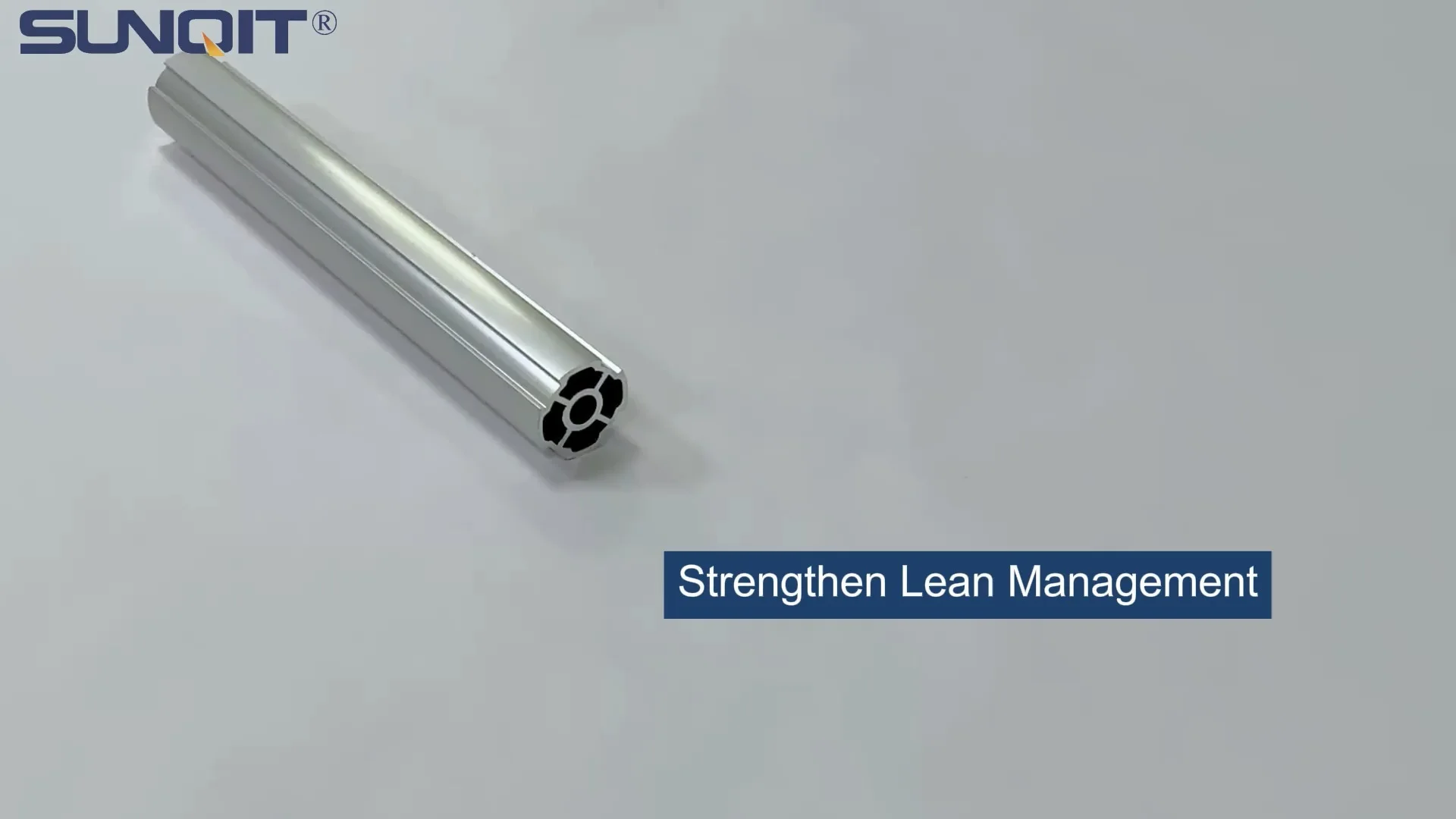
This product is called reinforced aluminum tube, and its bending strength is about twice that of the basic aluminum tube. The end face can process m1o threaded holes, install foot cups and other accessories, or convert internal and external screws in
The automotive manufacturing industry is a symphony of precision, speed, and collaboration. Every day, thousands of parts—from tiny screws to bulky engine blocks—move across factory floors, passing through assembly lines, quality checks, and storage areas before becoming part of a finished vehicle. But amid this complexity, inefficiencies can creep in like silent roadblocks: a cart that's too rigid to carry a new component size, a worker struggling to maneuver a heavy trolley through tight aisles, or a storage system that can't adapt to sudden production changes. These small hiccups add up, eating into time, increasing costs, and even risking delays in delivering vehicles to customers. This is where lean management steps in—not as a buzzword, but as a practical philosophy that transforms how work gets done by eliminating waste and prioritizing value. And at the heart of this transformation? Tools like the flexible turnover cart, a humble yet powerful asset that's redefining material handling in automotive plants worldwide.
Understanding Lean Management: More Than Just a Process, a Mindset
Lean management, born from the Toyota Production System (TPS) in the mid-20th century, is built on the idea of "kaizen"—continuous improvement. It's about looking at every step of the production process and asking: "Does this add value for the customer?" If the answer is no, that step is waste ("muda") and needs to be minimized or removed. In automotive manufacturing, waste can take many forms: overproduction (making more parts than needed), waiting (idle time for workers or machines), unnecessary transportation (moving parts back and forth), defects (parts that need rework), and even unused talent (employees' skills not being fully leveraged).
Material handling—how parts and tools are moved, stored, and accessed—is a prime area where waste thrives. Traditional fixed carts, for example, are often designed for one specific part or process. When a new vehicle model is introduced with different-sized components, those carts become obsolete, forcing factories to invest in new ones. Heavy steel trolleys may be durable but hard to push, leading to worker fatigue and slower movement. And rigid storage racks can't adjust to sudden spikes in demand, leaving parts scattered or underutilized space. All of this undermines the lean goal of creating a smooth, efficient "flow" of work.
Enter the lean system: a holistic approach that integrates tools, processes, and people to create flexibility, reduce waste, and boost productivity. Within this system, flexible turnover carts—part of the broader "turnover trolley and rack" category—emerge as a game-changer. Unlike their rigid predecessors, these carts are designed to adapt, evolve, and grow with the needs of the factory, making them a cornerstone of modern lean manufacturing.
What Are Flexible Turnover Carts? The Building Blocks of Adaptability
At first glance, a flexible turnover cart might look similar to any other material handling trolley. But its true power lies in its design: modular, lightweight, and infinitely customizable. These carts are built using components that prioritize versatility, starting with their frame. Instead of welded steel, many modern flexible carts use aluminum profile—a material that's strong yet lightweight, resistant to corrosion, and easy to modify. Aluminum profile comes in various shapes and sizes, with T-slots that allow accessories like shelves, hooks, and bins to be attached or repositioned without drilling or welding.
Then there are the lean pipe joints—the unsung heroes of flexibility. These small, durable connectors allow pipes (often aluminum or steel) to be joined at different angles, creating structures that can be adjusted in minutes. Need to raise a shelf by 6 inches to fit taller parts? Loosen a few joints, adjust the height, and tighten them back up. Want to add a side rail to prevent parts from sliding off? Snap on a new joint and pipe. This tool-free assembly means that even line workers can reconfigure the cart to meet their needs, without waiting for maintenance or engineering teams.
Mobility is another key feature, thanks to high-quality caster wheels. Unlike cheap plastic casters that get stuck or damage floors, these wheels are often made of rubber or polyurethane, designed to glide smoothly over concrete or epoxy surfaces. Many come with brake systems, so the cart stays securely in place during loading or unloading. Some even have swivel capabilities, making it easy to navigate tight corners between assembly stations—critical in busy automotive plants where space is at a premium.
Put it all together, and you have a cart that can do more than just carry parts. It can transform from a tool storage unit in the morning to a component transporter in the afternoon, and a waste collection bin by the end of the shift. This adaptability is why flexible turnover carts are quickly becoming a staple in lean-focused automotive facilities.

Why Lean Systems Need Flexible Turnover Carts: 5 Game-Changing Benefits
To truly understand the impact of flexible turnover carts, let's look at how they address common pain points in automotive manufacturing—and strengthen lean management in the process.
1. Reducing Waste: From "One Cart, One Job" to "One Cart, Many Jobs"
Traditional manufacturing often relies on a "one cart, one job" mindset. If you produce sedans and SUVs on the same line, you might need separate carts for sedan doors, SUV doors, sedan dashboards, SUV dashboards, and so on. This leads to cart clutter: rows of unused trolleys taking up valuable floor space, while workers waste time hunting for the right cart for the job. Flexible turnover carts eliminate this by replacing multiple single-purpose carts with one multi-purpose solution. A single cart can be reconfigured to carry sedan parts in the morning and SUV parts in the afternoon, cutting down on cart inventory by 30-50% in many cases. Less inventory means less storage space wasted, fewer replacement costs, and a cleaner, more organized factory floor.
2. Improving Ergonomics: Protecting Workers, Boosting Morale
In automotive plants, repetitive lifting, bending, and pushing can take a toll on workers' bodies. Heavy steel carts require more force to move, increasing the risk of strains or injuries. Flexible turnover carts, with their aluminum profile frames, are significantly lighter—often weighing 30-40% less than traditional steel carts. This reduces the physical effort needed to push or pull them, even when fully loaded. Adjustable shelves and heights mean workers can position parts at waist level, minimizing bending or reaching overhead. And smooth-rolling caster wheels reduce the jarring motion that can lead to hand or arm fatigue. The result? Happier, healthier employees who can focus on their work instead of struggling with equipment. In fact, plants that have switched to flexible carts often report lower absenteeism and higher job satisfaction scores—a win for both workers and management.
3. Enhancing Adaptability: Keeping Up with Changing Demands
The automotive industry is constantly evolving. New models are launched, customer preferences shift, and production runs get shorter. A factory that can't adapt quickly risks falling behind. Flexible turnover carts thrive in this environment. Take, for example, a plant that suddenly needs to ramp up production of electric vehicle (EV) batteries—a larger, heavier component than traditional car batteries. With a flexible cart, workers can add reinforced shelves, install heavier-duty caster wheels, and adjust the frame width to fit the new battery size—all in an hour or less. Traditional carts would require a custom order, which could take weeks. By reducing lead time for reconfiguration, flexible carts help factories respond faster to market changes, keeping production on track and customers happy.
4. Streamlining Workflow: From Chaos to "Flow"
Lean management emphasizes "flow"—the uninterrupted movement of parts and information through the production process. When carts are rigid or hard to move, they create bottlenecks. A worker might have to make multiple trips to transport parts because their cart is too small, or spend extra time navigating a heavy trolley around a corner, causing delays for the next station. Flexible turnover carts smooth out these kinks. Their lightweight design and maneuverable caster wheels mean parts can be moved in fewer trips, and closer to the point of use. Some carts even come with built-in dividers or labeled bins, so parts are organized by assembly step, reducing the time spent sorting or searching for the right component. This streamlined workflow not only speeds up production but also reduces errors—when parts are easy to access and clearly organized, there's less risk of picking the wrong one.
5. Cutting Costs: Long-Term Savings That Add Up
At first, flexible turnover carts might seem more expensive than basic steel trolleys. But their long-term savings far outweigh the initial investment. Let's break it down: fewer carts needed (since one flexible cart replaces multiple traditional ones), lower maintenance costs (modular components mean only damaged parts need replacing, not the entire cart), and reduced labor costs (less time spent on reconfiguration, fewer injuries, and faster production). Some plants report saving tens of thousands of dollars annually after switching to flexible carts. One automotive supplier in Michigan, for example, calculated that by reducing cart inventory by 40% and cutting down on worker compensation claims related to lifting, they saved over $120,000 in the first year alone.

A Day in the Life: How Flexible Carts Transform the Factory Floor
To put this in perspective, let's walk through a typical day for Carlos, an assembly line worker at a mid-sized automotive plant, before and after his team adopted flexible turnover carts.
Before Flexible Carts: Carlos starts his shift at 7 AM, tasked with assembling door panels for the plant's best-selling SUV. His first job is to retrieve the day's supply of door handles, locks, and trim pieces from the warehouse. The only cart available is a heavy steel trolley with fixed shelves—too short for the new, taller trim boxes. He has to stack the boxes on top of each other, which makes them unstable. On the way back to the line, he hits a uneven spot on the floor, and a box tumbles off, spilling trim pieces. He spends 10 minutes picking them up, then another 5 minutes rearranging the remaining boxes to fit. By 7:30, he's finally at his station, but he's already behind.
Throughout the day, the cart causes more headaches. It's hard to push, so he struggles to maneuver it between the assembly line and the storage area. When the afternoon shift switches to sedan door panels—smaller parts—the cart's shelves are too far apart, so parts slide around. He has to use bungee cords to keep them in place, which takes extra time. By the end of his shift, Carlos is exhausted, and his lower back aches from pushing the heavy cart. The team misses its production target by 15 units.
After Flexible Carts: Six months later, the plant invests in flexible turnover carts as part of its lean system rollout. On Carlos's first day with the new cart, he's impressed. The aluminum profile frame is light enough to push with one hand, even when fully loaded. The shelves are adjustable—he simply loosens the lean pipe joints, raises the middle shelf to fit the SUV trim boxes, and tightens them back up. No tools needed. The caster wheels glide over the floor, and the swivel feature makes turning into the assembly line a breeze. When the afternoon shift switches to sedans, he lowers the shelves and adds dividers (snapped into the T-slots on the aluminum profile) to keep small parts organized. No more bungee cords.
By 7:15 AM, Carlos is back at his station with all parts safely loaded. He makes fewer trips because the cart holds more, and he doesn't waste time picking up fallen parts. His back feels better at the end of the day, and the team exceeds its production target by 10 units. "It sounds silly, but that cart changed everything," Carlos says during a team meeting. "I can focus on building quality door panels instead of fighting with a trolley."
Carlos's story isn't unique. Across the industry, flexible turnover carts are turning frustrated workers into engaged contributors, and inefficient processes into models of lean excellence.

Traditional vs. Flexible Turnover Carts: A Side-by-Side Comparison
| Feature | Traditional Turnover Carts | Flexible Turnover Carts |
|---|---|---|
| Frame Material | Heavy steel, welded construction | Lightweight aluminum profile or lean pipe |
| Customization | Fixed design; requires welding or drilling to modify | Tool-free reconfiguration with lean pipe joints and T-slots |
| Mobility | Heavy; hard to push; basic caster wheels | Lightweight; smooth-rolling caster wheels with brakes/swivel |
| Cost Over Time | Low upfront cost, but high replacement/maintenance costs | Higher upfront cost, but lower long-term costs (modular, durable) |
| Space Efficiency | One cart per task; requires more storage space | Multi-purpose; reduces cart inventory by 30-50% |
| Worker Ergonomics | Heavy lifting/pushing; risk of strain | Adjustable heights; lightweight design; reduces fatigue |
| Adaptability to Change | Obsolete when part sizes/processes change | Easily reconfigured for new parts, models, or demands |
Integrating Flexible Carts into Your Lean System: Best Practices
Adopting flexible turnover carts isn't just about buying new equipment—it's about integrating them into your existing lean processes. Here are some tips to maximize their impact:
Start with a Waste Assessment: Before investing in carts, map out your current material handling process. Where are the bottlenecks? What tasks take longer than they should? Are workers complaining about specific pain points (e.g., "this cart is too heavy")? Use this data to design carts that solve real problems, not just look good on paper.
Involve the Users: Line workers, supervisors, and warehouse staff are the ones who will use the carts daily. Ask for their input on features: What shelf heights work best? Do they need bins, hooks, or dividers? Would swivel casters help in their area? By involving them in the design process, you'll create carts that actually meet their needs—and increase adoption rates.
Train Teams on Reconfiguration: Flexible carts are only useful if workers know how to adjust them. Hold short training sessions to demonstrate how lean pipe joints work, how to safely reposition shelves, and how to maintain caster wheels. Create simple instruction cards (with pictures) and post them near cart storage areas for quick reference.
Pair with Other Lean Tools: Flexible carts work best when integrated with other lean solutions. For example, use flow racks to store parts near the line, then load them onto flexible carts for transport to assembly stations. Or combine carts with ESD workstations (for electronics assembly) to create a seamless, static-safe workflow. The goal is to create a closed-loop system where materials flow smoothly from storage to production and back.
Measure and Improve: Like any lean initiative, success depends on data. Track metrics like cart inventory, time spent on material handling, worker injury rates, and production output before and after implementing flexible carts. Use this data to identify areas for improvement—maybe certain cart configurations work better than others, or some teams need additional training. Lean is about continuous improvement, and your cart program should be no exception.
The Future of Flexible Turnover Carts: Smart, Sustainable, and Even More Adaptive
As automotive manufacturing continues to evolve, so too will the tools that support it. Flexible turnover carts are no exception. Here are a few trends shaping their future:
Smart Carts with IoT Integration: Imagine a cart that can "talk"—sending real-time data to managers about its location, load weight, or maintenance needs. Sensors embedded in the aluminum profile or caster wheels could alert teams when a wheel is wearing out, or when a cart is sitting idle in a corner, wasting space. RFID tags could help track parts as they move through the plant, reducing the risk of lost inventory. This "smart" technology would turn carts into data hubs, providing insights to further optimize lean processes.
Sustainable Materials: With the automotive industry pushing toward carbon neutrality, cart manufacturers are exploring eco-friendly options. Recycled aluminum profile, plant-based plastics for casters, and energy-efficient production processes are becoming more common. Some companies are even designing carts that can be fully disassembled and recycled at the end of their lifespan, reducing waste.
Advanced Mobility Features: Autonomous mobile robots (AMRs) are already transforming material handling, but flexible carts could soon work alongside them. Imagine a cart with detachable caster wheels that can be picked up by an AMR for long-distance transport, then reattached for manual maneuvering at the assembly line. This hybrid approach would combine the efficiency of automation with the flexibility of human control.
These innovations won't replace the core benefits of flexible carts—modularity, adaptability, and ergonomics—but they'll enhance them, making lean management even more powerful in the years to come.
Conclusion: Flexible Turnover Carts—The Foundation of Lean Success
In the fast-paced world of automotive manufacturing, lean management isn't just an option—it's a necessity. To stay competitive, plants must eliminate waste, empower workers, and adapt quickly to change. Flexible turnover carts, with their modular design, aluminum profile frames, lean pipe joints, and maneuverable caster wheels, are proving to be a critical tool in this effort. They reduce costs, improve ergonomics, streamline workflows, and turn frustrated workers into engaged contributors.
Carlos, the assembly line worker, put it best: "A good cart doesn't just carry parts—it carries people, too. It makes you feel like the company cares about your work, and that makes you want to do better." In the end, lean management is about people as much as processes. By investing in tools that make their jobs easier, safer, and more efficient, manufacturers aren't just strengthening their bottom line—they're building a culture of continuous improvement that will drive success for years to come.
So, if you're looking to strengthen lean management in your automotive plant, start with the basics. Look at your material handling processes, talk to your workers, and consider the humble turnover cart. It might just be the key to unlocking a more efficient, more productive, and more human-centered factory floor.