- Company Articles
- Products and Technology
- Solution
- Strengthen Lean Management in Small-Scale Production: Affordable Flexible Solutions

Strengthen Lean Management in Small-Scale Production: Affordable Flexible Solutions
Related Product
Strengthen Lean Management
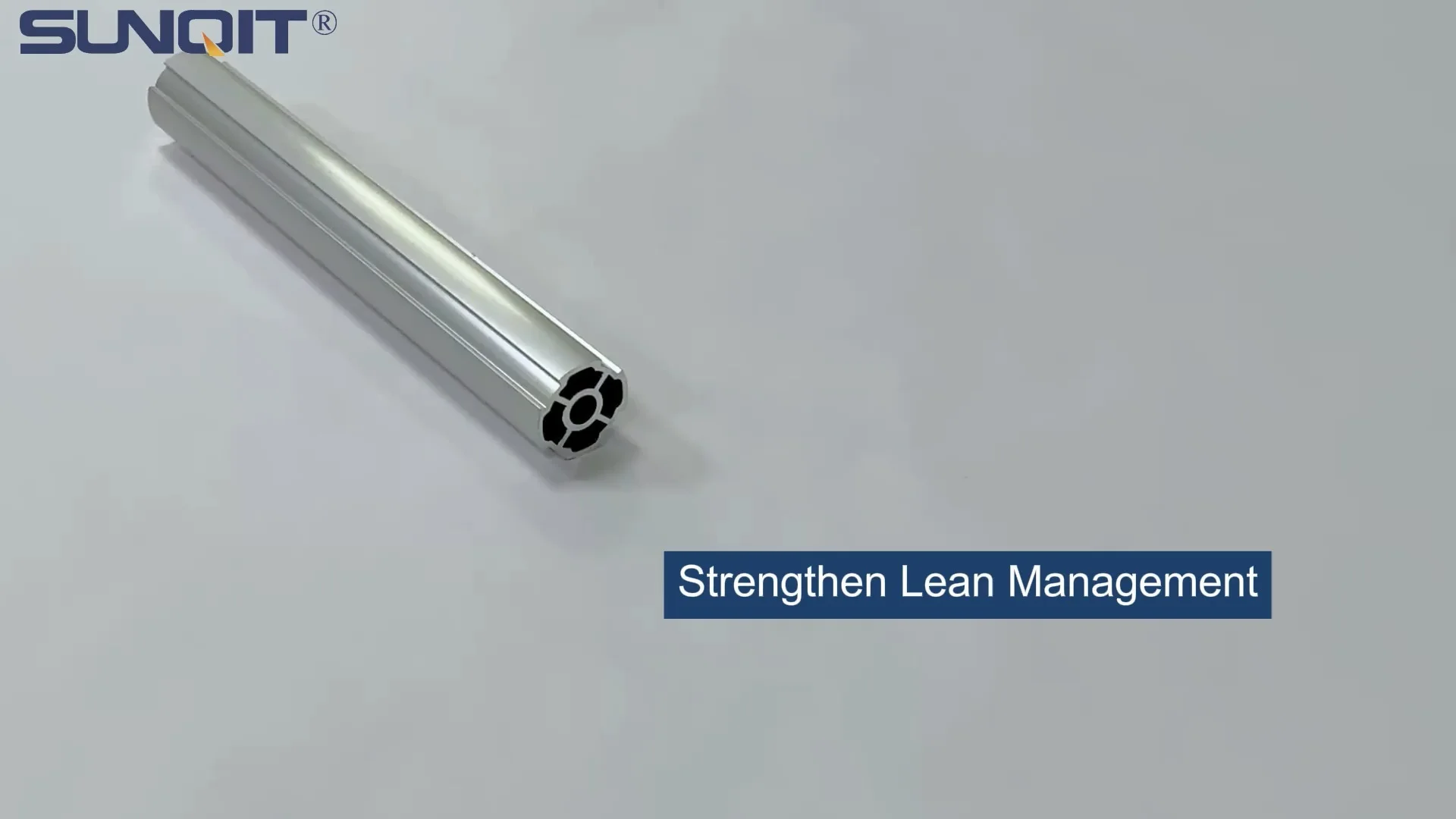
This product is called reinforced aluminum tube, and its bending strength is about twice that of the basic aluminum tube. The end face can process m1o threaded holes, install foot cups and other accessories, or convert internal and external screws in
Walk into most small-scale production workshops, and you'll likely find the same scene: workbenches cluttered with tools, parts stacked haphazardly on the floor, and workers spending precious minutes hunting for the right component. It's not that these teams don't care about efficiency—they're just stuck in a cycle of "making do" with rigid, outdated equipment. Lean management, often seen as a "big factory" concept, feels out of reach. But here's the truth: lean isn't about size. It's about smart, adaptable tools that turn chaos into order—without breaking the bank. Let's dive into how affordable solutions like lean pipe workbenches, flow racks, and aluminum lean pipe systems are changing the game for small producers everywhere.
The Lean Struggle for Small-Scale Producers: Why "One-Size-Fits-All" Tools Fail
Small production units face unique challenges. Unlike large factories with dedicated spaces and steady workflows, small workshops often juggle multiple product lines, fluctuating order volumes, and limited square footage. A furniture maker might switch from chairs to tables in a week; an electronics assembler could shift from phone chargers to smartwatch parts overnight. Traditional fixed equipment—heavy wooden workbenches, welded steel racks, or permanent conveyor belts—can't keep up. They're expensive to buy, impossible to reconfigure, and quickly become obstacles when workflows change.
Waste creeps in everywhere. Workers walk extra steps to fetch parts from disorganized shelves. Tools get lost in the clutter, leading to delays. Inventory piles up because there's no easy way to track what's in use. And when a new order requires a slightly different setup? You're stuck disassembling and rebuilding, losing hours (or days) of production time. This isn't just frustrating—it hits the bottom line hard. For small businesses, where every dollar and minute counts, this waste can mean the difference between thriving and just surviving.
Quick Lean Win:
Start by mapping your current workflow. Grab a notebook and sketch how materials move from arrival to finished product. Circle areas where workers pause, search, or double-back—that's where flexible tools will have the biggest impact.
Lean Pipe Workbenches: The "Swiss Army Knife" of Workstations
If lean management had a mascot, it might be the lean pipe workbench. These modular workstations are built with lightweight, durable pipes (often aluminum or steel) and simple connectors, letting you customize height, add shelves, attach tool holders, or even roll them around with casters. Unlike that old wooden bench in the corner that's been the same since 2010, a lean pipe workbench adapts to your needs—today, tomorrow, and next month.
Let's break down why they're a game-changer for small shops:
- Ergonomics that Reduce Fatigue: Adjust the height in minutes to match each worker's posture. No more hunching over a bench that's too low or stretching to reach a shelf that's too high. Happy workers are faster workers.
- Clutter-Free Workspaces: Add tool hooks, bins, or monitor mounts right where you need them. A mechanic assembling small engines, for example, can attach magnetic strips for screwdrivers and a shelf for spare parts—everything within arm's reach.
- ESD Protection for Sensitive Work: For electronics or medical device makers, ESD workstations (Electrostatic Discharge) are non-negotiable. These specialized lean pipe workbenches have grounded surfaces and anti-static mats to protect delicate components from static damage—critical for reducing costly defects.
- Portability When You Need It: Add casters, and suddenly your workbench can roll to the material storage area, then back to the assembly line. No more carrying heavy parts across the shop.
| Feature | Traditional Wooden Workbench | Lean Pipe Workbench |
|---|---|---|
| Cost | Low upfront, but no long-term value (can't adapt) | Moderate upfront, high long-term value (reusable, reconfigurable) |
| Setup Time | Hours (requires tools, cutting, assembly) | Minutes (snap-together connectors, no welding) |
| Customization | Fixed (height, shelves, layout can't change) | Unlimited (add/remove shelves, adjust height, attach accessories) |
| Durability | Wears quickly (scratches, water damage, warping) | Long-lasting (aluminum/steel resists corrosion, connectors stay tight) |
| Space Efficiency | Bulky, takes up fixed space | Compact, can be disassembled or rolled away when not in use |
Take Maria, who runs a small jewelry-making workshop. She used to struggle with a heavy wooden bench that limited her to working on one necklace design at a time. After switching to a lean pipe workbench, she added adjustable shelves for beads, a small LED light bar, and even a rotating tray for tools. Now she can work on three designs simultaneously, and when a big order comes in, she rolls the bench right next to her material cart. Her output? Up 30% in just two months.

Flow Racks: Let Gravity Do the Work (and Cut Inventory Waste)
If lean pipe workbenches organize the "doing," flow racks organize the "storing." These gravity-fed systems use sloped roller tracks to move materials from the back (where you load new stock) to the front (where workers pick parts). It's a simple idea—First In, First Out (FIFO)—but it solves a huge problem for small producers: inventory bloat.
Think about how most small shops store parts: boxes stacked on shelves, with the newest parts on top. Workers grab what's easiest to reach, leaving older stock to collect dust (or expire, in the case of perishables). Flow racks fix this by ensuring the oldest parts get used first, reducing waste from expired or obsolete inventory. For a bakery making custom cakes, that might mean frosting tubes or sprinkles never go stale. For a hardware assembler, it could mean nuts and bolts don't rust in the back of a shelf.
But the benefits don't stop there. Flow racks turn "hunting" into "grabbing." Instead of workers walking to a shelf, searching for the right box, and carrying it back, parts slide right to the picking area. A small auto parts shop I worked with once had workers spending 20 minutes per hour fetching screws and washers. After installing a 3-row, 3-floor flow rack (Material Rack B, in industry terms), that time dropped to 5 minutes. They reclaimed 15 minutes per worker per hour—adding up to 120 extra production minutes a day with zero new hires.
Pro Tip:
Start small with flow racks. Even a single 3-foot unit for your most-used parts (like screws, washers, or small components) can cut wasted time. Look for plastic roller track guide rails (yellow or grey) for lightweight parts, or aluminum guide rails for heavier items—they're affordable and easy to install.

Aluminum Lean Pipe: The Secret to "Build Today, Rebuild Tomorrow" Flexibility
At the heart of these solutions is aluminum lean pipe. You might have heard of traditional steel lean pipe, but aluminum takes flexibility to a new level. It's lightweight (so workers can assemble it without heavy tools), corrosion-resistant (perfect for humid or dusty shops), and compatible with a huge range of connectors—think 90° joints, internal rotary joints, or parallel clamps. This means you're not just building a workbench or rack; you're building a system you can tear down and rebuild in hours when your workflow changes.
Let's say you run a small toy manufacturer. This month, you're assembling dollhouses—so you build a lean pipe workstation with a flow rack on one side for small parts (doors, windows) and a conveyor on the other to move finished houses to packaging. Next month, you switch to toy cars. Instead of buying new equipment, you disassemble the flow rack, reconfigure the workbench height, and swap the conveyor for a roller track to slide car bodies through. Total cost? Just the time to rearrange the pipes and connectors. No new tools, no new materials—just adaptability.
Aluminum lean pipe accessories make customization even easier. Need a shelf? Snap on a bracket. Want to add a tool holder? Clamp on a pipe clamp. Even better, aluminum profiles (like 2020 or 4040 EU standard profiles) let you integrate other components—LED lights, monitors, or even small machines—directly into your setup. It's like building with industrial-grade Legos, but for grown-ups solving real production problems.

Conveyors: Small-Scale Systems That Don't Need a Big Budget
When you hear "conveyor," you might picture massive belts in auto plants. But small-scale conveyors—like roller tracks or mini aluminum roller conveyors—are game-changers for workshops with limited space. These aren't permanent installations; they're lightweight, portable, and designed to connect workstations. A small electronics assembler, for example, could use a 40 Steel Roller Track (with yellow wheels for visibility) to slide circuit boards from the soldering station to the testing station. No more workers carrying fragile boards by hand—reducing drops and defects.
Roller tracks are especially versatile. They come in different sizes (1-inch swivel roller balls for small parts, 0.5-inch for tiny components) and materials (plastic for light items, steel for heavier loads). And because they're modular, you can add or remove sections as needed. A clothing manufacturer might use a short roller track to move fabric bolts between cutting and sewing stations. During peak season, they can extend it by adding a few more sections—no tools required.
Case Study: From Chaos to 40% Faster Turnaround with Lean Tools
A small furniture workshop in Ohio was struggling to keep up with custom order demand. Their workflow was linear: cutting wood → sanding → assembly → painting. But with only one workbench per station, workers often waited for the previous step to finish. The owner, Mike, decided to invest in lean pipe workbenches, a flow rack for wood sheets, and a roller track to connect sanding to assembly.
Result? The flow rack ensured wood sheets were always within reach of the cutting station, reducing fetch time by 70%. The lean pipe workbench at assembly had adjustable shelves for screws and brackets, cutting tool-search time from 10 minutes to 2. The roller track let sanded pieces glide directly to assembly, so the sander never waited for the assembler. In three months, Mike's team cut order turnaround time by 40%—and they're now taking on 20% more orders without adding staff.
Getting Started: Lean Tools on a Small-Business Budget
You don't need to overhaul your entire shop at once. Start with one high-impact area: the workstation where your team spends the most time. For many small producers, that's the assembly bench. replace it with a basic lean pipe workbench (Workbench E, single deck, without casters if you don't need portability) and add a small flow rack nearby for parts. Cost? Often under $500—less than the price of a cheap used wooden bench, with far more value.
Next, look for "quick wins" with accessories. Caster wheels let you move workbenches or racks; plastic roller track guide rails turn a static shelf into a mini flow system. Many suppliers offer starter kits with pipes, joints, and basic accessories—perfect for testing the waters without overspending.
Finally, involve your team. They know the workflow best—where the bottlenecks are, which tools are always missing, which parts are hardest to reach. Let them help design the new setup. When workers feel ownership over the tools they use, they'll embrace the change and find even more ways to improve efficiency.
Final Thought: Lean Isn't About Perfection—It's About Progress
Small-scale production doesn't have to mean small-scale efficiency. Affordable, flexible tools like lean pipe workbenches, flow racks, and aluminum lean pipe systems prove that lean management is for everyone—regardless of shop size or budget. These tools turn chaos into order, waste into productivity, and "making do" into "thriving."
So take that first step. Swap out one cluttered workbench. Install a small flow rack for your most-used parts. Watch how quickly those small changes add up. Before you know it, you'll be wondering how you ever ran your shop without them. Lean management isn't about being perfect—it's about being adaptable. And with the right tools, adaptability has never been more affordable.