- Company Articles
- Products and Technology
- Solution
- Strengthen Lean Management with Custom Solutions: Designed for 3C Assembly Challenges

Strengthen Lean Management with Custom Solutions: Designed for 3C Assembly Challenges
Related Product
Strengthen Lean Management
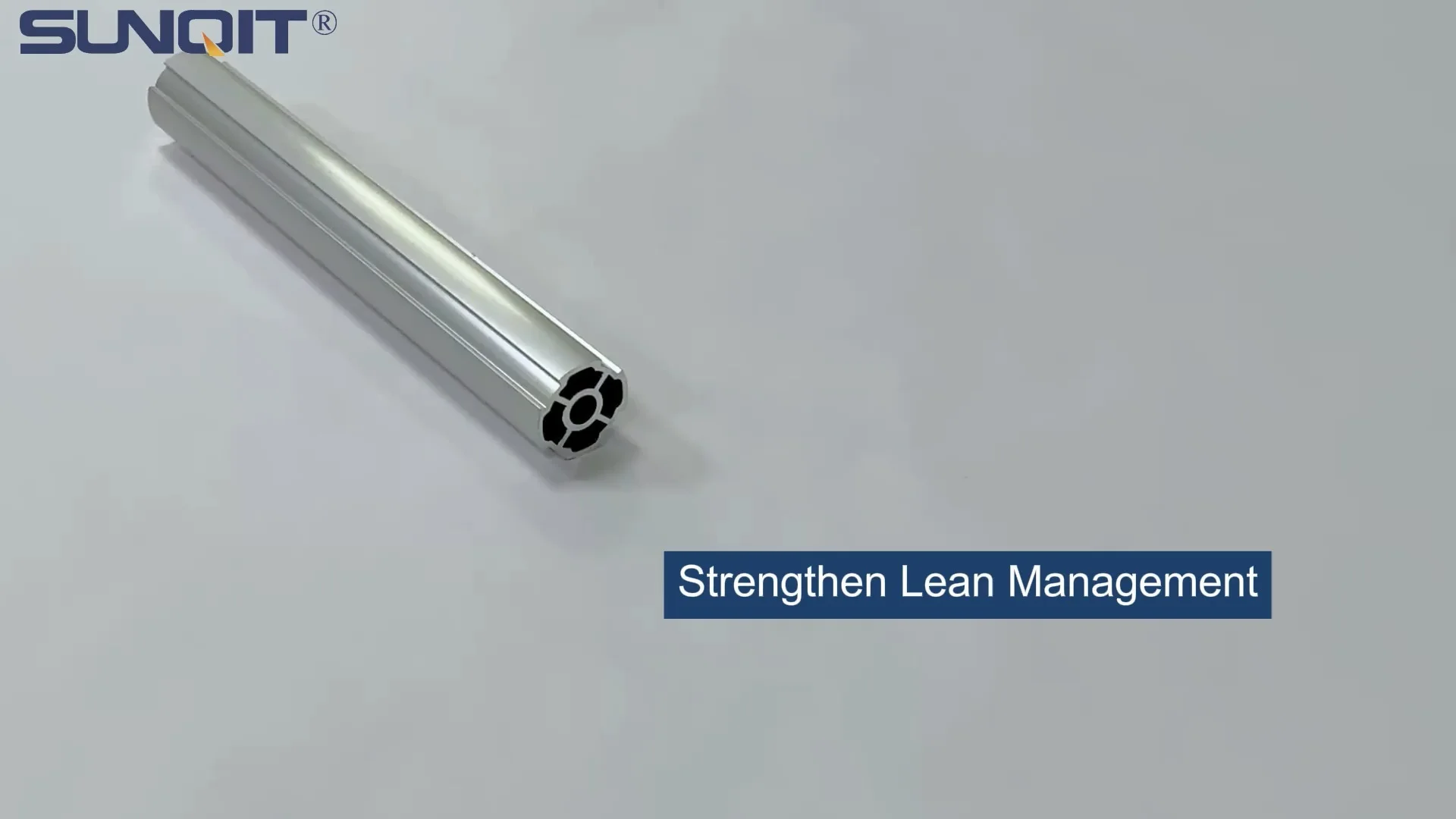
This product is called reinforced aluminum tube, and its bending strength is about twice that of the basic aluminum tube. The end face can process m1o threaded holes, install foot cups and other accessories, or convert internal and external screws in
The Heartbeat of 3C Assembly—Why Lean Matters
In the world of consumer electronics, where new smartphones, laptops, and wearables hit the market every few months, speed and precision aren't just goals—they're survival. 3C assembly lines hum with the energy of thousands of tiny components coming together to create products that fit in the palm of your hand, yet contain more computing power than early supercomputers. But behind that seamless final product lies a complex dance of machines, materials, and people. Here, in the chaos of high-volume, high-mix production, lean management isn't just a buzzword; it's the backbone that keeps the operation from collapsing under its own weight.
Lean management, at its core, is about respect—for your team, your materials, and your customers. It's about stripping away waste so that every action adds value. In 3C assembly, where a single misstep can cost thousands in defective microchips or delayed shipments, waste isn't just inefficient; it's costly. Time wasted searching for tools, motion wasted bending to reach parts, inventory wasted sitting idle, defects wasted reworking—these are the silent profit killers that lean aims to eliminate. And to do that effectively, one-size-fits-all solutions simply won't cut it. Customization is key, because no two 3C assembly lines face the same challenges.
The Unique Challenges of 3C Assembly Lines
To understand why custom lean solutions are non-negotiable, let's step onto the floor of a typical 3C assembly plant. Picture this: A line assembling smartwatches, where components like circuit boards, batteries, and screens are smaller than a postage stamp. Workers hunched over workstations, squinting at tiny parts, while bins of screws and connectors pile up beside them. Down the line, a bottleneck forms because the material handler can't keep up with feeding parts to the next station. Meanwhile, a quality inspector flags a batch of PCBs damaged by static electricity—costing hours of rework.
These scenes highlight the unique hurdles 3C assembly faces:
- Space constraints: 3C products are compact, but their assembly requires specialized tools, testing equipment, and material storage—all in tight quarters. Traditional bulky workstations or rigid racks eat up valuable floor space, leaving little room for operators to move.
- Sensitive components: Microchips, LCD screens, and sensors are damaged by static electricity (ESD), vibration, or even slight mishandling. A single static discharge can render a $500 PCB useless, making ESD protection non-negotiable.
- Rapid product cycles: A smartphone model may only be in production for 12–18 months before a newer version launches. Assembly lines must reconfigure quickly to accommodate new designs, meaning fixed, inflexible equipment becomes obsolete almost overnight.
- High-mix, low-volume demands: Many 3C plants produce multiple product variants simultaneously (e.g., 10 different phone models). This requires material storage systems that can separate small batches of parts without creating chaos.
- Worker ergonomics: Repetitive motions, awkward postures, and heavy lifting take a toll on operators. Fatigue leads to slower assembly times and more errors—costing both productivity and employee well-being.
These challenges demand solutions that are adaptable, space-efficient, protective, and people-centric. And that's where custom lean tools—like the lean pipe workbench, flow rack, and ESD workstation—shine.

Custom Lean Solutions: Building Around Your Team's Needs
Lean isn't about forcing workers into a rigid system; it's about designing the system around how they work best. Custom lean solutions do exactly that—they start with understanding your team's daily struggles, then build tools that turn frustration into flow. Let's dive into the workhorses that make this possible.
The Lean Pipe Workbench—Your Team's Command Center
At the heart of any assembly station is the workbench. But in 3C assembly, a generic workbench is like a carpenter's toolbox missing half the tools—it gets the job done, but not well. The lean pipe workbench, however, is a game-changer. Made from lightweight yet durable aluminum or steel pipes and modular joints, it's designed to evolve with your needs.
Consider Maria, an operator on a tablet assembly line. Before switching to a custom lean pipe workbench, her station was a cluttered mess: tools scattered across the surface, bins of screws stacked haphazardly, and a monitor mounted too high, straining her neck. Today, her workbench has a height-adjustable surface that matches her elbow level, a tool panel with magnetic strips holding every screwdriver and tweezer within arm's reach, and a shelf below for bins labeled by part number. The result? "I used to spend 15 minutes a day just hunting for tools," she says. "Now, I can focus on assembling—my hands move from part to tool to product without wasted motion."
What makes the lean pipe workbench so effective? Its modularity. Need to add a second shelf for new components? Snap on a few joints and pipes. Switching to a larger product? Adjust the height in minutes. Add a LED task light for better visibility? No problem. Unlike fixed wooden or steel workbenches, which require saws or welders to modify, lean pipe workbenches adapt with basic hand tools—perfect for 3C's ever-changing needs.
Ergonomics are another win. Many lean pipe workbenches come with adjustable legs, allowing operators of different heights to set the surface at a comfortable level, reducing back and shoulder strain. Some even include anti-fatigue mats and footrests, turning a tiring 8-hour shift into a manageable one. For 3C plants, where operator retention is critical, this isn't just a nice-to-have—it's a retention tool.
Flow Racks—Keeping Materials Moving, Not Waiting
If the lean pipe workbench is the operator's command center, the flow rack is the supply line that keeps it fed. In 3C assembly, where hundreds of small parts are needed per product, material storage can quickly become a bottleneck. Traditional shelving requires operators to reach, bend, or walk to grab parts—wasting precious time. Enter the flow rack: a gravity-fed storage system that brings materials directly to the operator, eliminating wasted motion.
Imagine a flow rack near Maria's workbench, stocked with bins of LCD screens, each tilted at a slight angle. As she takes a screen from the front bin, the bin behind it slides forward, thanks to gravity rollers. No more walking to the back of a shelf or digging through stacks—parts are always at the front, ready to grab. This "first-in, first-out" (FIFO) system also reduces the risk of obsolete parts sitting idle, a common issue in 3C where component specs change frequently.
Flow racks are customizable to fit even the smallest parts. Dividers can separate tiny screws from connectors, and bin sizes can be adjusted to match order quantities—no more oversized bins taking up space. For high-mix lines, color-coded bins or labels make it easy to spot the right part at a glance, cutting down on picking errors. A study by the Lean Enterprise Institute found that flow racks reduced material retrieval time by 35% in electronics assembly plants, freeing up operators to focus on assembly, not hunting for parts.
But flow racks aren't just for small parts. They're also ideal for larger components like batteries or subassemblies. For example, a flow rack with wider lanes can hold trays of smartphone batteries, ensuring they're always within arm's reach of the operator installing them. And because they're often built with aluminum profiles, flow racks are lightweight enough to move if the assembly line reconfigures—no need for heavy machinery or permanent installation.
ESD Workstations—Protecting the Invisible Threat
In 3C assembly, static electricity is the silent enemy. A single spark—too small to feel or see—can fry a microchip, turning a nearly finished product into scrap. For operators handling PCBs, sensors, or memory chips, this risk is constant. That's where the ESD workstation comes in: a specialized setup designed to neutralize static and protect sensitive components from the moment they hit the line.
An ESD workstation isn't just a regular workbench with a fancy label. It's a holistic system. The surface is covered in anti-static matting that dissipates static charges, grounded to the floor to prevent buildup. Operators wear grounding wristbands connected to the workstation, ensuring their bodies don't carry static. Overhead ionizers blow neutralizing air over the work area, eliminating static in the surrounding environment. Even the tools—screwdrivers, tweezers, bins—are anti-static, made from materials that don't generate static when rubbed against other surfaces.
For plants assembling products like laptops or smartwatches, where a single defective component can lead to costly recalls, ESD workstations aren't optional—they're a compliance requirement. International standards like ANSI/ESD S20.20 mandate strict static control measures, and failing an audit can halt production. But beyond compliance, ESD workstations offer peace of mind. "Before we switched to ESD workstations, we had at least one PCB failure a week due to static," says Raj, a quality manager at a 3C plant in Vietnam. "Now, it's maybe one a quarter. That's thousands saved in rework alone."
What makes ESD workstations even more valuable is their integration with other lean tools. Many are built using the same modular lean pipe or aluminum profiles as standard workbenches, meaning they can be customized with tool panels, shelves, or flow rack attachments—all while maintaining static protection. This flexibility ensures that safety doesn't come at the cost of efficiency.
Aluminum Profiles—The Flexibility Engine
If lean pipe workbenches, flow racks, and ESD workstations are the stars of the show, aluminum profiles are the supporting cast that makes their flexibility possible. These extruded aluminum rails—with T-slots running along their length—are the building blocks of modular lean systems. Think of them as industrial Legos: strong, lightweight, and infinitely reconfigurable.
Why aluminum profiles? For starters, they're lightweight. A 6-foot aluminum profile weighs a fraction of a steel beam, making it easy for two workers to carry and install—no need for cranes or forklifts. But don't let the weight fool you: aluminum profiles are surprisingly strong, able to support heavy workbenches, loaded flow racks, or even small conveyors. This combination of strength and lightness is a game-changer for 3C plants, where floor space is tight and reconfigurations happen monthly.
The T-slots are where the magic happens. These grooves allow accessories—like brackets, shelves, tool holders, or even conveyor tracks—to be attached anywhere along the profile, using simple bolts or sliding nuts. Need to add a shelf to a workbench? Slide a bracket into the T-slot, tighten the bolt, and you're done. Want to move a flow rack to a new location? Loosen the bolts, disassemble, and rebuild in the new spot. This modularity means that when your product line changes—say, from assembling smartwatches to fitness trackers—you don't need to buy new equipment; you just reconfigure what you have.
Aluminum profiles also excel at space efficiency. Their slim design (many are just 2–4 inches wide) means they take up minimal floor space, while their ability to stack vertically (with the right brackets) maximizes storage. For example, a vertical rack built with aluminum profiles can hold twice as many small parts as a traditional shelf unit, freeing up floor space for operators to move.
Durability is another plus. Aluminum resists rust and corrosion, making it ideal for factories with humid climates or frequent cleaning. Unlike steel, it doesn't require painting or maintenance to stay looking new, reducing long-term upkeep costs. And because aluminum profiles are mass-produced, accessories like brackets, end caps, and rubber strips are widely available—meaning you won't wait weeks for replacement parts if something breaks.

Bringing It All Together: A Day in the Life of an Optimized 3C Line
To see how these tools work in harmony, let's walk through a day at a 3C plant that's embraced custom lean solutions. Meet GreenTech Electronics, a mid-sized factory assembling wireless earbuds—small, delicate, and in high demand.
7:00 AM: The line starts up. Operators arrive to find their lean pipe workstations already set up: height-adjusted to their preference, tools organized on magnetic panels, and anti-fatigue mats in place. Each workstation is an ESD workstation, with grounding wristbands and ionizers ready to go.
7:15 AM: Material handlers stock flow racks with bins of earbud components—PCBs, batteries, speakers—each labeled with part numbers and tilted for FIFO access. The flow racks, built with aluminum profiles, are positioned between workstations, so operators can grab parts without turning their backs.
9:00 AM: A new batch of PCBs arrives. They're placed on a roller conveyor (built with aluminum profiles and plastic roller tracks) that carries them to the ESD workstation where operators solder components. The conveyor's speed is set to match the assembly rate, ensuring no bottlenecks.
12:00 PM: Lunch break. Because the lean pipe workstations are ergonomic, operators return feeling refreshed—not exhausted from hunching or reaching.
2:00 PM: A production meeting reveals the need to switch to a new earbud model next week. The team measures the new component sizes, then reconfigures the flow racks by adjusting bin dividers and adding a few extra shelves—all using aluminum profile brackets and bolts. The lean pipe workstations get new tool panels to accommodate the new tools needed for the model.
5:00 PM: End of shift. The line has assembled 20% more earbuds than the previous month, with zero ESD-related defects. Operators leave without sore backs or tired hands, already looking forward to tomorrow.
This isn't a fantasy—it's the reality for plants that invest in custom lean solutions. By combining lean pipe workbenches, flow racks, ESD workstations, and aluminum profiles, they turn chaos into order, waste into value, and frustration into pride.

Choosing the Right Partner: What to Look for in a Lean Solution Supplier
Investing in custom lean solutions is a big decision, and choosing the right supplier is critical. Not all suppliers are created equal—some focus on generic products, while others truly partner with you to design solutions that fit your unique needs. Here's what to look for:
- Industry expertise: Look for a supplier with experience in 3C assembly. They should understand the challenges of small components, ESD risks, and rapid reconfiguration. Ask for case studies or references from other 3C plants.
- Customization capabilities: Avoid suppliers that push "one-size-fits-all" products. Your supplier should start with a site visit, interview your operators, and design solutions around your specific workflows, space constraints, and product mix.
- Modular mindset: The best suppliers prioritize modularity, using components like aluminum profiles and lean pipe that can be reconfigured later. They should also offer a wide range of accessories—brackets, bins, tool holders—to adapt as your needs change.
- Quality materials: Lean tools are meant to last, so they need durable materials. Aluminum profiles should be high-grade (e.g., 6063-T5 aluminum), lean pipe joints should be strong yet easy to adjust, and ESD components should meet international standards.
- After-sales support: Even the best tools need maintenance. Choose a supplier that offers training for your team (so they can reconfigure systems themselves), fast delivery of replacement parts, and responsive customer service.
Remember, a good supplier isn't just selling products—they're investing in your success. They'll ask questions like, "What's the biggest frustration your operators face?" or "How often do you reconfigure your line?" Their goal should be to make your life easier, not just make a sale.
Conclusion: Lean Isn't Just a System—It's a Culture
At the end of the day, lean management isn't about tools or systems—it's about people. It's about giving your team the tools they need to do their jobs better, faster, and with less frustration. The lean pipe workbench, flow rack, ESD workstation, and aluminum profile aren't just pieces of equipment; they're enablers. They turn your team's hard work into results, their ideas into improvements, and their daily grind into a sense of purpose.
In the fast-paced world of 3C assembly, where competition is fierce and margins are tight, lean isn't optional. But to do lean right, you need solutions that adapt to your challenges, protect your products, and respect your team. Custom lean solutions do exactly that—they're the bridge between the chaos of production and the calm of efficiency.
So, take the first step. Talk to your operators about their struggles. Walk the line and spot the waste. Then, partner with a supplier who will design solutions that fit your plant, your products, and your people. The result? A line that doesn't just assemble products—but builds pride, productivity, and profit.
| Lean Solution | Key Benefit for 3C Assembly | Example Impact |
|---|---|---|
| Lean Pipe Workbench | Modular, ergonomic work surface adaptable to product changes | 25% reduction in operator motion waste; 15% faster assembly times |
| Flow Rack | FIFO material storage, reducing picking time and errors | 30% faster material retrieval; 10% fewer picking mistakes |
| ESD Workstation | Static protection for sensitive components | 90% reduction in ESD-related defects; compliance with ANSI/ESD S20.20 |
| Aluminum Profile | Lightweight, modular building blocks for reconfigurable systems | 40% faster line reconfiguration; 50% less floor space used |