- Company Articles
- Products and Technology
- Application Cases
- Strengthen Lean Management with Flexible Workstations: Workbench E Case Study

Strengthen Lean Management with Flexible Workstations: Workbench E Case Study
Related Product
Strengthen Lean Management
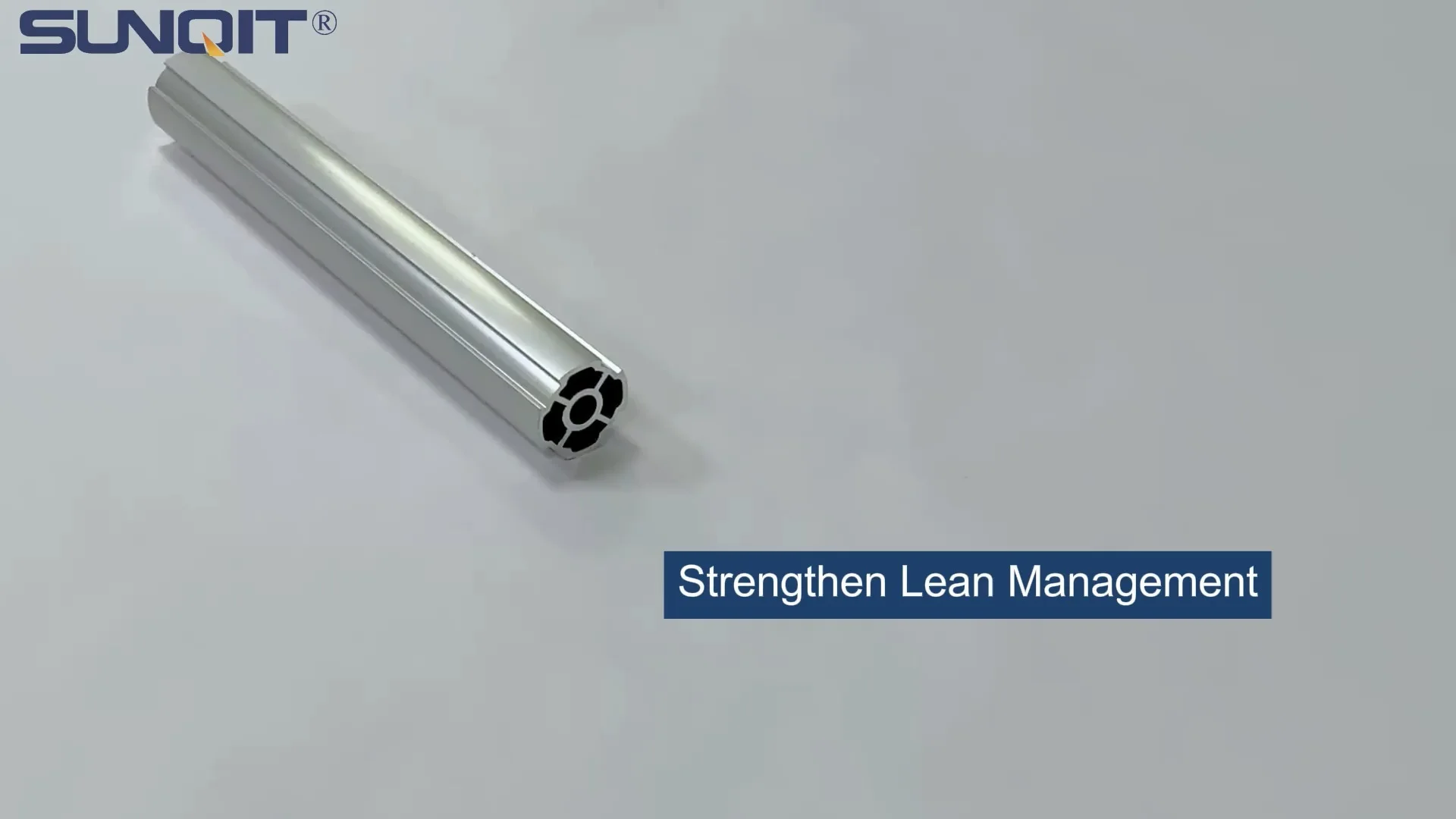
This product is called reinforced aluminum tube, and its bending strength is about twice that of the basic aluminum tube. The end face can process m1o threaded holes, install foot cups and other accessories, or convert internal and external screws in
In the fast-paced world of manufacturing, where every second counts and efficiency can make or break a business, the pressure to eliminate waste and streamline workflows has never been greater. For many production managers, the daily grind involves watching valuable time slip through the cracks—employees searching for tools, materials stuck in bottlenecks, or workstations that can't adapt to shifting production needs. These are not just minor inconveniences; they're symptoms of a system that's not living up to its potential. This is where lean management steps in, not as a buzzword, but as a proven framework to transform chaos into clarity. And at the heart of this transformation? The humble workstation—reimagined as a flexible, adaptable hub that aligns with lean principles. Today, we'll dive into how one specific workstation, Workbench E , became the cornerstone of a lean revolution for a mid-sized electronics manufacturer, leveraging aluminum profile engineering, ESD workstation features, and seamless integration with flow racks and roller tracks to redefine productivity.
Understanding Lean Management: Beyond the Buzzword
Before we jump into Workbench E, let's ground ourselves in what lean management truly means. Born from the Toyota Production System (TPS) in the mid-20th century, lean is more than a set of rules—it's a mindset centered on eliminating waste to create more value for customers. The core principles, as defined by lean thinkers James Womack and Daniel Jones, are simple but powerful: identify value (what customers are willing to pay for), map the value stream (all steps required to deliver that value), create flow (ensure work moves smoothly without interruptions), establish pull (produce only what's needed, when it's needed), and strive for perfection (continuously improve).
In practice, this translates to scrutinizing every aspect of production. Are employees walking 20 feet to grab a tool? That's waste (motion). Is inventory piling up because a workstation can't keep up? That's waste (inventory). Is a worker struggling with a fixed-height bench that strains their back? That's waste (ergonomic inefficiency). Lean management asks: How can we make this easier, faster, and more consistent?
For many manufacturers, the answer starts at the workstation. Think about it: the workstation is where the rubber meets the road. It's where components become products, where assembly happens, where quality is checked. If a workstation is rigid—fixed in height, cluttered with unnecessary tools, or incompatible with material flow systems—it becomes a bottleneck. But a flexible workstation? It adapts to the task, the worker, and the product, turning lean principles from theory into daily action.
The Critical Role of Workstations in a Lean System
A lean system is only as strong as its weakest link, and more often than not, that link is the workstation. Let's break down why:
- Workflow Flow: Lean thrives on "flow"—the idea that work should move from one step to the next with minimal delay. A workstation that's misaligned with upstream or downstream processes (e.g., materials arriving too late, finished parts piling up) disrupts this flow, creating bottlenecks.
- Value Creation: Every square inch of a workstation should contribute to value creation. Wasted space, disorganized tools, or non-essential equipment eat into this value, turning productive time into wasted motion.
- Adaptability: In today's manufacturing landscape, product lines change frequently—new models, custom orders, or seasonal demands. A rigid workstation forces teams to either (leading to errors) or rebuild (wasting time). Flexibility here is non-negotiable.
- Ergonomics: Fatigue and discomfort lead to slower work and higher error rates. A workstation that adjusts to different workers' heights, reaches, and postures keeps teams fresh and focused—directly impacting quality and speed.
This is where modular workstations shine. Unlike traditional fixed benches, modular designs use interchangeable components—think aluminum profile frames, adjustable shelves, and compatible accessories—to adapt to evolving needs. They're not just workspaces; they're systems that integrate with other lean tools, like flow racks for material storage and roller tracks for seamless part movement.

Workbench E: A Masterclass in Flexible Lean Design
Enter Workbench E—a single-deck, caster-free workstation designed from the ground up for lean environments. Let's unpack its features and why they matter for lean management.
1. Aluminum Profile: The Backbone of Flexibility
At first glance, Workbench E's frame stands out: sleek, lightweight, yet surprisingly sturdy. That's thanks to aluminum profile construction. Unlike steel, aluminum offers the perfect balance of strength and adaptability. Its T-slot design (a groove running along the length of the profile) allows for easy attachment of accessories—shelves, tool hooks, monitor arms—without welding or drilling. Need to add a second shelf for a new tool? Just slide in a bracket and secure it with a T-slot nut. Want to reposition the light bar? Loosen a few screws, adjust, and tighten. This modularity means the workstation evolves with your needs, eliminating the waste of "throwing away" an entire bench when processes change.
But aluminum profile isn't just about adjustability. It's also durable, resistant to corrosion, and lightweight enough to reconfigure without heavy machinery. For a lean system, this translates to lower long-term costs (no need to replace benches every few years) and faster setup times when rearranging production lines.
2. ESD Workstation Features: Protecting Sensitive Electronics
For electronics manufacturers, static electricity is a silent killer. A single electrostatic discharge (ESD) can fry a circuit board, rendering hours of work useless. Workbench E addresses this with built-in ESD protection:
- ESD-Safe Surface: The worktop is made of a static-dissipative material that redirects static charges away from sensitive components, preventing damage during assembly.
- Grounding Points: Integrated grounding jacks ensure operators can connect wrist straps or heel straps, channeling any static buildup from their bodies to the ground.
- ESD-Safe Accessories: Even the shelves and tool holders are made from ESD-compliant materials, so every touchpoint in the workstation is protected.
This isn't just about avoiding defects—it's about reducing waste. A single ESD-damaged component might cost $50, but the real cost is in rework, delays, and lost customer trust. Workbench E turns this risk into a non-issue, letting teams focus on building, not fixing.
3. Integration with Flow Racks and Roller Tracks
A workstation can't exist in isolation—it needs to connect with the material flow around it. Workbench E excels here, thanks to its compatibility with flow racks and roller tracks :
Flow Racks: These gravity-fed racks store materials at the workstation's edge, ensuring components are always within arm's reach. Workbench E's aluminum profile frame includes pre-drilled holes that align with flow rack brackets, making integration a 10-minute setup (no custom fabrication required). For example, a three-row, three-floor material rack (like Material Rack B) slots seamlessly alongside the bench, holding resistors, capacitors, and other small parts in clear bins—eliminating "search time" and keeping the workstation clutter-free.
Roller Tracks: When finished parts need to move to the next station, roller tracks (mounted to Workbench E's side or rear) use gravity to glide components downstream. Workbench E's aluminum profile accessories, like roller track placon mounts, ensure the tracks align perfectly with the bench height, preventing jams and spills. For delicate electronics, plastic roller track guide rails (yellow or grey) add a soft touch, while steel wheels handle heavier loads—all without scratching or damaging parts.
4. Ergonomics by Design
Workbench E's single-deck design (without casters) keeps it stable, but its real ergonomic magic lies in adjustability. The aluminum profile legs use adjustable leveling feet, letting teams tweak the height from 30 to 40 inches to match different operators. No more stooping or stretching—whether the assembler is 5'2" or 6'1", the workstation meets them at their best posture.
Accessories like swivel roller balls (1 inch or 0.5 inch) on the worktop let operators slide heavy assemblies across the surface with minimal effort, reducing strain on shoulders and arms. Even the tool holders are adjustable: mounted via T-slot brackets, they can be positioned exactly where the operator's hand naturally falls—turning "reach for the screwdriver" into "grab and go."

Case Study: How Workbench E Transformed a Struggling Electronics Line
To see Workbench E in action, let's meet PrecisionTech, a mid-sized manufacturer of printed circuit boards (PCBs) for medical devices. In early 2024, PrecisionTech was facing two critical challenges:
- Static Damage: Despite using basic ESD mats, 3-5% of PCBs were failing final tests due to hidden ESD damage—costing the company $15,000 monthly in rework and scrap.
- Material Flow Bottlenecks: Assemblers spent 15-20 minutes per shift walking to fetch components from distant storage racks. Worse, finished PCBs often piled up at the workstation, as there was no easy way to send them to the testing station.
Their existing workstations were wooden benches with fixed shelves—sturdy, but impossible to adjust. When PrecisionTech's production manager, Maria Gonzalez, heard about Workbench E, she was skeptical: "We'd tried 'ergonomic benches' before, and they ended up being just as rigid. But the modular design and ESD features caught my eye." She ordered 10 units for their busiest assembly line, paired with flow racks and roller tracks, to test the impact.
The Before Scenario: Chaos in the Details
Before Workbench E, PrecisionTech's assembly line looked like this:
- Workstations were cluttered with loose tools and overflowing bins of components. Assemblers often wasted 5 minutes per hour searching for the right resistor or capacitor.
- Material storage was 30 feet from the line—assemblers made 6-8 trips daily, adding up to 2 hours of lost time per team.
- Static damage was a mystery: PCBs passed initial checks but failed later, with no clear cause. Teams suspected ESD but couldn't prove it.
- Ergonomics suffered: the fixed-height benches forced taller workers to hunch, leading to complaints of back pain and slower work in the afternoon.
| Metric | Before Workbench E |
|---|---|
| Time per PCB Assembly | 12 minutes |
| ESD-Related Defects | 3-5% of units |
| Non-Value-Added Time per Shift | 2 hours/team |
| Employee Fatigue Complaints | 8/week |
The After Scenario: Lean in Motion
Within two weeks of installing Workbench E, the changes were undeniable. Here's what shifted:
1. ESD Defects Plummet
Workbench E's ESD-safe surface and grounding points eliminated static damage. In the first month, defects dropped to 0.5%—a 90% reduction. "We used to find failed PCBs during final testing and have no idea why," says lead assembler Raj Patel. "Now, we can trace every step, and the ESD workstation gives us confidence that static isn't the culprit. It's like having a safety net."
2. Material Flow Becomes Effortless
By mounting flow racks (Material Rack B) directly to Workbench E's aluminum profile frame, components were now within arm's reach. Assemblers stopped walking to storage, cutting non-value-added time by 90%. Finished PCBs, meanwhile, glided down roller tracks to the testing station—no more piles, no more delays. "I used to spend 10 minutes an hour just moving parts around," says assembler Lisa Chen. "Now, everything's right where I need it. It's like night and day."
3. Ergonomics Boosts Speed and Morale
Adjustable leveling feet let each operator set their Workbench E to their ideal height. Complaints of back pain dropped to zero, and afternoon productivity (previously a slump) stayed strong. "I can stand up straight now," says tall assembler Mike Torres. "I used to drag by 3 PM—now I'm just as fast at 4 as I am at 9."
4. Time per Assembly Cuts by 25%
With less searching, less walking, and less fatigue, assembly time per PCB dropped from 12 minutes to 9 minutes—a 25% improvement. Over a 40-hour week, that meant the team produced 33% more PCBs with the same number of workers. "We didn't add staff—we just stopped wasting time," Maria says. "That's the power of lean: it's not about working harder; it's about working smarter."
| Metric | After Workbench E | Improvement |
|---|---|---|
| Time per PCB Assembly | 9 minutes | 25% faster |
| ESD-Related Defects | 0.5% of units | 90% reduction |
| Non-Value-Added Time per Shift | 12 minutes/team | 94% reduction |
| Employee Fatigue Complaints | 0/week | 100% reduction |
Long-Term Impact: A Lean Culture Shift
Six months later, PrecisionTech rolled out Workbench E to all assembly lines. The results extended beyond metrics:
- Employee Engagement: Teams felt heard—their feedback about ergonomics and workflow was acted on, boosting morale. "It's not just a bench," Raj says. "It's proof the company cares about how we work."
- Continuous Improvement: The modular design encouraged experimentation. Teams added custom tool holders and adjusted roller track angles to fine-tune flow—embracing the "perfection" principle of lean.
- Scalability: When PrecisionTech added a new PCB model, they reconfigured Workbench E in hours (not days) by swapping accessories—no need for new benches.

Why Workbench E Works: The Lean Philosophy in Action
Workbench E isn't just a workstation—it's a physical manifestation of lean principles:
- Value: Every feature—aluminum profile adjustability, ESD protection, flow rack integration—adds value by eliminating waste.
- Flow: Roller tracks and flow racks ensure materials and parts move smoothly, aligning with the "flow" principle.
- Pull: By storing only what's needed at the workstation (via flow racks), Workbench E supports "pull" production—no overstocking, no excess inventory.
- Perfection: Modular design lets teams continuously improve the workstation, inching closer to "perfect" flow and efficiency.
Conclusion: Workstations as the Heart of Lean Success
PrecisionTech's story isn't unique. Across industries, manufacturers are discovering that flexible workstations like Workbench E are the unsung heroes of lean management. They bridge the gap between lean theory and daily practice, turning abstract principles into tangible results: faster production, fewer defects, happier teams.
At its core, lean management is about respect—for your team, your customers, and your resources. A workstation that adapts to your team's needs, protects their work from waste, and integrates seamlessly with the flow of materials is the ultimate expression of that respect. It says: "We value your time. We trust your expertise. Let's build something better—together."
So, if you're struggling with waste, bottlenecks, or static in your production line, look to your workstations. They might just be the key to unlocking your lean system's full potential. And if you're ready to take the leap, consider Workbench E—where flexibility, durability, and lean design meet. Your team (and your bottom line) will thank you.