- Company Articles
- Products and Technology
- Product knowledge
- Structure of 38 Aluminum Roller Track Black with Side Guide: Components Breakdown

Structure of 38 Aluminum Roller Track Black with Side Guide: Components Breakdown
Related Product
38 Aluminum Roller Track Black with Side Guide
Heavy duty roller tracks, aluminum frame with plastic wheel, one side with guide keeps goods and materials on the track to prevent bin move to other direction.Aluminum frame makes the rail ani-corrision when the environment are humid.
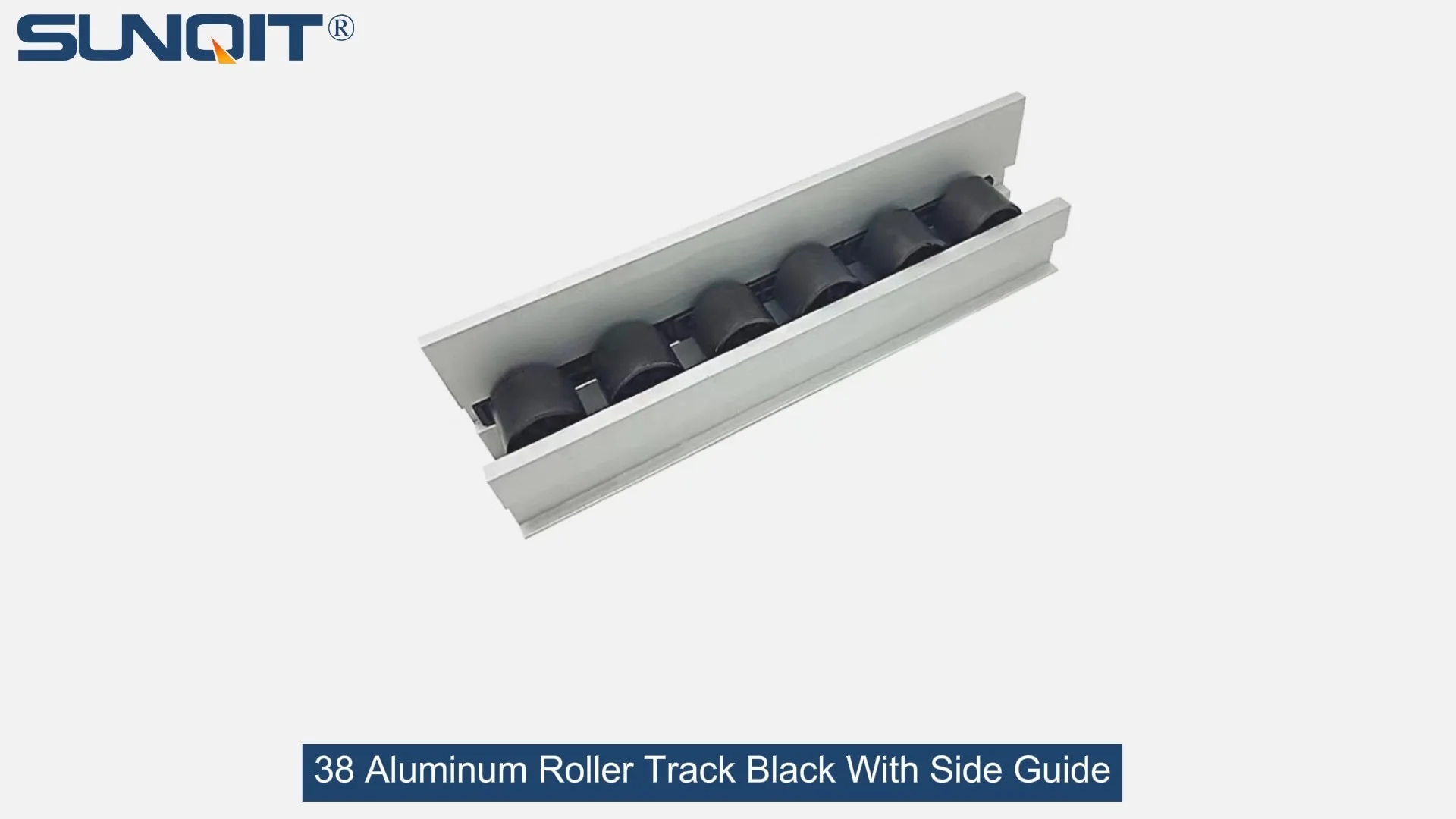
If you've ever walked through a busy manufacturing line or a well-organized warehouse, you've probably seen roller tracks in action—those sleek, functional systems that move parts and products from one place to another without fuss. Today, we're diving deep into one specific type: the 38 Aluminum Roller Track Black with Side Guide. This isn't just any track; it's a workhorse designed for flexibility, efficiency, and compatibility with modern lean system principles. Whether you're setting up a 3C assembly line for smartphones or optimizing a warehouse picking process, this track is a go-to choice for teams looking to cut waste and boost flow.
But what makes this track tick? It's all in the components—each piece plays a critical role in ensuring smooth, reliable movement. In this breakdown, we'll walk through every part of the 38 Aluminum Roller Track Black with Side Guide, from the aluminum profile body to the tiny end caps, explaining how they work together to keep your operations running like clockwork.
Component 1: 38mm Aluminum Roller Track Body
The backbone of this track is its body, made from high-quality aluminum extrusion profile—a material known for its strength, light weight, and versatility. Let's get into the specifics:
- Material & Finish: The body uses 6063-T5 aluminum alloy, a common choice for industrial profiles because of its excellent corrosion resistance and machinability. It's finished with black anodization, which adds a protective layer that resists scratches, wear, and rust. The black color isn't just for looks; it also helps hide minor dirt and scuffs, keeping the track looking clean even in busy environments.
- Dimensions: The track comes in standard lengths of 1m, 1.5m, and 2m (custom lengths are available too). Its width is 38mm—hence the name—and the height is 20mm. Along the top of the body, there are pre-drilled holes spaced every 50mm to hold the roller axles. On the sides, you'll find T-slots—small grooves that let you attach side guides and mounting brackets without drilling new holes.
- Function: This component does more than just hold the rollers. It provides a stable base for the entire system, distributes weight evenly across the track, and allows for easy adjustments thanks to the T-slots. Because it's made from aluminum, it's light enough to move around (great for reconfiguring production lines) but strong enough to handle loads up to 100kg per meter.
Component 2: Black ESD Rollers
Next up are the rollers—the parts that make the magic happen. These aren't ordinary plastic rollers; they're black ESD-coated rollers designed to protect sensitive components while ensuring smooth movement.
- Material: The rollers are made from nylon, a durable plastic that's resistant to impact and wear. The black coating is an ESD (electrostatic discharge) layer, which means it dissipates static electricity. This is crucial for industries like 3C assembly, where static can damage microchips or circuit boards.
- Specs: Each roller has a diameter of 30mm and is spaced exactly 50mm apart along the track. The spacing is intentional—too close, and you waste material; too far, and small products might get stuck between rollers. The rollers fit onto stainless steel axles, and they rotate 360 degrees with minimal friction.
- Function: The main job of these rollers is to let products slide easily from one end of the track to the other. But the ESD coating adds another layer of value: it prevents static buildup on the products, keeping them safe from damage. For example, if you're moving a smartphone screen along the track, the ESD roller ensures that no static charge transfers to the screen, which could cause dead pixels or other issues.

Component 3: Aluminum Side Guides
You might think side guides are an afterthought, but they're essential for keeping products on track (literally). The 38 Aluminum Roller Track Black with Side Guide uses aluminum side guides that are both functional and flexible.
- Material & Finish: Like the track body, the side guides are made from anodized aluminum. They have the same black finish as the track, so they blend in seamlessly. The anodization process gives them the same corrosion resistance as the body, so they'll last just as long.
- Dimensions: Each side guide is 15mm tall and 2mm thick. The height is enough to prevent most small to medium-sized products from falling off the track, but not so tall that it gets in the way of loading or unloading. The thickness ensures they're strong enough to withstand minor impacts from products.
- Installation & Function: The side guides attach to the T-slots on the track body using T-bolts and nuts. The best part? You can adjust their position along the track's width to fit different product sizes. For example, if you're moving small electronic components, you can set the guides to 50mm apart. If you switch to larger parts like power tools, you can widen the gap to 150mm—no need to replace the entire track. This flexibility is a core part of lean system principles, as it allows you to adapt quickly to changing production needs.

Component 4: Stainless Steel Axles
The rollers don't just float on the track—they're held in place by stainless steel axles. These small parts are easy to overlook, but they're critical for the track's reliability.
- Material: The axles are made from 304 stainless steel, which is rust-resistant and strong. This is important because the axles are exposed to dust, moisture, and occasional spills in industrial environments.
- Specs: Each axle is 4mm in diameter and 45mm long. The length is just enough to extend beyond the track body, so the rollers can rotate freely without rubbing against the sides. The diameter is perfectly sized to fit the holes in the track body and the center of the rollers.
- Function: The axles secure the rollers to the track body, ensuring they don't fall off or wiggle during use. They also allow the rollers to rotate smoothly—since stainless steel is a hard material, it doesn't wear down easily, so the axles will last for years with minimal maintenance.

Component 5: Adjustable Mounting Brackets
To use the track, you need to attach it to a frame—whether it's a lean pipe workstation, an aluminum profile shelf, or a conveyor system. That's where adjustable mounting brackets come in.
- Material: The brackets are made from aluminum alloy, which is light but strong enough to hold the track and its load. They have a black finish to match the track, so they look cohesive.
- Specs: Each bracket can support up to 50kg of weight. The angle is adjustable from 0 to 15 degrees—this is key for gravity flow systems, where you want products to move forward on their own without manual pushing or powered motors. The brackets attach to the T-slots on the track body and to the frame using T-bolts.
- Function: The brackets let you install the track at the perfect angle for your needs. For example, if you're using the track in a warehouse picking line, a 5-degree incline is enough to let boxes slide down to the packing station. If you're using it in a production line where products need to stop at each station, you can set the angle to 0 degrees (flat) and use a stopper to hold products in place. This adjustability makes the track versatile enough for almost any application.
Component 6: Black Plastic End Caps
Last but not least are the end caps. These small plastic parts might seem trivial, but they play three important roles:
- Dust Protection: The end caps cover the open ends of the track body, preventing dust, dirt, and small debris from getting inside. This is crucial because debris can clog the roller axles and cause the rollers to stick.
- Safety: The aluminum profile body has sharp edges at the ends. The end caps cover these edges, reducing the risk of cuts or scrapes for workers.
- Aesthetics: The end caps give the track a finished look, making it look more professional. This is important if you're using the track in a customer-facing area or a clean room environment.
- Material & Installation: The end caps are made from high-impact black plastic. They snap onto the ends of the track body—no tools needed. They're easy to remove if you need to clean the inside of the track or replace a roller.
How All Components Work Together
Now that we've covered each component, let's see how they fit together to create a functional track. Let's take a real-world example: setting up a track for assembling wireless earbuds.
First, you choose a 1.5m length of the 38mm aluminum track body. Next, you insert the stainless steel axles into the pre-drilled holes (every 50mm). Then, you snap the black ESD rollers onto each axle—they fit snugly, so no wiggling. After that, you attach the aluminum side guides using T-bolts, adjusting them to 80mm width to fit the earbud cases. Then, you add the black plastic end caps to both ends. Finally, you use the adjustable mounting brackets to attach the track to your lean pipe workstation. You set the bracket angle to 4 degrees—just enough for the earbud cases to slide from the assembly station to the testing station without manual help.
When the earbud case is placed on the track, the ESD rollers dissipate any static charge, protecting the sensitive electronics inside. The side guides keep the case aligned, so it doesn't tip over. The aluminum body supports the weight of the case, and the adjustable brackets ensure it moves at the right speed. This entire system works together to create a smooth, efficient flow—exactly what lean system principles are all about.
Another example: using the track as part of a conveyor system. If you need to move heavier products (like small appliances), you can attach multiple tracks together and add a powered motor. The aluminum profile body is strong enough to handle the load, and the side guides keep the products aligned. This setup reduces the need for manual labor, cutting down on waste and increasing productivity.
Applications of the 38 Aluminum Roller Track Black with Side Guide
This track is versatile enough to be used in almost any industrial setting. Let's look at some of the most common applications:
1. 3C Assembly Lines
The 3C industry (computers, communication, consumer electronics) relies heavily on this track. For example, in smartphone production lines, the track moves phone bodies from the soldering station to the screen attachment station. The ESD rollers protect the sensitive components, and the side guides keep the phone bodies aligned. This continuous flow reduces wait time and increases output.
2. Medical Equipment Production
Medical equipment like syringes or diagnostic tools requires precise handling. The 38 Aluminum Roller Track Black with Side Guide is perfect for this—its smooth movement ensures that delicate parts aren't damaged, and the ESD coating prevents static from interfering with sensitive electronic components in devices like blood glucose monitors.
3. Warehouse Logistics
In warehouses, this track is used in picking and packing lines. When a worker picks an item from a bin, they place it on the track, and it slides down to the packing station. This reduces the need for workers to carry items around, cutting down on motion waste (a key lean system principle). The adjustable brackets let you set the track to the perfect angle for different product weights.
4. Automotive Parts Manufacturing
Automotive parts like door handles or dashboard components are often moved using this track. The aluminum body is strong enough to handle the weight of these parts, and the side guides keep them from falling off. The track can be integrated into a larger conveyor system, moving parts from the molding station to the painting station.
Maintenance Tips for Longevity
To keep your 38 Aluminum Roller Track Black with Side Guide working well for years, follow these simple maintenance tips:
- Clean Regularly: Wipe the track body and rollers with a soft, dry cloth every week. Avoid using harsh chemicals or abrasive cleaners, as they can damage the anodized finish or ESD coating.
- Lubricate Rollers: Every 3 months, apply a small drop of light machine oil (like 3-in-1 oil) to each roller's bearing. Rotate the roller a few times to distribute the oil evenly. This keeps the rollers rotating smoothly.
- Check for Loose Parts: Every week, inspect the axles, side guides, and mounting brackets. If any parts are loose, tighten them with a wrench (but don't over-tighten—this can damage the aluminum profile).
- replace Worn Rollers: If a roller starts to stick or make noise, replace it immediately. To replace a roller, remove the axle (using a small screwdriver), take off the old roller, and snap on a new one. This is quick and easy, so it won't disrupt your operations.
- Store Properly: If you're not using the track for a long time, store it in a dry, cool place. Avoid stacking heavy items on top of it, as this can bend the aluminum body.
Why Choose This Track Over Others?
There are many roller tracks on the market, but the 38 Aluminum Roller Track Black with Side Guide stands out for several reasons:
- Flexibility: The adjustable side guides and mounting brackets let you adapt the track to different product sizes and angles.
- ESD Protection: The black ESD finish on the rollers and body protects sensitive electronic components from static damage.
- Durability: The aluminum profile body and stainless steel axles are built to last, even in busy industrial environments.
- Lean Compatibility: This track is designed to work with lean system principles, helping you reduce waste and boost efficiency.
- Easy Maintenance: The modular design makes it easy to clean, lubricate, and replace parts.
Whether you're setting up a new production line or optimizing an existing one, the 38 Aluminum Roller Track Black with Side Guide is a reliable, versatile choice. Its components work together to create a smooth, efficient flow—exactly what you need to keep your operations running at their best.