- Company Articles
- Products and Technology
- Product knowledge
- Structure of Gusset ALP 4040: Key Design Features and Components

Structure of Gusset ALP 4040: Key Design Features and Components
Related Product
Gusset ALP 4040
The 4040 bracket/Gusset is an external fastening method that creates a 90 degree connection. 4040 means this size is used for 40 series aluminum profile with a quick connection by bolt and nut. It is a lightweight bracket that requires no machining servic
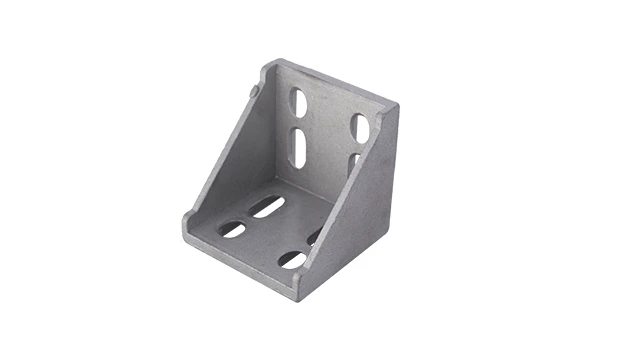
If you've ever assembled an aluminum frame—whether it's a workbench in a garage, a material rack in a factory, or a conveyor system on a production line—you know the frustration of wobbly joints. Even with the sturdiest aluminum profile, a weak connection can turn a solid structure into a shaky mess. That's where components like the Gusset ALP 4040 come in. Small but mighty, this unassuming piece of hardware is a game-changer for anyone who values stability, durability, and flexibility in their builds. In this article, we'll dive deep into what makes the Gusset ALP 4040 tick: its structure, design features, key components, and why it's become a staple in aluminum profile systems across industries.
Understanding Aluminum Profiles: The Backbone of Modern Assembly
Before we zoom in on the Gusset ALP 4040, let's take a step back and talk about aluminum profiles themselves. These extruded metal rails—with their signature T-slots running along the length—are the building blocks of countless structures, from simple shelving units to complex manufacturing workstations. What makes them so popular? For starters, aluminum is lightweight yet surprisingly strong, resistant to corrosion, and easy to work with. The T-slot design, meanwhile, allows for quick, tool-free adjustments: slide a nut into the slot, bolt on a bracket, and you're good to go. No welding, no drilling, no hassle.
But even the best aluminum profile needs help to form a rigid structure. That's where accessories like gussets, brackets, and connectors come into play. Think of them as the "glue" that holds the frame together—only instead of messy adhesives, they use mechanical strength to reinforce joints. And among these accessories, the Gusset ALP 4040 stands out for its ability to add stability without sacrificing flexibility. Designed specifically for 4040 aluminum profiles (those measuring 40mm x 40mm, a common size in industrial settings), this gusset is a favorite among engineers, manufacturers, and DIY enthusiasts alike.
Breaking Down the Structure of Gusset ALP 4040
At first glance, the Gusset ALP 4040 might look like a simple metal plate. But its structure is the result of careful engineering, designed to solve a specific problem: reinforcing right-angle joints between 4040 aluminum profiles. Let's break it down into its core elements.
Material: The Foundation of Strength
The Gusset ALP 4040 is typically made from 6063-T5 aluminum alloy, the same material used in most structural aluminum profiles. Why 6063-T5? For starters, it's lightweight—important for keeping overall frame weight down—yet has excellent tensile strength (around 180 MPa) and yield strength (110 MPa), meaning it can handle significant loads without bending or breaking. It's also highly extrudable, which allows for precise shaping during manufacturing, and it responds well to anodizing—a surface treatment that adds a protective layer, boosts corrosion resistance, and gives the gusset a clean, professional finish (usually silver or black).
Some manufacturers offer variations, like stainless steel gussets for high-moisture environments, but aluminum remains the go-to for most applications. It strikes the perfect balance of strength, weight, and cost, making the Gusset ALP 4040 accessible to everyone from small workshops to large factories.
Physical Dimensions: Precision Engineered for 4040 Profiles
The Gusset ALP 4040 isn't a one-size-fits-all component. Its dimensions are tailored to fit 4040 aluminum profiles like a glove. Let's talk numbers: a standard Gusset ALP 4040 measures roughly 80mm in length (along the hypotenuse of its triangular shape), with each "leg" (the sides that attach to the profiles) measuring 56mm. The thickness varies by manufacturer but is usually between 3mm and 5mm—thick enough to add rigidity, but thin enough to avoid bulking up the joint. The corners are rounded (typically with a 5mm radius) to prevent sharp edges, which is a nice safety touch, especially in environments where workers might brush against the frame.
Most importantly, the gusset features pre-drilled holes that align perfectly with the T-slots of 4040 profiles. These holes are usually spaced 30mm apart (matching the standard T-slot pitch) and sized to fit M5 or M6 bolts—common fasteners in aluminum profile assembly. This precision is key: misaligned holes would make installation a nightmare and weaken the joint, so manufacturers use CNC machining to ensure every hole is in exactly the right place.
Design: Triangular Shape, Maximum Reinforcement
The Gusset ALP 4040 is triangular, with two legs meeting at a 90-degree angle and a hypotenuse connecting them. This shape isn't arbitrary—it's a classic engineering solution for bracing. A triangle is the most stable geometric shape, as it resists deformation under load. When you attach the two legs of the gusset to perpendicular aluminum profiles (say, a vertical leg and a horizontal rail of a workbench), the hypotenuse acts as a brace, preventing the joint from "opening up" under stress. It's like adding a third side to a square, turning a wobbly rectangle into a rigid triangle.
Some gussets have a "stiffening rib"—a small ridge along the hypotenuse—that adds extra rigidity without increasing thickness. This is especially useful for larger gussets or applications where the joint will bear heavy loads, like supporting a workbench top loaded with machinery.

Key Design Features: What Makes Gusset ALP 4040 Stand Out?
Now that we understand its structure, let's explore the design features that make the Gusset ALP 4040 a top choice for aluminum profile assembly.
1. Universal Compatibility with 4040 Profiles
One of the Gusset ALP 4040's biggest selling points is its compatibility. It works with any standard 4040 aluminum profile, regardless of the manufacturer—whether you're using EU standard profiles, national standard profiles, or even custom extrusions with T-slots spaced 30mm apart. This universality is a huge plus for users: you don't need to worry about brand-specific parts. Just grab a Gusset ALP 4040, a few M6 bolts, and your 4040 profiles, and you're ready to build.
2. No-Drill Installation: Speed and Simplicity
Remember those pre-drilled holes we mentioned? They're not just for alignment—they eliminate the need to drill into the aluminum profile itself. Drilling is time-consuming, messy, and risks damaging the profile's structural integrity (a single hole can weaken the T-slot). With the Gusset ALP 4040, you simply slide T-nuts into the profile's T-slots, position the gusset over the nuts, and tighten the bolts. It takes minutes, even for beginners, and if you need to reposition the gusset later? Just loosen the bolts, slide it along the slot, and retighten. No permanent modifications, no wasted materials.
3. Load Distribution: Protecting the Profile
When you bolt a bracket directly to an aluminum profile, the load is concentrated on the small area around the bolt. Over time, this can cause the T-slot to deform, especially if the load is heavy or dynamic (like a workbench that's constantly being bumped or vibrated). The Gusset ALP 4040 solves this by spreading the load across a larger surface area. Its legs sit flush against the profile's walls, distributing the force from the bolt over the entire contact area. This reduces stress on the T-slot,ing the life of the profile and preventing costly replacements.
4. Low Profile: Aesthetic and Practical
Unlike bulky angle brackets, the Gusset ALP 4040 has a slim design—usually just 3-5mm thick—that sits almost flush against the profile. This is a big deal for applications where space is tight, like inside a cabinet or under a workbench. It also gives the frame a clean, uncluttered look, which matters in settings where appearance counts (think retail displays or office furniture). And because it's made from the same material as the profile, it blends in seamlessly—no mismatched metals or jarring color contrasts.

Components That Work with Gusset ALP 4040
The Gusset ALP 4040 doesn't work alone. To form a complete joint, you'll need a few key aluminum profile accessories. Let's meet the team.
T-Slot Nuts: The Unsung Heroes
T-slot nuts are small, T-shaped nuts that slide into the T-slot of the aluminum profile. They're threaded on the inside, allowing you to bolt the gusset (or any accessory) to the profile. For Gusset ALP 4040, M6 T-slot nuts are standard, though some gussets use M5 for lighter applications. Look for nuts with plastic inserts or spring-loaded balls—these "grip" the slot, preventing the nut from spinning while you tighten the bolt. Trust us, this saves a lot of frustration during installation.
Bolts and Washers: Keeping It Tight
You'll need socket head cap screws (SHCS) to attach the gusset to the T-slot nuts. M6 x 16mm or M6 x 20mm bolts are typical—long enough to pass through the gusset and thread into the nut, but not so long that they protrude through the other side of the profile. Adding a flat washer under the bolt head helps distribute pressure, protecting the gusset's surface from indentation. For extra security, some users add a lock washer or apply thread-locking adhesive (like Loctite) to prevent bolts from loosening due to vibration.
End Caps: The Finishing Touch
While not strictly necessary for the gusset's function, end caps are a popular add-on. These plastic or rubber caps snap onto the ends of aluminum profiles, hiding sharp edges, preventing dust and debris from entering the T-slots, and giving the frame a polished look. They come in a variety of colors (black, white, gray) to match the gusset or profile, and they're cheap—usually less than a dollar each. Think of them as the "cherry on top" of your build.
How Gusset ALP 4040 Compares to Other Gussets
The Gusset ALP 4040 isn't the only gusset on the market. There are smaller versions (like the Gusset ALP 3030 for 30mm x 30mm profiles) and larger ones (Gusset ALP 8080 for heavy-duty 80mm x 80mm frames). To see what makes the 4040 version special, let's compare it to two common alternatives: the Gusset ALP 3030 and the "L-bracket" style connector.
| Feature | Gusset ALP 4040 | Gusset ALP 3030 | L-Bracket (Standard Steel) |
|---|---|---|---|
| Compatible Profile Size | 40mm x 40mm | 30mm x 30mm | Variable (fits multiple sizes) |
| Material | 6063-T5 Aluminum | 6063-T5 Aluminum | Mild Steel (often zinc-plated) |
| Weight (per unit) | ~45g (5mm thick) | ~25g (5mm thick) | ~80g (same thickness) |
| Max Load Capacity (per joint) | Up to 500kg (static) | Up to 300kg (static) | Up to 600kg (static) |
| Installation Time | 2-3 minutes | 2-3 minutes | 5-7 minutes (requires drilling) |
| Corrosion Resistance | High (anodized aluminum) | High (anodized aluminum) | Medium (zinc plating can chip) |
| Best For | Medium-to-heavy loads, 4040 profiles | Light-to-medium loads, 3030 profiles | Heavy loads, non-aluminum frames |
As the table shows, the Gusset ALP 4040 hits a sweet spot: it's lighter than steel L-brackets, easier to install, and more corrosion-resistant, while offering enough strength for most industrial applications. It's the Goldilocks of gussets—not too big, not too small, just right for 4040 profiles.
Real-World Applications: Where Gusset ALP 4040 Shines
Now that we know what the Gusset ALP 4040 is and how it works, let's look at where it's actually used. Spoiler: it's everywhere.
Workbenches: The Heart of the Workshop
Workbenches are perhaps the most common application for Gusset ALP 4040. Whether it's a assembly workbench in a electronics factory, a lab bench in a university, or a hobbyist's workbench in a garage, stability is key. A typical workbench frame uses 4040 profiles for the legs and rails, with Gusset ALP 4040 at each corner to keep the frame from wobbling. Add a plywood or aluminum top, and you've got a sturdy surface that can handle tools, parts, and even heavy machinery without shaking. Some workbenches use multiple gussets per joint (one on each side of the profile) for extra rigidity—overkill for light use, but essential for industrial settings.
Lean Systems: Efficiency in Manufacturing
In lean manufacturing, every second counts. Lean systems—like kanban boards, material racks, and flow racks—need to be flexible (to adapt to changing production needs) and durable (to withstand constant use). Gusset ALP 4040 is a favorite here because it allows teams to build and reconfigure frames quickly. For example, a material rack used to store parts on an assembly line might start with three shelves, but if production ramps up, workers can add a fourth shelf by bolting on new profiles and gussets—no need to buy a whole new rack. This flexibility reduces waste and keeps production lines running smoothly.
Conveyor Frames: Moving Materials with Confidence
Conveyor systems rely on rigid frames to keep belts, rollers, and tracks aligned. Even a small amount of flex can cause jams, slow down production, or damage products. Gusset ALP 4040 reinforces the joints of conveyor frames, ensuring they stay straight and stable even when loaded with heavy boxes or parts. And because aluminum is lightweight, the gusset helps keep the overall conveyor weight down, reducing strain on motors and making installation easier (no need for heavy lifting equipment).
Tips for Installing Gusset ALP 4040 Like a Pro
Installing Gusset ALP 4040 is simple, but a few tips can make the process even smoother—and ensure your joint is as strong as possible.
- Clean the T-slots first. Dust, oil, or metal shavings in the slot can prevent T-nuts from sliding smoothly. Wipe the slot with a rag or blast it with compressed air before installing the nuts.
- Use the right bolt length. Bolts that are too short won't thread into the nut properly; too long will stick out the other side of the profile, creating a hazard. M6 x 16mm bolts work for most 4040 profiles (which are ~1.5mm thick walls), but measure your profile first to be sure.
- Don't overtighten. Aluminum is strong, but it's also soft—overtightening bolts can strip the threads or warp the gusset. Aim for a snug fit, then stop. A torque wrench set to 5-7 Nm is ideal for M6 bolts.
- Reinforce both sides for heavy loads. For joints that will bear more than 300kg, install a gusset on both sides of the profile. This distributes the load even further and reduces stress on the T-slots.
- Check for alignment. Before tightening the bolts, use a square to ensure the profiles are at a perfect 90-degree angle. A misaligned joint will weaken the structure and look unprofessional.
Why Suppliers Love Gusset ALP 4040
It's not just users who benefit from the Gusset ALP 4040—aluminum profile suppliers love it too. For starters, it's a high-margin accessory: cheap to manufacture, easy to stock, and in constant demand. Because it's compatible with standard 4040 profiles, suppliers don't need to carry specialized inventory—just a few boxes of gussets, T-slot nuts, and bolts, and they can meet customer needs. And since it's a "consumable" (users often buy multiple gussets per project), it encourages repeat business. For suppliers looking to stand out, offering Gusset ALP 4040 (and expertise on how to use it) is a great way to add value and build customer loyalty.
The Future of Gusset Design: What's Next?
As aluminum profile systems evolve, so too will accessories like the Gusset ALP 4040. We're already seeing trends like 3D-printed gussets for custom shapes (though these are still niche), and gussets with integrated sensors (to monitor joint stress in real time) for smart manufacturing. But for most users, the basics will remain the same: strength, compatibility, and ease of use. And as long as 4040 aluminum profiles are a staple in industrial and DIY projects, the Gusset ALP 4040 will be right there with them—quietly reinforcing joints, solving problems, and making builds better.
Final Thoughts: Small Part, Big Impact
The Gusset ALP 4040 might not be the most glamorous component in your aluminum profile toolkit, but it's one of the most important. By reinforcing joints with strength, precision, and flexibility, it turns ordinary frames into extraordinary structures—workbenches that don't wobble, lean systems that adapt to change, and conveyor frames that keep production moving. Whether you're a seasoned engineer or a first-time builder, this little gusset is proof that great things come in small packages. So the next time you're assembling an aluminum frame, give it a try. Your joints (and your sanity) will thank you.