- Company Articles
- Products and Technology
- Product knowledge
- Structure of Three Way Lean Pipe Joint: Materials & Design Principles

Structure of Three Way Lean Pipe Joint: Materials & Design Principles
Related Product
Three Way Lean Pipe Joint
Three way lean pipe joint for 3 pcs 28MM lean pipe connection in straight angle, which used widely in workbench, flow rack, hand trolley frame connection.
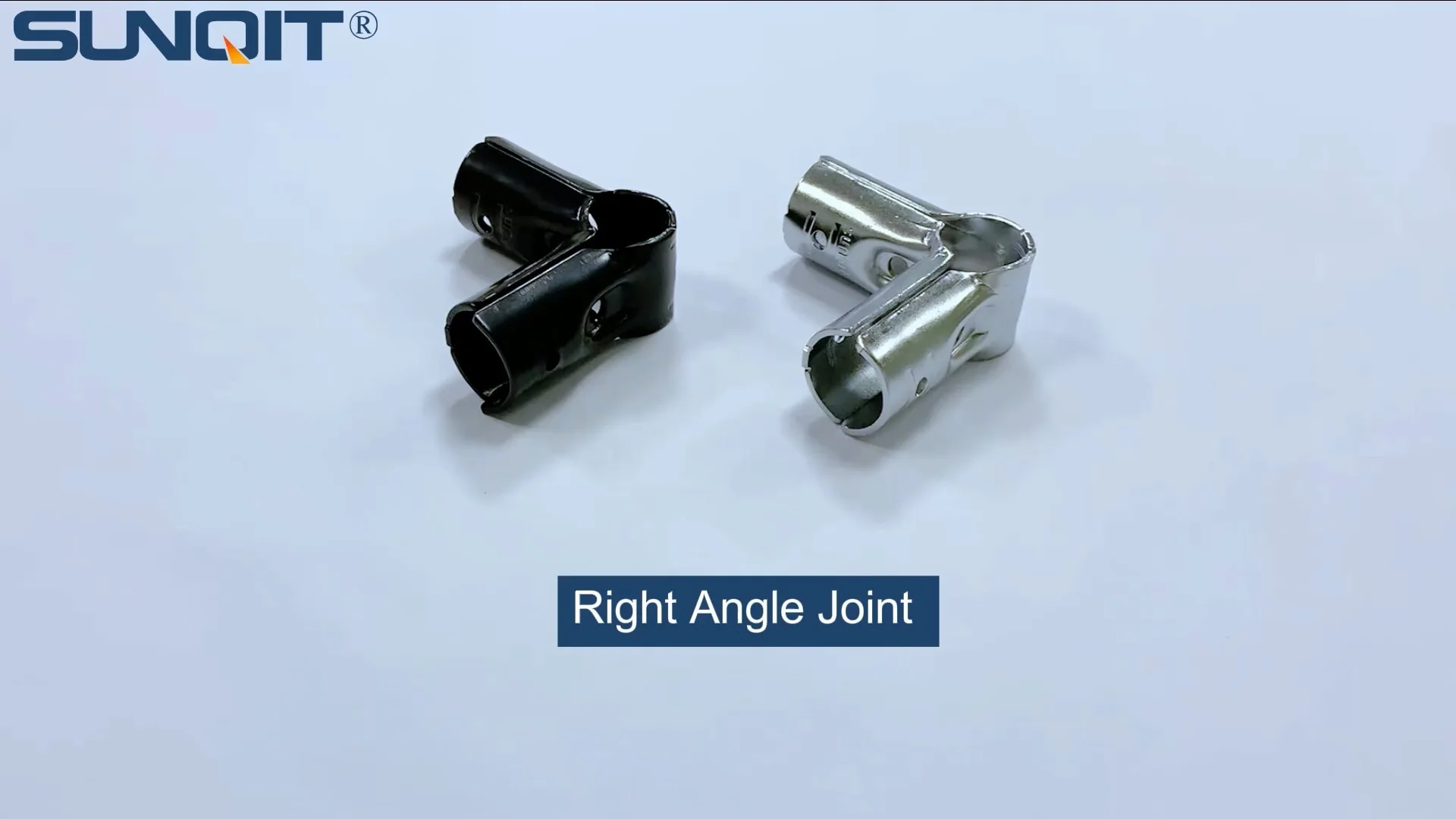
Walk into any modern manufacturing facility, and you'll notice a common theme: flexibility. Factories today don't just produce goods—they adapt, evolve, and reconfigure on the fly to meet shifting demands. At the heart of this adaptability lies a humble yet powerful tool: the lean pipe system. And if lean pipe systems are the backbone of flexible production, then the three way lean pipe joint is the unsung hero holding it all together. These small, unassuming components are what let teams build, break down, and rebuild workbenches, flow racks, and material trolleys in hours (or even minutes), all while staying true to lean manufacturing's core goal: eliminating waste.
But what exactly makes a three way lean pipe joint so essential? Why not just use screws, welds, or glue? To answer that, we need to dive into its structure, the materials that give it strength, and the design principles that make it a cornerstone of efficient production. Whether you're a plant manager looking to optimize your workflow, a small business owner setting up a new assembly line, or just curious about the mechanics behind factory organization, understanding these joints will change how you see the equipment on your shop floor.
What Even Is a Three Way Lean Pipe Joint?
Let's start with the basics. A three way lean pipe joint is a connector designed to link three lean pipes (or tubes) at once, forming stable, adjustable structures. Picture a T-junction in a pipe system, but instead of carrying water or gas, these joints carry the weight of tools, materials, and sometimes even entire workstations. Unlike fixed connectors, they're built to be assembled and disassembled by hand, often without special tools, which is why they're a favorite in lean environments where change is constant.
Think about it this way: If you've ever built something with tinker toys or erector sets, you get the idea. Each joint is a hub, and the pipes are the spokes. But unlike toys, these joints are engineered to handle real-world stress—like the daily wear of parts sliding down a flow rack or the vibrations of a conveyor belt. They're the reason a team can reconfigure a production line from assembling smartphones in the morning to testing circuit boards in the afternoon, without calling in a construction crew.
Breaking Down the Anatomy: What's Inside a Three Way Joint?
At first glance, a three way lean pipe joint might look like a simple plastic or metal nub with three holes. But take a closer look, and you'll see it's a marvel of functional design. Let's break down its key components:
1. The Body: The Backbone of the Joint
The main structure, or "body," of the joint is usually a single, solid piece—no weak seams or glued parts here. Its shape depends on the manufacturer, but most are rounded or hexagonal to make gripping easier during assembly. The body houses the connection points (the ports where pipes insert) and often includes internal threading or locking mechanisms to keep pipes secure once inserted.
2. Connection Ports: Where Pipes Meet
Three ports, each sized to fit standard lean pipe diameters (usually 28mm or 30mm for steel pipes, or 20mm for aluminum lean pipe), extend from the body at 90-degree angles (for T-shapes) or 120-degree angles (for Y-shapes). The inner walls of these ports are critical: some have rubber gaskets for a tighter grip, while others use knurled edges to bite into the pipe's surface, preventing slippage under load.
3. Locking Mechanisms: Keeping It All Together
Here's where the "lean" magic happens. Most three way joints use a simple yet effective locking system: a setscrew (a small screw that tightens against the pipe) or a cam lever (a lever you flip to clamp the pipe in place). Setscrews are common in metal joints—twist them with a hex key, and they dig into the pipe to hold it steady. Cam levers, on the other hand, are tool-free: flip the lever up, slide the pipe in, flip it down, and you're done. This is a game-changer for quick reconfigurations—no hunting for a screwdriver when you need to adjust a workbench height.
4. Rotational Features (In Some Models)
Some advanced joints, like the internal rotatary aluminum joint (a popular option for aluminum systems), add a rotating component. This lets one or more ports swivel slightly, so pipes can be angled beyond the standard 90 degrees. Imagine needing a workbench shelf that tilts to 45 degrees for easier access—rotational joints make that possible without custom fabrication.

Materials: Why the "Right Stuff" Matters
A joint is only as good as the material it's made from. Manufacturers choose materials based on where the joint will be used—whether it's a dry assembly line, a damp warehouse, or a cleanroom with strict ESD (electrostatic discharge) requirements. Let's look at the most common options:
| Material | Best For | Pros | Cons |
|---|---|---|---|
| Aluminum (Aluminum Lean Pipe) | Lightweight structures, cleanrooms, ESD-sensitive areas | Light, corrosion-resistant, recyclable, compatible with aluminum profile accessories | Lower load capacity than steel, pricier upfront |
| Steel (Stainless Steel Pipe Series) | Heavy-duty workbenches, outdoor use, high-weight loads | Super strong, durable, affordable | Heavy, prone to rust without coating |
| PE-Coated Steel (1.5mm PE Coated Lean Pipe) | General assembly lines, dry indoor environments | Rust-resistant, easy to clean, gentle on delicate parts | Coating can chip if hit hard, not ideal for extreme temperatures |
| Plastic (Reinforced Nylon) | Light loads, temporary structures, ESD-safe zones | ESD-neutral, cheap, lightweight | Not for heavy use, can warp in heat |
Aluminum joints, for example, are a top pick in electronics manufacturing. They're lightweight, so workers can reposition workbenches without straining, and they don't conduct static electricity—critical when handling sensitive components like circuit boards. On the flip side, a car parts factory might opt for stainless steel joints. They need to support heavy engine parts, and stainless steel's resistance to oil, grease, and corrosion ensures the structures last for years.
Then there's the PE coated lean pipe option—steel pipes with a plastic coating. These are perfect for environments where parts slide along surfaces, like flow racks. The plastic coating reduces friction, so boxes glide smoothly, and it also protects the pipes from scratches. It's a small detail, but it makes a big difference in how efficiently materials move through the production line.

Design Principles: Why These Joints Work So Well
Great design isn't just about looking good—it's about solving problems. Three way lean pipe joints are designed with three key principles in mind, all tied to lean manufacturing's focus on efficiency and adaptability:
1. Modularity: Build What You Need, When You Need It
Lean manufacturing hates waste, and "overbuilding" is a big waste. Three way joints let you build exactly the structure you need—no extra parts, no unused space. Need a 3-tier material rack for small components? Use three way joints to connect vertical pipes at each level. A month later, if you need to add a fourth tier? Just insert another joint and pipe. It's like building with digital blocks, but in the physical world.
This modularity also cuts down on storage costs. Instead of keeping pre-built shelves or workbenches in a warehouse (which take up space and often get damaged), you store pipes and joints—small, stackable, and easy to organize. When a new project comes in, you pull out the parts and assemble on the spot.
2. Load Distribution: Strength Without Overcomplication
Ever tried to balance a heavy box on a flimsy table? It wobbles, creaks, and eventually collapses. Three way joints prevent that by distributing weight evenly across all connected pipes. The secret is in their geometry: the three ports are positioned so that force from a heavy load (say, a toolbox on a shelf) spreads out through the joint and into the vertical and horizontal pipes, rather than on a single point.
Engineers test these joints rigorously—some can handle up to 500kg of weight per connection! That's why you'll see them in automotive plants, where they support heavy welding equipment, and in warehouses, where they hold pallets of goods. It's not just about strength, though; it's about predictability. You can trust that a well-designed joint will behave the same way every time, which is crucial for safety.
3. Ease of Use: No Expertise Required
Welding a metal frame requires a skilled worker, protective gear, and time. Assembling a lean pipe structure with three way joints? Any team member can do it after a 10-minute demo. Most joints tighten by hand or with a simple hex key, and since they're color-coded (some manufacturers use different colors for aluminum vs. steel joints), there's no guessing which parts go together.
This ease of use reduces downtime, too. If a joint wears out or breaks, you don't need to shut down the line for hours while a repair crew arrives. Just grab a new joint, swap it out, and you're back to production. It's the difference between a minor hiccup and a major delay.

Where You'll Find These Joints in Action
Three way lean pipe joints aren't just for big factories. They're everywhere production happens, from small workshops to multinational plants. Here are a few common applications:
Workbenches: The Heart of Assembly Lines
Most factory workbenches are built with lean pipes and three way joints. They're customizable—add a shelf for tools, a pegboard for supplies, or even a conveyor belt on one side. And when a new product comes in that requires a taller or wider workspace? Loosen the joints, adjust the pipes, and tighten them back up. No need to buy a whole new bench.
Flow Racks: Keeping Materials Moving
Flow racks use gravity to slide materials from the back to the front, so workers always take the oldest items first (a lean practice called "first in, first out"). Three way joints form the rack's frame, while roller tracks (another key accessory in the lean pipe and accessories family) line the shelves. The joints ensure the rack stays stable even as boxes slide down, preventing jams and spills.
Turnover Trolleys: Moving Materials Safely
Trolleys built with lean pipes and three way joints are lightweight but tough. They're used to move parts from one station to another, and their modular design means you can add dividers, bins, or even casters (wheels) for easy mobility. Since they're easy to clean, they're also popular in food processing or pharmaceutical plants where hygiene is critical.
Choosing the Right Supplier: It's About More Than Price
You could buy three way lean pipe joints from the cheapest online store, but that's a risky move. A weak joint can collapse, damaging materials or injuring workers. So what should you look for in a lean pipe supplier ?
First, check their material quality. A good supplier will share test reports—like load-bearing capacity or corrosion resistance—for their joints. If they can't prove the joints meet industry standards, walk away. Second, ask about compatibility. Lean pipe systems work best when all parts (pipes, joints, accessories) are from the same supplier, but if you mix brands, make sure the joints fit standard pipe diameters.
Third, consider their range of lean pipe and accessories . A supplier that only sells joints might not have the roller tracks, casters, or workbench tops you need later. It's better to partner with someone who offers a full suite of products—you'll save time and ensure everything works together seamlessly.
Wrapping Up: The Small Joint That Makes Big Changes
Three way lean pipe joints might not be the flashiest part of a factory, but they're one of the most impactful. They turn rigid, fixed workspaces into dynamic, adaptable environments where change is not just possible, but easy. By focusing on smart materials, thoughtful design, and lean principles, these joints help teams produce more, waste less, and stay ahead in a world where manufacturing never stands still.
So the next time you walk through a factory, take a second look at the workbenches, racks, and trolleys. Chances are, there's a three way lean pipe joint holding them together—quietly, reliably, and always ready for whatever the next production challenge brings.