- Company Articles
- Products and Technology
- Product knowledge
- Structure of Two Way Lean Pipe Joint: How It Connects Lean Pipes Effectively

Structure of Two Way Lean Pipe Joint: How It Connects Lean Pipes Effectively
Related Product
Two Way Lean Pipe Joint
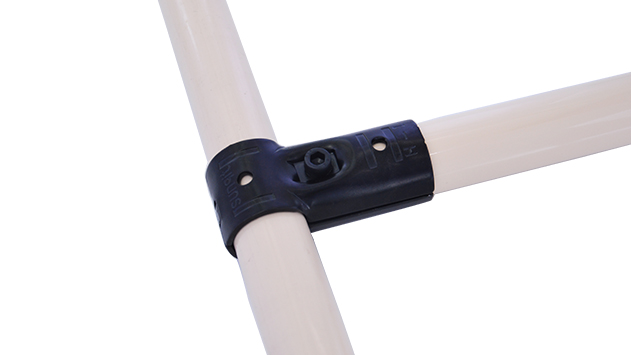
Two way lean pipe joint for 2 pcs 28MM lean pipe connection in straight angle, which used widely in workbench, flow rack, hand trolley frame connection.
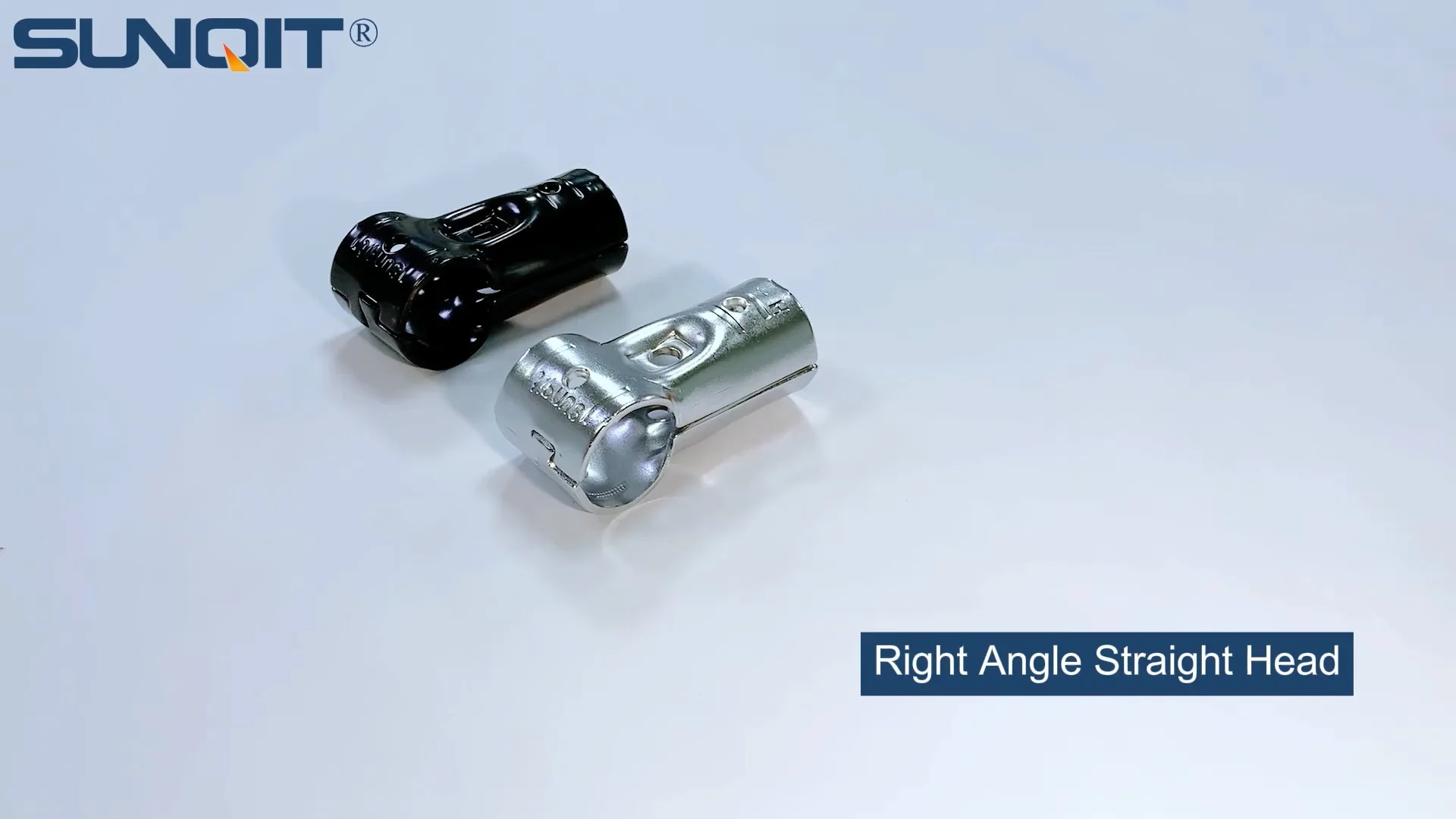
In the world of manufacturing and production, efficiency isn't just a buzzword—it's the backbone of success. Every tool, every process, and every component plays a role in keeping operations running smoothly, reducing waste, and ensuring teams can adapt to changing demands. Among the unsung heroes of this ecosystem are lean pipes and their accompanying accessories, which form the building blocks of modular, flexible workspaces. Today, we're diving deep into one of these critical components: the two way lean pipe joint. It might seem small, but this unassuming connector is what turns simple tubes into robust, customizable structures that power everything from assembly lines to warehouse racks. Let's explore its structure, how it works, and why it's indispensable in lean systems.
Understanding Lean Pipes: The Backbone of Modular Workspaces
Before we zoom in on the two way lean pipe joint, let's take a step back to appreciate the bigger picture: lean pipes themselves. Also known as "lean tubes," these are hollow, cylindrical tubes typically made from steel, aluminum, or plastic-coated materials. They're lightweight, durable, and designed to be easily assembled and reconfigured—traits that align perfectly with the principles of lean manufacturing, which prioritize minimizing waste and maximizing flexibility.
Lean pipes come in various materials to suit different environments. For example, steel pipes are favored for heavy-duty applications, while aluminum lean pipes shine in settings where corrosion resistance or reduced weight is key. Plastic-coated lean pipes, on the other hand, are ideal for environments where static control (like ESD workbenches) or surface protection is necessary. But regardless of the material, lean pipes alone are just tubes—their true power lies in how they're connected. That's where lean pipe accessories, especially joints, enter the picture.
What Is a Two Way Lean Pipe Joint?
At its core, a two way lean pipe joint is a specialized connector designed to link two lean pipes together at a specific angle—most commonly 90 degrees, though some designs allow for adjustability. Think of it as the "elbow" of the lean pipe world, but with a mechanical twist that makes assembly and disassembly a breeze. Unlike welded connections, which are permanent and rigid, two way lean pipe joints create semi-permanent bonds that can be loosened, repositioned, or disassembled entirely when needs change. This flexibility is why lean systems relying on these joints have become a staple in industries ranging from automotive to electronics manufacturing.
But not all joints are created equal. The two way variant is just one of many types, including three way, four way, fixed, and rotatory joints. Each serves a unique purpose, but the two way joint is perhaps the most versatile, forming the basic "L" or "T" shapes that are the foundation of most structures. Now, let's break down its structure to understand how it achieves this.
Anatomy of a Two Way Lean Pipe Joint: Key Components and Design
To appreciate how a two way lean pipe joint connects lean pipes effectively, we need to examine its parts. While designs can vary slightly between manufacturers, most two way joints share a few core components that work together to create a secure, stable connection.
1. The Body: The Joint's "Skeleton"
The body of the two way lean pipe joint is typically made from metal—often steel or aluminum—chosen for its strength and durability. It's shaped like a short, angled tube with two open ends (the "arms") where the lean pipes insert. The angle between these arms is usually 90 degrees, but some models offer adjustable angles (e.g., 45 to 135 degrees) for more complex structures. The body's thickness and material depend on the intended load; heavier-duty joints for industrial workbenches or material racks will have thicker walls, while lighter joints for temporary structures may use thinner materials.
2. Clamping Mechanism: The "Grip" That Holds It All Together
The magic of the two way lean pipe joint lies in its clamping mechanism. Unlike glue or welding, which bond materials chemically or metallurgically, this joint uses mechanical pressure to grip the lean pipes. Here's how it works: each arm of the joint has a small hole drilled through its wall, through which a screw or bolt (often a hex bolt or thumbscrew) is inserted. When tightened, this screw presses against the lean pipe inside the joint, creating friction that holds the pipe in place. Some designs include a metal plate or "gripper" at the end of the screw to distribute pressure evenly, preventing the pipe from denting or slipping.
In higher-quality joints, the inner surface of the body may also have ridges or serrations. These tiny bumps dig into the outer surface of the lean pipe when the screw is tightened, increasing friction and making the connection even more secure. It's a simple design, but it's surprisingly effective—so much so that properly tightened two way joints can support hundreds of pounds without budging.
3. Base or Mounting Plate (Optional): For Added Stability
Some two way lean pipe joints come with an additional base or mounting plate, which allows the joint to be attached to a workbench, floor, or wall. This is especially useful for structures like material racks or assembly stations where one end of the pipe needs to be anchored. The plate is usually welded or bolted to the joint's body and has pre-drilled holes for screws or anchors, ensuring the entire structure stays grounded.

How the Two Way Lean Pipe Joint Connects Lean Pipes: Step-by-Step
Now that we understand the joint's structure, let's walk through how it actually connects two lean pipes. The process is surprisingly straightforward, requiring no special tools (in most cases) and taking just a few minutes—another reason why lean systems are so popular for rapid reconfiguration.
Step 1: Prepare the Lean Pipes
Start by cutting the lean pipes to the desired length using a pipe cutter or hacksaw. For plastic-coated pipes, be careful not to nick the coating, as this can expose the metal underneath and lead to corrosion. Once cut, deburr the ends to remove any sharp edges—this ensures the pipes slide smoothly into the joint and prevents snags or injuries during assembly.
Step 2: insert Pipes into the Joint
Take the two way lean pipe joint and slide one lean pipe into each arm of the joint. Push the pipes in until they bottom out (or until they reach the desired length, if you're building a structure with overhangs). For angled joints, make sure the pipes are aligned correctly—e.g., one vertical and one horizontal for a 90-degree "L" shape.
Step 3: Tighten the Clamping Screws
Using a wrench or screwdriver (depending on the screw type), tighten the clamping screws on each arm of the joint. Start with one screw, turning it until you feel resistance, then switch to the other to ensure even pressure. Avoid over-tightening, as this can strip the threads or damage the pipe coating. The goal is to create enough friction that the pipes don't rotate or slide when pressure is applied—you should be able to shake the structure gently without any movement.
Step 4: Test and Adjust
Once the joint is tightened, give the connected pipes a gentle tug or shake to test stability. If they wobble, loosen the screws slightly, reposition the pipes, and retighten. This step is crucial, especially for load-bearing structures like workbenches or material racks, where a loose joint could lead to accidents or damage.

Why It Works: The Science of Friction and Mechanical Advantage
At first glance, the two way lean pipe joint's design seems almost too simple to be effective. How can a single screw pressing against a pipe create enough force to hold up heavy equipment or stacks of materials? The answer lies in friction and mechanical advantage.
Friction is the resistance that occurs when two surfaces rub against each other. When you tighten the joint's screw, it presses the gripper plate (or the screw itself) into the lean pipe, creating friction between the joint's inner wall, the gripper, and the pipe's outer surface. The serrations or ridges on the joint's inner wall amplify this friction by increasing the surface area of contact and "digging in" to the pipe's surface (or coating), preventing slippage.
Mechanical advantage comes into play with the screw itself. A screw is essentially an inclined plane wrapped around a cylinder, which allows you to apply a small amount of force over a long distance (turning the screw) to generate a large amount of force over a short distance (the clamping pressure). This is why even a small hex bolt can create enough pressure to hold hundreds of pounds when tightened properly.
Applications: Where Two Way Lean Pipe Joints Shine
Two way lean pipe joints are everywhere in manufacturing and warehousing, though you might not notice them at first glance. Their versatility makes them ideal for building a wide range of structures, each tailored to specific needs. Here are a few common applications:
1. Workbenches: The Heart of Assembly Lines
Workbenches are the workhorses of production facilities, and two way lean pipe joints are what make them customizable. By connecting vertical and horizontal lean pipes with two way joints, teams can build benches of varying heights, widths, and configurations—adding shelves, tool holders, or ESD (electrostatic discharge) surfaces as needed. When a new product line is introduced, the joints can be loosened, and the bench reconfigured in hours, not days.
2. Material Racks and Flow Racks: Organizing Inventory Efficiently
In warehouses and stockrooms, material racks need to maximize space while keeping items accessible. Two way joints help build multi-tiered racks where each shelf is supported by vertical pipes connected to horizontal beams. For flow racks, which use gravity to feed materials to the front, two way joints angle the horizontal pipes slightly downward, ensuring items glide smoothly to where they're needed.
3. Turnover Trolleys: Moving Materials with Ease
Turnover trolleys (or "push carts") are essential for moving parts between workstations. Their frames are often built with lean pipes and two way joints, which balance strength and lightweight design. The joints allow for customizing the trolley's size—adding side rails, shelves, or bins—to fit specific materials, from small components to large assemblies.
4. Safety Barriers and Guardrails
In busy facilities, safety is paramount. Two way lean pipe joints are used to build temporary or permanent guardrails around machinery, walkways, or loading docks. The modular design means barriers can be extended, shortened, or repositioned as the layout changes, without the need for welding or heavy construction.
Comparing Two Way Lean Pipe Joints to Other Joint Types
While the two way lean pipe joint is versatile, it's not the only option. Let's compare it to other common joint types to see when it's the best choice:
| Joint Type | Pipes Connected | Common Angles | Best For | Pros | Cons |
|---|---|---|---|---|---|
| Two Way Lean Pipe Joint | 2 | 90° (adjustable: 45°–135°) | Basic structures (L-shapes, T-shapes), workbenches, simple racks | Simple to use, lightweight, affordable | Limited to 2 pipes; not ideal for complex intersections |
| Three Way Lean Pipe Joint | 3 | 90° (e.g., two horizontal, one vertical) | Multi-tiered racks, corner supports, complex workstations | Connects more pipes; builds 3D structures | Bulkier than two way joints; higher cost |
| Fixed 90° Joint | 2 | Fixed 90° (non-adjustable) | Structures requiring precise angles (e.g., square frames) | Extra stability; no angle slippage | Not adjustable; less flexible for reconfiguration |
| Rotatory Joint | 2 | 360° rotating | Adjustable work surfaces, swing arms, movable components | Allows rotation; highly flexible | Less stable under heavy loads; more complex maintenance |
As the table shows, two way lean pipe joints excel in simplicity and flexibility, making them the go-to choice for most basic to moderately complex structures. They're affordable, easy to install, and compatible with standard lean pipes, which is why they're a staple in lean system design.
Maintenance Tips: Keeping Your Joints (and Structures) Strong
Like any tool, two way lean pipe joints require basic maintenance to ensure they last and perform reliably. Here are a few tips to keep them in top shape:
- Check for Loose Screws Regularly: Vibrations from machinery or frequent use can loosen screws over time. Inspect joints monthly (or weekly for high-load structures) and retighten as needed.
- Clean and Lubricate (If Needed): For joints with moving parts (e.g., adjustable-angle models), wipe away dust and debris, and apply a small amount of lubricant (like machine oil) to prevent rust and ensure smooth movement.
- replace Worn Components: If a screw strips, a gripper plate bends, or the joint's body cracks, replace it immediately. Using damaged joints puts your structure—and your team—at risk.
- Avoid Overloading: Every joint has a weight limit. Check the manufacturer's specs and never exceed the recommended load, as this can warp the joint or strip the screws.
Choosing the Right Two Way Lean Pipe Joint: Key Considerations
Not all two way lean pipe joints are created equal, and choosing the right one depends on your specific needs. Here are a few factors to keep in mind:
1. Material
Steel joints are strong and affordable but prone to rust in humid environments. Aluminum joints are lighter, corrosion-resistant, and ideal for cleanrooms or food-processing facilities. Plastic-coated steel joints offer a balance of strength and rust resistance, making them versatile for general use.
2. Load Capacity
Check the joint's load rating (usually listed in pounds or kilograms) to ensure it can support your intended use. A joint meant for a lightweight shelf won't hold up a heavy workbench with tools and equipment.
3. Pipe Compatibility
Lean pipes come in standard diameters (e.g., 28mm, 30mm, or 40mm). Make sure the joint's arm size matches your pipe diameter—an ill-fitting joint will be loose and unstable.
4. Adjustability
If you need to build structures with non-90-degree angles, opt for an adjustable two way joint. Fixed-angle joints are more stable but less flexible.
Conclusion: The Small Joint That Powers Big Efficiency
The two way lean pipe joint may be small, but its impact on manufacturing and production is enormous. By enabling quick, secure connections between lean pipes, it transforms simple tubes into modular, adaptable structures that grow and change with your business. Its simple yet effective design—relying on friction, mechanical advantage, and durable materials—makes it a cornerstone of lean systems, where flexibility and efficiency are non-negotiable.
Whether you're building a workbench for a new assembly line, a material rack for inventory, or a turnover trolley for moving parts, the two way lean pipe joint is there, quietly holding it all together. So the next time you walk through a production facility or warehouse, take a closer look at those modular structures—chances are, you'll spot the two way joint doing what it does best: making efficiency possible, one connection at a time.