- Company Articles
- Products and Technology
- Application Cases
- Success Story: Medical Workstations Upgraded with Gusset Alp 3030

Success Story: Medical Workstations Upgraded with Gusset Alp 3030
Related Product
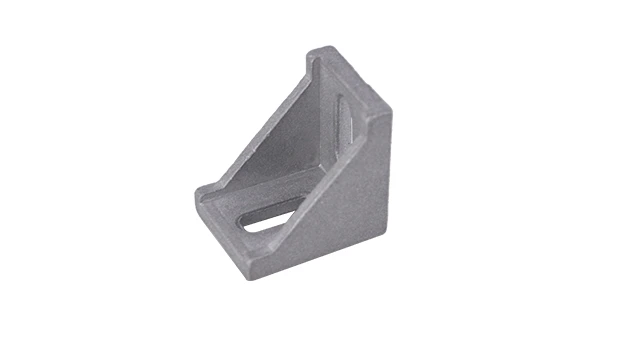
Gusset ALP 3030
The 3030 bracket/Gusset is an external fastening method that creates a 90 degree connection. 3030 means this size is used for 30 series aluminum profile with a quick connection by bolt and nut.
Introduction: A Critical Hurdle in Medical Device Manufacturing
In the fast-paced world of medical device manufacturing, precision isn't just a goal—it's a lifeline. Every component, every assembly step, and every workstation plays a role in ensuring that products meet the strictest safety and quality standards. But for MediTech Innovations, a mid-sized manufacturer specializing in diagnostic equipment, their aging workstations were slowly becoming a bottleneck. "We were struggling with two big issues," recalls Sarah Chen, the facility's operations manager. "First, our workbenches were wobbly and outdated, making it hard for technicians to maintain the precision needed for tiny circuit boards. Second, static electricity from the old metal frames was damaging sensitive components—costing us thousands in wasted materials and delayed production."
The problem wasn't just about equipment; it was about workflow. MediTech's assembly lines were rigid, built around fixed workstations that couldn't adapt when production needs changed. "When we launched a new product line for portable ultrasounds, we had to completely rebuild three workstations from scratch," Sarah explains. "It took our team two full days, and even then, the setup felt temporary. We knew we needed a
lean system
that could grow with us, not hold us back."
The Challenge: Beyond Wobbly Tables and Static Shocks
To understand the scope of MediTech's challenge, let's break it down. Their existing workstations were a hodgepodge of wooden tables and metal frames, some repurposed from other industries. While functional in the short term, they failed on three critical fronts: stability, ESD protection, and adaptability.
Stability:
"Our technicians work with tools that require steady hands—think microsoldering and component placement with 0.1mm precision," Sarah says. "A wobbly workstation isn't just annoying; it's dangerous. We had instances where a slight table shake caused a soldering iron to slip, ruining a $500 circuit board." The root cause? Weak joints and outdated materials that couldn't support the weight of equipment, tools, and materials without flexing.
ESD Risks:
Medical devices like pacemakers and diagnostic sensors contain delicate electronics that are highly sensitive to electrostatic discharge (ESD). "We'd invested in ESD mats and wristbands, but the workstations themselves were ungrounded metal frames," Sarah notes. "Static would build up on the frames and discharge when a technician touched a component—we were seeing a 3% failure rate in final testing, all traced back to ESD damage." For a company that prides itself on 99.9% quality control, this was unacceptable.
Adaptability:
MediTech's product lines change quarterly, with new models requiring different tool layouts, storage needs, and workflow paths. "Our old workstations were bolted to the floor or welded together," Sarah explains. "If we needed to add a shelf or reposition a tool holder, we'd have to call in a contractor. It was slow, expensive, and killed our team's ability to iterate quickly."
"We weren't just looking for new tables—we needed a system that could keep up with how we work. Something modular, sturdy, and safe. That's when we started researching
lean system suppliers
and came across ProLean Solutions." — Sarah Chen, Operations Manager, MediTech Innovations

The Solution: Gusset Alp 3030 and the Power of Aluminum Profiles
After meeting with several vendors, MediTech partnered with ProLean Solutions, a
lean system supplier
known for customizable industrial workspaces. ProLean's proposal centered on three key components: aluminum profiles for flexibility, ESD-safe materials for protection, and a critical reinforcing bracket called the
Gusset Alp 3030
for stability.
Aluminum Profiles: The Backbone of Flexibility
ProLean recommended building the new workstations using aluminum profiles —lightweight, corrosion-resistant, and infinitely configurable. Unlike traditional steel frames, aluminum profiles feature T-slots that allow accessories (shelves, tool holders, lighting) to be added or moved without drilling or welding. "Aluminum was a game-changer," Sarah says. "It's strong enough to support our equipment but light enough that we can reconfigure a workstation in under an hour with just a hex key."
ProLean recommended building the new workstations using aluminum profiles —lightweight, corrosion-resistant, and infinitely configurable. Unlike traditional steel frames, aluminum profiles feature T-slots that allow accessories (shelves, tool holders, lighting) to be added or moved without drilling or welding. "Aluminum was a game-changer," Sarah says. "It's strong enough to support our equipment but light enough that we can reconfigure a workstation in under an hour with just a hex key."
ProLean specified 3030 series aluminum profiles—30mm x 30mm extrusions with reinforced walls—for the workstation frames. "3030 is the sweet spot for us," explains Mark Torres, ProLean's lead design consultant. "It's rigid enough to prevent flexing but not overkill for medical assembly needs. And because it's aluminum, we can anodize it in ESD-safe colors, adding another layer of protection."
Gusset Alp 3030: The Secret to Stability
The star of the solution, though, was the Gusset Alp 3030 —a small but mighty bracket designed to reinforce the joints where aluminum profiles meet. "Traditional aluminum profile joints rely on friction from T-slot nuts, which can loosen over time with vibration," Mark explains. "The Gusset Alp 3030 acts like a mechanical 'lock'—it bolts across the joint, distributing weight evenly and preventing any movement. It's the difference between a workstation that wobbles after 6 months and one that stays rock-solid for years."
The star of the solution, though, was the Gusset Alp 3030 —a small but mighty bracket designed to reinforce the joints where aluminum profiles meet. "Traditional aluminum profile joints rely on friction from T-slot nuts, which can loosen over time with vibration," Mark explains. "The Gusset Alp 3030 acts like a mechanical 'lock'—it bolts across the joint, distributing weight evenly and preventing any movement. It's the difference between a workstation that wobbles after 6 months and one that stays rock-solid for years."
ProLean's design team added Gusset Alp 3030 brackets at every vertical-horizontal joint on the workstations, as well as at stress points like shelf supports and tool rail mounts. "We tested the prototype by stacking 50kg of equipment on the workstation and shaking it with a vibration tool—no movement at all," Sarah recalls. "Our technicians couldn't believe how steady it was compared to the old tables."
ESD Workstations: Safety Built In
To address the ESD issue, ProLean designed the workstations as full esd workstations , with:
To address the ESD issue, ProLean designed the workstations as full esd workstations , with:
- ESD-safe aluminum profiles with a conductive anodized finish, grounded to the facility's ESD system.
- Static-dissipative work surfaces (resistivity: 10^6–10^9 ohms) that channel static away from components.
- Grounded tool rails and storage bins to prevent charge buildup on tools.
"We also added flow racks along the assembly line," Mark notes. "These use roller tracks to move materials from station to station, reducing the need for technicians to bend or reach. They're built with the same aluminum profiles and Gusset Alp 3030 brackets, so they're just as sturdy and configurable as the workstations."

Implementation Journey: From Design to Deployment
The upgrade project spanned eight weeks, with ProLean and MediTech working hand-in-hand to ensure minimal disruption to production. Here's how it unfolded:
Week 1–2: Consultation and Design
ProLean's team spent two weeks on-site, interviewing technicians, observing workflows, and measuring space constraints. "They didn't just ask what we needed—they asked how we worked," Sarah says. "For example, they noticed that our night shift uses different tools than the day shift, so they designed the workstations with quick-release tool holders that can be swapped out in 5 minutes." The design included 12 custom workstations, 8 flow racks, and 4 mobile tool carts, all built with aluminum profiles and Gusset Alp 3030 brackets.
ProLean's team spent two weeks on-site, interviewing technicians, observing workflows, and measuring space constraints. "They didn't just ask what we needed—they asked how we worked," Sarah says. "For example, they noticed that our night shift uses different tools than the day shift, so they designed the workstations with quick-release tool holders that can be swapped out in 5 minutes." The design included 12 custom workstations, 8 flow racks, and 4 mobile tool carts, all built with aluminum profiles and Gusset Alp 3030 brackets.
Week 3–4: Prototyping and Testing
ProLean built a full-scale prototype workstation and flow rack, which MediTech's technicians tested for two weeks. "We put it through hell," Sarah laughs. "We loaded it with tools, spilled cleaning solution on the surface, even tried to wobble it during a shift. The feedback was unanimous: 'When can we get the rest?'" Adjustments were minor—adding a second shelf to one workstation, changing the angle of a tool rail—but the prototype confirmed that the Gusset Alp 3030 brackets eliminated wobble and the ESD features worked as promised.
ProLean built a full-scale prototype workstation and flow rack, which MediTech's technicians tested for two weeks. "We put it through hell," Sarah laughs. "We loaded it with tools, spilled cleaning solution on the surface, even tried to wobble it during a shift. The feedback was unanimous: 'When can we get the rest?'" Adjustments were minor—adding a second shelf to one workstation, changing the angle of a tool rail—but the prototype confirmed that the Gusset Alp 3030 brackets eliminated wobble and the ESD features worked as promised.
Week 5–7: Installation and Training
ProLean's installation team worked in phases, replacing two workstations per day to keep production running. "They'd set up the new workstation next to the old one, help the technicians transfer tools and materials, then remove the old table—all in under 2 hours per station," Sarah says. The team also trained MediTech's maintenance staff on how to reconfigure the workstations using basic tools: "Now, if a technician wants to add a shelf, they can do it themselves using the T-slot nuts and Gusset Alp brackets. No contractors needed."
ProLean's installation team worked in phases, replacing two workstations per day to keep production running. "They'd set up the new workstation next to the old one, help the technicians transfer tools and materials, then remove the old table—all in under 2 hours per station," Sarah says. The team also trained MediTech's maintenance staff on how to reconfigure the workstations using basic tools: "Now, if a technician wants to add a shelf, they can do it themselves using the T-slot nuts and Gusset Alp brackets. No contractors needed."
Week 8: Fine-Tuning and Launch
After all workstations were installed, ProLean conducted a final walkthrough with Sarah's team to adjust heights, tighten joints, and ensure all ESD systems were grounded. "They even brought in an ESD tester to verify that the workstations dissipated static properly—we saw readings below 10^6 ohms, which is better than industry standards," Sarah notes. The new system launched with a team celebration, and within days, the difference was clear.
After all workstations were installed, ProLean conducted a final walkthrough with Sarah's team to adjust heights, tighten joints, and ensure all ESD systems were grounded. "They even brought in an ESD tester to verify that the workstations dissipated static properly—we saw readings below 10^6 ohms, which is better than industry standards," Sarah notes. The new system launched with a team celebration, and within days, the difference was clear.
Results & Impact: From Frustration to Efficiency
Six months after the upgrade, MediTech has seen transformative results across productivity, quality, and employee satisfaction. Here's how the new workstations stack up against the old:
| Metric | Old Workstations | New Gusset Alp 3030 Workstations | Improvement |
|---|---|---|---|
| ESD-Related Failures | 3% of components | 0.1% of components | 97% reduction |
| Workstation Reconfiguration Time | 48 hours (with contractor) | 45 minutes (in-house staff) | 98% faster |
| Technician Productivity | 12 units assembled/shift | 16 units assembled/shift | 33% increase |
| Tool Access Time | 2.5 minutes/hour searching for tools | 0.3 minutes/hour searching for tools | 88% reduction |
| Employee Satisfaction (Survey) | 6/10 | 9.2/10 | 53% improvement |
Quality: ESD Failures Plummet
The most immediate impact was on ESD-related damage. "Our failure rate dropped from 3% to 0.1%—that's 29 fewer failed components per day," Sarah reports. "We're saving about $15,000 monthly in material costs alone. More importantly, we're shipping products with confidence, knowing they'll perform as intended for patients."
The most immediate impact was on ESD-related damage. "Our failure rate dropped from 3% to 0.1%—that's 29 fewer failed components per day," Sarah reports. "We're saving about $15,000 monthly in material costs alone. More importantly, we're shipping products with confidence, knowing they'll perform as intended for patients."
Efficiency: Time Saved, Output Up
The modular design has cut reconfiguration time from two days to under an hour, allowing MediTech to launch new product lines faster. "Last month, we rolled out a new sensor model and reconfigured three workstations in the morning—by lunch, the team was assembling the first units," Sarah says. Productivity has jumped 33%, with technicians citing the steady work surface and organized tool layout as key factors. "No more fumbling for tools or fighting a wobbly table—they can focus on building quality products."
The modular design has cut reconfiguration time from two days to under an hour, allowing MediTech to launch new product lines faster. "Last month, we rolled out a new sensor model and reconfigured three workstations in the morning—by lunch, the team was assembling the first units," Sarah says. Productivity has jumped 33%, with technicians citing the steady work surface and organized tool layout as key factors. "No more fumbling for tools or fighting a wobbly table—they can focus on building quality products."
Morale: Happy Technicians, Better Work
Perhaps the most unexpected win has been employee satisfaction. "Our quarterly survey scores for 'work environment' went from 6/10 to 9.2/10," Sarah says. "Technicians tell me the steady workbench reduces fatigue, and the ability to customize their space (adding shelves, adjusting heights) makes them feel valued. It's not just about the equipment—it's about giving them the tools to do their best work."
Perhaps the most unexpected win has been employee satisfaction. "Our quarterly survey scores for 'work environment' went from 6/10 to 9.2/10," Sarah says. "Technicians tell me the steady workbench reduces fatigue, and the ability to customize their space (adding shelves, adjusting heights) makes them feel valued. It's not just about the equipment—it's about giving them the tools to do their best work."
"The
Gusset Alp 3030
might seem like a small part, but it's the reason the workstations feel indestructible. Our technicians joke that we could park a car on them—and I almost believe it." — Raj Patel, Lead Technician, MediTech Innovations
Conclusion: More Than Workstations—A Foundation for Growth
For MediTech Innovations, upgrading to Gusset Alp 3030-reinforced, aluminum profile
esd workstations
wasn't just a equipment refresh—it was an investment in their ability to innovate, adapt, and deliver quality medical devices. "We're no longer limited by our workspace," Sarah says. "If we need to scale production, add a new process, or reconfigure a line, we can do it in a day. That agility is priceless in our industry."
The success has led MediTech to expand the system beyond assembly lines—they're now installing ProLean's flow racks in their warehouse and
lean system
workstations in their R&D lab. "The Gusset Alp 3030 brackets and aluminum profiles have become our standard," Sarah notes. "They're durable, flexible, and safe—exactly what we needed."
For other manufacturers facing similar challenges, Sarah has a simple piece of advice: "Don't settle for 'good enough' workstations. Invest in a system that grows with you. For us, that system was built on
aluminum profiles
,
Gusset Alp 3030
brackets, and a partner who understood our needs. It's been a game-changer."