- Company Articles
- Products and Technology
- Product knowledge
- Suction Cup Anti-Slip Foot Adjusters in Automotive Manufacturing Facilities

Suction Cup Anti-Slip Foot Adjusters in Automotive Manufacturing Facilities
Related Product
Suction Cup Anti-slip Foot Adjuster
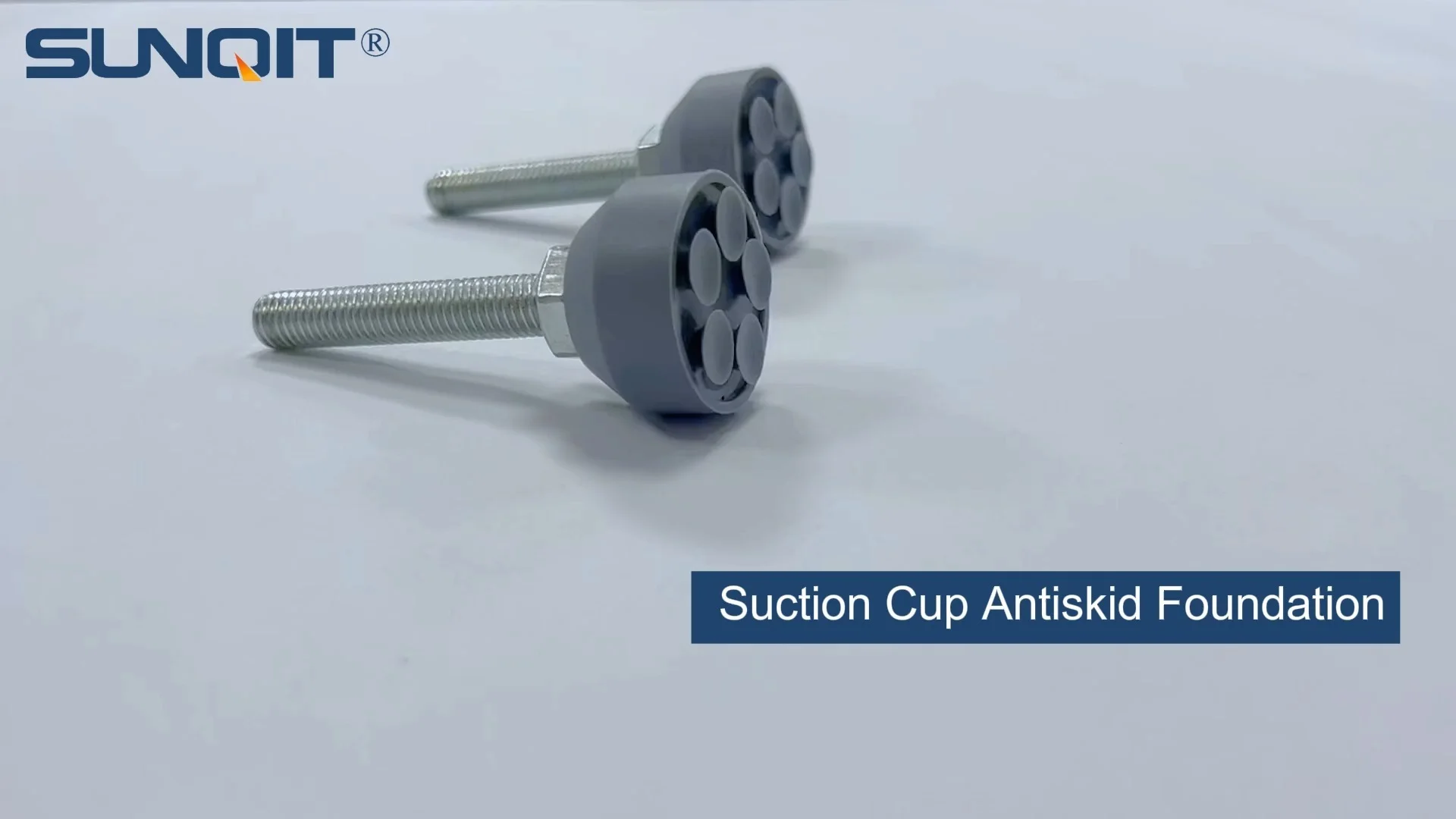
D=35mm suction cup anti-slip foot adjusterï¼screw M10*55ï¼with a blot, used for workbench, flowrack pipe contact with groud.
In the high-stakes world of automotive manufacturing, where precision is measured in millimeters and production lines run 24/7, even the smallest details can tip the scales between flawless quality and costly errors. Every nut, bolt, and component must align perfectly, and every workstation must operate with unwavering stability. Amidst the buzz of robotic arms, the hum of conveyor belts, and the focused energy of assembly line workers, there's a quiet hero working behind the scenes: the suction cup anti-slip foot adjuster. These unassuming components play a critical role in anchoring workbenches, material racks, and assembly stations, ensuring that the tools and surfaces that shape our vehicles remain steady, secure, and ready to meet the demands of modern manufacturing.
Understanding Suction Cup Anti-Slip Foot Adjusters: More Than Just "Feet"
At first glance, a suction cup anti-slip foot adjuster might seem like a simple piece of hardware—a metal stem topped with a rubber suction cup, designed to prop up a workbench or rack. But dig deeper, and you'll discover a thoughtfully engineered solution tailored to the unique challenges of factory floors. These adjusters combine two key functions: height adjustment and anti-slip stability. The threaded metal stem allows operators to tweak the height of equipment by rotating the base, ensuring level alignment even on uneven concrete or slightly sloped surfaces. Meanwhile, the suction cup—typically made from durable, oil-resistant rubber—creates a vacuum seal with the floor, locking the equipment in place and preventing unwanted movement, even when subjected to vibrations from nearby machinery or the constant in-and-out of parts.
What sets these foot adjusters apart is their ability to adapt to less-than-ideal conditions. Unlike traditional rubber feet, which rely on friction alone, the suction cup design actively "grips" the floor. When pressure is applied (from the weight of the equipment), air is squeezed out from under the cup, creating a partial vacuum that resists lateral forces. This makes them especially valuable in automotive plants, where floors are often dotted with small cracks, oil spills, or uneven patches from years of heavy equipment use. Whether supporting a lightweight aluminum workbench or a loaded material rack, these adjusters transform an unstable surface into a rock-solid foundation.
Why Stability Matters in Automotive Manufacturing
In automotive manufacturing, stability isn't just a convenience—it's a cornerstone of quality control. Consider the assembly of an engine block: workers rely on workbenches to hold precision tools, gauges, and components as they torque bolts to exact specifications. A workbench that shifts even a fraction of an inch could result in over-tightened bolts (risking component damage) or under-tightened ones (posing safety hazards down the line). Similarly, inspection stations, where parts are measured for defects using laser scanners or micrometers, require absolute stillness to ensure accurate readings. A wobbly surface here could lead to false rejects or, worse, missed flaws that end up in finished vehicles.
Beyond quality, stability directly impacts worker safety. Slipping or shifting equipment is a leading cause of workplace accidents in factories. A material rack that tips due to uneven feet could send heavy parts crashing to the floor, endangering nearby employees. Suction cup anti-slip foot adjusters mitigate this risk by anchoring equipment firmly, even during high-activity periods. They also reduce fatigue: when workbenches are level and stable, workers don't waste energy compensating for (shaking) or readjusting tools, allowing them to focus on their tasks with greater precision and less physical strain.

Integration with Lean Systems: Small Adjustments, Big Efficiency Gains
Modern automotive plants operate on lean manufacturing principles—streamlining processes, eliminating waste, and maximizing value. A lean system thrives on predictability: consistent workflows, minimal downtime, and resources allocated to where they're most needed. Here, suction cup anti-slip foot adjusters quietly support lean goals by reducing "hidden" waste. Think about it: a workbench that wobbles requires frequent stops for realignment, eating into production time. A material rack that slips out of position might cause parts to jam in conveyor systems, halting entire lines. These disruptions are forms of "non-value-added" time—exactly what lean systems aim to eliminate.
By ensuring equipment stays stable and level, suction cup adjusters keep workflows moving smoothly. They also align with the "5S" methodology—a cornerstone of lean manufacturing—specifically the "Set in Order" (Seiton) principle, which emphasizes organizing tools and equipment for easy access and efficiency. A stable workstation is an organized workstation: tools stay where they're placed, parts don't roll off uneven surfaces, and workers can retrieve what they need without searching or readjusting. Over time, these small efficiencies add up, reducing lead times and increasing overall productivity.

Synergy with Workbenches and Aluminum Profiles: Building a Stable Foundation
In automotive manufacturing, workbenches are the command centers of production. They're where parts are assembled, inspected, and prepared for the next stage of the line. Today's workbenches are often built using aluminum profiles—lightweight, modular, and infinitely customizable. Aluminum profiles allow manufacturers to design workbenches tailored to specific tasks, whether it's a compact station for electronics assembly or a heavy-duty bench for engine component work. But even the most well-designed aluminum profile workbench is only as good as its base. This is where suction cup anti-slip foot adjusters shine.
Aluminum profiles are prized for their strength-to-weight ratio, but their lightness can make them prone to movement if not properly anchored. Suction cup adjusters complement this by adding a layer of stability that's both robust and flexible. Because aluminum workbenches are modular, they're often reconfigured to adapt to new production needs—adding a shelf here, extending a surface there. Suction cup foot adjusters make these reconfigurations seamless: simply adjust the height to level the new setup, and the suction cups lock it in place. This flexibility is key in today's automotive plants, where models change frequently and production lines must adapt quickly to new designs.
| Feature | Traditional Rubber Foot Adjusters | Suction Cup Anti-Slip Foot Adjusters |
|---|---|---|
| Grip Mechanism | Relies on friction between rubber and floor | Creates a vacuum seal to "lock" equipment in place |
| Stability on Uneven Floors | Limited; may rock or slide on cracks/bumps | High; suction cup conforms to minor irregularities |
| Resistance to Liquids | Reduced grip on oily or wet floors | Maintains seal even with light oil/water exposure (rubber is chemical-resistant) |
| Adjustability | Basic height adjustment | Precision height adjustment with locking nut to prevent slippage |
| Best For | Light, stationary equipment on smooth, dry floors | Heavy or vibration-prone equipment; uneven or damp factory floors |

Real-World Impact: A Case Study in Stability
To understand the tangible benefits of suction cup anti-slip foot adjusters, consider the experience of a mid-sized automotive parts manufacturer in Michigan. The plant produced transmission components, and for years, their assembly workbenches used traditional rubber foot adjusters. Despite regular maintenance, workers complained about benches "creeping" during shifts—slowly sliding out of position due to vibrations from nearby stamping machines. This led to frequent rework: parts that didn't align correctly, tools that fell off uneven surfaces, and occasional scrap due to misaligned drilling.
After switching to suction cup anti-slip foot adjusters, the changes were immediate. Within the first month, rework decreased by 18%, and tool-related accidents (like wrenches slipping off benches) dropped by 32%. Workers reported less fatigue, noting that they no longer had to "fight" to keep parts steady. Perhaps most impressively, the plant's quality control team saw a 23% reduction in minor defects, such as slightly off-center holes or misaligned gears—issues directly traced to workstation instability. The adjusters paid for themselves within three months, not just through reduced scrap and rework, but through increased worker productivity and morale.
Overcoming Challenges: Design Features That Deliver Results
Automotive manufacturing floors are tough environments. They're subjected to heavy loads, chemical spills (oil, coolant, cleaning agents), and constant foot and equipment traffic. Suction cup anti-slip foot adjusters are built to thrive here, thanks to thoughtful design features:
Durable Materials
The suction cups are typically made from nitrile rubber or EPDM, both of which resist oils, greases, and industrial chemicals. This ensures the cups maintain their elasticity and grip, even when exposed to common factory fluids. The metal stems are often zinc-plated or stainless steel, preventing rust in humid or damp conditions.
Reinforced Suction Cups
Many models feature a reinforced rim on the suction cup, which helps maintain the vacuum seal even on slightly rough surfaces. This is critical in older plants with worn concrete floors, where traditional feet might struggle to find traction.
High Load Capacity
Modern adjusters are rated to support hundreds of pounds per unit. A typical workbench might use four adjusters, each capable of holding 500 lbs, resulting in a total capacity of 2,000 lbs—more than enough for heavy tools, parts bins, and assembly materials.
Easy Maintenance
Maintaining suction cup adjusters is simple: occasional cleaning with soap and water to remove dirt or debris from the cup, and checking the threaded stem for signs of wear. Unlike mechanical locking systems, there are no complex parts to lubricate or replace, making them a low-maintenance solution for busy plants.
Looking Ahead: The Future of Workplace Stability
As automotive manufacturing evolves—with the rise of electric vehicles, autonomous assembly lines, and smart factories—so too will the tools that support it. Suction cup anti-slip foot adjusters are poised to keep pace, with innovations like integrated sensors that monitor stability in real time. Imagine a workbench equipped with "smart" adjusters that detect when the suction seal weakens (due to a dirty cup or a sudden load shift) and alert maintenance teams before a problem arises. Or adjusters with automatic height leveling, using small motors to keep workbenches perfectly aligned, even as the factory floor heats up and expands throughout the day.
There's also growing interest in sustainability. Manufacturers are exploring recycled rubber for suction cups and lighter, high-strength alloys for stems to reduce material use. These eco-friendly designs align with the automotive industry's push toward greener production practices, ensuring that stability doesn't come at the cost of the planet.
Conclusion: Small Components, Big Impact
In the grand scheme of automotive manufacturing—where robots assemble cars with pinpoint accuracy and supply chains span the globe—suction cup anti-slip foot adjusters may seem (insignificant). But as any seasoned plant manager will tell you, the difference between a good production line and a great one lies in the details. These unassuming components provide the stability that underpins precision, safety, and efficiency. They support lean systems by reducing waste, enhance the functionality of aluminum profile workbenches, and ensure that every tool, part, and worker has a solid foundation to build on.
The next time you see a car rolling off the assembly line, take a moment to appreciate the quiet heroes holding it all together. From the rubber suction cups gripping the factory floor to the workers who rely on stable workstations, it's these small, intentional choices that drive the automotive industry forward—one steady step at a time.