- Company Articles
- Products and Technology
- Product knowledge
- Suction Cup Anti-Slip Foot Adjusters in Conveyor Systems: Preventing Slippage

Suction Cup Anti-Slip Foot Adjusters in Conveyor Systems: Preventing Slippage
Related Product
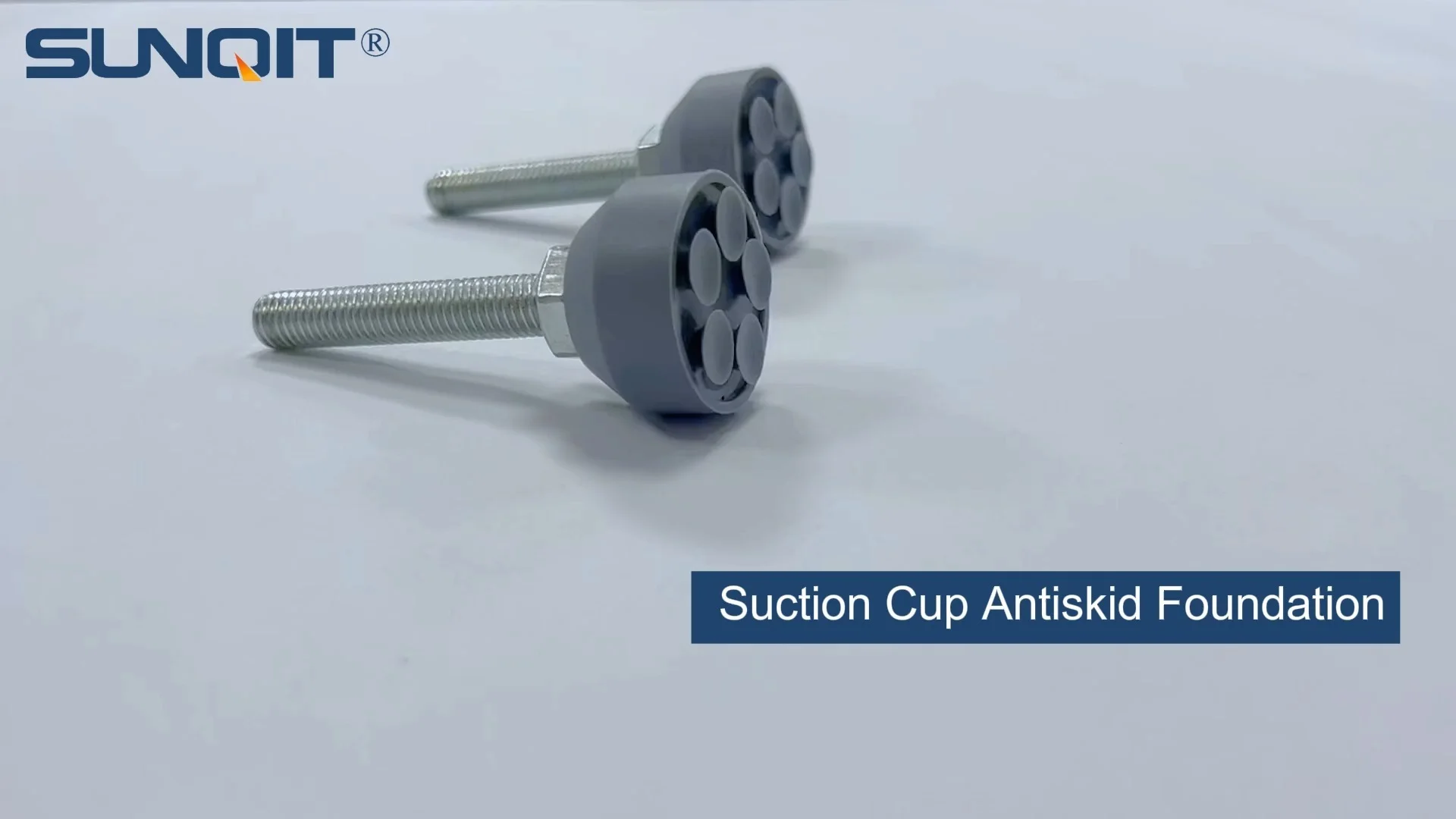
Suction Cup Anti-slip Foot Adjuster
D=35mm suction cup anti-slip foot adjusterï¼screw M10*55ï¼with a blot, used for workbench, flowrack pipe contact with groud.
The Backbone of Modern Manufacturing: Conveyor Systems and the Hidden Risk of Slippage
Walk into any manufacturing plant, warehouse, or distribution center today, and you'll likely hear the steady hum of conveyor systems. These unassuming workhorses are the circulatory system of production lines, moving everything from small electronic components to heavy machinery parts with precision and speed. In facilities that rely on lean system principles—where efficiency, waste reduction, and continuous flow are paramount—conveyors aren't just tools; they're the lifeline that keeps operations running like clockwork.
But here's the thing about lifelines: even a tiny kink can cause a ripple effect. For conveyor systems, that "kink" often comes in the form of slippage. Picture this: a busy automotive assembly line, where a conveyor belt carries half-assembled engine parts toward the next workstation. Suddenly, a slight shift in the conveyor's base causes the belt to misalign. A metal bracket slides off, clattering to the floor. The line halts. Workers scramble to fix the issue, while upstream processes back up and downstream stations sit idle. In that moment, slippage isn't just a minor inconvenience—it's a productivity killer.
Slippage in conveyor systems can stem from countless sources: uneven factory floors, vibrations from nearby machinery, heavy loads straining the conveyor's structure, or even environmental factors like oil spills or humidity. The consequences, however, are consistently costly: damaged products, increased rework, worker safety hazards (think tripping over displaced items), and unplanned downtime that erodes profit margins. For facilities aiming to uphold lean system standards, where every second of downtime is a waste of resources, preventing slippage isn't just a goal—it's a necessity.
The Silent Solution: Suction Cup Anti-Slip Foot Adjusters
Enter the unsung hero of conveyor stability: the suction cup anti-slip foot adjuster. At first glance, these devices might seem—small, unobtrusive components bolted to the base of conveyor frames. But their impact is anything but minor. Designed to anchor conveyor systems firmly to the floor while accommodating uneven surfaces, they're the first line of defense against slippage.
So, what makes these foot adjusters so effective? Let's break it down. At their core, they combine two critical features: a powerful suction cup base and an adjustable height mechanism. The suction cup, typically made from high-density rubber or silicone, creates a vacuum-like seal with the floor, gripping even smooth or slightly textured surfaces with remarkable tenacity. This isn't just friction at work—it's a physical bond that resists lateral movement, even when the conveyor is vibrating under heavy loads. Meanwhile, the adjustable height feature (often a threaded rod or screw) lets operators level the conveyor precisely, compensating for dips or bumps in the floor that could otherwise cause instability.
Take, for example, a roller track conveyor—a common setup where items glide along a series of rotating rollers. If the conveyor isn't level, items might slow down, get stuck, or even slide off the track entirely. Suction cup foot adjusters solve this by ensuring the roller track remains perfectly aligned, so each roller spins in sync, and products move smoothly from start to finish. It's a small adjustment with a big payoff: fewer jams, less product damage, and a conveyor that operates at peak efficiency.

How Suction Cup Anti-Slip Foot Adjusters Outperform Traditional Solutions
You might be thinking, "Aren't there other ways to prevent conveyor slippage?" You're right—manufacturers have tried everything from heavy concrete blocks to adhesive pads and caster locks. But suction cup anti-slip foot adjusters stand out for their versatility, durability, and ease of use. Let's compare them to three common alternatives:
| Anti-Slip Solution | Grip Strength | Adjustability | Installation & Maintenance | Best For |
|---|---|---|---|---|
| Suction Cup Anti-Slip Foot Adjusters | High (vacuum seal + friction) | Excellent (height-adjustable for uneven floors) | Simple (bolt-on installation; minimal upkeep) | Roller track conveyors, workbenches, and mobile equipment |
| Adhesive Pads | Medium (friction-only; weakens over time) | Poor (fixed height; permanent once applied) | Easy initially, but hard to replace; leaves residue | Lightweight, stationary equipment |
| Caster Locks | Medium (locks wheels in place) | None (doesn't address floor unevenness) | Simple, but locks can jam; doesn't prevent frame movement | Mobile trolleys (not ideal for conveyors) |
| Concrete Blocks | High (weight-based) | None (permanent; can't adjust for uneven floors) | Bulky, hard to move; damages floors over time | Heavy, stationary machinery (not conveyors) |
The table tells a clear story: suction cup foot adjusters offer the best balance of grip, adjustability, and practicality for conveyor systems. Unlike adhesive pads, they don't degrade with wear or temperature changes. Unlike caster locks, they don't just "lock" movement—they stabilize the entire system. And unlike concrete blocks, they're lightweight enough to reposition if needed, yet strong enough to anchor even heavy-duty conveyors.

Integrating Foot Adjusters with Lean Systems: A Match Made in Efficiency
Lean system principles are all about eliminating waste—whether that's time, materials, or energy. Slippage in conveyors introduces all three types of waste: time lost to downtime, materials wasted on damaged products, and energy spent on rework. Suction cup anti-slip foot adjusters align seamlessly with lean goals by preventing these inefficiencies before they start.
Consider a typical lean workflow: parts move from a material rack to a workbench, then to a conveyor, and finally to packaging. If the conveyor slips, the entire flow is disrupted. Workers at the workbench can't pass parts downstream, so they either stop working or pile up inventory (another lean no-no). With foot adjusters keeping the conveyor stable, the flow remains continuous—just as lean principles demand.
What's more, these foot adjusters are designed with lean's "continuous improvement" mindset in mind. They're easy to inspect (just check the suction cup for wear) and quick to replace, so maintenance teams can address issues before they escalate. And because they're adjustable, they adapt to changing conditions—like a new production line layout or a floor that's been repaired—without requiring a complete conveyor overhaul.

Real-World Impact: Case Studies from the Factory Floor
Don't just take our word for it—manufacturers across industries are seeing tangible results from suction cup anti-slip foot adjusters. Take a mid-sized electronics plant in Ohio that produces circuit boards. Their roller track conveyors, which moved delicate PCBs between assembly stations, were slipping up to three times a week, causing $2,000 in damaged components and 10 hours of downtime monthly. After installing suction cup foot adjusters, slippage incidents dropped to zero. The plant saved over $24,000 in a year and reallocated maintenance staff to more critical tasks—all from a simple upgrade.
Another example: a automotive parts supplier in Michigan that uses a lean system to produce brake components. Their belt conveyor, which transported heavy metal parts, was prone to shifting on the factory's slightly uneven concrete floor. This caused parts to misalign with the next workstation, leading to frequent jams. By adding suction cup foot adjusters, they leveled the conveyor and eliminated jams entirely. Production speed increased by 15%, and workers reported feeling safer, knowing the conveyor was stable.
Choosing the Right Foot Adjusters for Your Conveyor System
Not all suction cup anti-slip foot adjusters are created equal. To get the best results, you'll need to consider a few key factors:
1. Load Capacity
Conveyors come in all sizes, from small tabletop models to industrial giants moving tons of material daily. Make sure the foot adjusters you choose can support your conveyor's weight, plus the maximum load it will carry. Look for models rated for at least 120% of your conveyor's total weight to be safe.
2. Floor Type
Suction cups work best on smooth, non-porous floors like concrete or tile. If your facility has rough or uneven floors, opt for foot adjusters with larger suction cups or reinforced rubber to ensure a tight seal.
3. Environmental Conditions
Factories with oil, grease, or moisture on the floor need foot adjusters with chemical-resistant suction cups (look for nitrile rubber) to maintain grip. For cold environments, choose cups that stay flexible in low temperatures.
4. Compatibility with Conveyor Design
Whether you're using a roller track conveyor, a belt conveyor, or a custom system, ensure the foot adjusters fit your conveyor's frame. Many suppliers offer universal models, but it's always best to check the bolt pattern and mounting dimensions first.
Conclusion: Small Adjustments, Big Results for Conveyor Stability
In the world of manufacturing, success often hinges on the details—the small, often overlooked components that keep the big machines running smoothly. Suction cup anti-slip foot adjusters are one such detail. By anchoring conveyor systems firmly to the floor, leveling out uneven surfaces, and preventing slippage, they play a critical role in maintaining efficiency, safety, and profitability.
For facilities committed to lean system principles, these foot adjusters aren't just a purchase—they're an investment in continuous improvement. They reduce waste, minimize downtime, and ensure that conveyor systems (and the lean goals they support) deliver on their promise. So the next time you walk past a conveyor line, take a moment to look down. Chances are, the stability keeping everything moving forward is thanks to a simple, powerful tool: the suction cup anti-slip foot adjuster.