- Company Articles
- Products and Technology
- Product knowledge
- Suction Cup Anti-Slip Foot Adjusters vs. Standard Foot Pads: Which Is Superior?

Suction Cup Anti-Slip Foot Adjusters vs. Standard Foot Pads: Which Is Superior?
Related Product
Suction Cup Anti-slip Foot Adjuster
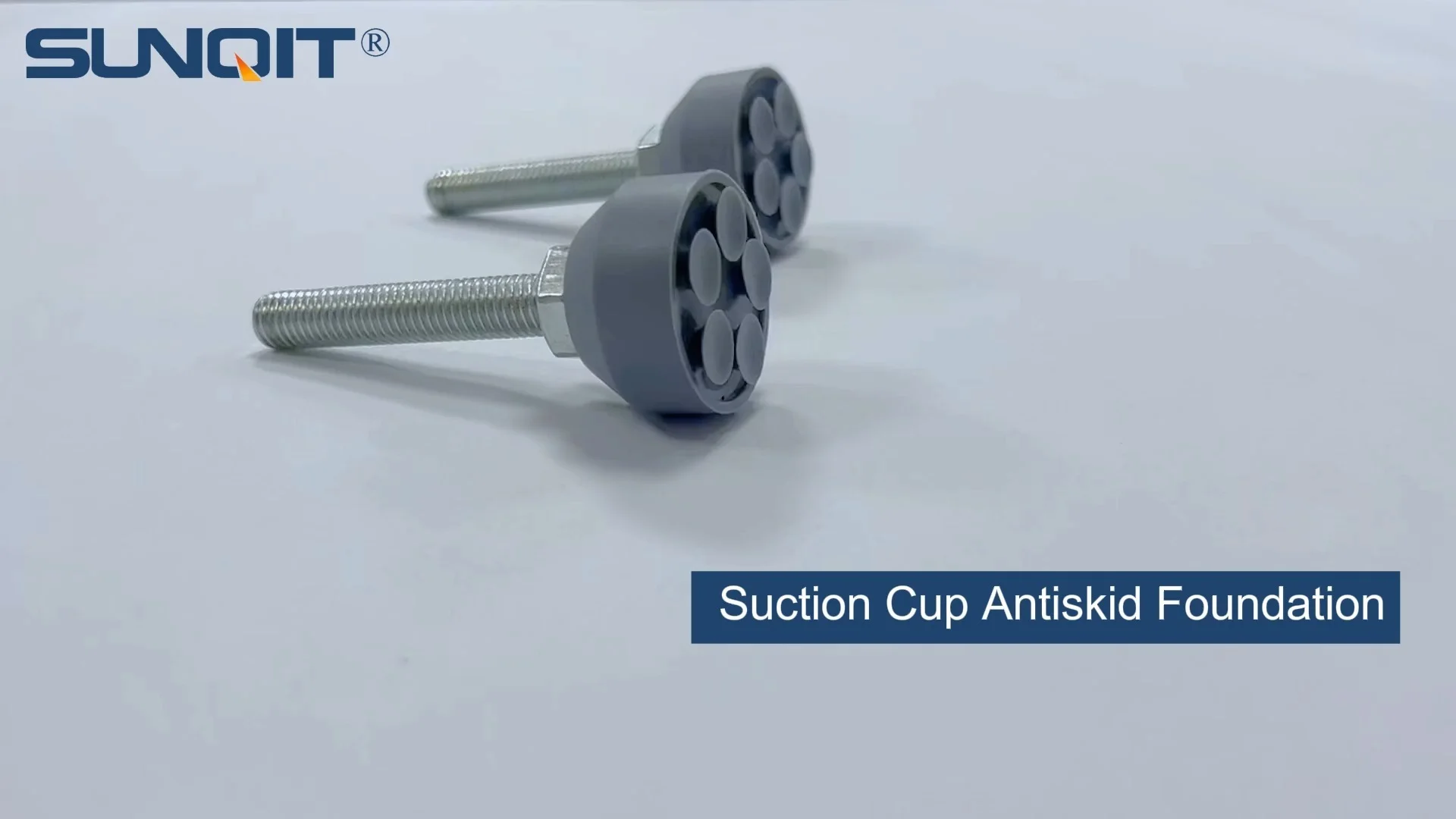
D=35mm suction cup anti-slip foot adjusterï¼screw M10*55ï¼with a blot, used for workbench, flowrack pipe contact with groud.
Walk into any bustling factory, workshop, or assembly line, and you'll notice the hum of machines, the rhythm of workers, and the steady flow of materials. But amid all this activity, there's a silent hero keeping everything grounded—literally. We're talking about the unsung components under your workbench, trolley, or rack: the foot adjusters and pads that prevent wobbling, sliding, and instability. For anyone who spends hours at a workbench or relies on sturdy equipment to get the job done, the difference between a reliable foot support and a faulty one can mean the difference between smooth productivity and frustrating delays.
Take Maria, for example. A third-shift assembly line worker at a mid-sized electronics plant, Maria spends her nights piecing together circuit boards on an aluminum workbench. A few months ago, she'd start each shift by sighing at the sight of her workbench: one corner always seemed to hover half an inch off the ground, no matter how much she twisted the standard rubber foot pads. Tools would slide, tiny screws would roll off the edge, and more than once, a delicate component had slipped from her hand because the bench shifted. "It felt like fighting the workbench instead of working on it," she recalls. Then her supervisor installed suction cup anti-slip foot adjusters. "Overnight, everything changed. The bench stays put, even when I lean on it. I haven't lost a single part since."
Maria's story isn't unique. In workspaces where precision, safety, and efficiency matter, the choice between standard foot pads and suction cup anti-slip foot adjusters can have a huge impact. Let's dive into what makes these two options different, where each excels, and how to decide which one deserves a spot under your workspace.
First, Let's Talk About Standard Foot Pads: The Tried-and-True Basics
Standard foot pads are the workhorses of the industrial world—simple, affordable, and everywhere. You've probably seen them under your kitchen table, your office chair, or that old bookshelf in the garage. In factories and workshops, they're the default choice for supporting everything from lightweight workbenches to basic storage racks. But what exactly are they, and how do they work?
Design & Materials: Simple, Static Support
At their core, standard foot pads are all about simplicity. Most are small, disk-shaped pieces made from rubber, plastic, or sometimes felt. Rubber is the most common material because it's cheap, durable, and offers a basic level of grip. Plastic pads are lighter and often used for lighter loads, while felt is reserved for delicate floors (think hardwood in offices) to prevent scratches.
Their design is straightforward: a flat or slightly convex base that sits between the equipment (like a workbench leg) and the floor. Some have a threaded stem that screws into the equipment, allowing for minor height adjustments—twist the pad clockwise to raise the leg, counterclockwise to lower it. Others are glued or snapped into place, offering no adjustability at all. The key here is that they're static: once installed, their job is to provide a stable base, but they don't actively "grip" the floor or adapt to changing conditions.
How They Work: Passive Stability for Basic Needs
Standard foot pads rely on friction to keep equipment from sliding. The rubber or plastic base creates resistance against the floor, so when you push or lean on the workbench, the pads (hopefully) prevent it from moving. For very light equipment or in environments where the floor is perfectly smooth and dry, this works fine. If the floor is uneven, the threaded versions let you tweak each leg's height to level the equipment—though "tweak" is the operative word. Most standard pads only adjust by a quarter-inch or so, which isn't enough for floors with noticeable dips or cracks.
Let's say you have a basic wooden workbench in a home garage. The floor is concrete, mostly flat, and the bench holds a drill press and some hand tools. Standard rubber foot pads here would do the job. The bench isn't heavy, you don't move it often, and the floor doesn't shift. But in a busy factory with concrete floors that have seen years of heavy machinery rolling over them—causing small cracks, dips, or unevenness—standard pads start to fall short.
Limitations: When "Good Enough" Isn't Enough
The problem with standard foot pads is that they're designed for ideal conditions, and real-world workspaces are rarely ideal. Let's break down their biggest limitations:
- Minimal adjustability: Most only adjust by 1/4 to 1/2 inch, which isn't enough for uneven floors. If your workbench has a leg that's 1 inch shorter than the others because of a floor dip, standard pads can't fix that—you'll end up with a wobbly bench.
- Poor grip on smooth or wet floors: Rubber pads lose friction on polished concrete, tile, or wet surfaces. In food processing plants or workshops where floors are cleaned regularly with water, standard pads can slide, turning a stable workbench into a hazard.
- Wear and tear: Rubber hardens over time, especially in high-heat environments (like near industrial ovens), losing its grip. Plastic pads can crack under heavy loads, and glued-on pads can peel off, leaving the equipment leg scraping directly on the floor.
- No active anti-slip mechanism: They rely entirely on static friction. If you lean heavily on the workbench or bump into it with a trolley, the pads might not hold. This is a big issue in precision work—like Maria's circuit board assembly—where even a tiny shift can ruin a product.
For light-duty, low-stakes applications, standard foot pads are fine. But when your workspace demands stability, adjustability, and reliability—especially under heavy loads or on imperfect floors—you need something more advanced. That's where suction cup anti-slip foot adjusters come in.
Suction Cup Anti-Slip Foot Adjusters: The Upgrade Your Workspace Deserves
Imagine a foot pad that doesn't just sit on the floor—it grips it. A pad that can adjust to uneven floors by inches, not fractions. A pad that stays stable even when you lean on the workbench, roll a caster wheel-equipped trolley next to it, or spill a little water on the floor. That's the promise of suction cup anti-slip foot adjusters. They're not just a "better pad"—they're a complete reimagining of how equipment stays grounded.
Design & Mechanics: Suction, Adjustability, and Anti-Slip Power
Suction cup anti-slip foot adjusters look different from standard pads, and for good reason. Let's break down their key features:
The Suction Cup Base: Active Grip, Not Just Friction
The star of the show is the suction cup itself. Made from high-grade, flexible rubber (often nitrile or silicone, which resist heat, oil, and chemicals), the cup is concave, like a tiny plunger. When you press the adjuster down, the cup flattens, pushing air out from underneath it. As it (snaps back to shape), it creates a vacuum seal between the cup and the floor. This seal isn't just about grip—it's about suction . The more weight on the equipment, the tighter the seal, because the weight presses the cup further into the floor, expelling even more air.
This is a game-changer. Unlike standard pads, which rely on friction alone, suction cup adjusters use physics to "stick" to the floor. Even on smooth surfaces like polished concrete or tile, the vacuum seal prevents sliding. And if the floor is slightly textured (like industrial concrete with a brushed finish), the flexible rubber conforms to the texture, enhancing the seal.
Adjustable Threaded Stems: Leveling for Imperfect Floors
Most suction cup anti-slip foot adjusters also come with a long, threaded stem—often 2 to 4 inches long—attached to the suction cup base. This stem screws into the equipment leg (like an aluminum workbench leg), allowing for significant height adjustments. Need to raise a leg by 2 inches to level a bench on a sloped floor? Just twist the stem. The adjustability here is far beyond what standard pads offer, making them ideal for workspaces with uneven or damaged floors.
Some models even have a lock nut on the stem. Once you've adjusted the height, you tighten the lock nut against the equipment leg, preventing the stem from unscrewing over time—no more waking up to a wobbly bench because the pad "walked" loose overnight.
Anti-Slip Rubber Coating: Extra Grip for Extra Safety
To top it off, many suction cup adjusters have an anti-slip rubber coating on the suction cup surface. This coating has tiny ridges or patterns that increase friction, even when the suction seal isn't fully engaged (like on very rough floors where a vacuum seal is hard to form). It's a backup layer of protection, ensuring that even if the suction is reduced, the adjuster still grips better than a standard pad.
Solving the Problems Standard Pads Can't
Let's go back to Maria's story. Her aluminum workbench was wobbly because the factory floor had a small dip under one leg—a dip that standard pads (with their 1/4-inch adjustability) couldn't compensate for. The bench shifted when she leaned on it, making it hard to solder tiny components. After switching to suction cup anti-slip foot adjusters, here's what changed:
First, the long threaded stem let her adjust the height by 1.5 inches, perfectly leveling the bench. Then, the suction cup base sealed to the concrete floor, so even when she leaned on the bench to reach for tools, it didn't budge. On rainy days, when the floor near the loading dock got a little wet, the anti-slip coating kept the bench stable. "It's like the bench is glued to the floor," she says. "I don't even think about it anymore—I just work."
This isn't just about convenience. In industrial settings, stability translates to safety and productivity. A stable workbench reduces errors (no more dropped parts or misaligned assemblies), lowers fatigue (workers don't waste energy steadying the bench), and cuts down on accidents (no slipping or tipping equipment).

Head-to-Head: Suction Cup Adjusters vs. Standard Foot Pads
To really understand which option is better, let's put them side by side. Below is a detailed comparison of their key features, strengths, and weaknesses.
| Feature | Standard Foot Pads | Suction Cup Anti-Slip Foot Adjusters |
|---|---|---|
| Adjustability | Minimal (1/4–1/2 inch adjustment via threaded stem; some non-adjustable) | High (2–4 inches adjustment via long threaded stem; lock nut to prevent loosening) |
| Stability/Grip | Relies on static friction; poor on smooth/wet floors; no active suction | Uses vacuum suction + anti-slip rubber coating; excellent grip on smooth, wet, or slightly textured floors |
| Durability | Moderate; rubber hardens/cracks over time; plastic prone to breaking under heavy loads | High; thick, flexible rubber suction cups resist hardening; metal threaded stems withstand heavy loads |
| Weight Capacity | Low to moderate (up to 200 lbs per pad) | High (up to 500+ lbs per pad, thanks to metal stems and vacuum seal) |
| Floor Compatibility | Best on rough, dry floors; risks slipping on smooth/wet floors; may scratch delicate floors | Works on all floor types (smooth, rough, wet, dry); suction seal protects delicate floors (no scraping) |
| Cost | Low ($1–$5 per pad) | Higher upfront ($8–$15 per adjuster) |
| Best For | Light-duty equipment, ideal floors, low-stakes applications (e.g., home workshops, office furniture) | Heavy-duty equipment, uneven/wet floors, precision work (e.g., aluminum workbenches, industrial assembly lines, caster wheel-equipped trolleys when stationary) |
The Verdict So Far: It's About Your Needs
Standard foot pads are great if you're on a tight budget, have light equipment, and work on perfectly even, dry floors. They're the "good enough" option for basic setups. But if your workspace demands stability, adjustability, or durability—especially under heavy loads or on imperfect floors—suction cup anti-slip foot adjusters are worth the investment. They're not just a "better pad"—they're a tool that makes your entire workspace more efficient and safer.

Real-World Applications: Where Each Shines (and Struggles)
To make the choice clearer, let's look at specific scenarios where one option outperforms the other. After all, the "superior" choice depends on your unique workspace and needs.
Scenario 1: Home Workshop with Light Tools
If you're a hobbyist with a small wooden workbench in your garage, holding a drill, a sander, and some hand tools, standard foot pads are probably all you need. The bench is light, you don't use it for precision work, and the floor is likely flat enough for minor adjustments. Spending $15 on suction cup adjusters here would be overkill—save the money for better tools instead.
Scenario 2: Industrial Aluminum Workbench in Electronics Manufacturing
Now, imagine an aluminum workbench in a factory where workers assemble smartphones or medical devices. These tasks require pinpoint precision: soldering tiny wires, aligning microchips, or attaching delicate sensors. Even a 1-millimeter shift in the workbench can ruin a product. The factory floor, meanwhile, is polished concrete—smooth, but with small dips from years of heavy machinery. Here, standard pads would fail: they can't level the bench properly, and they'd slide on the smooth floor. Suction cup adjusters, with their long stems and vacuum grip, are the clear choice. They keep the bench stable, reducing errors and rework.
Scenario 3: Caster Wheel-Equipped Trolleys (When Stationary)
Many workshops use trolleys with caster wheels to move materials around. When these trolleys are stationary (e.g., loaded with parts at a workbench), they need to stay put. Standard foot pads on trolley legs are often too weak to hold the trolley in place—bump it with a knee, and it rolls away. Suction cup adjusters solve this: when the trolley is parked, you lower the adjusters (via the threaded stem) until the suction cups seal to the floor, locking the trolley in place. When you need to move it, raise the adjusters, and the caster wheels take over. It's the best of both worlds: mobility when you need it, stability when you don't.
Scenario 4: Food Processing Plant with Wet Floors
Food processing facilities have strict hygiene rules, meaning floors are cleaned multiple times a day with water and sanitizers. This leaves floors wet and slippery—nightmare conditions for standard foot pads, which lose grip instantly. Suction cup anti-slip adjusters thrive here: the vacuum seal works even on wet floors, and the anti-slip coating adds extra traction. This isn't just about productivity; it's about safety. No one wants a workbench sliding into a worker or a storage rack tipping over because the pads failed on a wet floor.
Scenario 5: Heavy-Duty Storage Racks with Uneven Floors
Warehouses and distribution centers use tall storage racks to hold pallets of goods. These racks are heavy—often loaded with thousands of pounds of inventory. If the floor is uneven (common in older warehouses), standard pads can't level the rack properly, leading to uneven weight distribution and a higher risk of collapse. Suction cup adjusters, with their high weight capacity and long adjustability, ensure the rack stands straight and stable, even on bumpy floors. The vacuum seal also prevents the rack from shifting during loading/unloading, reducing the risk of accidents.

Installation & Maintenance: Keeping Your Foot Supports in Top Shape
Whether you choose standard foot pads or suction cup adjusters, proper installation and maintenance are key to getting the most out of them. Let's break down how to install each and keep them working well.
Installing Standard Foot Pads: Quick and Easy (But Limited)
Installing standard foot pads is usually a 5-minute job. Here's how it's done:
- Check the equipment legs: Most workbenches or racks have pre-drilled holes or threaded inserts for foot pads. If not, you may need to drill a hole (for threaded pads) or use adhesive (for glue-on pads).
- Screw or attach the pads: For threaded pads, simply screw them into the leg until they're tight. For glue-on pads, clean the leg with rubbing alcohol, apply adhesive to the pad, and press it firmly into place. Let it dry for 24 hours before using the equipment.
- Level the equipment: If the pads are adjustable, twist them to raise or lower each leg until the equipment is level. Use a spirit level to check—place it on the workbench surface, and adjust until the bubble is centered.
Maintenance for standard pads is minimal: every few months, check for wear (cracks, hardening rubber, or peeled adhesive). replace them when they start to show signs of damage—usually every 6–12 months in heavy use.
Installing Suction Cup Anti-Slip Foot Adjusters: A Little More Work, But Worth It
Suction cup adjusters take a bit more time to install, but the process is still straightforward. Here's a step-by-step guide:
- Prepare the equipment legs: Ensure the legs have a threaded hole (most aluminum workbenches do, but if not, you may need to tap the hole with a tap and die set to create threads).
- Screw in the adjusters: Start by screwing the threaded stem into the leg by hand. Turn it until the suction cup base is about 1 inch above the floor (you'll adjust the height next).
- Level the equipment: Place a spirit level on the workbench. For each leg, twist the adjuster's stem to raise or lower it until the bubble is centered. If the adjuster has a lock nut, leave it loose for now—you'll tighten it after leveling.
- Engage the suction seal: Once level, press down firmly on the equipment (or each leg individually) to push the suction cup against the floor. This expels air and creates the vacuum seal. You should hear a faint "snap" or feel the cup grip the floor.
- Lock the adjusters: Tighten the lock nut (if present) against the leg to prevent the stem from unscrewing. Use a wrench for this—you want it snug, but not so tight that you strip the threads.
- Test for stability: Lean on the equipment, push it gently, and check for movement. If it shifts, readjust the height or re-seal the suction cup (clean the floor first if there's dust or debris).
Maintaining Suction Cup Adjusters: Keep the Seal Strong
Suction cup adjusters last longer than standard pads (usually 2–3 years with heavy use), but they do need a little care to maintain their suction power:
- Clean the suction cups regularly: Dust, dirt, and oil on the cup surface break the vacuum seal. Wipe the cups with a damp cloth every 2–4 weeks to remove debris. For stubborn grime, use mild soap and water—avoid harsh chemicals that can damage the rubber.
- Lubricate the threaded stem: Over time, the stem can get stiff from dust or rust (if it's metal). Every 3 months, apply a drop of machine oil or silicone lubricant to the threads. Twist the stem back and forth to distribute the lubricant—this keeps adjustments smooth.
- Check the lock nuts: Tighten them if they loosen—vibration from machinery can cause them to back off. A loose lock nut means the stem might unscrew, making the equipment wobbly.
- replace worn cups: If the rubber cup cracks, hardens, or loses its flexibility, replace the adjuster. A damaged cup can't form a proper seal, so it won't grip the floor.
With proper care, suction cup anti-slip foot adjusters will keep your workspace stable for years, making them a smart long-term investment.
The Bottom Line: Which Should You Choose?
At the end of the day, the choice between standard foot pads and suction cup anti-slip foot adjusters comes down to your workspace needs. If you're working with light equipment on a flat, dry floor and don't need precision, standard pads are affordable and sufficient. But if stability, adjustability, or safety is a priority—especially in industrial, manufacturing, or high-precision settings—suction cup adjusters are the clear winner.
Think of it this way: standard foot pads are like flip-flops—fine for the beach, but not for a marathon. Suction cup anti-slip foot adjusters are like running shoes—designed for performance, durability, and support when you need it most. They might cost a little more upfront, but they pay off in reduced errors, fewer accidents, and less downtime.
Maria's story says it all: "I used to dread setting up my workbench every morning. Now, I walk in, turn on my tools, and get to work. The suction cup adjusters just… work. They make my job easier, and that's worth every penny."
So, if you're tired of wobbly equipment, slipping pads, or uneven workbenches, it's time to upgrade. Your workers, your products, and your bottom line will thank you.