- Company Articles
- Products and Technology
- Product knowledge
- Surface Hardness of 60 Steel Roller Track Grey: Resistance to Wear & Tear

Surface Hardness of 60 Steel Roller Track Grey: Resistance to Wear & Tear
Related Product
60 Steel Roller Track Grey
The roller track can be installed with multiple accessories to create different slopes and configurations of flow racks.All steel conveyor 60 roller track accessories are engineered to perfectly fit the sliding rail.
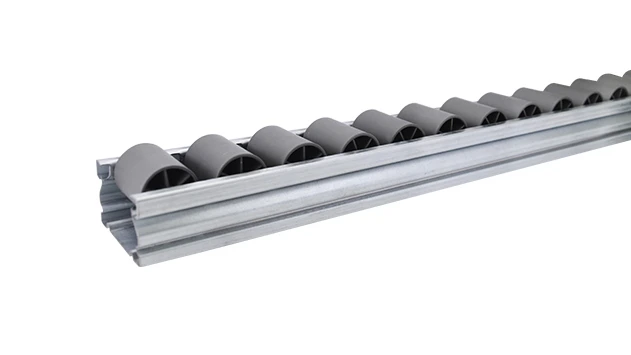
Walk onto any bustling factory floor, warehouse, or production line, and you'll spot them—those silent workhorses moving parts, components, and goods with effortless precision: roller tracks. Today, we're zeroing in on a standout performer in this space: the 60 Steel Roller Track Grey. We'll unpack its surface hardness, how it fights wear and tear, and why it's a cornerstone of efficient lean manufacturing systems. Whether you're setting up a conveyor, building a flow rack, or designing a lean workbench, understanding this component's strengths will help you make smarter decisions for your operations.
What Is 60 Steel Roller Track Grey?
60 Steel Roller Track Grey is a heavy-duty industrial component crafted from 60-grade medium-carbon steel. This steel variant is prized for its balance of strength, toughness, and machinability—making it ideal for parts that need to withstand constant use and heavy loads. The "grey" in its name comes from a specialized surface treatment, typically a grey oxide coating or phosphating process, which adds a protective layer against corrosion and enhances its visual appeal.
You'll find this roller track in a wide range of applications: conveyors transporting components through assembly lines, flow racks organizing parts for quick pick-and-place in warehouses, and even integrated into lean workstations to deliver materials directly to workers. Its versatility and durability make it a go-to choice for industries like automotive, 3C assembly, medical device manufacturing, and (warehousing and logistics).
Surface Hardness: The Foundation of Durability
Surface hardness is the measure of a material's ability to resist indentation, scratching, or deformation when subjected to external force. For roller tracks, this property is non-negotiable—every time a part slides over the rollers, friction occurs, and over time, this friction wears down the surface. The harder the surface, the longer it can resist this wear.
60 Steel Roller Track Grey typically boasts a surface hardness of 45-50 on the Rockwell C scale (HRC). To put this in context:
- A standard aluminum roller track has a hardness of 15-20 HRC.
- A plastic roller track (like yellow or grey plastic guides) sits at 5-10 HRC.
- A stainless steel roller track is around 30-35 HRC.
This means the 60 Steel Grey track is significantly harder than most alternatives, making it far more resistant to scratches, dents, and general wear.
| Material Type | Typical Surface Hardness (HRC) | Key Wear Resistance Feature |
|---|---|---|
| 60 Steel Roller Track Grey | 45-50 | High hardness + corrosion-resistant grey coating |
| Aluminum Roller Track | 15-20 | Lightweight + corrosion-resistant (but lower hardness) |
| Plastic Roller Track | 5-10 | Low friction + cost-effective (but limited durability) |
| Stainless Steel Roller Track | 30-35 | Corrosion-resistant + hygienic (but less hard than 60 steel) |
The Science Behind Wear & Tear Resistance
Wear and tear in roller tracks comes in three main forms: abrasive, adhesive, and fatigue wear. Let's break down how 60 Steel Roller Track Grey combats each:
**Abrasive Wear**: This occurs when hard particles (like metal shavings, sand, or dust) get trapped between the roller and the material being transported. These particles act like sandpaper, scratching the surface. The high hardness of 60 steel means these particles can't easily indent or scratch the track—keeping it smooth and functional for longer.
**Adhesive Wear**: When two surfaces come into contact under pressure, they can stick together (a process called cold welding). When they separate, small pieces of material are pulled off, causing wear. The smooth, hard surface of the 60 Steel Grey track reduces the contact area where sticking can occur, minimizing adhesive wear. The grey coating also acts as a barrier, preventing direct metal-to-metal contact.
**Fatigue Wear**: Repeated stress from heavy loads or constant movement can cause tiny cracks to form on the surface. Over time, these cracks expand, leading to peeling or flaking. The 60-grade steel's high tensile strength and hardness make it resistant to fatigue—meaning it can handle thousands of cycles without developing cracks that compromise its performance.
How It Fits Into Lean Manufacturing Solutions
Lean manufacturing is all about eliminating waste, improving efficiency, and maximizing value. 60 Steel Roller Track Grey aligns perfectly with these principles, offering benefits that support continuous improvement and sustainable operations:
**Conveyors**: In a lean production line, conveyors with these roller tracks ensure parts move smoothly from one station to the next. The high durability means less downtime for repairs or replacements—critical for maintaining a steady workflow. For example, in an automotive assembly line, a conveyor using 60 Steel Grey tracks can transport heavy engine components without wear, keeping the line running 24/7.
**Flow Racks**: Flow racks are essential for lean material handling, allowing parts to slide forward via gravity as they're used. The smooth, hard surface of the 60 Steel Grey track ensures parts move freely without getting stuck, reducing waste from delays and improving picking efficiency. In a 3C assembly plant, this means workers can quickly access small components like circuit boards, speeding up production.
**Lean Workstations**: A well-designed lean workbench integrates roller tracks to deliver materials directly to the worker's fingertips. The durability of the 60 Steel Grey track means the workstation can handle heavy use day in and day out, supporting the lean of "continuous improvement" (kaizen). Workers don't have to waste time fetching parts—they're delivered right to them, boosting productivity.
**Cost Savings**: While 60 Steel Roller Track Grey may have a higher upfront cost than aluminum or plastic alternatives, its longer lifespan translates to lower total cost of ownership. For instance, if an aluminum track lasts 2 years and costs $100, a 60 Steel Grey track lasting 5 years at $200 is cheaper per year ($40 vs. $50). This aligns with lean's focus on efficient resource use and minimizing waste from frequent replacements.
Maintenance Tips to Maximize Lifespan
Even with its high hardness and durability, proper maintenance is key to extending the life of your 60 Steel Roller Track Grey. Here are some practical tips:
**Regular Cleaning**: Dust and debris can build up between rollers, increasing friction and wear. Wipe the track with a dry cloth or use a brush to remove particles at least once a week. For dusty environments (like woodworking factories), clean daily.
**Lubrication**: Apply a light industrial lubricant (like lithium grease) to the roller bearings every 3-6 months. Avoid over-lubrication—excess grease attracts dust and debris.
**Inspect for Damage**: Check the track monthly for dents, bent rollers, or cracked coatings. replace damaged parts immediately to prevent further issues.
**Avoid Overloading**: Follow the manufacturer's load capacity guidelines. Overloading can cause deformation or breakage, even in high-hardness tracks.
**Corrosion Protection**: If used in wet environments (like food processing plants), apply a corrosion-resistant spray to the track every 6 months to enhance the protective coating.
Why Choose 60 Steel Roller Track Grey Over Alternatives?
Let's compare 60 Steel Roller Track Grey with other common materials to highlight its advantages:
**vs. Aluminum**: Aluminum tracks are lightweight but less hard (15-20 HRC). They're prone to scratching and denting under heavy loads. 60 Steel Grey tracks are heavier but offer far better wear resistance, making them ideal for heavy-duty applications.
**vs. Plastic**: Plastic tracks are cheap but have the lowest hardness (5-10 HRC). They wear quickly under constant use and can't handle heavy loads. 60 Steel Grey tracks are more expensive but last 5x longer, making them a better long-term investment.
**vs. Stainless Steel**: Stainless steel tracks are corrosion-resistant but less hard (30-35 HRC). They're great for hygienic environments (like medical device manufacturing) but not as durable as 60 Steel Grey for heavy loads.
Conclusion: A Durable Choice for Lean Operations
60 Steel Roller Track Grey is more than just a component—it's a strategic investment in your operation's efficiency and sustainability. Its high surface hardness (45-50 HRC) provides exceptional resistance to wear and tear, while its versatility makes it suitable for a wide range of lean applications, from conveyors to flow racks and workbenches.
By choosing this roller track, you're not only getting a durable product but also supporting lean principles: reducing downtime, improving efficiency, and minimizing waste. Whether you're in automotive, 3C assembly, or warehousing, 60 Steel Roller Track Grey is a reliable choice that will serve your business well for years to come.
In the fast-paced world of manufacturing, every component counts. The 60 Steel Roller Track Grey stands out as a durable, efficient, and cost-effective solution—proving that sometimes, the hardest choices (pun intended) are the best ones for your bottom line.