- Company Articles
- Products and Technology
- Product knowledge
- Surface Smoothness of Single Side Aluminum Pipe: Preventing Part Scratches

Surface Smoothness of Single Side Aluminum Pipe: Preventing Part Scratches
Related Product
Single Side Aluminum Pipe
The single-sided plane can be installed with a back-mounted material box, and can also be used as a sidewall or partition.
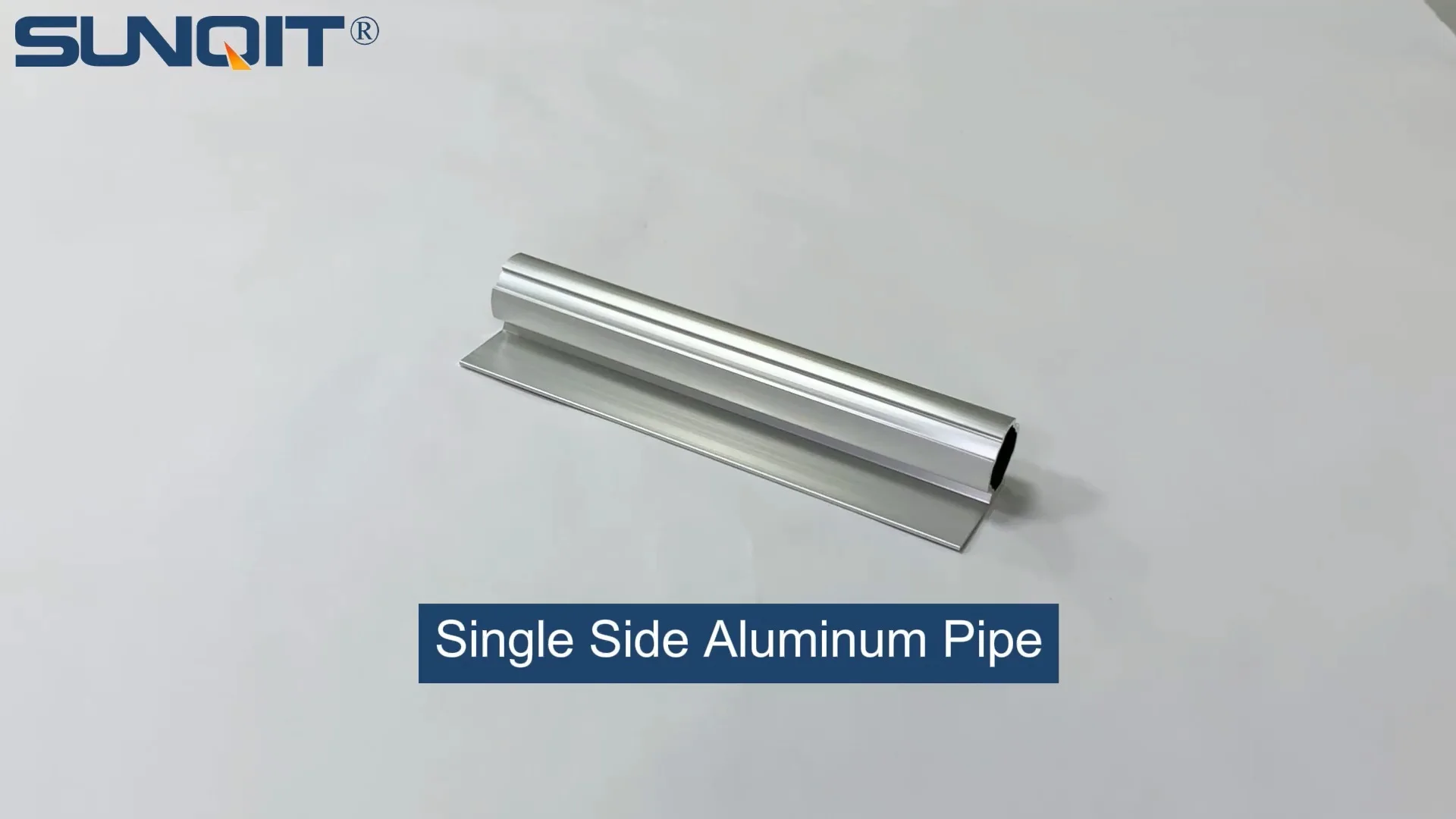
In the fast-paced world of manufacturing, where every second counts and precision is non-negotiable, even the smallest imperfection can send ripples through an entire production line. Imagine this: a worker carefully slides a sensitive electronic component across a workbench, only to notice a tiny scratch marring its surface. That scratch might seem insignificant, but in reality, it could lead to product defects, customer returns, or even costly rework. This is where the unassuming hero of many production floors comes into play: the single side aluminum pipe. Its surface smoothness isn't just a nice-to-have feature—it's a critical factor in keeping your operations running smoothly, your parts intact, and your lean system firing on all cylinders.
What Exactly Is Single Side Aluminum Pipe?
If you've ever walked through a factory, warehouse, or assembly plant, you've probably seen single side aluminum pipe without even realizing it. It's the sleek, lightweight tubing that forms the backbone of workbenches, the rails of conveyor systems, and the frames of material racks. Unlike traditional steel pipes, which can be heavy and prone to rust, single side aluminum pipe offers the best of both worlds: durability and maneuverability. But what sets it apart, and why does its surface matter so much?
Single side aluminum pipe is extruded with a focus on one smooth, continuous surface—typically the side that comes into contact with parts, tools, or workers. The other side might have a different finish or texture, designed for structural support or to accommodate aluminum pipe accessories like joints, clamps, or roller tracks. This intentional design makes it ideal for applications where parts slide, glide, or rest on the pipe's surface. Think about a workbench where delicate circuit boards are assembled: the last thing you want is a rough edge catching on a component. Or a conveyor system moving plastic parts: a bumpy surface could cause parts to jostle, scratch, or even fall off the line.
Why Surface Smoothness Is a Big Deal in Lean Systems
If your operation runs on a lean system, you know the name of the game is eliminating waste—whether that's time, materials, or defects. Every scratch on a part is a form of waste: it means rework, it means lost time, and it means your team isn't operating at peak efficiency. Surface smoothness in single side aluminum pipe directly addresses this by acting as a silent guardian against such waste.
Let's break it down. In a lean system, production flows like a well-choreographed dance. Parts move from one station to the next, tools are within arm's reach, and every step is optimized to avoid unnecessary motion. If the aluminum pipe on a workbench or conveyor has a rough spot, that dance gets disrupted. A part might get stuck, requiring a worker to stop and free it—wasting precious seconds. Or worse, the rough spot could scratch the part, turning a good component into a reject. Over time, these small disruptions add up: missed deadlines, increased costs, and a system that's no longer "lean."
On the flip side, a smooth surface keeps things moving. Parts glide effortlessly across workbenches equipped with single side aluminum pipe, roller tracks with plastic guide rails (whether yellow or grey) roll without resistance, and swivel roller balls (1 inch or 0.5 inch) spin freely, ensuring materials are transferred without a hitch. It's the kind of detail that doesn't make headlines, but it's the reason your lean system can deliver on its promise of efficiency.

Common Culprits Behind Scratches: What's Hurting Your Pipes?
Even the smoothest single side aluminum pipe can fall victim to scratches if you're not careful. Understanding what causes these scratches is the first step in preventing them. Let's take a look at the usual suspects:
| Scratch Cause | How It Happens | Preventive Tip |
|---|---|---|
| Rough Extrusion or Manufacturing Defects | If the pipe isn't extruded with precise dies, it might have bumps, ridges, or uneven edges right off the production line. | Choose suppliers with strict quality control—look for pipes with a Ra (roughness average) value below 0.8 μm for critical applications. |
| Poorly Designed Aluminum Pipe Accessories | Joints, clamps, or end caps with sharp edges can rub against the pipe surface during installation or use. | Opt for accessories with rounded edges, like plastic roller track guide rails or nylon swivel roller balls, which are gentler on surfaces. |
| Careless Handling During Installation | Dragging pipes across concrete floors, dropping them, or using metal tools to tighten joints can leave deep scratches. | Use padded carts for transport, wear gloves when handling, and tighten joints with plastic or rubber-coated tools. |
| Environmental Debris | Dust, metal shavings, or grit on the pipe surface can act like sandpaper when parts slide over it. | Wipe down pipes daily with a soft, lint-free cloth and keep work areas clean with regular sweeping or vacuuming. |

How Single Side Aluminum Pipe Achieves That "Baby-Smooth" Finish
So, what makes single side aluminum pipe so much smoother than, say, a standard steel pipe or even a regular aluminum pipe? It all comes down to the manufacturing process. Let's pull back the curtain a bit.
First, the extrusion process. Single side aluminum pipe is made by forcing heated aluminum through a precision die. The die is engineered to create a smooth, uniform surface on one side, with the other side often designed to lock into aluminum pipe accessories (like internal rotatary aluminum joints or parallel fixation aluminum pipe joints) without compromising the smooth side. This die isn't just a mold—it's a tool that's calibrated to the micrometer to ensure no rough spots or imperfections make it through.
After extrusion, many pipes undergo additional finishing steps. Anodizing is a common one: this electrochemical process creates a protective oxide layer on the aluminum surface, which not only boosts corrosion resistance but also enhances smoothness. Some pipes might also be polished or coated with a clear sealant to fill in any microscopic valleys, resulting in a surface that feels almost slippery to the touch.
Quality control is another key piece of the puzzle. Reputable manufacturers don't just extrude the pipe and ship it—they inspect every batch. This might involve visual checks under bright lights to spot scratches or dents, or using specialized tools to measure surface roughness (that Ra value we mentioned earlier). For example, a pipe intended for use with delicate electronics might need an Ra value of 0.4 μm or lower, while a pipe for a heavy-duty material rack might be acceptable at 0.8 μm. These standards ensure that when you order single side aluminum pipe, you're getting a product that's ready to protect your parts, not damage them.

Aluminum Pipe Accessories: Your Allies in the Fight Against Scratches
You could have the smoothest single side aluminum pipe in the world, but if you pair it with low-quality accessories, you're asking for trouble. Aluminum pipe accessories—things like joints, clamps, roller tracks, and end caps—play a huge role in preserving surface smoothness and preventing scratches on both the pipe and the parts it touches.
Let's take roller tracks, for example. A plastic roller track guide rail (yellow or grey) is designed to be gentle on parts. The plastic has a smooth, non-abrasive surface that won't scratch even soft materials like plastic or painted metal. Compare that to a metal guide rail with rough edges—every time a part slides over it, it's at risk of picking up a scratch. Similarly, swivel roller balls (whether 1 inch, 0.5 inch, or stainless steel) are engineered to rotate freely, so parts glide over them without friction. If those roller balls are cheaply made, with rough seams or uneven surfaces, they'll act like tiny abrasives, leaving marks on everything they touch.
Joints are another area where quality matters. Internal rotatary aluminum joints, for instance, are designed to connect pipes without protruding edges. When installed correctly, they sit flush against the pipe, so there's no sharp corner to catch on parts or tools. On the flip side, a poorly made joint with a jagged edge can scratch the pipe itself during installation, creating a rough spot that then scratches parts down the line. It's a domino effect—one bad accessory can undo all the good work of a smooth pipe.
Even something as simple as an end cap can make a difference. A plastic pipe end cap with a smooth, rounded edge prevents the pipe's cut end (which might be sharp) from scratching workers or parts. Without it, that raw edge is a scratch waiting to happen.
Real-World Results: How Smooth Pipes Transformed One Factory's Defect Rate
Talk is cheap—let's look at a real example of how surface smoothness in single side aluminum pipe made a tangible difference. A mid-sized electronics manufacturer we worked with a few years back was struggling with a frustrating problem: about 8% of their circuit boards were coming off the assembly line with tiny scratches. These scratches weren't deep enough to render the boards completely useless, but they were enough to fail the company's quality checks, leading to rework and delays.
After some investigation, the team traced the issue to their workbenches. The benches were made with older steel pipes that had developed rough patches over time, and the plastic roller track guide rails were cracked and discolored, with sharp edges where the plastic had worn away. Parts were sliding over these rough surfaces, picking up scratches before they even reached the assembly stage.
The solution? They replaced the steel pipes with single side aluminum pipe and swapped out the old roller tracks for new ones with grey plastic guide rails. They also upgraded to stainless steel swivel roller balls (1 inch) on their material transfer stations to ensure smoother movement. Within a month, the defect rate dropped from 8% to just 1.5%. The production manager later told us, "It's like night and day. We used to spend hours inspecting for scratches; now, we barely find any. The team's morale is up, and we're hitting our deadlines without the stress of rework."
This isn't an isolated case. Factories, warehouses, and assembly plants across industries are seeing similar results when they prioritize surface smoothness in their aluminum pipe systems. It's a small investment that pays off in big ways: happier customers, fewer headaches, and a lean system that truly lives up to its name.
Testing Surface Smoothness: What to Look For (Even If You're Not a Expert)
You don't need a Ph.D. in materials science to check if a single side aluminum pipe has a smooth enough surface. Here are a few simple tests you can do when evaluating pipes or inspecting your existing setup:
- The "Finger Test": Run your finger gently along the smooth side of the pipe. It should feel uniformly smooth, with no bumps, ridges, or rough spots. If you feel any grit or unevenness, that's a red flag.
- The "Light Reflection Test": Hold the pipe up to a light source (natural light works best). Tilt it slightly—you should see a consistent reflection along the entire smooth surface. Dark spots or distortions could indicate scratches or dents.
- The "Tape Test": Press a piece of clear tape firmly onto the pipe's surface, then peel it off slowly. If the tape picks up any debris or metal shavings, the surface might be rough enough to scratch parts.
- Check the Ra Value: If you're ordering new pipes, ask the supplier for the Ra (roughness average) value. For most manufacturing applications, an Ra of 0.8 μm or lower is ideal. For delicate parts (like electronics), aim for 0.4 μm or lower.
Best Practices for Keeping Your Pipes Smooth (Long After Installation)
Surface smoothness isn't a "set it and forget it" feature. To keep your single side aluminum pipe in top shape, you'll need to adopt a few simple maintenance habits:
1. Handle with Care: Train your team to treat aluminum pipes gently. No dragging them across the floor, no dropping them, and no using them as makeshift hammers or levers. When moving pipes, use padded carts or slings to prevent dents and scratches.
2. Clean Regularly: A quick wipe-down with a soft, damp cloth (avoid abrasive sponges or cleaners) will remove dust, oil, and debris that can cause scratches over time. For stubborn grime, use a mild soap solution—never harsh chemicals like bleach or ammonia.
3. Inspect Accessories: Check aluminum pipe accessories like joints, clamps, and roller tracks regularly for signs of wear. If a joint starts to protrude or a roller track guide rail cracks, replace it immediately—don't wait for it to scratch a part.
4. Protect During Storage: If you're storing extra pipes, keep them on a rack with padded supports, not directly on the ground. Cover them with a breathable cloth to keep dust off, but avoid plastic tarps, which can trap moisture and cause corrosion (even on aluminum).
5. Address Scratches Promptly: If you do notice a small scratch on a pipe, don't ignore it. Use a fine-grit sandpaper (400 grit or higher) to gently buff the area, then wipe it clean and apply a clear aluminum sealant to protect the spot from further damage.
Wrapping It Up: Smooth Pipes, Smooth Operations
At the end of the day, surface smoothness in single side aluminum pipe is about more than just aesthetics. It's about protecting your parts, your team's hard work, and your bottom line. In a lean system where every detail counts, a smooth pipe isn't a luxury—it's a necessity. It keeps production flowing, reduces waste, and ensures that the parts leaving your facility are as perfect as the day they were made.
So, the next time you walk through your production floor, take a closer look at those aluminum pipes. Run your hand along their surface. Are they smooth? Or are there rough spots waiting to scratch your next batch of parts? Investing in high-quality single side aluminum pipe and the right aluminum pipe accessories might not seem like the most exciting upgrade, but it's one that will pay off in smoother operations, happier customers, and a lean system that truly delivers.
After all, in manufacturing, the little things often make the biggest difference. And when it comes to surface smoothness, there's no such thing as "good enough."