- Company Articles
- Products and Technology
- Product knowledge
- Surface Treatment of 4040r EU Standard Aluminum Profile: Corrosion Resistance

Surface Treatment of 4040r EU Standard Aluminum Profile: Corrosion Resistance
Related Product
4040R EU Standard Aluminum Profile
4040R is a 4.00x4.00 CM fractional 40 series square extrusion T-slot profile with two side open T-slots, each side with 4.00cm face,the other side is round face. The profile has align-a-grooves to assist in aligning connecting profiles.
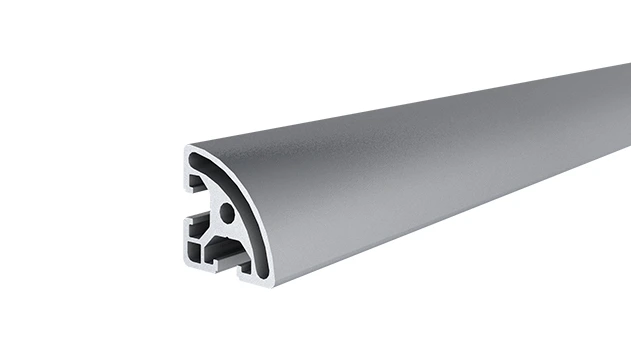
Walk into any modern factory, warehouse, or assembly line, and you'll likely spot the unsung heroes of industrial efficiency: aluminum profiles. These sleek, modular structures form the backbone of workbenches where products take shape, material racks that keep parts organized, and lean systems that streamline operations from start to finish. Among the most versatile and widely used is the 4040r EU standard aluminum profile —a 40mm x 40mm workhorse designed to meet strict European quality standards. But what makes this profile truly indispensable isn't just its strength or flexibility; it's the surface treatment that protects it from corrosion, ensuring it stands the test of time in even the toughest industrial environments.
In this article, we'll dive deep into the world of surface treatments for 4040r EU standard aluminum profiles, focusing on how these processes enhance corrosion resistance. We'll explore why corrosion protection matters (hint: it's not just about longevity), break down the most effective treatment methods, and look at real-world applications—from the workbench where technicians assemble electronics to the material rack b (3 row and 3 floor) that keeps production lines supplied. By the end, you'll understand why choosing the right surface treatment isn't just a technical detail, but a critical decision that impacts safety, efficiency, and the bottom line.
What Is the 4040r EU Standard Aluminum Profile?
Before we get into surface treatments, let's take a moment to appreciate the 4040r EU standard aluminum profile itself. At its core, it's a rectangular extrusion with a 40mm width and 40mm height, featuring a "r" (rounded) edge design that adds both safety and aesthetic appeal. Unlike generic aluminum tubes, the 4040r profile adheres to EU standards, which means strict tolerances for dimensions, material purity, and mechanical properties. This isn't just red tape—these standards ensure consistency, so when you buy a 4040r profile from a reputable aluminum profile supplier , you know it will fit perfectly with aluminum profile accessories like connectors, end caps, and brackets.
Why is this profile so popular? Its versatility. It's used to build everything from lightweight workbenches to heavy-duty material racks, from conveyor frames to machine guards. In lean manufacturing systems, where adaptability is key, the 4040r profile shines: its T-slot design allows for quick adjustments—add a shelf here, a tool holder there—without welding or drilling. But all this versatility would be for naught if the profile couldn't withstand the environments it's exposed to. Factories are harsh places: humidity, oils, chemicals, and even salt air in coastal locations can all take a toll on untreated aluminum. That's where surface treatment comes in.
Why Corrosion Resistance Matters: More Than Just "Looking Good"
Corrosion is aluminum's silent enemy. While aluminum naturally forms a thin oxide layer when exposed to air—this is why untreated aluminum doesn't rust like steel—this layer is fragile. Scratches, moisture, or exposure to acidic or alkaline substances can break it down, leading to pitting, discoloration, or even structural weakening. For industrial equipment, this isn't just a cosmetic issue.
Imagine a material rack b (3 row and 3 floor) in a food processing plant. It holds plastic bins of ingredients, and the air is humid with steam from cooking processes. Without proper corrosion protection, the aluminum profile could start to degrade. Over time, the rack might bend under the weight of the bins, risking spills or injuries. Or consider a workbench in an electronics assembly line: corrosion could create rough edges that damage sensitive components or leave metal particles that interfere with circuit boards. In short, corrosion resistance isn't just about making profiles look new—it's about maintaining safety, reliability, and efficiency.
For businesses, the cost of ignoring corrosion resistance is steep. A rusted material rack might need replacement after 2-3 years, while a properly treated one could last 10+ years. That's not just the cost of the rack itself; it's the downtime to replace it, the labor to move materials, and the risk of production delays. In lean systems, where every minute counts, unplanned downtime is the enemy. Surface treatment isn't an extra expense—it's an investment in long-term productivity.

Surface Treatment Methods: Protecting 4040r Profiles from the Inside Out
So, how do manufacturers protect 4040r EU standard aluminum profiles from corrosion? There are several tried-and-true methods, each with its own strengths, weaknesses, and ideal use cases. Let's break them down.
1. Anodizing: The Gold Standard for Durability
Anodizing is perhaps the most well-known surface treatment for aluminum, and for good reason. It's an electrochemical process that thickens the natural oxide layer on the aluminum's surface, turning it into a hard, porous coating that's resistant to corrosion and wear. Here's how it works: the aluminum profile is submerged in an electrolyte bath (usually sulfuric acid) and becomes the anode in an electrical circuit. When current is applied, oxygen ions are released, reacting with the aluminum to form aluminum oxide (Al₂O₃). The result? A coating that's integrated with the base metal, so it won't chip or peel like paint.
Anodized 4040r profiles are prized for their durability. The coating can be dyed in a range of colors (though natural silver is most common in industrial settings) and has a matte, uniform finish. It's especially resistant to salt spray, making it ideal for coastal factories or marine applications. In one test, anodized aluminum profiles exposed to 500 hours of salt spray (equivalent to years of coastal exposure) showed no signs of corrosion—unlike untreated profiles, which pitted and discolored within days.
But anodizing isn't perfect. It's more expensive than some other treatments, and the porous surface can absorb oils or stains if not sealed properly. For applications where aesthetics matter less than cost, other methods might be preferable. Still, for high-wear, high-moisture environments—like the workbench in a car repair shop or a material rack b (3 row and 3 floor) near a washing station—anodizing is hard to beat.
2. Powder Coating: Colorful, Cost-Effective Protection
If anodizing is the "durable workhorse," powder coating is the "versatile artist." This process involves applying a dry powder (usually polyester or epoxy) to the aluminum profile using an electrostatic gun, then curing it in an oven at high temperatures (around 180-200°C). The heat melts the powder, forming a smooth, hard film that adheres tightly to the surface. Unlike liquid paint, powder coating contains no solvents, so it's more environmentally friendly and produces less waste.
Powder coating offers excellent corrosion resistance, thanks to its thick, uniform layer. It's also highly customizable: powders come in hundreds of colors, textures (matte, gloss, textured), and even special finishes like anti-slip or ESD (electrostatic discharge) for electronics manufacturing. For a workbench in a colorful factory or a material rack that needs to match a company's brand colors, powder coating is the way to go.
Another advantage? Cost. Powder coating is generally cheaper than anodizing, making it popular for small businesses or large-scale projects where budget is a concern. It's also more resistant to chipping than liquid paint, though it can scratch if hit with heavy objects. For example, a material rack b (3 row and 3 floor) in a warehouse, where bins are slid in and out daily, might benefit from a textured powder coat to hide minor scratches.
3. Electrophoretic Coating: Smooth, Uniform Protection
Electrophoretic coating (also called e-coating or electrocoating) is a hybrid of anodizing and painting. Like anodizing, it uses an electrical current to deposit a coating, but instead of forming an oxide layer, it deposits pigmented resin particles. The process starts with cleaning the aluminum profile to remove oils and oxides, then submerging it in a bath of water-based paint containing charged particles. The profile is made the cathode, attracting the positively charged paint particles. After deposition, the profile is baked to cure the resin, resulting in a smooth, even finish.
E-coating offers excellent corrosion resistance, especially in humid or chemical-rich environments. The finish is thinner than powder coating but more uniform, with no drips or runs—ideal for complex profiles with tight corners or T-slots, where powder might struggle to reach. It's often used as a base coat under powder coating for extra protection, but it can also stand alone for a sleek, understated look.
One downside? E-coating is less durable than anodizing or powder coating when it comes to abrasion. A sharp tool dropped on an e-coated workbench might scratch the surface, exposing the aluminum underneath. For low-wear applications, though—like material racks in dry storage areas—it's a cost-effective, reliable choice.
| Surface Treatment | Process Overview | Corrosion Resistance | Durability (Abrasion) | Cost (Relative) | Ideal Applications |
|---|---|---|---|---|---|
| Anodizing | Electrochemical process thickens natural oxide layer | Excellent (resists salt spray, moisture, chemicals) | High (hard, scratch-resistant surface) | High | Coastal factories, high-wear workbenches, marine environments |
| Powder Coating | Electrostatic application of dry powder, cured with heat | Very Good (thick, uniform layer resists moisture) | Medium-High (resistant to chipping, less scratch-resistant than anodizing) | Medium | Color-coded material racks, general factory workbenches, brand-matched equipment |
| Electrophoretic Coating | Electrical deposition of pigmented resin particles | Good (resists humidity, mild chemicals) | Medium (smooth finish, prone to scratching) | Medium-Low | Dry storage racks, low-wear assembly lines, base coat for powder coating |
Real-World Applications: How Surface Treatment Protects Workbenches and Material Racks
To understand why surface treatment matters, let's look at two common applications of 4040r EU standard aluminum profiles: the humble workbench and the material rack b (3 row and 3 floor) . These are workhorses in any factory, and their performance directly impacts daily operations.
Workbench: Where Precision Meets Durability
A typical workbench built with 4040r profiles might be used for assembling small parts, testing electronics, or packing products. It needs to be flat, stable, and resistant to the daily wear and tear of tools, spills, and constant use. Let's say this workbench is in a pharmaceutical factory, where cleanliness is critical. The air is kept at a steady humidity to prevent product degradation, and the bench is wiped down daily with disinfectants. Without proper surface treatment, the aluminum profile could react with the disinfectants, leading to discoloration or pitting. Anodized aluminum, with its non-porous, chemical-resistant surface, would stand up to this environment, ensuring the bench remains clean and functional for years.
In a more rugged setting—say, a mechanic's workshop—the workbench might be exposed to oil spills, grease, and heavy tools. Here, powder coating would be a smart choice. Its thick layer resists oil absorption, and if a wrench is dropped, the coating is less likely to chip than e-coating. Plus, a textured powder coat could add grip, preventing tools from sliding off the bench.
Material Rack B (3 Row and 3 Floor): Heavy-Duty Storage That Lasts
Material rack b is designed for high-density storage: 3 rows and 3 floors of shelves, each holding bins of parts, raw materials, or finished products. In a warehouse, this rack might be moved with a forklift (carefully!), exposed to dust, and loaded with heavy bins day in and day out. Corrosion here isn't just about the rack looking good—it's about structural integrity. A corroded profile could weaken, causing the shelves to sag or even collapse.
If the warehouse is near the coast, salt air is a constant threat. Anodized 4040r profiles would be ideal here, as they resist salt-induced corrosion. For a warehouse in a dry, inland area, powder coating might be sufficient—and more budget-friendly. Either way, the surface treatment ensures the rack can handle the weight of the materials (often hundreds of kilograms) without degrading. And when paired with aluminum profile accessories like heavy-duty brackets and end caps (which are also treated for corrosion), the rack becomes a reliable, long-term storage solution.
Choosing the Right Surface Treatment: It's All About the Environment
So, how do you choose between anodizing, powder coating, and electrophoretic coating for your 4040r EU standard aluminum profile? The answer depends on three key factors: the environment the profile will be in, the level of wear it will face, and your budget.
Environment: If the profile will be exposed to salt water, high humidity, or chemicals (like in a factory with cleaning agents), anodizing is the best bet. For dry, indoor environments with minimal chemical exposure, powder coating or e-coating works well.
Wear and Tear: High-traffic areas—like workbenches where tools are constantly placed and moved—need the abrasion resistance of anodizing or powder coating. Low-wear areas, like overhead racks, can get by with e-coating.
Budget: E-coating is the most affordable, followed by powder coating, then anodizing. But remember: the cheapest option upfront might cost more in the long run if it needs frequent replacement.
Don't forget to consider aluminum profile accessories , too. Brackets, connectors, and end caps should be treated with the same care as the profiles themselves. A corroded bracket could fail, even if the profile is pristine. Reputable suppliers will offer accessories with matching surface treatments, ensuring your entire system is protected.
Conclusion: Corrosion Resistance as a Foundation of Lean Systems
The 4040r EU standard aluminum profile is more than just a piece of metal—it's a building block of modern industrial efficiency. Whether it's forming the frame of a workbench where innovation happens or supporting a material rack b (3 row and 3 floor) that keeps production flowing, its performance depends on one critical factor: surface treatment. By choosing the right method—anodizing for durability, powder coating for versatility, or e-coating for cost-effectiveness—businesses can ensure their aluminum profiles resist corrosion, stand up to daily wear, and contribute to the reliability of their lean system .
In the end, surface treatment isn't an afterthought. It's an investment in safety, productivity, and peace of mind. A well-treated 4040r profile doesn't just last longer—it works harder, keeping your factory running smoothly, your employees safe, and your bottom line healthy. So, the next time you walk past a workbench or material rack, take a moment to appreciate the science (and art) of surface treatment. It's the invisible shield that makes industrial efficiency possible.