- Company Articles
- Products and Technology
- Product knowledge
- Surface Treatment Options for 3030 National Standard Profile A: Anodized vs. Powder Coated

Surface Treatment Options for 3030 National Standard Profile A: Anodized vs. Powder Coated
Related Product
3030 National Standard Profile A
Workbench, production line, logistic rack, warehouse rack Industry: Manufacturer workshop, Automobile, Electronic, Assembling, logistic
Walk into any modern manufacturing facility, workshop, or even a sleek retail display, and you'll likely spot aluminum profiles holding everything together. These unassuming metal frameworks are the unsung heroes of efficiency, versatility, and durability—especially when it comes to building workbenches, material racks, conveyor systems, or turnover trolleys. Among the countless aluminum profiles available, one stands out for its balance of strength, adaptability, and cost-effectiveness: the 3030 National Standard Profile A. But here's the thing about this profile that often flies under the radar: its performance isn't just about the metal itself. The surface treatment you choose—whether anodized or powder coated—can make or break its lifespan, functionality, and even its ability to work with essential aluminum profile accessories. Let's dive into why this decision matters, how these two treatments stack up, and which one might be right for your next project.
First, Let's Talk About 3030 National Standard Profile A
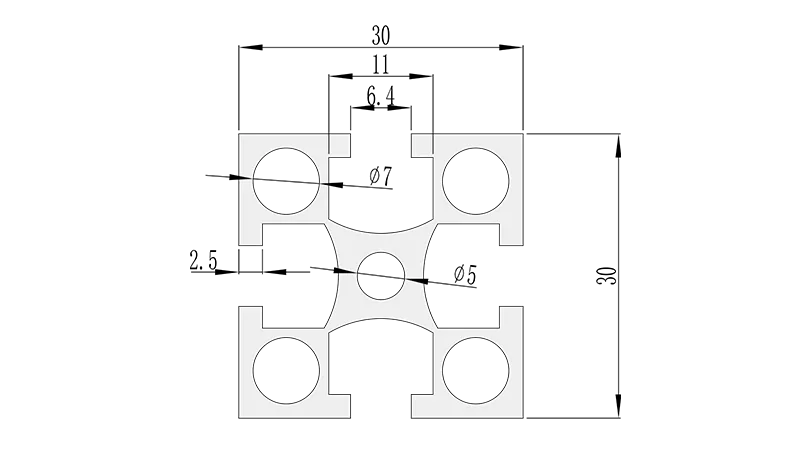
Before we get into surface treatments, let's make sure we're all on the same page about the star of the show: the 3030 National Standard Profile A. If you're not familiar with aluminum profiles, think of them as modular building blocks. This particular profile gets its name from its dimensions—30mm by 30mm—and the "National Standard" label means it adheres to strict size and quality guidelines, ensuring consistency whether you're buying from one supplier or another. Its T-slot design (those grooves running along its length) is what makes it so versatile: you can slide in aluminum profile fixings like bolts, brackets, or hinges, attach aluminum profile rubber strips for sealing, or even mount tools directly to the frame without drilling. It's lightweight but surprisingly strong, which is why it's a go-to for everything from workbenches in small garages to large-scale assembly lines in factories.
But here's the catch: raw aluminum is reactive. Exposed to moisture, chemicals, or even just the air, it can corrode, tarnish, or scratch—quickly turning that sleek frame into an eyesore that compromises structural integrity. That's where surface treatments come in. They're like a suit of armor for your 3030 National Standard Profile A, protecting it from the elements while also enhancing its look and functionality. And when it comes to armor, two options dominate the market: anodizing and powder coating. Let's break down how each works.
Why Surface Treatment Isn't Just About Looks
You might be thinking, "Can't I just leave the aluminum as it is? It's already metal, right?" Well, technically, yes—but you'd be setting yourself up for headaches down the line. Aluminum naturally forms a thin oxide layer when exposed to oxygen, which offers some protection, but it's fragile. A quick scratch or a splash of acidic liquid can wear it away, leading to corrosion, discoloration, or even pitting. Surface treatments take that natural protection to the next level. They don't just add a layer; they transform the surface itself, making it more resistant to scratches, chemicals, and UV rays. And it's not all about durability, either. The right treatment can make cleaning easier (no more stubborn fingerprints!), improve grip for tools or parts, and even help your profile blend in (or stand out!) in its environment. Plus, when you're using aluminum profile accessories like rubber strips or fixings, the texture and adhesion of the surface can affect how well those accessories stay in place. A poorly treated surface might mean your rubber strip peels off mid-project or your fixing slips loose—definitely not what you want when you're relying on that profile to hold up a workbench or support a conveyor.
Anodized: The "Natural" Armor for Aluminum
Anodizing is like giving your aluminum profile a supercharged version of its natural oxide layer. Instead of letting nature take its slow, uneven course, anodizing uses an electrolytic process to grow a thicker, denser oxide film right on the surface of the metal. Here's how it works, in simple terms: The 3030 National Standard Profile A is submerged in an acid bath (usually sulfuric acid) and connected to an electrical current. When the current runs, oxygen ions are released, bonding with the aluminum to form aluminum oxide. This oxide layer isn't just stuck on top—it's chemically integrated with the metal, so it won't chip or peel off like paint. The result? A surface that's harder, more corrosion-resistant, and has a subtle, matte finish that highlights the aluminum's natural texture.
But anodizing isn't a one-size-fits-all process. You can control the thickness of the oxide layer (measured in microns) depending on your needs. For most industrial applications, a layer between 10-20 microns is standard—enough to resist daily wear and tear without adding too much bulk. You can also dye the anodized layer during the process, giving you a range of colors from classic silver to deep blacks, blues, or reds. That said, the color options are more limited than powder coating, and the finish tends to be more muted, with a slightly metallic sheen that still feels "aluminum-like."
So, what are the perks of choosing anodized for your 3030 National Standard Profile A? First, durability. Anodized surfaces are scratch-resistant (though not scratch-proof—nothing is!) and hold up well to exposure to water, oils, and mild chemicals. If you're using your profile in a humid environment (like a food processing plant) or near oils and coolants (common in manufacturing), anodizing is a solid bet. Second, low maintenance. A quick wipe with a damp cloth is usually all it takes to keep anodized aluminum clean—no special cleaners needed. Third, it's eco-friendly. The anodizing process uses recyclable chemicals, and since the layer is integrated into the metal, there's no risk of flaking off into the environment. Finally, it plays well with aluminum profile accessories. The porous nature of the anodized layer (yes, even though it's dense, it has tiny pores that help with dye absorption) can actually improve adhesion for things like aluminum profile rubber strips. Think of it like a rough canvas versus a smooth one—the rubber has more to "grab onto," so it's less likely to peel over time.
Of course, no treatment is perfect. Anodized surfaces can be prone to "etching" if exposed to strong acids or bases, so they're not ideal for environments with heavy chemical exposure (like some industrial cleaning areas). The color range is also more limited—you won't get the bright, bold hues you can with powder coating. And if the anodized layer is damaged (say, by a sharp impact), it can't be easily repaired. You'd have to strip the entire profile and re-anodize it, which is more of a hassle than a quick touch-up.
Powder Coated: The Colorful, Customizable Alternative
If anodizing is about enhancing aluminum's natural properties, powder coating is about transformation. Instead of growing an oxide layer, powder coating applies a dry, fine powder (usually a mix of resin and pigment) to the surface of the 3030 National Standard Profile A, then bakes it at high temperatures (around 180-200°C) to melt and fuse the powder into a smooth, hard finish. It's like painting, but instead of liquid paint, you're using a powder that's electrostatically charged to stick to the metal. The result? A thick, uniform layer that comes in just about any color you can imagine—metallics, gloss, matte, even textures like hammered or wrinkle finishes.
The process starts with prepping the aluminum: cleaning it thoroughly to remove oils, dirt, or oxidation, then sandblasting or etching to give the surface a slight texture (this helps the powder adhere better). Next, the profile is hung on a conveyor and passed through a spray booth, where a gun applies the powder. The electrostatic charge ensures the powder clings evenly, even to hard-to-reach corners of the 3030's T-slots. Then it's off to the curing oven, where the powder melts into a continuous film, bonding to the metal as it cools. The end result is a finish that's not just colorful but also thick—typically 60-120 microns, compared to anodizing's 10-20. That extra thickness means more protection against dents and impacts, which is a big plus if your profile will be moved around a lot (think turnover trolleys or portable workbenches).
So, why choose powder coated over anodized? Let's start with color. If your project needs to match a brand's signature hue, stand out in a retail space, or color-code different work zones (e.g., red for "danger," green for "safe"), powder coating is your best friend. The color options are nearly endless, and the finish is consistent across batches (when done by a reputable supplier). Second, impact resistance. That thick layer acts like a cushion—if a tool drops on a powder coated profile, it's more likely to bounce off without leaving a mark than it would on anodized aluminum. Third, chemical resistance. While anodized aluminum struggles with strong chemicals, powder coated surfaces hold up well to a wider range, including solvents and alkalis. Fourth, it's great for hiding imperfections. If your 3030 National Standard Profile A has minor scratches or dents from manufacturing, powder coating can cover them up, giving you a smooth, flawless look.
But powder coating has its downsides too. The thick layer can affect precision. If you're using aluminum profile fixings that require a tight fit (like brackets that slide into the T-slot), the extra thickness of the powder coat might make those fixings feel "sticky" or require adjustments to the slot size. It's not a dealbreaker, but it's something to keep in mind when ordering accessories. The finish is also more prone to chipping if hit hard—imagine dropping a heavy wrench on it; the powder coat might crack or flake off, exposing the aluminum underneath (which can then start to corrode if not treated). Maintenance is a bit trickier too. While it's still easy to clean, using abrasive sponges or harsh cleaners can scratch the finish. And color matching over time can be tough—if you need to replace a section of powder coated profile a year later, there's a chance the new color might not be an exact match to the old one, thanks to slight variations in the powder or curing process.
Anodized vs. Powder Coated: A Side-by-Side Showdown
Still on the fence? Let's put these two treatments head-to-head with a detailed comparison. We'll cover everything from how they're made to how they work with aluminum profile accessories—so you can see exactly where each shines.
| Feature | Anodized | Powder Coated |
|---|---|---|
| Process | Electrolytic process grows an aluminum oxide layer integrated with the metal. | Electrostatic application of dry powder, cured with heat to form a bonded plastic layer. |
| Appearance | Matte to semi-gloss, metallic finish; highlights aluminum's natural texture. Limited color range (silver, black, bronze, blues, reds). | Smooth, even finish; gloss, matte, or textured options. Unlimited color range, including custom hues and metallics. |
| Durability | Scratch-resistant; holds up to daily wear, but vulnerable to heavy impacts or sharp objects. | Thicker layer resists impacts and dents better; prone to chipping if struck hard. |
| Corrosion Resistance | Excellent in humid, wet, or oil-exposed environments; poor resistance to strong acids/bases. | Very good in most environments; better resistance to chemicals and UV rays than anodized. |
| Color Range | Limited (dye-based, dependent on oxide layer porosity). | Unlimited (pigment-based, can match any color). |
| Cost | Generally higher upfront cost (complex electrolytic process). | Lower upfront cost for large batches; more affordable for custom colors. |
| Maintenance | Easy: wipe with damp cloth; no special cleaners needed. | Easy, but avoid abrasive tools/cleaners to prevent scratching. |
| Accessory Compatibility | Good adhesion for aluminum profile rubber strips (porous surface); smooth finish may require adjusted torque for aluminum profile fixings. | Thicker layer may affect fit of aluminum profile fixings; rubber strip adhesion depends on finish texture (matte better than gloss). |
Real-World Scenarios: When to Pick Which Treatment
Theory is great, but let's talk about how this plays out in actual projects. Here are a few common scenarios where the choice between anodized and powder coated 3030 National Standard Profile A matters—and which treatment comes out on top.
Scenario 1: A Medical Device Assembly Workbench
Medical environments demand cleanliness, corrosion resistance, and a sterile look. The workbench needs to withstand daily wipe-downs with disinfectants (which are often mild chemicals) and can't have any chipping or flaking that might harbor bacteria. Anodized 3030 National Standard Profile A is the way to go here. Its smooth, non-porous (after sealing) surface is easy to sanitize, and the corrosion resistance holds up to those daily disinfectant sprays. Plus, the natural aluminum finish fits the clinical aesthetic of medical settings. Aluminum profile accessories like rubber strips for edge protection will adhere well, and fixings like clamps or tool holders won't slip thanks to the anodized layer's slight texture.
Scenario 2: A Retail Display for a Clothing Brand
Retail is all about branding and aesthetics. The display needs to match the brand's signature color (say, a bright teal) and stand out in a crowded store. It also needs to be durable enough to handle customers bumping into it or staff rearranging merchandise. Powder coated 3030 National Standard Profile A is perfect here. You can get an exact color match for the teal, and the thick finish will resist dents from accidental bumps. The display might use aluminum profile accessories like hooks or shelves, and while the powder coat's thickness might require slight adjustments to the fixings, the visual payoff is worth it. Plus, if a section gets scratched, a quick touch-up with matching powder paint can hide the blemish.
Scenario 3: A Material Rack in a Car Manufacturing Plant
Car manufacturing plants are tough environments: oils, coolants, heavy parts being slid on and off racks, and constant foot traffic. The material rack needs to resist corrosion from oils, stand up to scratches from metal parts, and require minimal maintenance. Anodized 3030 National Standard Profile A is the better choice here. The corrosion resistance handles the oils and coolants, and the scratch-resistant finish can take the abuse of parts being loaded/unloaded. Cleaning is a breeze—just hose it down (if the plant allows) or wipe with a rag. Aluminum profile accessories like roller tracks (for sliding parts) will glide smoothly on the anodized surface, and fixings like brackets won't loosen over time because the anodized layer keeps the metal from warping or corroding.
Scenario 4: A Kids' Play Area Structure
Kids are rough on everything—so the structure needs to be colorful (to appeal to kids), impact-resistant (to handle climbing and jumping), and safe (no sharp edges or flaking paint). Powder coated 3030 National Standard Profile A wins here. You can choose bright, fun colors (red, blue, yellow) to make the play area inviting, and the thick powder coat will resist dents from kids climbing. The finish is also non-toxic, so even if a child chews on it (we know, kids!), there's no risk of harmful chemicals. Aluminum profile accessories like rounded edge caps (to prevent bumps) will adhere well to the powder coat, and the structure can be easily repainted if it gets too scuffed after a few years.
How Surface Treatment Affects Your Aluminum Profile Accessories
We've touched on this a few times, but it's worth diving deeper: your choice of surface treatment doesn't just affect the profile itself—it affects how well it works with the aluminum profile accessories that make your project functional. Let's take a closer look at two key accessories: aluminum profile rubber strips and aluminum profile fixings.
Aluminum Profile Rubber Strips: Adhesion Matters
Rubber strips are essential for many projects—they add grip, cushioning, or sealing (e.g., to keep dust out of a workbench). But if the rubber strip peels off, it's useless. Anodized surfaces tend to have better adhesion for rubber strips because of the porous oxide layer. Even after sealing, those tiny pores create a "rough" surface at the microscopic level, giving the rubber's adhesive something to bond to. Think of it like Velcro: the more hooks and loops, the stronger the hold. Powder coated surfaces, on the other hand, are smooth and non-porous (since the powder melts into a solid film). While modern adhesives can still stick well, they might not be as durable over time—especially if the strip is exposed to heat or moisture. If you're using rubber strips in a high-moisture area (like a kitchen or bathroom), anodized is the safer bet for long-term adhesion.
Aluminum Profile Fixings: Fit and Function
Fixings like bolts, nuts, brackets, and T-slot nuts are what hold your project together. Anodized profiles have a thinner surface layer (10-20 microns), so the fit of fixings is usually consistent with the profile's advertised dimensions. You can use standard T-slot nuts or brackets without worrying about them being too tight. Powder coated profiles, with their thicker layer (60-120 microns), might have slightly reduced slot sizes. For example, a 3030 profile's T-slot is designed to be a certain width, but the powder coat can narrow that slot by a few microns. This might make fixings feel tight or require you to order "oversized" fixings to compensate. It's not a huge issue—most suppliers account for this when selling powder coated profiles—but it's something to check before ordering accessories. You don't want to get to the assembly line and realize your brackets won't slide into the slots!
Caring for Your Treated Profile: Tips for Longevity
No matter which treatment you choose, a little care goes a long way in extending the life of your 3030 National Standard Profile A. Here's how to keep both anodized and powder coated profiles looking and performing their best.
For Anodized Profiles
- Clean regularly: Wipe with a soft cloth and mild soap and water. Avoid abrasive sponges or scouring pads—they can scratch the anodized layer.
- Avoid harsh chemicals: Keep acids, bases, and strong solvents away. If a chemical spill occurs, rinse immediately with water.
- Handle with care: While scratch-resistant, anodized aluminum can still scratch. Use padded gloves when moving heavy parts on the profile, and avoid dragging sharp objects across the surface.
- Inspect for damage: If you notice a scratch or chip, clean the area and apply a clear, anti-corrosion spray to prevent further damage (though this won't restore the anodized layer).
For Powder Coated Profiles
- Clean gently: Use a soft cloth and mild detergent. Avoid abrasive cleaners or pressure washers (high pressure can chip the finish).
- Touch up chips: If the powder coat chips, use a touch-up pen with matching color to cover the exposed aluminum. This prevents corrosion and keeps the profile looking uniform.
- Avoid extreme heat: While powder coats are cured at high temps, prolonged exposure to heat (like near a furnace) can cause discoloration. Keep the profile away from direct heat sources.
- Watch for color fading: If the profile is in direct sunlight, the color might fade over time. Choose UV-resistant powder coats for outdoor or sun-exposed applications.
Making Your Choice: A Quick Decision Guide
Still not sure which treatment is right for you? Ask yourself these questions:
- What's the environment like? Humid, oily, or chemical-heavy? Go anodized. Dry, indoor, or requires bright colors? Powder coated.
- How important is color? Need an exact brand color or bold hues? Powder coated. Happy with natural aluminum or muted tones? Anodized.
- Will it take impacts? Kids, retail, or high-traffic areas? Powder coated (better impact resistance). Industrial racks with sliding parts? Anodized (better scratch resistance).
- What's your budget? Tighter upfront budget? Powder coated (cheaper for large batches). Willing to invest in long-term durability? Anodized (lower maintenance costs over time).
- What accessories are you using? Heavily reliant on rubber strips? Anodized (better adhesion). Using standard fixings without adjustments? Anodized. Okay with slight adjustments to fixings for color? Powder coated.
Wrapping It Up: It's All About Your Project's Needs
At the end of the day, both anodized and powder coated surface treatments are excellent choices for 3030 National Standard Profile A—they just excel in different scenarios. Anodized is the workhorse, perfect for industrial environments, medical settings, or anywhere durability and low maintenance are key. Powder coated is the artist, ideal for retail, branding, or projects where color and customization take center stage. And remember, the profile itself is just the starting point—how it interacts with aluminum profile accessories like rubber strips and fixings can be just as important as the treatment itself. So, take the time to assess your environment, budget, and aesthetic goals, and don't hesitate to ask your supplier for samples of both treatments. Seeing (and feeling!) the difference in person can make all the difference. Whether you go anodized or powder coated, one thing's for sure: with the right surface treatment, your 3030 National Standard Profile A will be ready to tackle whatever your project throws at it—for years to come.