- Company Articles
- Products and Technology
- Product knowledge
- Surface Treatments for 4040C EU Standard Aluminum Profile: Anodizing, Powder Coating & More

Surface Treatments for 4040C EU Standard Aluminum Profile: Anodizing, Powder Coating & More
Related Product
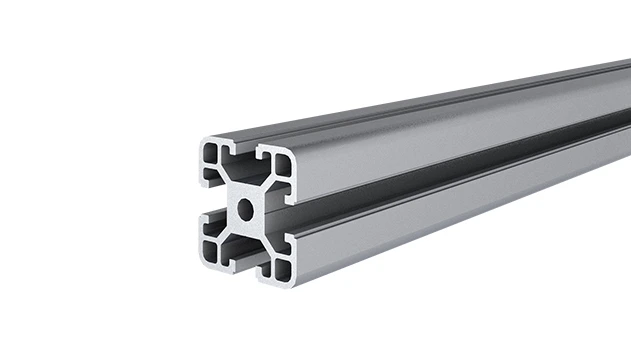
4040C EU Standard Aluminum Profile
4040C is a 4.00x4.00 CM fractional 40 series square extrusion T-slot profile with four open T-slots, each side with 4.00cm face. The profile has align-a-grooves to assist in aligning connecting profiles.
Walk into any modern manufacturing facility, and you'll likely spot a network of sturdy workbenches, organized material racks, and smooth-flowing production lines. Behind much of this efficiency is the 4040C EU standard aluminum profile—a versatile, durable building block that forms the backbone of lean systems across industries. From assembling ESD workstations to constructing multi-tiered material racks, this profile's adaptability makes it a favorite among engineers and facility managers. But what truly elevates its performance? The surface treatments that protect it, enhance its appearance, and tailor it to specific industrial needs. In this guide, we'll dive into the most common surface treatments for 4040C profiles, exploring how processes like anodizing and powder coating transform a simple aluminum extrusion into a workhorse of the factory floor.
Understanding the 4040C EU Standard Aluminum Profile
Before we jump into surface treatments, let's get to know the star of the show: the 4040C EU standard aluminum profile. As the name suggests, it measures 40mm by 40mm in cross-section, with a "C" designation that refers to its specific groove design and wall thickness—features that make it compatible with a wide range of aluminum profile accessories, from internal rotary joints to end caps. Manufactured via extrusion, this profile starts as a billet of aluminum alloy (typically 6063, prized for its excellent extrudability and corrosion resistance) that's forced through a die to create its signature T-slot structure. Those T-slots? They're the secret to its flexibility, allowing easy attachment of brackets, panels, and other components without welding—perfect for lean systems that prioritize quick reconfiguration.
In industrial settings, the 4040C profile shines in applications like workbenches (think "Workbench E (single deck-without caster)" for assembly stations), material racks (such as "Material Rack B (3 row and 3 floor)" for parts storage), and even conveyor frames. But raw aluminum, while strong, is vulnerable: it scratches easily, reacts with moisture, and lacks the visual polish many facilities desire. That's where surface treatments come in—they're not just about looks; they're about extending lifespan, improving functionality, and ensuring the profile holds up in tough environments.
Why Surface Treatment Matters for Aluminum Profiles
Aluminum is naturally corrosion-resistant thanks to a thin oxide layer that forms when it reacts with oxygen. But in industrial environments—where exposure to oils, chemicals, humidity, and physical abrasion is common—this native layer isn't enough. Surface treatments beef up that protection, turning the profile into a resilient asset. Beyond durability, treatments also address practical needs: an ESD workstation, for example, requires a surface that dissipates static electricity, while a material rack in a food processing plant might need a food-safe finish. Aesthetics play a role too; a sleek, uniform surface can (tísheng—elevate) a facility's professionalism, making it easier to identify work zones or brand equipment with company colors.
Simply put, surface treatments bridge the gap between a raw extrusion and a finished, application-ready component. Let's explore the most popular methods, starting with the industry staple: anodizing.

Anodizing: The Industrial Workhorse
Anodizing is often called the "gold standard" for aluminum surface treatment—and for good reason. This electrolytic process doesn't just coat the profile; it transforms its surface, creating a hard, porous oxide layer that's integrated with the base aluminum. The result? A finish that's resistant to corrosion, wear, and fading, making it ideal for high-traffic areas like assembly lines and material handling zones.
How Anodizing Works: A Step-by-Step Breakdown
Anodizing starts long before the profile hits the electrolytic bath. First, the 4040C extrusion undergoes thorough cleaning to remove oils, dirt, and oxidation from the extrusion process. This is usually done with a degreasing agent, followed by rinsing. Next comes pre-treatment: etching (using a caustic solution like sodium hydroxide) to dissolve any surface imperfections and create a uniform texture, then desmutting (with nitric acid) to remove smut—those dark, powdery residues left by etching. These steps ensure the aluminum surface is clean and uniform, so the anodizing layer adheres evenly.
The anodizing itself takes place in a tank filled with an electrolyte solution (most commonly sulfuric acid). The aluminum profile acts as the anode, and a lead plate as the cathode. When an electric current is applied, oxygen ions from the electrolyte bond with the aluminum surface, forming aluminum oxide (Al₂O₃). This oxide layer grows both outward (from the surface) and inward (into the aluminum), creating a strong, integrated barrier. The thickness of this layer depends on the process duration: standard anodizing yields 5–25 microns, while "hard anodizing" (used for high-wear applications) can reach 50–100 microns. After anodizing, the profile is sealed—often in hot water or nickel acetate—to close the pores in the oxide layer, enhancing corrosion resistance and preventing staining.
Why Anodizing is a Top Choice for 4040C Profiles
So, why do manufacturers swear by anodizing for 4040C profiles? Let's count the benefits: unbeatable corrosion resistance , for starters. The sealed oxide layer acts as a barrier against moisture, chemicals, and salt—critical in factories with high humidity or where cleaning agents are used. For example, a 4040C-based material rack storing metal parts in a coastal facility would stay rust-free for years with anodizing, whereas untreated aluminum might develop unsightly spots within months.
Then there's hardness and wear resistance . The anodized layer is significantly harder than raw aluminum (up to 300 HV for standard anodizing, compared to 40–60 HV for untreated 6063 aluminum), making it resistant to scratches from tools, parts, and daily handling. This is a game-changer for workbenches, where surfaces take constant abuse from screwdrivers, wrenches, and heavy components.
Aesthetics are another plus. Anodizing offers a range of natural aluminum tones—from matte silver to a deeper, richer gray—with options for dyed colors (think black, blue, or red) by immersing the profile in a dye bath before sealing. These colors are fade-resistant, too, even under bright factory lights. And because the oxide layer is thin (unlike paint), anodizing doesn't compromise the profile's dimensional accuracy—important when fitting precision aluminum profile accessories like 90° internal joints.
Powder Coating: Color, Durability, and Customization
If anodizing is the "no-nonsense workhorse," powder coating is the "creative chameleon" of surface treatments. Unlike anodizing, which modifies the aluminum's surface, powder coating applies a dry, pigmented powder that's fused into a solid film via heat. The result? A thick, vibrant finish that's perfect for branding, color-coding, or adding a pop of personality to industrial equipment.
The Powder Coating Process: From Powder to Perfect
Powder coating starts with surface preparation—just like anodizing. The 4040C profile is cleaned, degreased, and often sandblasted to create a rough texture that helps the powder adhere. Next, the powder is applied using an electrostatic spray gun: the gun charges the powder particles, and the grounded profile attracts them, ensuring even coverage—even in hard-to-reach spots like T-slot corners. The powder itself is a mix of resin (usually epoxy or polyester), pigment, and additives; thermoset powders (the most common) cure into a cross-linked, durable finish when heated, while thermoplastic powders melt and flow but don't cross-link.
After spraying, the profile moves to a curing oven, where it's heated to 160–200°C for 10–20 minutes. The heat melts the powder, which flows into a smooth film and then cures into a hard coating. The result is a finish that's 50–150 microns thick—much thicker than anodizing—with a texture ranging from glossy to matte, or even textured (think "orange peel" for slip resistance).
When to Choose Powder Coating for 4040C Profiles
Powder coating shines in applications where color and durability go hand in hand. Take material racks, for example: a "Material Rack B (3 row and 3 floor)" used in a warehouse might be powder-coated bright yellow to signal "fast-moving parts" or blue for "electronics components," making inventory checks a breeze. Unlike painted surfaces, powder-coated colors are consistent across batches and resistant to chipping, fading, and chemicals—so that yellow rack will stay vibrant even after years of forklift bumps and cleaning.
Another perk? Environmental friendliness. Powder coating produces little to no volatile organic compounds (VOCs), unlike liquid paint, making it a greener choice for facilities aiming to reduce their carbon footprint. And because overspray can be collected and reused, there's minimal waste—a win for lean systems that prioritize efficiency.
That said, powder coating has limitations. Its thick finish can slightly alter the profile's dimensions, which may require adjustments when using tight-tolerance aluminum profile accessories. It's also less resistant to extreme abrasion than hard anodizing—so a workbench surface that sees heavy tool use might still scratch, though touch-up kits are available for minor damage.
Beyond Anodizing and Powder Coating: Other Notable Treatments
While anodizing and powder coating dominate the industrial scene, there are other surface treatments worth considering for 4040C profiles, depending on your needs. Let's explore a few:
Electrophoresis (E-Coating)
Electrophoresis, or E-coating, is like anodizing's cousin—it uses an electric current to deposit a finish, but instead of oxide, it's a layer of paint. The process involves submerging the profile in a water-based paint bath, applying an electric charge, and letting the paint particles migrate to the surface. E-coating offers exceptional corrosion resistance (often better than liquid paint) and a uniform finish, even on complex shapes. It's commonly used in automotive and architectural applications but works well for 4040C profiles in humid or chemical-exposed environments—think washdown areas in food processing plants.
Mechanical Finishes: Brushing, Polishing, and Sandblasting
Sometimes, the goal isn't just protection—it's aesthetics. Mechanical finishes like brushing (creating fine, parallel lines), polishing (achieving a mirror-like shine), or sandblasting (for a matte, textured surface) can transform a 4040C profile into a statement piece. These finishes are often used as pre-treatments before anodizing or powder coating, but they can also stand alone for decorative applications. For example, a brushed aluminum finish on a workbench in a high-end tech lab adds a sleek, professional touch without compromising functionality.
Comparing Surface Treatments: A Quick Reference Table
| Treatment Method | Process Overview | Key Advantages | Typical Thickness | Best For | Cost (Relative) |
|---|---|---|---|---|---|
| Anodizing | Electrolytic oxidation creates an integrated aluminum oxide layer; sealed post-treatment. | Excellent corrosion/wear resistance; thin, dimensionally stable; natural/aluminum dyed colors. | 5–100 microns | Workbenches, high-wear surfaces, humid environments. | Medium |
| Powder Coating | Electrostatic application of dry powder; cured in oven to form a thick film. | Wide color range; durable, chip-resistant; environmentally friendly. | 50–150 microns | Material racks, branded equipment, color-coded systems. | Medium-High |
| Electrophoresis | Electrostatic deposition of water-based paint; cured to form a smooth film. | Superior corrosion resistance; uniform coverage on complex shapes. | 10–30 microns | Humid/chemical-exposed areas, architectural accents. | High |
| Mechanical Finishing | Brushing, polishing, or sandblasting to alter surface texture. | Aesthetic appeal; prepares surface for other treatments. | Minimal (removes microns of material) | Decorative applications, pre-treatment for coatings. | Low-Medium |
Choosing the Right Treatment for Your 4040C Profile
With so many options, how do you pick the best surface treatment for your 4040C profile? Start by asking three key questions: What environment will it be in? If the profile will live in a damp warehouse or near the coast, anodizing or electrophoresis is a safer bet than powder coating. How will it be used? A workbench surface needs wear resistance (anodizing), while a material rack for brand display needs color (powder coating). What's your budget? Mechanical finishes are the most affordable, while electrophoresis is the priciest—but remember, investing in a durable treatment now saves on replacement costs later.
Don't forget compatibility with aluminum profile accessories, either. Anodizing's thin layer won't interfere with joint fits, but a thick powder coat might require slightly larger brackets. And if you're using ESD workbench components? Look for treatments that maintain conductivity, like clear anodizing (dyed anodizing can reduce conductivity).
Final Thoughts: Surface Treatments as a Catalyst for Lean Systems
At the end of the day, surface treatments for 4040C EU standard aluminum profiles are more than just "cosmetic upgrades"—they're a strategic investment in lean systems. A well-treated profile lasts longer, requires less maintenance, and adapts to changing needs, reducing waste and downtime. Whether you opt for the rugged reliability of anodizing, the color versatility of powder coating, or the sleek finish of mechanical brushing, the right treatment turns a simple extrusion into a tool that drives efficiency, safety, and productivity.
So, the next time you walk past that Workbench E or Material Rack B in your facility, take a closer look. Chances are, its surface treatment is working hard behind the scenes—protecting, enhancing, and ensuring that 4040C profile keeps supporting your operations for years to come.