- Company Articles
- Products and Technology
- Product knowledge
- Sustainable Advantages: Reusable Aluminum Profile Rubber Strips in Lean Manufacturing

Sustainable Advantages: Reusable Aluminum Profile Rubber Strips in Lean Manufacturing
Related Product
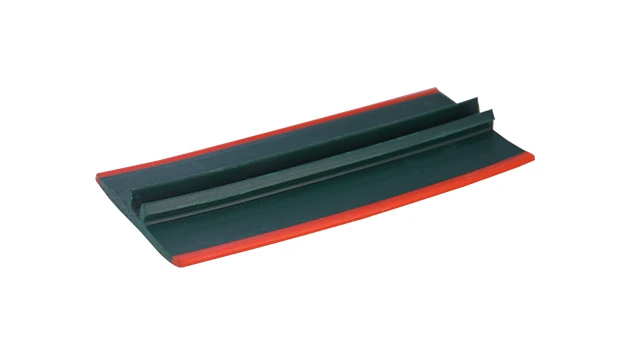
Aluminum Profile Rubber Strip
The tread strip fits into a T-slot channel and provides an anti-slip ribbed surface. It has a key pad that presses into a T-slot and is commonly used for adding traction on steps or as padding for doors. Tread strip can be ordered by rolls. The high quali
Imagine walking through a bustling manufacturing plant on a typical Tuesday morning. The air hums with the steady whir of conveyor belts, and workers in blue uniforms move with purpose, assembling components that will soon become part of a smartphone, a medical device, or a household appliance. Near the end of the line, a technician pauses, frowning, as a plastic part slips off a roller track—again. "Must be the rubber strip," she mutters, reaching for a replacement from a nearby bin. The old strip, cracked and worn, joins a growing pile of waste by the workstation. Later that day, the plant manager reviews the monthly report: production delays due to equipment wear, rising waste disposal costs, and a sustainability audit score that's just shy of the company's goals. What if the solution to all these challenges was smaller than a breadbox? What if it was something as as the rubber strip the technician just replaced?
In the world of manufacturing, where every second and every cent counts, it's often the smallest components that wield the biggest impact. Today, we're shining a spotlight on one such unsung hero: the aluminum profile rubber strip . Specifically, we'll explore how reusable versions of these strips are becoming a cornerstone of lean manufacturing and sustainability efforts, transforming how plants operate, reduce waste, and build resilience in an era of environmental accountability. Along the way, we'll dive into the role of aluminum extrusion profile systems, the versatility of aluminum profile designs, and why these tiny strips are proving that sustainability and efficiency don't have to be trade-offs—they can be partners.
1. Understanding Lean Manufacturing and the Sustainability Imperative
Before we zoom in on rubber strips, let's set the stage with the two forces driving modern manufacturing: lean principles and sustainability. For decades, lean manufacturing has been the gold standard for operational excellence, born from the Toyota Production System's focus on eliminating waste ( muda ) in all its forms—overproduction, waiting, transportation, defects, inventory, motion, and overprocessing. The goal? To create more value with fewer resources, keeping processes agile and customer-centric.
But in recent years, lean has evolved. Today, it's no longer enough to just cut waste from production lines; manufacturers must also consider the environmental and social impact of their operations. Enter sustainability: the triple bottom line of people, planet, and profit. Climate change regulations, consumer demand for eco-friendly products, and investor pressure to reduce carbon footprints have turned sustainability from a "nice-to-have" into a business imperative. A 2023 McKinsey report found that 67% of manufacturers now prioritize sustainability as a core strategic goal, with 83% investing in circular economy practices—like reusing, recycling, and extending product lifespans—to meet those targets.
The intersection of lean and sustainability is where magic happens. Lean teaches us to optimize processes; sustainability teaches us to optimize resource use. Together, they create a framework where efficiency and environmental responsibility reinforce each other. And that's where aluminum profile systems and their accompanying components—like rubber strips—come into play.
2. Aluminum Profiles: The Backbone of Modern Manufacturing
If lean manufacturing is a symphony, then aluminum profile systems are the conductors. Lightweight yet surprisingly strong, aluminum has long been a favorite in manufacturing for its versatility, durability, and recyclability. But it's the aluminum extrusion profile process that truly makes it a lean superstar. Extrusion involves heating aluminum billets and forcing them through a die to create custom cross-sectional shapes—think T-slots, channels, or angles—that can be assembled into everything from workbenches and material racks to conveyor systems and safety barriers.
What makes extruded aluminum profiles so ideal for lean environments? Let's count the ways:
- Modularity: Profiles connect using simple brackets and fasteners, allowing teams to reconfigure workstations or production lines in hours instead of days. Need to expand a assembly area? Swap out a 4-foot section for an 8-foot one. Redesign a material rack to fit larger components? Just add a few extra crossbars. This flexibility eliminates the waste of "overbuilding" fixed structures that become obsolete as needs change.
- Lightweight Strength: Aluminum is 30% lighter than steel but retains 70% of its strength, making it easy to move and reposition without heavy machinery. This reduces worker fatigue and speeds up line changes—key for lean's "quick changeover" goals.
- Recyclability: Aluminum is 100% recyclable, and recycling it uses just 5% of the energy required to produce new aluminum from bauxite ore. Most aluminum profiles contain at least 30% recycled content, and at the end of their life, they can be melted down and turned into new profiles with zero loss of quality. This closed-loop cycle aligns perfectly with sustainability's circular economy model.
- Low Maintenance: Unlike steel, aluminum resists rust and corrosion, even in humid or chemical-heavy environments. This means less time spent painting, treating, or replacing corroded parts—another win for lean's "reducing downtime" mantra.
Walk into any forward-thinking plant today, and you'll see aluminum profiles everywhere: supporting lean pipe workbench setups, forming the frames of roller conveyors, and holding up flow racks stocked with components. They're the silent workhorses, enabling the flexibility and efficiency that lean manufacturing demands. But even the best workhorse needs the right gear—and that's where the aluminum profile rubber strip enters the story.

3. The Unsung Hero: What Are Aluminum Profile Rubber Strips?
If aluminum profiles are the bones of a manufacturing system, then rubber strips are the ligaments and tendons—small but critical for holding everything together smoothly. So, what exactly are these strips, and where do they fit in?
Aluminum profile rubber strips are thin, flexible strips made from rubber or rubber-like materials (often EPDM, silicone, or neoprene) that attach to the edges, slots, or surfaces of aluminum profiles. They come in various shapes—flat, U-shaped, T-shaped, or custom-molded to match specific profile designs—and serve a handful of essential functions:
- Sealing: In enclosures or workstations where dust, moisture, or debris could harm sensitive components, rubber strips create a tight seal, keeping contaminants out.
- Cushioning: When parts slide along aluminum roller tracks or bump against profile edges, rubber strips absorb impact, preventing scratches, dents, or damage to the components (and the profiles themselves).
- Noise Reduction: Metal-on-metal contact in manufacturing is noisy. Rubber strips dampen vibrations and muffle sounds, creating a quieter, less stressful work environment.
- Vibration Dampening: Machinery vibrations can loosen fasteners, misalign parts, or even damage delicate electronics. Rubber strips act as shock absorbers, stabilizing the system and extending equipment life.
- Safety: Sharp edges on aluminum profiles (even rounded ones) can cause cuts or snags. Rubber strips add a soft, grippy surface that reduces injury risks for workers handling profiles or moving parts along them.
For years, manufacturers relied on single-use or "disposable" rubber strips. These were often glued or nailed into place, making replacement a hassle. They'd wear out quickly—cracking from UV exposure, hardening from heat, or tearing from repeated friction—and end up in landfills, contributing to both waste and downtime. But as lean and sustainability goals have tightened, a new generation of reusable aluminum profile rubber strips has emerged. Designed to be durable, easy to remove, and ready for reuse, these strips are changing the game.

4. The Sustainable Edge: Why Reusability Matters
Let's circle back to that technician we met earlier, replacing a worn rubber strip. With traditional strips, that scene repeats every 3–6 months, depending on usage. Each replacement means:
- Waste: A steady stream of old strips going to landfills. Rubber is not easily biodegradable, and while some types can be recycled, the process is energy-intensive and often overlooked in busy plants.
- Cost: New strips to purchase, plus labor to install them. Multiply that by hundreds of workstations or miles of conveyor track, and the numbers add up fast.
- Downtime: Every minute spent replacing a strip is a minute the production line isn't moving. In lean terms, that's "waiting waste"—one of the seven deadly wastes lean seeks to eliminate.
- Environmental Impact: Producing new rubber requires extracting raw materials (like natural rubber latex or synthetic petroleum-based polymers), manufacturing them in energy-heavy facilities, and shipping them to the plant. Each step adds to the product's carbon footprint.
Reusable rubber strips flip this script. Made from high-quality, durable materials (like reinforced EPDM or silicone), they're designed to withstand the rigors of manufacturing—heat, friction, chemicals, and UV exposure—for years, not months. They attach to aluminum profile s using snap-on, adhesive-free designs (often fitting into T-slots or grooves), so when they do need cleaning or replacement, workers can pop them off in seconds, no tools required. And because they're reusable, they can be moved to new profiles if the system is reconfigured—no need to buy new strips for the "new" setup.
| Feature | Traditional Single-Use Rubber Strips | Reusable Aluminum Profile Rubber Strips |
|---|---|---|
| Average Lifespan | 3–6 months | 2–3 years |
| Installation Method | Glued, nailed, or riveted (permanent, hard to remove) | Snap-on/T-slot fitting (tool-free, removable in seconds) |
| Reusability | Not reusable; must be discarded after wear | Reusable on new profiles after system reconfigurations |
| Annual Waste Generated (per 100 strips) | 200–400 strips (2–4 replacements/year) | 17–50 strips (0.17–0.5 replacements/year) |
| 5-Year Total Cost (Material + Labor) | $3,200 (avg. $16/strip + $20 labor x 4 replacements) | $1,440 (avg. $36/strip + $10 labor x 0.5 replacements) |
| Carbon Footprint (per strip, lifecycle) | 8.2 kg CO₂e (frequent replacement = more production/shipping) | 3.1 kg CO₂e (extended lifespan reduces production needs) |
| Compatibility with Lean Principles | Low (causes downtime, generates waste) | High (reduces waste, minimizes downtime, supports flexibility) |
The table above tells a clear story: reusable strips aren't just better for the planet—they're better for the bottom line, too. Let's break down the sustainable advantages in more detail.
Environmental Benefits: Less Waste, Lower Carbon Footprint
At their core, reusable aluminum profile rubber strip s tackle two of sustainability's biggest challenges: waste reduction and resource conservation. By extending the lifespan of each strip from months to years, they drastically cut the number of strips entering landfills. A manufacturing plant with 1,000 workstations and conveyor sections might use 5,000 rubber strips annually. With single-use strips, that's 25,000 strips over five years; with reusable ones, it's just 2,500—a 90% reduction in waste.
Less waste also means less demand for new rubber production. Manufacturing rubber is energy-intensive: producing one kilogram of synthetic rubber emits about 8–10 kg of CO₂e (carbon dioxide equivalent), according to the Rubber Manufacturers Association. By reducing the need for new strips, reusable options shrink this footprint. Additionally, because they're designed to be removed and reused when aluminum profile systems are reconfigured, they eliminate the "new strip for new setup" cycle, further conserving resources.
And let's not forget the aluminum connection. Aluminum extrusion profile s are already highly recyclable, but their sustainability benefits are amplified when paired with reusable components. A truly circular system doesn't just recycle the "big parts"—it maximizes the lifespan of every piece, from the profile to the strip. Together, they create a closed loop where materials are kept in use for as long as possible, minimizing the need for extraction and production.
Economic Benefits: Cost Savings That Add Up
Sustainability often gets a bad rap for being "expensive," but reusable rubber strips prove the opposite. While they may cost 2–3 times more upfront than single-use versions, their extended lifespan and reusability make them a budget-friendly choice over time. Let's crunch the numbers for a hypothetical plant using 1,000 strips:
- Single-Use Strips: $5 per strip, replaced every 6 months. Annual cost: 1,000 strips x 2 replacements x $5 = $10,000. Labor: 10 minutes per replacement (to remove old, clean surface, install new) x 2,000 replacements x $25/hour labor rate = $8,333/year. Total 5-year cost: ($10,000 + $8,333) x 5 = $91,665.
- Reusable Strips: $15 per strip, replaced every 3 years. Annual cost: 1,000 strips x (1 replacement/3 years) x $15 = $5,000. Labor: 2 minutes per replacement (snap off, snap on) x 333 replacements x $25/hour = $278/year. Total 5-year cost: ($5,000 + $278) x 5 = $26,390.
That's a 71% savings over five years—nearly $65,000 for a single plant. And that doesn't even include savings from reduced downtime (fewer line stops for strip replacements) or lower waste disposal fees (less trash to haul away). For lean manufacturers focused on cutting costs without sacrificing quality, reusable strips are a no-brainer.
Operational Benefits: Smoother, More Resilient Production
Beyond sustainability and cost, reusable rubber strips make day-to-day operations easier—another hallmark of lean manufacturing. Their snap-on design means workers can replace or reposition them in seconds, without specialized tools or training. This reduces setup time when reconfiguring workstations, aligning with lean's "quick changeover" principles (think SMED: Single-Minute Exchange of Die).
Durable materials also mean fewer unexpected failures. A cracked single-use strip might cause parts to jam on a conveyor, leading to production delays and scrap. Reusable strips, with their resistance to wear and tear, keep lines moving smoothly, reducing "downtime waste" and improving overall equipment effectiveness (OEE)—a key lean metric.
"We switched to reusable rubber strips last year, and the difference in line reliability has been night and day," says Raj Patel, Production Supervisor at GreenTech Assembly. "Before, we'd have a jam or a slip at least once a week because a strip had worn thin. Now? Maybe once a quarter. The operators love them because they don't have to stop what they're doing to hunt for replacements. It's made the whole line feel more… stable ."
5. Real-World Impact: Case Study: PrecisionWorks Manufacturing
To put these benefits into context, let's look at a real-world example (names and details have been anonymized for privacy). PrecisionWorks Manufacturing is a mid-sized electronics assembly plant in the Midwest, producing circuit boards for automotive and medical clients. Like many manufacturers, they'd long struggled with balancing lean efficiency and sustainability goals—until they discovered reusable aluminum profile rubber strip s.
Before the switch, PrecisionWorks used traditional glued rubber strips on their 20 lean pipe workbench es, 10 roller conveyors, and 15 material racks—all built with aluminum profile s. The maintenance team was replacing strips every 4 months, generating over 500 pounds of waste annually and spending 160 hours/year on replacements. Production delays due to strip-related jams cost the plant an estimated $20,000/year in lost output.
In 2022, the plant manager attended a sustainability conference where reusable rubber strips were showcased. Intrigued, he ordered a trial batch for 5 workstations and a conveyor line. The results were immediate:
- Waste Reduction: After 12 months, the trial area had replaced just 5 strips (instead of the expected 30), cutting waste by 83%.
- Cost Savings: Labor hours for replacements dropped from 8 hours/month to 1 hour/month. The plant estimated annual labor savings of $3,600 for the trial area alone.
- Production Uptime: Strip-related jams fell by 90%, reducing delays and improving OEE by 3%.
Encouraged, PrecisionWorks rolled out reusable strips plant-wide in early 2023. Today, 18 months later, they've reduced annual waste by 450 pounds, cut maintenance labor by 120 hours/year, and eliminated nearly all strip-related production delays. The upfront investment of $15,000 for 2,000 strips is on track to pay for itself by the end of 2024—less than two years after implementation.
"We didn't realize how much time and money we were wasting on something as small as rubber strips," says the plant manager. "It's a classic lean lesson: sometimes the biggest gains come from optimizing the smallest parts of the process. And the sustainability bonus? That's just the cherry on top."
6. Overcoming Barriers: Why Aren't All Manufacturers Using Reusable Strips?
If reusable aluminum profile rubber strip s are so great, why isn't every plant using them? Like any change, adoption comes with barriers—mostly perceptual or logistical. Let's address the most common ones:
"They Cost Too Much Upfront"
This is the biggest pushback. It's true: reusable strips cost more initially. But as we saw in the cost breakdown earlier, the long-term savings far outweigh the upfront investment. To overcome this, manufacturers can start small—trialing strips in high-waste areas (like busy conveyors or frequently reconfigured workstations) to prove ROI before rolling out plant-wide. Many suppliers also offer bulk discounts or financing options to ease the transition.
"We Don't Have Time to Switch"
Plant managers are busy, and "changing rubber strips" often falls low on the priority list. But the beauty of reusable strips is that they're easy to install during routine maintenance or scheduled downtime. PrecisionWorks, for example, swapped out strips during their quarterly line cleaning, adding just 30 minutes to each session. The time invested was minimal compared to the ongoing savings.
"We're Not Sure Which Type to Choose"
Rubber strips come in different materials (EPDM, silicone, neoprene) and designs, and choosing the right one for your environment can be confusing. The key is to match the strip to the application: EPDM for general use, silicone for high-heat areas (like near ovens or welders), and neoprene for chemical resistance. Reputable aluminum profile suppliers can help recommend the best option based on your plant's specific needs.
"Our Teams Are Resistant to Change"
Workers often prefer familiar processes, even if they're inefficient. To get buy-in, involve the people who use the strips daily—maintenance technicians, operators, supervisors—in the decision. Let them test samples, provide feedback, and see the benefits firsthand. When teams understand how reusable strips make their jobs easier (fewer jams, less time replacing parts), resistance melts away.
7. The Future: Innovations in Reusable Aluminum Profile Rubber Strips
As manufacturing evolves, so too will the humble rubber strip. Here are a few innovations on the horizon that could make reusable strips even more sustainable and efficient:
Smart Strips with Embedded Sensors
Imagine a rubber strip that can "tell" you when it's starting to wear out. Emerging technologies are integrating tiny sensors into strips to monitor friction, temperature, and vibration. When a strip reaches a threshold, it sends an alert to the maintenance team—enabling predictive replacement before failure. This would eliminate "surprise" downtime and further optimize maintenance schedules.
Bio-Based Rubber Materials
While EPDM and silicone are durable, they're still petroleum-based. Researchers are developing bio-based rubbers made from renewable resources like dandelion latex or algae, which have a lower carbon footprint. When paired with reusable designs, these materials could make strips even more sustainable.
3D-Printed Custom Strips
3D printing allows for on-demand production of custom-shaped strips, tailored to unique aluminum profile designs. This reduces waste from mass-produced "one-size-fits-all" strips and enables plants to create strips optimized for their specific needs—like extra-thick sections for high-friction areas or flexible hinges for moving parts.
Recyclable Rubber Blends
While reusability is key, eventually even the toughest strip will wear out. Manufacturers are experimenting with rubber blends that are easier to recycle, using additives that break down the material into reusable feedstock. Some are even designing strips that can be ground up and mixed into new rubber products, closing the loop entirely.
8. Conclusion: Small Part, Big Impact
In the grand scheme of manufacturing, aluminum profile rubber strip s are tiny. They're easy to overlook, easy to take for granted, and easy to dismiss as "not worth optimizing." But as we've explored, they're also a powerful example of how sustainability and lean manufacturing can work hand in hand—reducing waste, cutting costs, and improving efficiency, all at once.
Lean manufacturing teaches us to "look for waste in every corner," and sustainability urges us to "leave the planet better than we found it." Reusable rubber strips answer both calls. They turn a once-disposable component into a long-lasting asset, proving that even the smallest parts can drive big change.
So, the next time you walk through a manufacturing plant, take a closer look at those aluminum workbenches and conveyors. Underneath the hustle and bustle, there's a quiet revolution happening—one rubber strip at a time. And who knows? Maybe that technician we met earlier is now smiling, because she hasn't had to replace a strip in months.
Because in the end, sustainability isn't about grand gestures. It's about making the right choice, one small part at a time.