- Company Articles
- Products and Technology
- Installation And Maintenance
- Sustainable Castor Installation Base Design: Aligning with Green Manufacturing Trends

Sustainable Castor Installation Base Design: Aligning with Green Manufacturing Trends
Related Product
Castor Installation Base
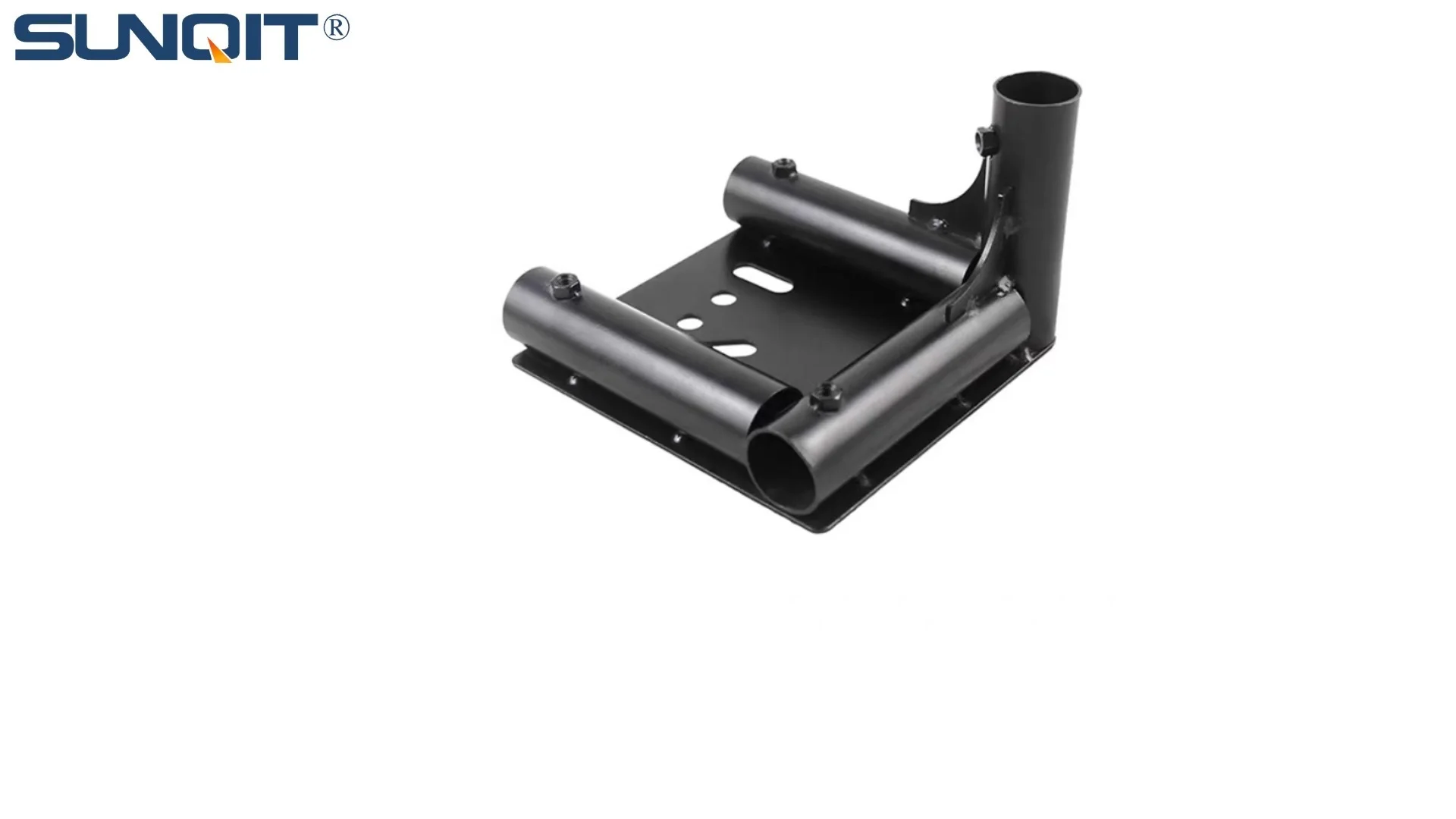
Pipe fitting castor installation base,Well made, precise and strong. Made of high quality of steel,black painting surface treatment for greater resistance to corrosion. It is used for castor or foot lever connection with lean pipe.
In the hum of a busy manufacturing plant, where conveyor belts whir and assembly lines pulse with precision, there's a quiet hero keeping operations moving: the castor installation base. It's the unsung foundation beneath workbenches, material carts, and heavy machinery, enabling mobility, stability, and flexibility. Yet for decades, these bases have flown under the sustainability radar—often built from resource-heavy materials, designed for single-use, and discarded without a second thought. Today, that's changing. As green manufacturing trends reshape industries from automotive to electronics, even the most components like castor installation bases are getting a sustainability makeover. This article dives into how reimagining these bases—through smart materials, modular design, and lean principles—is helping manufacturers reduce their environmental footprint while boosting efficiency.
The Green Manufacturing Revolution: Why Every Component Counts
Sustainability in manufacturing is no longer a buzzword; it's a business imperative. With 71% of consumers prioritizing eco-friendly brands (Nielsen, 2023) and governments tightening regulations on carbon emissions, manufacturers are racing to overhaul their processes. But true sustainability isn't just about switching to renewable energy or recycling packaging—it's about rethinking every link in the supply chain, including the smallest parts that keep factories running. Castor installation bases, though small in size, play a outsized role here. A typical manufacturing facility might use hundreds of these bases across workstations, trolleys, and material racks. If each base is designed with waste in mind, the cumulative impact adds up—from raw material extraction to end-of-life disposal. By prioritizing sustainability in their design, manufacturers can cut costs, reduce carbon emissions, and align with the lean system principles that drive modern production: eliminating waste, optimizing resources, and creating value with less.
Consider this: The global manufacturing sector accounts for 28% of global carbon emissions (UNEP, 2024). A significant portion of this comes from "embodied carbon"—the emissions released during the production of materials like steel and plastic. Traditional castor installation bases, often made from solid steel or non-recyclable plastics, are major contributors. For example, producing one ton of steel emits 1.8 tons of CO2 (World Steel Association, 2024), while plastic production relies on fossil fuels and creates persistent waste. By switching to sustainable alternatives, manufacturers can chip away at this footprint. But sustainability isn't just about materials; it's about design that extends a product's life, reduces maintenance, and enables reuse. A well-designed castor base shouldn't end up in a landfill after a single project—it should adapt, evolve, and serve multiple purposes over time.
The Overlooked Impact of Castor Installation Bases
To understand why castor installation bases matter for sustainability, let's zoom in on a typical factory floor. Imagine a workstation used for assembling circuit boards. Its base, fitted with casters, allows workers to reposition it for different tasks—a key part of agile manufacturing. But if that base is made from thick steel, it's heavy to transport, requiring more energy to move. If its casters are fixed and non-replaceable, a single broken wheel means replacing the entire base. If the leveling feet are welded in place, the base becomes useless if the factory floor is uneven elsewhere. Each of these flaws contributes to waste: excess energy use, premature disposal, and lost productivity. Now multiply this by hundreds of bases across a factory, and the environmental cost becomes clear.
Sustainable castor installation bases address these issues head-on. They're designed to be lightweight yet durable, modular for easy repairs, and adaptable to different environments. Take, for example, adjustable leveling feet —a feature that might seem minor, but has a big impact. By allowing the base to be fine-tuned for uneven floors, these feet prevent wobbling, reduce wear on casters, and extend the base's lifespan. Instead of discarding a base because it doesn't fit a new workspace, workers can simply adjust the feet. Similarly, using high-quality caster and accessories —like replaceable wheels or corrosion-resistant joints—means components can be swapped out individually, reducing the need for full replacements. These small design choices add up to big wins for sustainability: less waste, lower replacement costs, and a longer product life cycle.

Materials Matter: The Case for Aluminum Profile
At the heart of sustainable castor installation base design is material selection. For decades, steel has been the go-to for industrial bases, prized for its strength. But steel has a dark side: it's energy-intensive to produce, heavy to transport, and difficult to recycle without losing quality. Enter aluminum profile —a material that's revolutionizing sustainable manufacturing. Aluminum is 100% recyclable, with recycled aluminum requiring just 5% of the energy needed to produce primary aluminum (Aluminum Association, 2024). It's also lightweight—about one-third the density of steel—reducing transportation emissions and making bases easier to maneuver. And with modern extrusion techniques, aluminum profiles can be shaped into strong, hollow structures that match steel's load-bearing capacity at a fraction of the weight.
| Material | Carbon Footprint (per kg) | Recyclability | Weight (vs. Steel) | Durability |
|---|---|---|---|---|
| Traditional Steel | 1.8 kg CO2 | 60-70% (loses quality) | 100% | High (prone to rust) |
| Aluminum Profile | 0.2 kg CO2 (recycled) | 100% (no quality loss) | 33% | High (corrosion-resistant) |
| Plastic (Traditional) | 2.5 kg CO2 | Limited (downcycled) | 50% | Low (prone to cracking) |
Aluminum profile also offers design flexibility that steel can't match. Extruded aluminum can be customized with T-slots, grooves, or channels that allow for easy attachment of casters, leveling feet, or other accessories. This modularity means bases can be assembled without welding—reducing energy use during production and making repairs simpler. For example, a manufacturer can mix and match aluminum profile lengths to create bases of different sizes, avoiding the waste of cutting steel to fixed dimensions. And because aluminum is naturally corrosion-resistant, bases last longer in humid or chemical-heavy environments, further reducing replacement needs.
But aluminum isn't the only sustainable material in the mix. Some manufacturers are experimenting with bio-based plastics for caster wheels or recycled steel for joints, though aluminum remains the gold standard for bases due to its recyclability and strength-to-weight ratio. The key is to choose materials that minimize environmental impact without sacrificing performance—a balance that aluminum profile strikes perfectly.

Modular Design: Lean Principles in Action
Sustainability and lean system principles go hand in hand. Lean manufacturing focuses on eliminating waste—whether it's excess inventory, unnecessary movement, or defects—and sustainable design does the same by reducing resource use and extending product life. Modular castor installation bases embody this synergy. Instead of building a one-size-fits-all base, manufacturers can create kits of interchangeable parts: aluminum profile rails, adjustable leveling feet, caster brackets, and joints. Workers can then assemble bases on-site, customizing them to specific needs. This reduces overproduction (no more stockpiling bases that might never be used) and transportation costs (shipping flat-pack parts instead of fully assembled bases).
Take, for example, a food processing plant that needs bases for mobile workstations. Some stations require heavy-duty casters for moving large vats, while others need locking wheels for stability during packaging. With a modular system, the plant can order a single set of aluminum profiles and mix-and-match caster and accessories to create both types of bases. If a workstation's purpose changes later, the base can be disassembled and reconfigured with new parts. This "circular" approach to design keeps materials in use longer, reducing the need for new production. It also aligns with lean principles by cutting inventory costs—instead of storing 10 types of bases, the plant stores a few key components.
Modularity also simplifies repairs. In a traditional steel base, a bent rail or broken caster might mean the entire unit is scrap. With an aluminum profile base, workers can remove the damaged part and replace it with a new one in minutes. This not only reduces waste but also minimizes downtime—a critical factor for productivity. A 2023 study by the Lean Enterprise Institute found that modular equipment components reduced maintenance-related waste by 40% in manufacturing facilities, with 78% of surveyed managers reporting lower replacement costs.

Lifecycle Thinking: From Cradle to Cradle
Sustainable design isn't just about how a product is made—it's about how it's used and what happens to it when it's no longer needed. Castor installation bases designed with lifecycle thinking in mind follow the "cradle-to-cradle" model, where materials are kept in a closed loop. Aluminum profile bases excel here: at the end of their life, they can be disassembled, sorted, and recycled into new profiles with no loss of quality. Compare this to steel bases, which often end up in landfills because recycling them requires energy-intensive shredding and melting, and the resulting steel is lower-grade. Or plastic bases, which may take centuries to decompose.
To illustrate, let's trace the lifecycle of an aluminum profile castor base:
1.
Raw Materials:
The base is made from recycled aluminum, reducing reliance on bauxite mining (a major source of deforestation).
2.
Production:
Aluminum profiles are extruded using renewable energy (e.g., solar or wind power), cutting carbon emissions.
3.
Use:
The base is used in a factory for 10+ years, with replaceable casters and adjustable feet extending its life.
4.
End-of-Life:
The base is disassembled; aluminum parts are recycled into new profiles, and casters are refurbished or recycled.
At every stage, the environmental impact is minimized—a stark contrast to traditional bases that often end their lifecycle in landfills after just 3-5 years.
Lifecycle thinking also considers the base's impact during use. Aluminum's lightweight nature reduces the energy needed to move the base, lowering operational carbon emissions. Its corrosion resistance means it can be used in harsh environments (like chemical plants or outdoor facilities) without degrading, further extending its lifespan. Even the finish matters: many aluminum profile bases use powder coating, which emits fewer volatile organic compounds (VOCs) than traditional paint, improving air quality in factories.
Case Study: How XYZ Manufacturing Cut Waste with Aluminum Profile Bases
To see sustainable castor installation bases in action, let's look at XYZ Manufacturing, a mid-sized electronics assembler in Ohio. In 2022, the company set a goal to reduce its carbon footprint by 30% by 2025. A audit revealed that a significant portion of its waste came from replacing castor bases for workstations and trolleys—many of which were steel, heavy, and prone to rust in the humid factory environment. The average base lasted just 4 years before needing replacement, and each replacement generated 25 kg of steel waste.
XYZ's sustainability team decided to test aluminum profile bases with modular
caster and accessories
and
adjustable leveling feet
. They replaced 50 traditional steel bases with aluminum ones, each customized to the workstation's needs. The results were striking:
•
Weight Reduction:
Aluminum bases were 60% lighter than steel, cutting energy use for moving workstations by 35%.
•
Lifespan Extension:
After 2 years, none of the aluminum bases needed replacement, compared to 12 steel bases that had been discarded in the same period.
•
Repair Savings:
When casters wore out, workers replaced just the wheels, saving $2,400 in replacement costs.
•
Recycling Potential:
The company partnered with a local recycler to collect old aluminum parts, generating $800 in scrap metal revenue in the first year.
By 2023, XYZ had rolled out aluminum profile bases across its entire facility, putting it on track to meet its 2025 carbon reduction goal.
Future Trends: What's Next for Sustainable Bases
As green manufacturing evolves, so too will castor installation base design. Here are three trends to watch:
1.
Smart Materials:
Researchers are developing aluminum profiles infused with graphene, which increases strength while reducing weight by a further 15%. These "super profiles" could make bases even more durable and energy-efficient.
2.
Digital Twins:
Using 3D modeling and IoT sensors, manufacturers can create digital twins of castor bases to predict wear and optimize maintenance. For example, sensors in casters could alert workers when wheels need replacement, preventing breakdowns and extending life.
3.
Biodegradable Accessories:
While aluminum profiles are already sustainable, companies are experimenting with casters and joints made from bioplastics derived from corn or sugarcane, further reducing reliance on fossil fuels.
Conclusion: Small Parts, Big Impact
Sustainable castor installation bases may not grab headlines, but they're a powerful example of how reimagining even the smallest components can drive meaningful change in manufacturing. By choosing materials like aluminum profile , embracing modular design with caster and accessories , and prioritizing lifecycle thinking, manufacturers can reduce waste, cut costs, and align with the green trends shaping the industry. As XYZ Manufacturing discovered, these bases aren't just good for the planet—they're good for business. In a world where sustainability is no longer optional, the future of manufacturing belongs to those who pay attention to the details. And when it comes to details, castor installation bases are leading the way.
So the next time you walk through a factory, take a moment to look down. The base beneath that workstation might just be quietly revolutionizing sustainability—one adjustable foot, one recyclable profile, and one replaceable caster at a time.