- Company Articles
- Products and Technology
- Product knowledge
- Sustainable Design: How Aluminum Workbench C Supports Eco-Friendly Production

Sustainable Design: How Aluminum Workbench C Supports Eco-Friendly Production
Related Product
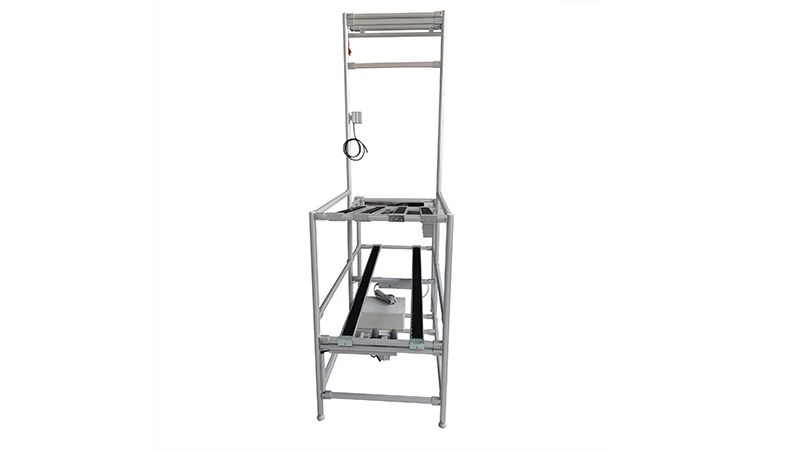
Aluminum Workbench C
aluminum-tube-workbench-is-more-flexible-and-durable,-compared-with-traditional-pe/abs-coated-steel-tube.-it-is-easy-to-assemble,-anti-corrosion,-rust-protection,-and-recycle-use-after-disassemble.
Sustainable Design: How Aluminum Workbench C Supports Eco-Friendly Production
The Shift Toward Eco-Friendly Production: Why Every Tool Matters
In today's manufacturing landscape, the phrase "sustainable production" has evolved from a buzzword to a business imperative. With global carbon emissions from industry accounting for nearly a quarter of all greenhouse gas output, and consumers increasingly prioritizing brands with strong environmental credentials, manufacturers are under pressure to rethink every aspect of their operations—including the tools they rely on daily. Among these tools, workbenches stand as unsung heroes: they're the silent backbone of assembly lines, the steady platforms where products take shape, and the workhorses that endure the wear and tear of daily operations. Yet, for too long, traditional workbenches have been a hidden source of environmental waste, from their resource-heavy production to their short lifespans and difficulty to recycle. Enter Aluminum Workbench C—a game-changer in sustainable design that's not just redefining what a workbench can do, but how it can help businesses shrink their carbon footprint while boosting efficiency.
Consider this: a mid-sized electronics manufacturer in Vietnam was replacing its steel workbenches every 5 years, at a cost of $15,000 annually. Each discarded bench ended up in a landfill, contributing to the 50 million tons of industrial waste Vietnam generates yearly. Meanwhile, a automotive parts plant in Michigan was struggling with warped wooden workbenches that required constant repairs, driving up energy use for sanding, painting, and replacement. These stories aren't anomalies—they're the norm for manufacturers stuck in outdated, wasteful cycles. But what if there was a workbench designed to break this cycle? One that's built to last, easy to adapt, and fully recyclable? That's where Aluminum Workbench C comes in.
The Hidden Environmental Cost of Traditional Workbenches
To understand why Aluminum Workbench C is a sustainability breakthrough, it's critical to first unpack the environmental toll of the workbenches that came before it. Traditional workbenches are typically made from three materials: wood, steel, or particleboard. Each comes with its own set of ecological drawbacks, creating a cycle of waste that's costly for both businesses and the planet.
Wood: A Resource-Hungry Choice
Wooden workbenches, once a staple in workshops, are prized for their affordability and ease of customization. But their sustainability credentials are shaky at best. To produce a single wooden workbench, manufacturers often rely on hardwoods like oak or maple, which take decades to mature. Even with "sustainable forestry" certifications, logging disrupts ecosystems, reduces biodiversity, and releases stored carbon into the atmosphere. Once in use, wood is prone to warping, cracking, and rotting—especially in humid manufacturing environments—meaning most wooden workbenches last just 3–5 years. When they're discarded, they rarely get recycled; instead, they're sent to landfills, where they decompose and emit methane, a potent greenhouse gas. For a company using 50 wooden workbenches, that's 10–17 replacements over 20 years, each contributing to deforestation and landfill waste.
Steel: Heavy on Emissions, Heavy on Waste
Steel workbenches, lauded for their strength, come with a different set of problems. Steel production is energy-intensive: refining iron ore into steel requires temperatures of 1,600°C, and the process emits 1.8 tons of CO2 per ton of steel produced—making it one of the most carbon-intensive manufacturing processes on the planet. Once built, steel workbenches are heavy and hard to modify; if a company needs to adjust the height, add shelves, or reconfigure a workspace, the entire bench often needs to be replaced. Worse, steel is prone to rust, especially in facilities with high moisture (like food processing plants or coastal factories), requiring frequent repainting or coating with toxic chemicals to extend its life. When steel workbenches finally reach the end of their lifespan, recycling them is possible but energy-heavy, and many end up in landfills due to contamination from coatings or hardware.
Particleboard: A Hidden Source of Toxins
Particleboard workbenches, often marketed as a budget-friendly alternative, are made from wood chips, sawdust, and resin adhesives. While they repurpose wood waste, the resin used (often formaldehyde-based) releases volatile organic compounds (VOCs) into the air, harming indoor air quality and worker health. These benches are also highly susceptible to water damage; even a small spill can cause swelling and structural failure, leading to rapid replacement. With a lifespan of just 2–3 years, particleboard workbenches create a cycle of constant disposal, with their toxic adhesives making recycling nearly impossible.
| Material | Average Lifespan | Carbon Footprint (Production) | Recyclability Rate | Annual Waste per Bench |
|---|---|---|---|---|
| Wood | 3–5 years | High (deforestation, transportation) | Low (often landfilled) | ~50kg (when discarded) |
| Steel | 5–7 years | Very High (1.8t CO2/ton of steel) | Medium (recyclable but energy-heavy) | ~80kg (when discarded) |
| Particleboard | 2–3 years | Medium (VOC emissions from resin) | Very Low (toxic adhesives) | ~40kg (when discarded) |
| Aluminum Workbench C | 15–20 years | Low (especially with recycled aluminum) | 95%+ (fully recyclable) | ~2kg (minimal waste from accessories) |
The table above paints a clear picture: traditional workbenches are not just costly for businesses—they're costly for the planet. Aluminum Workbench C, by contrast, is engineered to flip the script, addressing each of these pain points through intentional, sustainable design.
Aluminum Workbench C: Built on Sustainable Foundations—Aluminum Extrusion Profile
At the heart of Aluminum Workbench C's sustainability is its core material: aluminum extrusion profile. Unlike steel or wood, which require intensive mining or logging, aluminum is a marvel of recyclability and efficiency. But what exactly is aluminum extrusion, and why does it make such a difference?
Aluminum extrusion is a manufacturing process where aluminum billets (cylindrical blocks of aluminum) are heated to 500–600°C (soft enough to shape but not melt) and then pushed through a custom die—a metal mold with the desired cross-sectional shape. This process creates complex, precise profiles with minimal material waste. For Aluminum Workbench C, the die is designed to create a lightweight yet incredibly strong frame, with hollow sections that reduce weight without sacrificing durability. Think of it like shaping clay: the aluminum flows smoothly through the die, taking on the exact form needed, whether it's a leg, a shelf bracket, or a support beam. This precision means there's no excess material to trim or discard, unlike cutting steel or sawing wood, which generates significant waste.
But the benefits of aluminum extrusion profile don't stop at production efficiency. Aluminum itself is a sustainability superstar. It's 100% recyclable, and recycling it uses just 5% of the energy required to produce new aluminum from bauxite ore. That's a 95% energy savings—equivalent to taking 40 cars off the road for a year for every ton of recycled aluminum. What's more, aluminum retains its quality through endless recycling cycles; a recycled aluminum can today could become part of an Aluminum Workbench C tomorrow, and then part of a window frame the next decade, with no loss in strength or performance. This "infinite recyclability" is a game-changer for closing the material loop and reducing reliance on virgin resources.
For manufacturers, this translates to tangible benefits. Take a medical device company in Germany that switched to Aluminum Workbench C and began using recycled aluminum for its profiles. By sourcing 80% recycled aluminum, the company cut the carbon footprint of its workbench production by 75%, aligning with the EU's strict carbon neutrality goals. Meanwhile, a furniture manufacturer in Canada reduced shipping costs by 30% thanks to the lightweight nature of aluminum extrusion profiles, trimming transportation emissions and saving on fuel. These aren't just "green" wins—they're bottom-line wins, proving that sustainability and profitability can go hand in hand.
Modularity: The Key to Reducing Waste Through Adaptability
One of the biggest environmental sins of traditional workbenches is their "one-size-fits-all" design. A bench built for a specific task today becomes obsolete tomorrow when production needs change—whether it's a new product line, a shift in workflow, or a need for ergonomic adjustments. This obsolescence drives constant replacement, but Aluminum Workbench C solves this with a modular design that grows and changes with your business, thanks to its use of aluminum profile and aluminum profile accessories.
Imagine a small electronics assembly plant in Malaysia that produces both smartphones and tablets. When the plant launches a new tablet model, the assembly line needs taller workbenches to accommodate larger components. With traditional steel benches, this would mean buying entirely new units. But with Aluminum Workbench C, the plant simply swaps out the existing legs for longer ones using aluminum profile accessories like adjustable height brackets. The same frame, the same work surface—just reconfigured in an afternoon, with zero waste. That's the power of modularity.
Aluminum Workbench C's modularity stems from its use of standardized aluminum profile and a wide range of aluminum profile accessories: connectors, shelves, tool hooks, and even ergonomic add-ons like monitor mounts or keyboard trays. These accessories are designed to snap into the T-slots (longitudinal grooves) of the aluminum profile, allowing for tool-free adjustments. Need to add a shelf for extra storage? Slide in a bracket and secure it with a thumb screw. Want to lower the work surface for a shorter operator? Adjust the leg height using the built-in height markers. This flexibility means the workbench can adapt to changing needs over decades, not years, drastically reducing the need for new materials.
Consider the case of a automotive parts supplier in Mexico that expanded its production line by 50% in six months. Instead of purchasing 20 new workbenches, the company reconfigured its existing Aluminum Workbench C units using aluminum profile accessories, saving $20,000 and keeping 1.2 tons of waste out of landfills. The plant manager noted, "We used to see workbenches as a fixed cost—buy it, use it, replace it. Now, they're an investment that grows with us. We haven't bought a new bench in three years, and we're still finding new ways to adapt the ones we have."
Modularity also reduces waste during the design phase. Traditional workbenches often require custom fabrication for unique tasks, leading to excess material and longer lead times. Aluminum Workbench C, with its standardized aluminum profile and accessories, eliminates the need for custom parts. Manufacturers can mix and match components to create exactly what they need, whether it's a (ESD) workstation for electronics or a heavy-duty assembly bench for machinery. This not only cuts down on production waste but also speeds up delivery times, reducing the carbon emissions associated with rush shipping.
Durability and Longevity: Building for the Long Haul
In the world of sustainability, durability is just as important as recyclability. A product that's built to last 20 years is inherently more sustainable than one that needs replacement every 5 years, even if both are recyclable. Aluminum Workbench C excels here, with a lifespan of 15–20 years—3–4 times longer than traditional workbenches—thanks to the natural properties of aluminum and thoughtful engineering.
Aluminum's greatest asset in durability is its resistance to corrosion. Unlike steel, which rusts when exposed to moisture, aluminum forms a thin, protective oxide layer when it comes into contact with air. This layer is self-healing: if scratched, it reforms almost instantly, preventing further damage. For manufacturers in humid climates or those working with liquids (like food processing or chemical plants), this is a game-changer. A brewery in Brazil, for example, replaced its rusted steel workbenches with Aluminum Workbench C and saw zero corrosion after 8 years of daily exposure to water and cleaning chemicals. The steel benches had required annual repainting, using toxic solvents and emitting VOCs; the aluminum benches needed only occasional wiping, cutting maintenance time by 90% and improving indoor air quality.
But durability isn't just about resisting the elements—it's about withstanding the daily grind of manufacturing. Aluminum extrusion profiles are surprisingly strong for their weight, with a tensile strength of up to 300 MPa (megapascals)—strong enough to support 300kg of weight per square meter. This means Aluminum Workbench C can handle heavy tools, bulky components, and the constant pounding of assembly work without bending or warping. A aerospace manufacturer in the U.S. tested this by mounting a 250kg hydraulic press on an Aluminum Workbench C; after 10,000 cycles of operation, the bench showed no signs of structural fatigue, while a steel bench under the same conditions developed hairline cracks. The result? The aerospace company extended its workbench replacement cycle from 5 years to 15, saving $40,000 and preventing 2 tons of steel waste.
Another key to longevity is the use of high-quality aluminum profile accessories. The connectors, brackets, and hardware used in Aluminum Workbench C are made from the same durable aluminum or stainless steel, ensuring they don't fail before the frame. Even the work surface—often a composite of aluminum and recycled plastic—is designed to resist scratches, heat, and chemical spills, eliminating the need for frequent replacement. For a pharmaceutical company in India, this meant a workbench surface that stayed clean and sterile for over a decade, avoiding the waste of disposable plastic covers and reducing the use of harsh cleaning chemicals.
Perhaps the most inspiring example of durability comes from a textile factory in Bangladesh. When the factory was damaged by a cyclone, most of its equipment was destroyed—but the Aluminum Workbench C units, despite being flooded and buffeted by high winds, remained structurally sound. After a quick cleaning and replacement of a few minor accessories (which were sourced locally), the benches were back in use within a week. "We lost so much, but the workbenches held on," said the factory manager. "It was a small victory, but it reminded us that investing in durable tools isn't just good for the planet—it's good for resilience, too."
Integration with Lean Systems: Streamlining Efficiency, Cutting Waste
Sustainability and efficiency are two sides of the same coin, and nowhere is this more evident than in lean manufacturing. Lean systems—rooted in the principles of "reduce, reuse, recycle"—aim to eliminate waste (muda) in all forms: overproduction, excess inventory, unnecessary motion, and defects. Aluminum Workbench C isn't just a sustainable tool; it's a lean tool, designed to support these principles and help manufacturers streamline their operations while cutting environmental impact.
One of the core tenets of lean manufacturing is "5S"—sort, set in order, shine, standardize, sustain. Aluminum Workbench C excels at "set in order" (seiton) by providing built-in organization through its aluminum profile accessories. Tool hooks, bins, and holders can be positioned exactly where workers need them, reducing search time and unnecessary movement. A electronics assembly line in China implemented 5S with Aluminum Workbench C and saw a 20% reduction in time spent looking for tools, translating to 10 fewer work hours per week and lower energy use (since workers were no longer wandering the factory floor). This isn't just efficiency—it's sustainability, as less time spent moving means less energy consumed and fewer carbon emissions.
Another lean principle is "just-in-time" (JIT) production, which minimizes inventory by producing only what's needed, when it's needed. Aluminum Workbench C supports JIT by adapting to changing production volumes. For example, a toy manufacturer in Indonesia ramps up production during holiday seasons, requiring extra workbenches. Instead of buying new benches (which would sit idle for 8 months of the year), the manufacturer reconfigures existing Aluminum Workbench C units into longer, shared workstations using aluminum profile connectors. This flexibility reduces the need for excess inventory (in this case, extra benches) and the waste associated with storing and maintaining unused equipment.
Ergonomics, a key part of lean systems (reducing "muda" of motion and defects), is also central to Aluminum Workbench C's design. The height-adjustable legs, customizable work surfaces, and angled shelves reduce worker fatigue and errors. A study by the International Ergonomics Association found that ergonomic workbenches reduce repetitive strain injuries by 40% and defect rates by 15%. For a furniture manufacturer in Poland, this meant fewer scrapped products (saving 500kg of wood waste annually) and lower workers' compensation costs, proving that a healthier workforce is a more sustainable workforce.
Perhaps the most powerful example of lean integration comes from a automotive plant in Japan, a country known for pioneering lean manufacturing. The plant replaced its traditional workbenches with Aluminum Workbench C and saw a 25% reduction in production waste, a 15% increase in throughput, and a 10% drop in energy use—all in the first year. "The workbench became the hub of our lean system," said the plant's lean coordinator. "It wasn't just a place to work; it was a tool that helped us see waste we hadn't noticed before—like how much space we were wasting with fixed benches, or how much time we lost to adjusting non-adjustable surfaces."
Closing the Loop: The Recyclability Journey of Aluminum Workbench C
Every product reaches the end of its useful life eventually—but what happens next defines its true sustainability. For Aluminum Workbench C, the end of life is just the beginning of a new journey, thanks to aluminum's infinite recyclability. Unlike traditional workbenches that end up in landfills, Aluminum Workbench C is designed to be disassembled, recycled, and reborn into new products, creating a closed-loop system that minimizes waste and conserves resources.
The disassembly process is surprisingly simple. Aluminum Workbench C uses aluminum profile accessories like snap-fit connectors and thumb screws, eliminating the need for welding or permanent adhesives. When it's time to retire the bench, workers can easily remove the accessories, separate the aluminum profiles from any non-aluminum components (like wooden work surfaces, which can be recycled separately), and send the aluminum to a recycling facility. This simplicity is key: many traditional workbenches end up in landfills not because they can't be recycled, but because they're too hard to take apart. A recycling facility in the U.S. reported that 70% of steel workbenches they receive are too contaminated with welds or coatings to recycle, so they're landfilled. Aluminum Workbench C, with its modular, non-toxic design, avoids this fate.
Once at the recycling facility, the aluminum profiles are shredded, melted down, and purified. As mentioned earlier, this process uses just 5% of the energy of producing new aluminum, making it incredibly efficient. The recycled aluminum is then cast into new billets, extruded into new profiles, and used to make everything from new workbenches to car parts to window frames. For a packaging company in Australia, this closed loop became a source of pride: the company's first generation of Aluminum Workbench C, after 15 years of use, was recycled into aluminum cans, which were then sold locally. "We literally drank from the cups made from our old workbenches," joked the company's sustainability director. "It was a powerful reminder that nothing has to be 'waste'—it's just a resource in the wrong place."
Even the non-aluminum components of Aluminum Workbench C are designed with recyclability in mind. The work surface, for example, is often made from recycled plastic or composite materials that can be recycled or composted. The casters (if included) use steel or aluminum parts that are recyclable, and the rubber wheels can be ground down and used in new rubber products. This attention to detail ensures that the entire bench, not just its frame, contributes to a circular economy.
For manufacturers, this recyclability loop offers a unique marketing advantage. Consumers are increasingly asking, "What happens to this product when I'm done with it?" By choosing Aluminum Workbench C, businesses can answer confidently: "It becomes part of something new." A clothing manufacturer in Italy even included this story in its sustainability report, highlighting how its Aluminum Workbench C units would be recycled into bike frames at the end of their life. This transparency resonated with eco-conscious consumers, boosting brand loyalty and sales.
The Future of Sustainable Workbenches: Innovations on the Horizon
Aluminum Workbench C is already a leader in sustainable design, but the future holds even more promise. As technology advances and sustainability goals become more ambitious, we're seeing exciting innovations that will make workbenches even more eco-friendly, efficient, and adaptable. Here are a few trends to watch:
Smart Workbenches with Energy Monitoring
Imagine a workbench that tracks its own energy use—and the energy use of the tools plugged into it. Emerging technologies like IoT sensors and smart plugs are being integrated into aluminum profile designs, allowing manufacturers to monitor real-time energy consumption, identify inefficiencies, and automatically power down tools when not in use. A prototype smart Aluminum Workbench C tested by a tech company in Silicon Valley reduced energy use by 35% by shutting off idle tools, proving that intelligence and sustainability can go hand in hand.
Bio-Based Aluminum Profile Accessories
While aluminum is already sustainable, researchers are exploring bio-based materials for accessories like bins, handles, and bumpers. Made from plant-based plastics or recycled rubber, these accessories would further reduce reliance on fossil fuels and add another layer of recyclability. A Dutch startup is currently testing hemp-based brackets for aluminum profiles, with early results showing comparable strength to traditional plastic brackets but with a 60% lower carbon footprint.
3D-Printed Customization
3D printing (additive manufacturing) is revolutionizing how aluminum profile accessories are made. Instead of mass-producing standardized parts, manufacturers can 3D-print custom brackets or holders on demand, using recycled plastic or metal filaments. This reduces inventory waste and allows for hyper-specific designs tailored to unique tasks. A medical device manufacturer in Switzerland used 3D-printed aluminum profile accessories to create a workbench for delicate surgical tool assembly, cutting lead times from 4 weeks to 2 days and eliminating excess material waste.
Solar-Powered Workbenches
For off-grid or energy-conscious facilities, solar-powered Aluminum Workbench C units are on the horizon. Thin-film solar panels integrated into the work surface or overhead shelves could power small tools, lights, or charging stations, reducing reliance on grid electricity. A remote manufacturing facility in Kenya is testing this concept, using solar-powered workbenches to cut diesel generator use by 20%, lowering both costs and emissions.
Conclusion: Aluminum Workbench C—More Than a Workbench, a Sustainability Partner
In the fight against climate change, every decision matters. From the materials we choose to the tools we use, each choice ripples outward, affecting our planet, our communities, and our bottom lines. Aluminum Workbench C isn't just a workbench—it's a statement that sustainability and efficiency can coexist, that durability and adaptability don't have to come at the expense of the environment, and that even the most humble tools can play a role in building a better future.
For manufacturers ready to make the switch, the benefits are clear: lower costs, reduced waste, happier workers, and a stronger brand reputation. Whether you're a small workshop or a global production facility, Aluminum Workbench C offers a path forward—one where your workbenches support your sustainability goals, not hinder them. As the saying goes, "The best time to plant a tree was 20 years ago. The second best time is now." The same applies to sustainable tools: the sooner you invest in Aluminum Workbench C, the sooner you'll start reaping the rewards—for your business, your workers, and the planet.
So, let's build something better. Let's build with intention. Let's build with Aluminum Workbench C.