- Company Articles
- Products and Technology
- Product knowledge
- Sustainable Features of Modern Free Flow Chain Conveyors: Reusability Focus

Sustainable Features of Modern Free Flow Chain Conveyors: Reusability Focus
Related Product
Free Flow Chain Conveyor
The free flow conveyor system uses a free flow chain that can increase the speed of the tooling board that supports the products. This can improve the efficiency and quality of the production process, as well as reduce the wear and tear of the system.
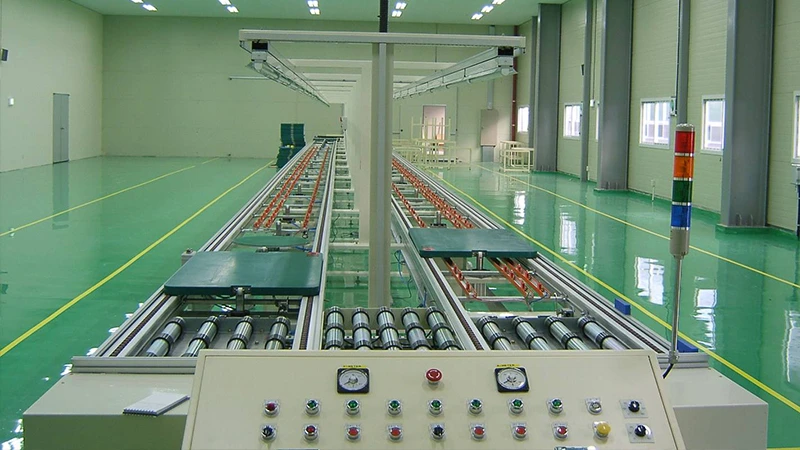
In today's fast-paced manufacturing landscape, the pressure to balance productivity with environmental responsibility has never been greater. As factories around the world strive to reduce their carbon footprint and embrace circular economy principles, even the most seemingly utilitarian equipment is undergoing a sustainability makeover. Among these, free flow chain conveyors—workhorses of material handling—are emerging as unsung heroes in the quest for greener operations. More than just tools for moving parts from point A to B, modern free flow chain conveyors are designed with reusability at their core, aligning with the ethos of lean system practices and the demand for adaptable, long-lasting solutions. This article dives into the sustainable features that make these conveyors indispensable for forward-thinking manufacturers, exploring how their modular design, durable materials, and adaptable components are redefining what it means to build equipment that serves both the bottom line and the planet.
Why Reusability Matters in Modern Manufacturing
The days of "use-and-discard" manufacturing are fading. Today's industry leaders recognize that sustainability isn't just a buzzword—it's a business imperative. With stricter regulations, growing consumer demand for eco-friendly products, and the rising cost of raw materials, companies are rethinking every aspect of their operations, from production lines to packaging. At the heart of this shift is the concept of reusability: designing equipment that can be disassembled, repurposed, or recycled, rather than ending up in landfills after a single lifecycle.
For material handling systems like conveyors, reusability translates to tangible benefits. It reduces waste by minimizing the need for new raw materials, cuts costs associated with frequent replacements, and supports the lean system goal of eliminating inefficiencies. Imagine a factory that invests in a conveyor system only to redesign its production line a year later—with traditional rigid conveyors, that often means scrapping the old setup and buying new. But with reusable, modular systems, that same factory can reconfigure components, swap out parts, and adapt the conveyor to fit the new layout, saving time, money, and resources.
Reusability also aligns with the principles of lean system management, which emphasizes maximizing value while minimizing waste. By investing in equipment that can be reused across multiple projects or production cycles, manufacturers create a more agile, responsive operation. This agility is crucial in today's market, where product lines evolve rapidly and customization is key. A free flow chain conveyor that can be retooled for different products or processes isn't just sustainable—it's a competitive advantage.
The Building Blocks of Sustainable Free Flow Chain Conveyors
What sets modern free flow chain conveyors apart in terms of reusability? It starts with intentional design choices, from the materials used to the way components connect. Let's break down the key features that make these conveyors champions of sustainability.
Modular Design: The Power of "Plug-and-Play"
At the core of any reusable conveyor system is modularity. Unlike traditional conveyors, which are often welded or bolted into fixed configurations, modern free flow chain conveyors are built using interlocking components that can be easily disassembled and rearranged. This is made possible by using standardized parts like aluminum extrusion profile and aluminum profile accessories, which act as the "Lego blocks" of material handling.
For example, aluminum profile—lightweight, strong, and infinitely adaptable—forms the backbone of many conveyor frames. These profiles feature T-slots that allow accessories like brackets, guides, and supports to be attached without welding. Need to shorten the conveyor? Simply remove a section of aluminum profile. Want to add a curve or a side rail? Slide in an aluminum profile accessory and secure it with a bolt. This flexibility means the same conveyor can be reconfigured for different tasks, whether it's moving small electronics on an assembly line or heavier components in a warehouse.
Even the chain itself is designed for reusability. Free flow chains are typically made of durable plastics or metals that can be cleaned, repaired, or replaced individually, rather than replacing the entire chain when a single link fails. This "replace-a-part, not-the-whole" approach drastically extends the system's lifespan and reduces waste.
Materials That Stand the Test of Time (and Reuse)
The materials chosen for free flow chain conveyors play a huge role in their sustainability. While traditional conveyors often rely on heavy steel, modern systems are increasingly turning to aluminum profile for its unbeatable combination of strength, lightness, and recyclability. Aluminum is not only resistant to corrosion—making it ideal for harsh manufacturing environments—but it's also 100% recyclable, with almost no loss of quality during the recycling process. This means that even at the end of a conveyor's lifecycle, the aluminum extrusion profile can be melted down and repurposed into new components, closing the loop on material waste.
But aluminum isn't the only star material. Many conveyors also incorporate lean pipe and accessories, which are coated in durable, recyclable plastics. These pipes are lightweight yet strong, and their smooth surfaces reduce friction, minimizing wear and tear on both the conveyor and the products being transported. When combined with aluminum profile accessories like connectors and brackets, lean pipe creates a system that's both sturdy and easy to modify.
The key here is material compatibility. By using standardized materials like aluminum profile and lean pipe, manufacturers ensure that components from different systems can be mixed and matched. A bracket designed for one aluminum extrusion profile will likely fit another, and a lean pipe joint can connect to an aluminum frame with minimal adapters. This interoperability is critical for reusability—no more being locked into a single supplier's proprietary parts.
Adaptable Components: From Workbench to Warehouse
Reusability isn't just about the conveyor itself—it's about how well it integrates with other equipment. Modern free flow chain conveyors are designed to work seamlessly with everything from workbench setups to automated storage systems, thanks to a wide range of compatible components.
Take aluminum profile accessories, for instance. These include everything from end caps and rubber strips to hinges and clamps, all designed to enhance the functionality of the conveyor. Need to add a side guide to prevent products from slipping off? Attach an aluminum guide rail A or B using T-slot bolts. Want to mount the conveyor on a mobile base for easy movement? Use caster and accessories to add wheels. These accessories are designed to be reused across different setups—an aluminum guide rail from an old conveyor can find new life on a workbench or a material rack, reducing the need for new parts.
Even smaller components, like roller track and accessories, contribute to reusability. Roller tracks with swivel roller balls (available in sizes like 1 inch or 0.5 inch) can be swapped between conveyors or repurposed as part of a picking station. Plastic roller track guide rails, whether yellow, grey, or another color, are durable enough to withstand multiple installations and removals, ensuring they can be reused long after the initial conveyor is retired.
Energy Efficiency: Doing More with Less
While reusability focuses on material waste, energy efficiency is another pillar of sustainability in conveyor design. Free flow chain conveyors are inherently efficient due to their low-friction operation—products glide along the chain with minimal resistance, reducing the power needed to move them. This not only cuts energy costs but also extends the life of the motor and other moving parts, further enhancing reusability by reducing wear and tear.
Many modern conveyors also feature variable speed controls, allowing operators to adjust power usage based on demand. During slow periods, the conveyor can run at a lower speed, saving energy. When production ramps up, it can speed up without sacrificing efficiency. This adaptability ensures the conveyor uses only the energy it needs, making it both eco-friendly and cost-effective.
From Factory Floor to Second Life: The Lifecycle Advantage
A truly sustainable conveyor system doesn't just perform well during its initial use—it also has a clear path to reuse or recycling at the end of its lifecycle. Let's trace the journey of a free flow chain conveyor, from production to retirement, and see how reusability shines at every stage.
Production:
The manufacturing process of aluminum profile and lean pipe is already more sustainable than traditional steel production, as aluminum requires less energy to recycle than to produce from raw ore. Many suppliers also use recycled materials in their aluminum extrusion profile, further reducing the carbon footprint of the conveyor's components.
Use:
During operation, the conveyor's modular design allows for easy repairs. If a section of roller track gets damaged, it can be replaced without taking the entire conveyor offline. This "repair, don't replace" mindset extends the system's lifespan, delaying the need for a full replacement.
Reconfiguration:
When the production line changes, the conveyor can be disassembled and reassembled in a new layout. Components like aluminum profile and lean pipe joint are reused, while only a few new parts (if any) are needed to adapt to the new design.
Second Life:
Even when the conveyor is no longer needed for its original purpose, its parts can find new uses. Aluminum profile might be repurposed into a workbench or a material rack. Roller track and accessories could be used in a small-scale assembly line or a warehouse picking system. Lean pipe and accessories might end up in a prototype station or a temporary storage setup.
Recycling:
If parts are too worn for reuse, materials like aluminum profile and stainless steel pipe series are highly recyclable. Aluminum, in particular, can be recycled repeatedly without losing quality, making it a staple of circular economy practices.
| Stage of Lifecycle | Traditional Conveyor | Modern Free Flow Chain Conveyor (with Aluminum Profile) |
|---|---|---|
| Production | High energy use; mostly virgin materials | Lower energy use; recycled aluminum content common |
| Use Phase | Fixed design; hard to repair; high wear on non-modular parts | Modular; easy repairs; replaceable components extend lifespan |
| Reconfiguration | Often requires full replacement; high waste | Disassemble and reuse components; minimal new parts needed |
| End-of-Life | Mostly landfilled; limited recyclability | Components reused or recycled; aluminum 100% recyclable |
| Total Waste Generated | High | Low |
Real-World Impact: A Case Study
Case Study: Automotive Parts Manufacturer Cuts Waste by 40% with Reusable Conveyors
A mid-sized automotive parts manufacturer in the Midwest was facing a dilemma: their production line for brake components was outdated, and they needed to upgrade to meet new safety standards. The old system relied on rigid steel conveyors that had been in place for over a decade—effective, but impossible to reconfigure. When the company decided to expand their product line to include electric vehicle parts, they realized the old conveyors wouldn't fit the new layout, and replacing them entirely would cost over $100,000.
Instead, they opted for a free flow chain conveyor system built with aluminum extrusion profile and lean pipe and accessories. The modular design allowed them to reuse 70% of the components from their old conveyor system (after cleaning and minor repairs) and only purchase new aluminum profile accessories and roller track to adapt to the new layout. The total cost came in at $45,000—less than half the price of a new traditional conveyor.
But the savings didn't stop there. Over the next two years, the company reconfigured the conveyor three more times to accommodate new part sizes and production schedules. Each time, they reused existing components, saving an additional $20,000 in replacement costs. They also reduced waste: instead of sending old steel conveyors to the landfill, they recycled the non-reusable parts and repurposed the rest. By the end of the second year, their material handling waste had dropped by 40%, and their lean system audits showed improved efficiency due to the conveyor's adaptability.
"We used to see conveyors as a one-time expense," said the plant manager. "Now, we see them as an investment that keeps giving. The fact that we can take apart sections and use them elsewhere? That's changed how we plan for the future. We're not just saving money—we're building a smarter, greener factory."
Looking Ahead: The Future of Reusable Conveyors
As sustainability becomes even more central to manufacturing, the demand for reusable free flow chain conveyors will only grow. What does the future hold for these systems? We can expect to see even more innovation in materials, with advances in recycled aluminum alloys and bio-based plastics for components like roller track guide rails. Smart sensors may also play a role, allowing operators to monitor wear and tear in real time, ensuring components are repaired or replaced before they fail—further extending the conveyor's lifespan.
Another trend is the integration of free flow chain conveyors with digital tools. Imagine a conveyor system where you can scan a QR code on an aluminum profile accessory to see its reuse history, or use 3D modeling software to plan a reconfiguration before ever touching a tool. This digital-physical integration will make reusability even more accessible, empowering manufacturers to get the most out of their equipment.
Finally, as lean system practices continue to evolve, we'll see conveyors designed with even greater emphasis on flexibility. Think conveyor sections that can be quickly swapped between lines, or aluminum profile that's compatible with a wider range of accessories, making it easier to adapt to new technologies like collaborative robots or automated guided vehicles (AGVs).
Conclusion: Reusability as a Catalyst for Change
Modern free flow chain conveyors are more than just tools for moving materials—they're a testament to how sustainability and innovation can go hand in hand. By prioritizing reusability through modular design, durable materials like aluminum profile, and adaptable components, these conveyors are helping manufacturers build operations that are not only more efficient but also more responsible.
For companies looking to reduce waste, cut costs, and stay competitive in a rapidly changing market, investing in reusable free flow chain conveyors is a clear choice. It's a choice that benefits the bottom line, the planet, and the workers who rely on these systems every day. As the automotive manufacturer's case study shows, reusability isn't just about being green—it's about being smart.
So, whether you're setting up a new assembly line, upgrading an existing one, or planning for future growth, consider the impact of your material handling equipment. Choose systems that can grow with you, adapt with you, and be reused by you. In the end, the most sustainable conveyor isn't the one that works perfectly once—it's the one that keeps working, in new ways, for years to come.