- Company Articles
- Products and Technology
- Product knowledge
- Sustainable Improvement with Turning Angle Code 3030: Reduce Waste, Enhance Flexibility

Sustainable Improvement with Turning Angle Code 3030: Reduce Waste, Enhance Flexibility
Related Product
Turning Angle Code 3030
The turning angle aluminum profile connector provides a 90 degree hidden corner connection. 3030 it is means this size is used for 30 series aluminum profile.The corner code comes with set screws that allow for quick, easy connections.
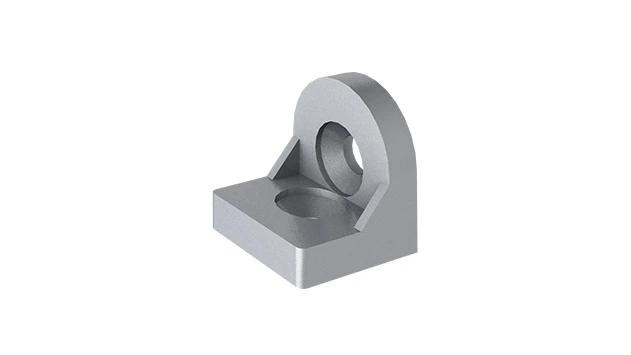
Let's start with a story we've all heard (or lived): A manufacturing floor manager walks through their facility, sighing at the sight of a workbench that's too short for the new equipment, a material rack that can't fit the larger boxes coming in, and a production line that feels stuck in 2010—while the industry races toward 2030. "We need to adapt," they think, "but reconfiguring all this would cost a fortune and take weeks." Sound familiar? If you've ever felt trapped by rigid, one-size-fits-nobody workspaces, you're not alone. The hidden cost of inflexibility isn't just frustration—it's wasted time, money, and resources that could be fueling growth. But what if there was a small, unassuming part that could change all that? Enter the Turning Angle Code 3030 —a quiet hero in the world of modular workspaces, and a game-changer for anyone serious about sustainable improvement.
The Hidden Costs of Rigidity: Why "Set It and Forget It" No Longer Works
Let's talk about waste. Not the obvious kind—scrap metal or leftover packaging—but the silent drain of rigidity. Traditional workspaces, built with welded steel frames, custom-cut wooden benches, or fixed metal brackets, are like concrete shoes for your operation. They work… until they don't. A new product comes in, and suddenly your workbench is too narrow. A supplier changes their box size, and your material rack becomes obsolete. A team member needs a taller station to avoid back strain, and you're stuck choosing between worker safety and budget constraints.
Here's the kicker: According to lean manufacturing principles, waste isn't just what you throw away—it's anything that doesn't add value . That includes the 40 hours your team spends dismantling and rebuilding a workbench. The $5,000 you spend on new steel brackets because the old ones can't be reused. The weeks of production delays while you wait for custom parts to arrive. Rigidity breeds these kinds of waste, and in today's fast-paced market—where customer demands shift overnight and product lifecycles shrink by the month—sticking with "set it and forget it" infrastructure is a recipe for stagnation.
And then there's sustainability. We're all trying to do better—reduce our carbon footprint, cut down on landfill waste, build operations that last. But traditional workspace setups? They're the opposite of sustainable. Welded frames are hard to recycle; custom parts often end up in the trash when they're no longer needed; and the energy used to fabricate, transport, and install them adds up. It's a cycle of waste that feels impossible to break—until you start looking at modular solutions.
Meet the Turning Angle Code 3030: Small Part, Big Impact
So, what exactly is a Turning Angle Code 3030? Let's keep it simple: It's a connector. But not just any connector. Think of it as the "Swiss Army knife" of workspace building—small, versatile, and surprisingly powerful. Designed to work with aluminum profiles (those lightweight, durable metal beams you've seen in modern factories and labs), this little component is the key to building workspaces that adapt, grow, and evolve with your needs.
Breaking Down the Design: Why It Works
Let's get up close. The Turning Angle Code 3030 is typically made from high-grade aluminum alloy—lightweight but strong enough to handle the daily grind of manufacturing, assembly, or warehousing. Its name gives a hint: "3030" refers to the size of the aluminum profile it's designed for (usually 30mm x 30mm, a common standard in modular setups), and "Turning" points to its ability to connect profiles at angles—most often 90 degrees, but with some variations for slopes or corners. Unlike clunky traditional brackets that require drilling, welding, or specialized tools, this angle code uses a simple tightening mechanism—often a hex key or even a hand screw—to lock into the T-slots of aluminum profiles. No welding, no cutting, no mess.
Here's where it gets clever: The connection is secure but temporary . Tighten the screw, and the angle code grips the profile like a vice, holding the structure steady even under heavy loads (we're talking hundreds of pounds for industrial-grade models). Loosen it, and you can slide the code along the profile, rotate it, or remove it entirely—no damage, no waste, no hassle. It's modularity in its purest form.
Why Aluminum? The Material Behind the Magic
You might be wondering: Why aluminum profiles, and why an aluminum angle code? Let's start with the profiles themselves. Aluminum is lightweight (about a third the weight of steel), which makes it easy to handle during setup—no need for heavy machinery or extra workers. It's also corrosion-resistant, so it holds up in humid warehouses or cleanrooms. And crucially, it's infinitely recyclable. Unlike steel, which loses quality when recycled, aluminum can be melted down and reused without degradation—making it a sustainability standout.
Pair that with an aluminum angle code, and you've got a system that's built to last. The Turning Angle Code 3030 won't rust, warp, or degrade over time, even with constant use. And because both the code and the profile are made from the same material, they expand and contract at the same rate with temperature changes—no creaking, no loosening, just consistent performance.

Reducing Waste: How Turning Angle Code 3030 Cuts the Fat
Let's circle back to waste—the silent killer of efficiency and sustainability. The Turning Angle Code 3030 isn't just about flexibility; it's a waste-reduction machine. Let's break down how it attacks waste from every angle.
Material Waste: From "Use Once" to "Use Forever"
Traditional workspace setups are built on a "use once, then discard" model. Need a new shelf? Cut a steel bracket to size, weld it on, and if you ever need to move that shelf? The bracket is useless—scrap metal. With Turning Angle Code 3030 and aluminum profiles, it's the opposite. The angle codes are reusable. Move a workbench? Unscrew the codes, reposition the profiles, and tighten them back up. Expand a material rack? Add more profiles and angle codes—no cutting, no waste. Even if you completely redesign your workspace, the angle codes and profiles can be repurposed into something new. We've heard stories of manufacturers using 10-year-old angle codes on brand-new production lines—now that's a material win.
And let's talk about excess material. When you build with custom brackets, you're always ordering extra "just in case." With modular angle codes, you buy only what you need, and if you overbuy? Store them—they'll work on your next project. No more boxes of unused, rusting brackets gathering dust in the corner.
Time Waste: From Weeks to Afternoons
Time is money, and nowhere is that truer than on the factory floor. Let's say you need to reconfigure a production line to accommodate a new product. With traditional welded frames, that might mean: hiring a welder, shutting down the line for a week, waiting for custom parts, and hoping the measurements are right. With Turning Angle Code 3030? A team of two workers with basic tools can have the job done in a day. No shutdowns, no waiting, no guesswork.
Take a real example: A small automotive parts manufacturer we worked with recently needed to adjust their assembly workbenches to fit larger components. Their old setup used wooden tops bolted to steel frames. To raise the height, they would have had to cut new steel legs, weld them, and repaint—costing $3,000 and 3 days of downtime. Instead, they switched to aluminum profiles and Turning Angle Code 3030. Their team loosened the angle codes, slid the profiles up by 6 inches, retightened, and added new worktop brackets. Total time? 4 hours. Total cost? $0—they reused all the existing parts. That's the power of time savings.
Labor Waste: From Specialists to Any Team Member
Welders, carpenters, and metalworkers are skilled professionals—and they're expensive. Traditional setups require their expertise just to build a simple shelf. With Turning Angle Code 3030, you don't need specialists. Any team member with a basic understanding of tools can assemble, adjust, or reconfigure a workspace. That frees up skilled labor for more important tasks—like maintaining machinery or improving workflows—and reduces reliance on external contractors. It's a win-win for your team and your budget.

Enhancing Flexibility: Workspaces That Grow With You
If reducing waste is the "why" behind modular systems, flexibility is the "how." The Turning Angle Code 3030 doesn't just help you build workspaces—it helps you evolve them. Let's dive into how that flexibility plays out in real life.
Adapting to Product Changes: No More "One and Done" Workbenches
Imagine you run a electronics assembly line. One month, you're building small circuit boards; the next, a client orders a larger device that needs more workspace. With a traditional wooden workbench, you're stuck—either cram the new boards on the old bench or buy a new one. With an aluminum profile workbench built using Turning Angle Code 3030? You've got options. Need more width? Add a section of profile and a new top using the same angle codes. Need a shelf above for tools? Attach brackets with angle codes. Need to split the bench into two smaller stations for a new team? Unscrew the middle angle codes, separate the profiles, and you've got two benches. It's like having a workbench that can read your mind (or at least your production schedule).
Scaling with Your Business: From Garage Startup to Factory Floor
Startups know this pain: You begin in a garage with a single workbench, then suddenly you're doubling in size and need 10 more. With modular setups, growth is seamless. Buy a few extra aluminum profiles and Turning Angle Code 3030s, and you can expand your workspace incrementally—no need to overhaul everything at once. A food packaging company we know started with 2 workbenches and a small material rack. Three years later, they've expanded to a 5,000-square-foot facility, and 80% of their original angle codes and profiles are still in use—now part of conveyor systems, packing stations, and quality control areas. That's scalability without waste.
Supporting Lean Systems: Aligning with the Principles of Continuous Improvement
If you're familiar with lean system methodologies—think Kaizen, 5S, or just-in-time production—you know that continuous improvement is the name of the game. Lean thrives on adaptability: optimizing workflows, reducing bottlenecks, and responding to feedback. But how do you optimize a workflow if your workbench can't move, or your material rack can't adjust? You can't. That's where Turning Angle Code 3030 shines. It turns your workspace into a living, breathing system that can evolve with your lean efforts.
Take material flow, for example. A lean team might notice that parts are taking too long to move from the storage rack to the assembly line. With traditional fixed racks, you're stuck. With a modular rack built using angle codes, you can add a roller track (another modular component) to the rack, sloping it slightly to let parts glide down to the line—reducing transport time by 50%. A few weeks later, if the team realizes the slope is too steep, they can adjust the angle using the angle codes, no problem. It's lean in action: small changes, big results, all made possible by flexible infrastructure.
Traditional vs. Modular: A Side-by-Side Comparison
Still not convinced? Let's put it all together with a comparison. Below is a breakdown of how traditional workspace setups stack up against systems built with Turning Angle Code 3030 and aluminum profiles. The differences might surprise you.
| Aspect | Traditional (Welded Steel/Wood) | Modular (Turning Angle Code 3030 + Aluminum Profiles) |
|---|---|---|
| Setup Time | 1-2 weeks (welding, cutting, painting) | 1-2 days (tool-free assembly for basic setups) |
| Reconfiguration Ease | Nearly impossible (requires cutting/welding new parts) | Simple (loosen screws, adjust, retighten) |
| Material Waste | High (custom cuts, unused brackets, discarded frames) | Low (reusable parts, minimal cutting, zero waste on reconfigurations) |
| Cost Over 5 Years | High (initial cost + replacement costs + downtime) | Low (initial cost + minimal additions; no replacements needed) |
| Sustainability | Poor (hard to recycle, high energy use in production) | sExcellent (recyclable aluminum, reusable parts, low energy assembly) |
| Weight | Heavy (hard to move, requires machinery) | Lightweight (easily moved by hand, reduces injury risk) |
| Customization | Limited (custom parts required for unique setups) | Unlimited (mix and match profiles, angle codes, and accessories) |
Sustainability Beyond Waste: The Long-Term Impact
We've talked a lot about reducing waste, but sustainability is about more than just cutting down on scrap. It's about building systems that contribute to a healthier planet, stronger communities, and resilient businesses. Let's dig into how Turning Angle Code 3030 supports that bigger picture.
Recyclability: Closing the Loop
Aluminum is one of the most recyclable materials on the planet—95% of the energy used to produce new aluminum is saved when recycling existing aluminum. When a modular workspace using Turning Angle Code 3030 and aluminum profiles finally reaches the end of its life (which, with proper care, could be decades), every component can go into the recycling bin. The angle codes, the profiles, even the accessories—all can be melted down and turned into new products. Compare that to wooden workbenches (which often end up in landfills) or welded steel (which loses quality when recycled) and the difference is clear: modular systems are built for a circular economy.
Energy Efficiency: Less Energy, More Output
The energy footprint of traditional workspace setup is huge. Think about it: mining iron ore for steel, cutting and welding it (which uses fossil fuels), transporting heavy materials (more fuel), and then installing (more labor, more energy). Aluminum production does require energy, but because aluminum profiles are lightweight, transporting them uses less fuel than steel. And because modular setups require no welding or cutting on-site, there's no need for energy-hungry tools like welders or plasma cutters. It all adds up to a lower carbon footprint—before, during, and after setup.
Worker Wellbeing: A Sustainable Workforce
Sustainability isn't just environmental—it's about people, too. A rigid workspace can lead to ergonomic issues: workbenches that are too low, causing back pain; fixed material racks that require stretching or bending, increasing injury risk. With modular setups, you can adjust workspaces to fit people , not the other way around. Need a taller workbench for a taller worker? Use Turning Angle Code 3030 to raise the profile legs by 6 inches. Want to add a footrest under the bench? Attach it with angle codes. Happier, healthier workers are more productive, more loyal, and less likely to miss days due to injury. That's a sustainable workforce—and it starts with flexible infrastructure.
Choosing the Right Angle Code: What to Look For
Not all angle codes are created equal. If you're ready to make the switch to modular, here are a few things to keep in mind when shopping for Turning Angle Code 3030 (or any modular connector):
- Material Quality: Look for high-grade aluminum alloy (6061-T6 is a common industrial standard) to ensure strength and corrosion resistance.
- Load Capacity: Check the weight rating—industrial workspaces need angle codes that can handle heavy loads (200+ pounds per connection is a good benchmark).
- Ease of Use: Opt for angle codes with tool-free or simple tool (hex key) tightening—no need for specialized equipment.
- Compatibility: Make sure the angle code fits your aluminum profile size (3030 in this case) and T-slot design (metric vs. imperial).
- Supplier Support: Choose a supplier that offers samples, technical support, and replacement parts—you'll want help if you run into setup questions.
The Future of Workspaces: Flexible, Sustainable, Human-Centered
As we look ahead, one thing is clear: The workspaces of tomorrow won't be rigid. They'll be flexible, adaptable, and designed with sustainability in mind. Turning Angle Code 3030 might seem like a small part, but small parts can drive big change. It's not just about building better workbenches or material racks—it's about building better businesses. Businesses that can pivot when markets shift, reduce waste when resources are scarce, and grow when opportunities arise.
So, the next time you walk through your workspace and see a bench that's too short, a rack that's too narrow, or a line that's too slow, remember: You don't have to live with rigidity. There's a better way. It starts with a small, unassuming connector and a big idea: that your workspace should work for you, not against you. Sustainable improvement isn't a buzzword—it's a mindset, and it's within reach. All you need is the right tools. And sometimes, the right tool is as simple as a Turning Angle Code 3030.