- Company Articles
- Products and Technology
- Solution
- Sustainable Lean Manufacturing: Why Aluminum Workbench B Aligns with Environmental Goals

Sustainable Lean Manufacturing: Why Aluminum Workbench B Aligns with Environmental Goals
Related Product
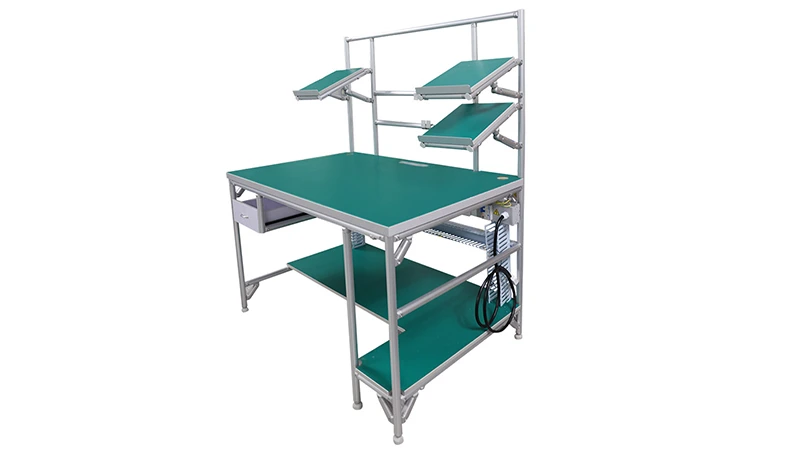
Aluminum Workbench B
Aluminum tube workbench is more flexible and durable, compared with traditional PE/ABS coated steel tube. It is easy to assemble, anti corrosion, rust protection, and recycle use after disassemble.
In an era where every production decision echoes through environmental and operational landscapes, the tools we choose shape more than just assembly lines—they shape the future of responsible manufacturing. Let's explore how Aluminum Workbench B emerges as a quiet champion, bridging lean efficiency with sustainability in ways that feel both practical and purposeful.
The Intersection of Lean and Green: Why Manufacturing Can't Ignore Either
Walk into any modern factory, and you'll likely hear two buzzwords: "lean" and "sustainable." For years, these concepts operated in parallel—lean focused on trimming waste and boosting productivity, sustainability on reducing environmental impact. But today, they're not just parallel; they're inseparable. A truly efficient manufacturing process can't afford to waste resources, and a truly sustainable one can't afford inefficiencies. It's this intersection that makes tools like Aluminum Workbench B more than just a work surface—it's a statement that operational excellence and environmental responsibility can coexist, even thrive, together.
Lean manufacturing, at its core, is about eliminating waste—whether that's excess inventory, unnecessary movement, or idle time. Sustainability, similarly, targets waste but through the lens of planetary health: reducing carbon footprints, minimizing landfill contributions, and conserving resources. The magic happens when these two missions align. A workbench that's designed for lean flexibility (easily reconfigurable, durable enough to outlast production line changes) inherently reduces waste by extending its own lifecycle. One made from sustainable materials (like aluminum) takes that a step further by ensuring even its "end of life" isn't the end of its utility. This is the future of manufacturing: tools that don't just serve the bottom line, but serve the planet, too.
Aluminum: The Unsung Hero of Sustainable Materials
To understand why Aluminum Workbench B matters, we first need to talk about aluminum itself—a material that's been quietly revolutionizing sustainable manufacturing for decades, yet still feels underappreciated. Let's start with the basics: aluminum is 100% recyclable. Not "sort of" recyclable, not "downcyclable," but fully recyclable, with no loss in quality. That means the aluminum in your morning coffee can could, one day, become part of a workbench, then a car part, then a bicycle frame, and so on. Compare that to steel, which loses strength with each recycling cycle, or wood, which—while renewable—requires significant energy and resources to process and rarely gets a second life in industrial settings.
But recyclability is just the start. Aluminum's production story is equally compelling. While mining and refining raw aluminum does require energy, recycling it uses just 5% of the energy needed to produce new aluminum. Let that sink in: 95% less energy for the same material. For manufacturers looking to cut carbon emissions, that's a statistic that can't be ignored. And when it comes to durability, aluminum holds its own. It's resistant to corrosion, lightweight yet strong, and requires minimal maintenance—meaning it doesn't need frequent replacements, reducing the demand for new materials over time.
Then there's the role of aluminum extrusion profile in creating precision-engineered tools. Extrusion—pushing heated aluminum through a die to create custom shapes—allows for incredibly precise designs. This isn't just about aesthetics; it's about efficiency. An extruded aluminum profile can be tailored to exact specifications, ensuring no material is wasted in production. Unlike traditional steel fabrication, which often involves cutting, welding, and grinding (generating scrap and emissions), extrusion minimizes waste from the start. It's this combination of recyclability, energy efficiency, and precision that makes aluminum the backbone of sustainable manufacturing tools—and Aluminum Workbench B leverages every bit of it.

Aluminum Workbench B: More Than a Table—A Lean, Green Workflow Partner
Let's get specific: What makes Aluminum Workbench B different? To answer that, let's imagine a typical workbench scenario. Picture a traditional steel workbench in a factory. It's heavy, bolted to the floor, and built for a single purpose. When the production line reconfigures (as lean principles often demand), that workbench becomes dead weight—either left unused (wasting space) or scrapped (wasting materials). Now, contrast that with Aluminum Workbench B. From the moment it's assembled, it's clear this isn't just a static surface; it's a flexible, future-ready tool.
First, its design. Aluminum Workbench B is built around the concept of modularity, a cornerstone of lean systems. Its frame uses aluminum lean pipe and aluminum profile components, connected by lightweight, durable joints that allow for easy adjustments. Need to raise the height for ergonomic comfort? Swap out a few pipes. Want to add a shelf for tools? Attach it with compatible accessories. Moving the workbench to a new line? Since aluminum is lightweight, it can be disassembled, transported, and reassembled without heavy machinery or excessive labor. This isn't just convenient—it's waste reduction in action. A workbench that adapts to your needs means you'll never have to replace it because a production line changed. That's lean (no unnecessary capital expenditure) and sustainable (no old workbench in a landfill).
Then there's the material choice itself: aluminum. Unlike steel, which can rust and require chemical treatments to maintain, aluminum resists corrosion naturally. That means less maintenance, fewer harsh cleaning agents, and a longer lifespan. Even the finish—often anodized or powder-coated—adds durability without toxic off-gassing. And when the day finally comes that the workbench is no longer needed (decades down the line), its aluminum components can be recycled, melting down to become part of a new aluminum profile, a new lean pipe, or even a new workbench. Compare that to a wooden workbench, which might splinter or warp over time, or a plastic one, which degrades and rarely recycles cleanly. Aluminum Workbench B isn't just built to last; it's built to leave a minimal footprint, even at the end of its life.

By the Numbers: How Aluminum Workbench B Stacks Up Against Traditional Options
| Feature | Traditional Steel Workbench | Traditional Wooden Workbench | Aluminum Workbench B |
|---|---|---|---|
| Material Lifespan | 10–15 years (prone to rust if unmaintained) | 5–8 years (prone to warping, splintering) | 20+ years (corrosion-resistant, low maintenance) |
| Recyclability | Steel is recyclable, but recycling requires energy; often mixed with other materials (bolts, coatings) complicating process | Limited; wood may biodegrade but often treated with chemicals; rarely recycled industrially | 100% recyclable; aluminum retains quality after recycling; components are easily separated for pure material recycling |
| Energy to Produce (per kg) | ≈20–30 MJ (new steel); ≈7–10 MJ (recycled steel) | ≈15–20 MJ (including logging, processing, finishing) | ≈2 MJ (recycled aluminum); ≈55 MJ (new aluminum, but 95% energy savings when recycled) |
| Flexibility/Reconfigurability | Low; fixed design, difficult to modify without cutting/welding | Very low; permanent structure, modifications risk damage | High; modular aluminum lean pipe and profile components allow easy adjustments, additions, or disassembly |
| Weight (per square meter) | ≈40–50 kg (heavy, requires machinery to move) | ≈15–25 kg (moderate, but heavy for manual handling) | ≈10–15 kg (lightweight, easily moved by 2 people) |
The table tells a clear story: Aluminum Workbench B isn't just "better" for the environment—it's better for the people using it, too. Its lightweight design reduces strain on workers who need to reposition it. Its modularity means teams can adapt their workspace without waiting for maintenance crews or new equipment. And its longevity ensures that the workbench grows with the company, not against it. This is lean thinking at its finest: a tool that serves the present while safeguarding the future.
Real-World Impact: A Day in the Life with Aluminum Workbench B
Let's ground this in reality with a hypothetical (but all-too-common) scenario. Imagine a mid-sized electronics manufacturer, "GreenTech," that's been transitioning to lean manufacturing. Their old production line used steel workbenches—sturdy, but rigid. When they decided to shift from assembling smartphones to tablets (a common pivot in tech manufacturing), they faced a problem: the steel workbenches were too low for the new tablet assembly fixtures. Their options? Buy new workbenches (costing $15,000) or try to modify the old ones (expensive, time-consuming, and likely to weaken the structure). Instead, they opted for Aluminum Workbench B.
Within a week, the old steel workbenches were recycled (their steel repurposed, though with energy loss), and Aluminum Workbench Bs were installed. The difference was immediate. The modular design allowed GreenTech to adjust the height of each workbench by swapping out aluminum profile legs—no welding, no cutting, just hand tools. When they needed to add tool holders and cable management brackets, they attached them using standard aluminum lean pipe accessories, no custom fabrication required. Six months later, when they added a third shift, they disassembled two workbenches from a less busy line, moved them, and reassembled them in the new area—all in an afternoon, with no downtime.
But the real win? Sustainability metrics. GreenTech tracked their carbon footprint and found that switching to Aluminum Workbench B reduced their workbench-related emissions by 62% over five years. Why? Because they avoided buying new steel (high embodied energy), reduced waste from scrapped workbenches, and even saved on shipping costs (aluminum's lighter weight cut transportation emissions). Their workers also reported less fatigue—adjustable heights meant better ergonomics—and higher morale, knowing their workspace was part of the company's sustainability commitment. It's a small change, but multiplied across hundreds of workbenches, it adds up to a big impact.
Beyond the Workbench: Building a Lean, Sustainable Ecosystem
Aluminum Workbench B is just one piece of the puzzle. To truly embrace sustainable lean manufacturing, companies need an ecosystem of tools that work together—workbenches, flow racks, trolleys, and more—all built with the same principles of modularity and sustainability. This is where aluminum profile and aluminum lean pipe shine as foundational materials. They're not just for workbenches; they're the building blocks of an entire production system.
Consider flow racks, for example. A traditional flow rack might be made of steel or wood, heavy and fixed. An aluminum flow rack, built with the same modular components as Aluminum Workbench B, can be adjusted to fit different container sizes, reconfigured for new product lines, or even disassembled and repurposed as a trolley when no longer needed. The same goes for turnover trolleys—lightweight aluminum frames mean easier maneuvering (saving worker energy) and recyclable components mean end-of-life responsibility. When every tool in the factory speaks the same "language" of modular aluminum, the possibilities for efficiency and sustainability multiply.
This ecosystem approach also reduces supply chain complexity. Instead of sourcing steel workbenches from one supplier, wooden trolleys from another, and plastic flow racks from a third, manufacturers can partner with a single supplier of aluminum profile and lean pipe systems. This streamlines logistics (fewer shipments, lower emissions), simplifies maintenance (universal accessories), and ensures consistency in sustainability standards. It's lean (reduced supply chain waste) and sustainable (reduced carbon from transportation and material diversity) in one fell swoop.
The Future of Manufacturing: Small Choices, Big Change
At the end of the day, sustainable lean manufacturing isn't about grand gestures—it's about the everyday choices: the workbench you assemble, the materials you prioritize, the way you design for adaptability. Aluminum Workbench B embodies this philosophy. It's not flashy, but it's thoughtful. It doesn't shout about sustainability; it lives it, through every recyclable component, every adjustable joint, every year it outlasts a traditional alternative.
For manufacturers just starting their sustainability journey, or those deep in lean transformation, Aluminum Workbench B is a low-risk, high-reward step. It's a tool that pays for itself in reduced waste, lower energy costs, and longer lifespans. More importantly, it's a signal to teams, customers, and the planet that efficiency and responsibility don't have to be trade-offs. They can be partners, working together to build a manufacturing future that's as kind to the bottom line as it is to the Earth.
So the next time you walk through a factory, take a closer look at the workbenches. They might seem like just tables, but they're so much more. They're the foundation of how we make things—and with tools like Aluminum Workbench B, that foundation can be strong, flexible, and sustainable. And in a world that needs more of all three, that's a future worth building.